I am posting just FYI, check those two pivot bolts that holds the Horz. Stab on. Skip to 7th Par below to get to the point. Btw no accident, no damage but scary.
I am a EAA Tech counselor. This is how I got to know the Gent that built a RV-12 E-LSA. I did the final inspection.
It is beautifully built and equip. There were some small issues, exhaust to cowl clearance, flaperons to fuselage clearance, some wires without enough service slack... nothing major.
He flew it a full year. He called me about doing his first condition, how to do compression test. I advised him on phone. He took Rainbow Aviation LSA-I two day course. I was surprised he was not shown compression test?
I get another call months later, after he did condition inspection. But now he needed help putting in solid rivets. He did not have rivet gun, bucking bar. He has a squeezer but not able to fit into the area. Glad to help him. He had removed the Horz stab and it was at his house. (I still know nothing of missing bolt.)
In the past to install the flying Horz Stab on a RV-12 you had put spacers (washers in) the lug clevis joints. All RV's have a clevis/lug joint for flight controls and use washers to shim out the gap. Anyway everyone knows what a pain it is to get those washers in there. Van now has a kit for the RV-12 to add spacers that rivet in, using the same rivets as the nut-plate rivets. This makes installing the Horz Stab easier.
He has installed solids -before using his rivet squeezer, but there was room before assembly of the Horz stab. Now they needed to be riveted with gun/bar. So I helped him get those new nut plates and spacers installed. That is when he told me what happened.
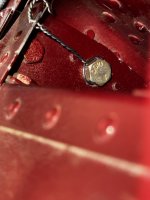
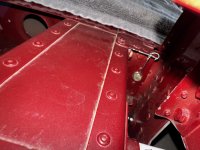
He and his wife were flying back home, in cruise, when the autopilot was hunting to maintain altitude a bit. He disconnected and could tell something was off. He landed safely at nearest airport. They were close enough to home, family drove out and picked up the builders wife. Builder stayed behind. People at airport helped him investigate. That is when the bolt was found sitting in bottom of the fuselage, Only one of two bolts for the two main pivot points was attaching the Horz stab to the fuselage.
Why did it not fail (fall off)? The one bolt, plus the two pull pull up down cables, and the trim cable held it on. Yes the control cables held it on in part. The RV-12 as you likely know has a flying tail, not fixed stab with elevators like other current RV's. No major damage, except chaffing of two gusset plates/stops at the top, inboard end ribs and spar. They had groves and suspect the fuselage cut out was supporting the Horz. stab as well as the one bolt and control cables.
Speculation away but be kind please. Never tight? He missed it during condition inspection (which I offered to help with but he never took me up on). I quizzed him. He said he checked all the cables and bolts and did not see anything wrong at the time. I asked about torque of bolts. He knew the answers and also as we all do if there is no room for a torque wrench you calibrate your arm, use the German method: "Gut Un Tight"
INSPECTION is a bit of an art, bright light, magnifying glass, mirrors, touching, moving comes in. I am not a professional A&P or IA. I have been around a lot of them. Inspectors are different breed, at least good ones. Attention to detail, know what to look for and how to look for it. I have learned over the year (sometimes by missing things). Fortunately my mistakes were benign.
[MOSAIC people only need is a 2 day course and going to keep a plane safe they did not build, do condition inspections. OK. It is possible this person also has limited mechanical abilities? We hope they have good judgement and will know their limitations and get help. I also hope the FAA has a better plan than the current two day LSA-I course. Repairman ticket on one plane you built, did not assure you were an expert mechanic or inspector. I do think it was far better than a two day generic class on LSA's. Are they going to change the curriculum to include Lycoming's and EAB's. My first RV-4 I remember the learning curve in maintaining and inspecting, and repairs. Eye-opening. I owned Part 23 and did a lot of the work with A&P watching. I had built cars and motorcycles but never a plane I built. That was over 30 yrs ago. I see this RV-12 E-LSA builder kind of like me. He built the plane and took the LSA course but he was not sure how to do a compression test. Don't want people to get hurt missing critical things is all.]
I called Van's about something else but asked about RV-12's losing Horz Stab bolts. Gary says never heard of it.
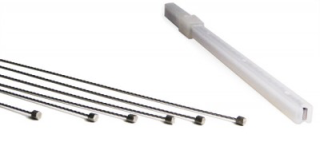
ONLY thing keeping the bolt from backing out is the nut plate locking feature. Blue Loctite? Red Loctite? This is a rotating joint ALBEIT with a bearing so friction should be low. The builder asked me about drilling the bolt and using a cotter pin in threaded end? I kind of discounted the idea but think may be not a bad idea?
[Autopilot Servo, with rotating joints and only nylon Lok nuts on bolts, not a fan of it, just me. If it comes lose and it jams the aileron or elevator, that is bad thing. I don't want anything in the flight controls coming loose... no one does. ]
These RV-12 Horz stab bolts are not easy to see without the fairing off. I went over his plane for a EAA Tech final inspection. I tell people just like the FAA inspection YOU (the builder) are certifying you have inspected everything. If it is covered I can't see it...
To be noted when I looked at this RV-12 the FAA had already signed off on it. I gather it was mostly a paperwork exercise. A final EAA Tech counselor report (these are free by the way) is a lot more about details, placards and paperwork typically pre FAA inspection. All planes I have looked at are very well made, including this RV-12. However when I see these planes built, ready to fly I can only see what I can see. If it is partially disassembled great. Cowl always comes off. There are early, mid and final EAA tech visit reports. So by all means have other eyes on your project throughout the build. I saw this plane at the end. Again workmanship was very good. I did however ask he open up the baggage area to see the control cable routing.
Keep in mind my EAA Tech Inspect was almost 1.5 yrs ago, and it was before it flew (but after the FAA was out). I got a good wiggle, check for play, function, rigging of all control surfaces. Saw clearance issues (FAA missed). However the stick felt like it had some play in pitch due to cable slack, heard cable slap (but I was being a bit aggressive). Had him remove the baggage area and inspect cables again, routing (a common mistake) and check tension. RV-12's have play in stick because it is cable not push pull tubes. The control stick bushings seem to have play even new. RV's with solid tube, bearing flight control systems are just more solid feeling. The RV-12 is different significantly but they fly great. Anyway the bolt was in for over a year and 100 hours. Why it came put I have no idea.
No preaching, just be careful and may be pull the tail fairing off and have a good look. That FIRST condition inspection is very important. He either missed it or it got lose in the 5 months post condition inspection??? I am not going to guess but he and his wife go to Church... Just saying, God was looking over them IMHO.
I am a EAA Tech counselor. This is how I got to know the Gent that built a RV-12 E-LSA. I did the final inspection.
It is beautifully built and equip. There were some small issues, exhaust to cowl clearance, flaperons to fuselage clearance, some wires without enough service slack... nothing major.
He flew it a full year. He called me about doing his first condition, how to do compression test. I advised him on phone. He took Rainbow Aviation LSA-I two day course. I was surprised he was not shown compression test?
I get another call months later, after he did condition inspection. But now he needed help putting in solid rivets. He did not have rivet gun, bucking bar. He has a squeezer but not able to fit into the area. Glad to help him. He had removed the Horz stab and it was at his house. (I still know nothing of missing bolt.)
In the past to install the flying Horz Stab on a RV-12 you had put spacers (washers in) the lug clevis joints. All RV's have a clevis/lug joint for flight controls and use washers to shim out the gap. Anyway everyone knows what a pain it is to get those washers in there. Van now has a kit for the RV-12 to add spacers that rivet in, using the same rivets as the nut-plate rivets. This makes installing the Horz Stab easier.
He has installed solids -before using his rivet squeezer, but there was room before assembly of the Horz stab. Now they needed to be riveted with gun/bar. So I helped him get those new nut plates and spacers installed. That is when he told me what happened.
He and his wife were flying back home, in cruise, when the autopilot was hunting to maintain altitude a bit. He disconnected and could tell something was off. He landed safely at nearest airport. They were close enough to home, family drove out and picked up the builders wife. Builder stayed behind. People at airport helped him investigate. That is when the bolt was found sitting in bottom of the fuselage, Only one of two bolts for the two main pivot points was attaching the Horz stab to the fuselage.
Why did it not fail (fall off)? The one bolt, plus the two pull pull up down cables, and the trim cable held it on. Yes the control cables held it on in part. The RV-12 as you likely know has a flying tail, not fixed stab with elevators like other current RV's. No major damage, except chaffing of two gusset plates/stops at the top, inboard end ribs and spar. They had groves and suspect the fuselage cut out was supporting the Horz. stab as well as the one bolt and control cables.
Speculation away but be kind please. Never tight? He missed it during condition inspection (which I offered to help with but he never took me up on). I quizzed him. He said he checked all the cables and bolts and did not see anything wrong at the time. I asked about torque of bolts. He knew the answers and also as we all do if there is no room for a torque wrench you calibrate your arm, use the German method: "Gut Un Tight"
INSPECTION is a bit of an art, bright light, magnifying glass, mirrors, touching, moving comes in. I am not a professional A&P or IA. I have been around a lot of them. Inspectors are different breed, at least good ones. Attention to detail, know what to look for and how to look for it. I have learned over the year (sometimes by missing things). Fortunately my mistakes were benign.
[MOSAIC people only need is a 2 day course and going to keep a plane safe they did not build, do condition inspections. OK. It is possible this person also has limited mechanical abilities? We hope they have good judgement and will know their limitations and get help. I also hope the FAA has a better plan than the current two day LSA-I course. Repairman ticket on one plane you built, did not assure you were an expert mechanic or inspector. I do think it was far better than a two day generic class on LSA's. Are they going to change the curriculum to include Lycoming's and EAB's. My first RV-4 I remember the learning curve in maintaining and inspecting, and repairs. Eye-opening. I owned Part 23 and did a lot of the work with A&P watching. I had built cars and motorcycles but never a plane I built. That was over 30 yrs ago. I see this RV-12 E-LSA builder kind of like me. He built the plane and took the LSA course but he was not sure how to do a compression test. Don't want people to get hurt missing critical things is all.]
I called Van's about something else but asked about RV-12's losing Horz Stab bolts. Gary says never heard of it.
ONLY thing keeping the bolt from backing out is the nut plate locking feature. Blue Loctite? Red Loctite? This is a rotating joint ALBEIT with a bearing so friction should be low. The builder asked me about drilling the bolt and using a cotter pin in threaded end? I kind of discounted the idea but think may be not a bad idea?
[Autopilot Servo, with rotating joints and only nylon Lok nuts on bolts, not a fan of it, just me. If it comes lose and it jams the aileron or elevator, that is bad thing. I don't want anything in the flight controls coming loose... no one does. ]
These RV-12 Horz stab bolts are not easy to see without the fairing off. I went over his plane for a EAA Tech final inspection. I tell people just like the FAA inspection YOU (the builder) are certifying you have inspected everything. If it is covered I can't see it...
To be noted when I looked at this RV-12 the FAA had already signed off on it. I gather it was mostly a paperwork exercise. A final EAA Tech counselor report (these are free by the way) is a lot more about details, placards and paperwork typically pre FAA inspection. All planes I have looked at are very well made, including this RV-12. However when I see these planes built, ready to fly I can only see what I can see. If it is partially disassembled great. Cowl always comes off. There are early, mid and final EAA tech visit reports. So by all means have other eyes on your project throughout the build. I saw this plane at the end. Again workmanship was very good. I did however ask he open up the baggage area to see the control cable routing.
Keep in mind my EAA Tech Inspect was almost 1.5 yrs ago, and it was before it flew (but after the FAA was out). I got a good wiggle, check for play, function, rigging of all control surfaces. Saw clearance issues (FAA missed). However the stick felt like it had some play in pitch due to cable slack, heard cable slap (but I was being a bit aggressive). Had him remove the baggage area and inspect cables again, routing (a common mistake) and check tension. RV-12's have play in stick because it is cable not push pull tubes. The control stick bushings seem to have play even new. RV's with solid tube, bearing flight control systems are just more solid feeling. The RV-12 is different significantly but they fly great. Anyway the bolt was in for over a year and 100 hours. Why it came put I have no idea.
No preaching, just be careful and may be pull the tail fairing off and have a good look. That FIRST condition inspection is very important. He either missed it or it got lose in the 5 months post condition inspection??? I am not going to guess but he and his wife go to Church... Just saying, God was looking over them IMHO.
Last edited:


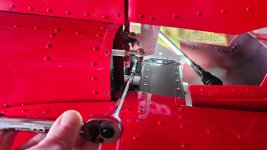
 If you get under and in front of the bolt and then pull the leading edge of the stab down, from the front, below and inboard a bit, looking between the stab and the tailcone you can see the threads of the bolt coming out of the nutplate. (need a good flashlight)