
The mechanical fuel pump should be putting out about the same as the electric fuel pump. You might have some debris in the mechanical pump leaving the intake valve in the mechanical fuel pump open slightly. The new mechanical pump may be faulty.The flow numbers look about right, 3.6 gph at full throttle and mixture, while retarding throttle to idle gives 1.6 gph. 23 psi with the electric boost pump on, about 10 psi while cranking on only the mechanical fuel pump. Those seem about right to me.

Van's Air Force
You are using an out of date browser. It may not display this or other websites correctly.
You should upgrade or use an alternative browser.
You should upgrade or use an alternative browser.
Troubleshooting ideas?
- Thread starter Tweetr
- Start date

You're thinking induction leak? I would think that would go lean (air consumption not sensed by the fuel servo). At this point I'll try anything.I haven’t seen a response to this post. Examine the intake runners for cracks or joint leaks. One technique I’ve witnessed is to have an assistant stand behind the engine, with an aerosol can of butane (used to refill lighters), and when the engine starts to run, spray the butane on suspected areas of the intake pipes. Stay away from the prop! If the engine starts to run smoother you’ve found a leak.
I don't think I've ever noticed fuel pressure on the mechanical pump while cranking. I know at cruise rpm the old mechanical put out 20 psi, and the electric 21 psi. I know when installing the new pump, it is possible to get the pump tongue beside the actuator and not engaged. Especially when installing in an RV-4 without taking the engine off! I was careful to feel the tongue engage, but the quarters are so tight and restricted that I can't swear it's correct.The mechanical fuel pump should be putting out about the same as the electric fuel pump. You might have some debris in the mechanical pump leaving the intake valve in the mechanical fuel pump open slightly. The new mechanical pump may be faulty.
If the tongue is not engaged, will I get fuel pressure on the mechanical pump? Does anyone know what pressure you see when only cranking?

A vacuum leak does cause a lean condition.You're thinking induction leak? I would think that would go lean (air consumption not sensed by the fuel servo). At this point I'll try anything.
Induction leaks have little impact on starting. You can remove a carb and spray some gas in the intake and it will kick over. Wont stay running, but you can’t even get yours to kick over, so doubt it is as simple as an induction leak. Your current problem is well beyond that IMHO. Have seen some pretty massive induction leaks and they never created a crank no start scenario. Idle is crap, but they start just fine, if primed properly.You're thinking induction leak? I would think that would go lean (air consumption not sensed by the fuel servo). At this point I'll try anything.
Last edited:
I would argue that none of those fixes caused a richer mixture.Well, that did not work at all! I'm starting to tear my hair out. I need all possible help here. At each step I seem to have made it worse, not better!
First I replaced the leaking mechanical fuel pump. Starting behavior remained the same, trying to run, but never coming up to idle. That's the starting video above.
Second I cleaned the injectors. The two injector videos above show the results: from a dribble to a smooth stream. Start attempts after that step just pop once, then nothing. Restart attempts don't even pop.
Third I found blue staining and fuel dripping from the outlet tube from the fuel selector to the electric boost pump. I remade that tube and installed it yesterday. Now it is definitely bone dry, no stains or leaks. But now on start attempts it never pops even once! Just spins.
In each case I've made it worse, not better. There are a couple of directions I'm thinking. I invite all suggestions. Am I on the right track?
1. Every fix I've tried would tend to make the mixture richer, not leaner. If it had been an over-lean problem, these steps should have improved matters. As it didn't, am I actually too rich? Flooding immediately? Could the failing mechanical pump have flung debris into the fuel servo? The flow numbers look about right, 3.6 gph at full throttle and mixture, while retarding throttle to idle gives 1.6 gph. 23 psi with the electric boost pump on, about 10 psi while cranking on only the mechanical fuel pump. Those seem about right to me.
2. Or perhaps, as some suggest above, it's really the LSE ignition failing in some mode that makes the timing erratic, and the leaking fuel pump was just ancillary. I began testing the electronic ignition IAW LSE instructions.
A. Checked the timing on the Hall Effect sensor. By our best estimate, using a laser line along the case split line, it may have been set a few degrees early. We reset it very accurately using the laser line and the integral timing LED. No change on starting: it doesn't even pop.
B. Checked the coils as instructed. Disconnected the spark plug wires from the coils and rocked the prop past both trigger points at TDC 1 and 3. Definitely jumping a spark all the way across that gap, a good 3/4" to 1" between them! The spark is jumping right at zero degrees as it should.
What else?
Back to the basics - fuel, air, spark.
Pull plugs. Leave leads connected and ground the threads. Crank and look for spark on all 4.
Attempt starting with just priming. Mixture rich. boost pump on for 3 seconds. Go ico and crank. If it doesn’t kick, prime for 4 seconds, then ico and crank again, then 5, etc. etc. if you can get it to kick over, THEN you begin to focus on fuel delivery. First stop is the servo. Have you cleaned the finger strainer? Any signs of air restriction, try starting with different throttle positions, etc.
If it won’t kick over, then on to compression testing as well as excessive ign advance. You can attempt to start only on the mag. If it starts and runs, you have identified the lse as the culprit. This may or may not work depending upon how powerful your starter is. You need a certain rpm to get a non impulse mag to spark. You can test this via the method above.
Crank no start is probably the most complex troubleshooting scenario. You may need some expert help. I could write pages on the subject. It is a matter of discrete component testing and eliminating variables.
Last edited:
If you jammed the pushrod, the mechanical pump will output nothing. Hoever, you have a boost pump, so should be able to continue testing. I would expect 0 psi from mechanical pump during cranking, but honestly never have looked.I don't think I've ever noticed fuel pressure on the mechanical pump while cranking. I know at cruise rpm the old mechanical put out 20 psi, and the electric 21 psi. I know when installing the new pump, it is possible to get the pump tongue beside the actuator and not engaged. Especially when installing in an RV-4 without taking the engine off! I was careful to feel the tongue engage, but the quarters are so tight and restricted that I can't swear it's correct.
If the tongue is not engaged, will I get fuel pressure on the mechanical pump? Does anyone know what pressure you see when only cranking?
Easy to test. Disconnect line from pump and crank. Fuel either comes out or it doesn’t.
Last edited:
Fuel might come out, but at what pressure?Easy to test. Disconnect line from pump and crank. Fuel either comes out or it doesn’t.
If you remove the line from the pump, there would be little force (at cranking RPM) and no pressure. It is a diaphragm pump, so inverse relationship between flow rate and pressure. This test is just to confirm the pump is working (pushrod not jammed) not its performance. OP mentioned a slight concern he may not have installed it correctly.Fuel might come out, but at what pressure?
That's a good idea. Much easier and less probability of screwing something up worse than pulling the mechanical pump off again and reinstalling it.If you jammed the pushrod, the mechanical pump will output nothing. Hoever, you have a boost pump, so should be able to continue testing. I would expect 0 psi from mechanical pump during cranking, but honestly never have looked
Easy to test. Disconnect line from pump and crank. Fuel either comes out or it doesn’t.
Today I have some time before the grandkids come over. Planning:
1. Shot glass test with graduated cylinders.
2. Pull Hall Effect Sensor cover and look for oil inside.
3. Disconnect input line from mechanical pump to fuel servo and crank. If I've screwed up installing the pump, it should show up here. (I wouldn't think I could get 10 psi while cranking from a misinstalled pump, but at this point I need to verify everything.)
I'm also mulling methods to eliminate the LSE ignition as a culprit. All are involved and/or expensive. I'm mulling replacing the non-impulse Slick mag with a Surefly, or similar, with zero-degree starting timing. That would allow starting on the right "mag" and would thereby isolate the LSE from the problem. If it went with a Surefly I could just plug it into the existing spark plugs and leads. Down side is that I would need to install a second battery and isolate it for redundancy.
An alternative would be to replace the non-impulse Slick mag with an impulse-coupled mag. I'm not sure what is involved. Does the replacement mag come with its correct drive gear? Is it a direct, drop-in replacement? If so, that would be my preference for overall ignition redundancy.
Last edited:

#1. Reminder to only use the boost pump for this test. Start with throttle cracked, mixture at cutout, boost pump on. Any flow with mixture at cutout? If not, then move the mixture forward perhaps a couple of inches. Have your buddy monitor the shot glasses for flow. When ~1/2 full go to cutout and turn off the boost pump, record the conditions for the data run along with how long of a test. If the shot glasses are about the same after ~20 seconds (like the attached) you have verified the fuel system with the exception of the mechanical fuel pump. If the fuel level in the shot glasses are low you have crud in the fuel system. If the level in the shot glasses are not about the same you most likely have crud in the spider. See attached photo.1. Shot glass test with graduated cylinders.
2. Pull Hall Effect Sensor cover and look for oil inside.
3. Disconnect input line from mechanical pump to fuel servo and crank. If I've screwed up installing the pump, it should show up here. (I wouldn't think I could get 10 psi while cranking from a misinstalled pump, but at this point I need to verify everything.)
I'm also mulling methods to eliminate the LSE ignition as a culprit. All are involved and/or expensive. I'm mulling replacing the non-impulse Slick mag with a Surefly, or similar, with zero-degree starting timing. That would allow starting on the right "mag" and would thereby isolate the LSE from the problem. If it went with a Surefly I could just plug it into the existing spark plugs and leads. Down side is that I would need to install a second battery and isolate it for redundancy.
An alternative would be to replace the non-impulse Slick mag with an impulse-coupled mag. I'm not sure what is involved. Does the replacement mag come with its correct drive gear? Is it a direct, drop-in replacement? If so, that would be my preference for overall ignition redundancy.
#3. I can see why you would be suspicious that you installed the mechanical fuel pump wrong as it seems to be marking the start of your problems. But I’d be concerned that you can cause damage to the engine if you continue to crank the engine. I’d first remove the pump to see verify it is installed correctly.
#3. If you really must crank the engine, remove a plug from each cylinder first. The starters can’t take cranking for long with the plugs in.
After verifying the mechanical fuel pump, to eliminate the LightSpeed from the equation try starting on just the mag (you will have to rewire the start switch to do this - another vote for igntions toggle switches instead of the Cessna key start switch). I have started Lycoming engines using a non-impulse mag and while not a permanent solution it can work. Make sure you have a hot battery and a solid starter to minimize the potential kick back.
Side note. On my first build (25 years ago) I had dual Lightspeed Plasma II+ ignitions. I had five failures in the first 300 hours, two hard failures in flight. I replaced them with dual pMags and they have ~1500 hours in that plane. Since then build #2 (RV-10) is flying with one pMag and one mag (new owner preference) and my current ride (RV-8) has been flying with dual pMags since first flight (650 hours now). The new RV-10 will have dual pMags, and I’m finally close to hanging the engine.
Attachments
Honestly...I'd consider the Surefly and Magneto and have no qualms running Surefly without a backup battery IF...the Magneto is Bendix. I've been doing that for 5 years now with three different airplanes...never a problem.#1. Reminder to only use the boost pump for this test. Start with throttle cracked, mixture at cutout, boost pump on. Any flow with mixture at cutout? If not, then move the mixture forward perhaps a couple of inches. Have your buddy monitor the shot glasses for flow. When ~1/2 full go to cutout and turn off the boost pump, record the conditions for the data run along with how long of a test. If the shot glasses are about the same after ~20 seconds (like the attached) you have verified the fuel system with the exception of the mechanical fuel pump. If the fuel level in the shot glasses are low you have crud in the fuel system. If the level in the shot glasses are not about the same you most likely have crud in the spider. See attached photo.
#3. I can see why you would be suspicious that you installed the mechanical fuel pump wrong as it seems to be marking the start of your problems. But I’d be concerned that you can cause damage to the engine if you continue to crank the engine. I’d first remove the pump to see verify it is installed correctly.
#3. If you really must crank the engine, remove a plug from each cylinder first. The starters can’t take cranking for long with the plugs in.
After verifying the mechanical fuel pump, to eliminate the LightSpeed from the equation try starting on just the mag (you will have to rewire the start switch to do this - another vote for igntions toggle switches instead of the Cessna key start switch). I have started Lycoming engines using a non-impulse mag and while not a permanent solution it can work. Make sure you have a hot battery and a solid starter to minimize the potential kick back.
Side note. On my first build (25 years ago) I had dual Lightspeed Plasma II+ ignitions. I had five failures in the first 300 hours, two hard failures in flight. I replaced them with dual pMags and they have ~1500 hours in that plane. Since then build #2 (RV-10) is flying with one pMag and one mag (new owner preference) and my current ride (RV-8) has been flying with dual pMags since first flight (650 hours now). The new RV-10 will have dual pMags, and I’m finally close to hanging the engine.
You havent reported back much...and my train of thought on issues like this are similar to Carl's. Except...a wire chafing or rubbing and causing an errant short does and can happen and since you said this issues was developing over a period of time. That alone, to me is way less time consuming to test all plugs and wires for actual spark and then moving on to fuel.
Are the plugs wet? are they brown, black, grey or white?
details, details, details...
Steve
As far as kickbacks with a metal prop, thats not as likely as with a light prop... I'd definitely disconnect Light Speed and try starting on your mag. That alone can answer a lot.
You keep focusing on the shot glasses, but your engine won't even kick over. Assuiming I am understanding your responses.When the engine is cold, it is kicking over on the fuel introduced via priming. If the engine won't even kick over, it is down to fuel priming, spark and compression (you can assume it is good enough if you feel the 4 comp events by turning the prop). You MUST pull the plugs and confirm they are producing sparks while cranking. This is fundemental crank no start troubleshooting. Why waste all that time buying new ign systems when you can confirm the LSE is sparking or possibly use your current mag; The the preferred method if the lse is suspect.That's a good idea. Much easier and less probability of screwing something up worse than pulling the mechanical pump off again and reinstalling it.
Today I have some time before the grandkids come over. Planning:
1. Shot glass test with graduated cylinders.
2. Pull Hall Effect Sensor cover and look for oil inside.
3. Disconnect input line from mechanical pump to fuel servo and crank. If I've screwed up installing the pump, it should show up here. (I wouldn't think I could get 10 psi while cranking from a misinstalled pump, but at this point I need to verify everything.)
I'm also mulling methods to eliminate the LSE ignition as a culprit. All are involved and/or expensive. I'm mulling replacing the non-impulse Slick mag with a Surefly, or similar, with zero-degree starting timing. That would allow starting on the right "mag" and would thereby isolate the LSE from the problem. If it went with a Surefly I could just plug it into the existing spark plugs and leads. Down side is that I would need to install a second battery and isolate it for redundancy.
An alternative would be to replace the non-impulse Slick mag with an impulse-coupled mag. I'm not sure what is involved. Does the replacement mag come with its correct drive gear? Is it a direct, drop-in replacement? If so, that would be my preference for overall ignition redundancy.
No need to mess with fuel pump, as the engine can be primed and run on the boost pump. Though you should confirm the pushrod is not jammed.
If it won't even kick over, you are wasting your time working on reasons it won't stay running. That is step 2.
Last edited:
you should also know that plugs can foul and not spark when soaked with raw gas. keep that in mind with repeated testing.You keep focusing on the shot glasses, but your engine won't even kick over. Assuiming I am understanding your responses.When the engine is cold, it is kicking over on the fuel introduced via priming. If the engine won't even kick over, it is down to fuel priming, spark and compression (you can assume it is good enough if you feel the 4 comp events by turning the prop). You MUST pull the plugs and confirm they are producing sparks while cranking. This is fundemental crank no start troubleshooting. Why waste all that time buying new ign systems when you can confirm the LSE is sparking or possibly use your current mag; The the preferred method if the lse is suspect.
No need to mess with fuel pump, as the engine can be primed and run on the boost pump. Though you should confirm the pushrod is not jammed.
If it won't even kick over, you are wasting your time working on reasons it won't stay running. That is step 2.
The mechanical pump has a 25 lbs. spring pushing the diaphram back after the arm compresses the spring. There is an in and out side of the mechanical pump. The pump puts out the same pressure whether its running 1 rpm or 2700 rpm's. The only difference is the flow rate. OP needs to check the pressure on the out side of the pump.If you remove the line from the pump, there would be little force (at cranking RPM) and no pressure.
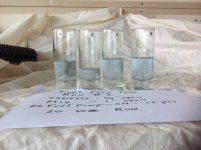
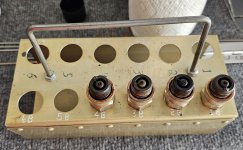
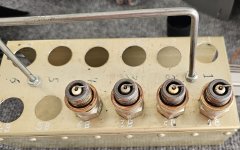
Okay, here is the shot glass test conducted exactly as recommended. Throttle cracked, mixture ended up a couple of inches forward. 30 seconds of flow. Indicating 2.0 gph, 23.4 psi on the electric boost pump. The shot glasses are lined up left to right, #1,2,3,4.#1. Reminder to only use the boost pump for this test. Start with throttle cracked, mixture at cutout, boost pump on. Any flow with mixture at cutout? If not, then move the mixture forward perhaps a couple of inches. Have your buddy monitor the shot glasses for flow. When ~1/2 full go to cutout and turn off the boost pump, record the conditions for the data run along with how long of a test. If the shot glasses are about the same after ~20 seconds (like the attached) you have verified the fuel system with the exception of the mechanical fuel pump. If the fuel level in the shot glasses are low you have crud in the fuel system. If the level in the shot glasses are not about the same you most likely have crud in the spider. See attached photo.
#3. I can see why you would be suspicious that you installed the mechanical fuel pump wrong as it seems to be marking the start of your problems. But I’d be concerned that you can cause damage to the engine if you continue to crank the engine. I’d first remove the pump to see verify it is installed correctly.
#3. If you really must crank the engine, remove a plug from each cylinder first. The starters can’t take cranking for long with the plugs in.
After verifying the mechanical fuel pump, to eliminate the LightSpeed from the equation try starting on just the mag (you will have to rewire the start switch to do this - another vote for igntions toggle switches instead of the Cessna key start switch). I have started Lycoming engines using a non-impulse mag and while not a permanent solution it can work. Make sure you have a hot battery and a solid starter to minimize the potential kick back.
Side note. On my first build (25 years ago) I had dual Lightspeed Plasma II+ ignitions. I had five failures in the first 300 hours, two hard failures in flight. I replaced them with dual pMags and they have ~1500 hours in that plane. Since then build #2 (RV-10) is flying with one pMag and one mag (new owner preference) and my current ride (RV-8) has been flying with dual pMags since first flight (650 hours now). The new RV-10 will have dual pMags, and I’m finally close to hanging the engine.
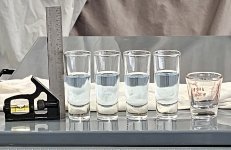
Flow looks very even. #3 very slightly less, but not significant in my estimation.
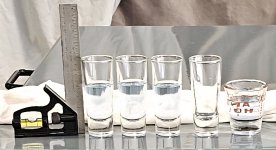
Amount flowed in 30 seconds is just under 4 teaspoons, or 0.67 oz.
I also tested metering with mixture lever
(0.0 gph and no flow at ICO, 2.0 gph at half)
And with purge valve
(0.0 gph with no flow at ICO, 2.0 gph at full run)
And with throttle
(1.5 gph at full idle, 2.0 gph cracked 1/8)
I think I can rule out distribution through the flow divider (spider.) Agreed?
The fuel pressure measuring line is indeed on the outlet fitting of the mechanical pump. While cranking, with the electric boost pump off, I show 10 psi on the mechanical pump. You can see the cranking speed in the first video. The Odyssey battery spins the starter very briskly.The mechanical pump has a 25 lbs. spring pushing the diaphram back after the arm compresses the spring. There is an in and out side of the mechanical pump. The pump puts out the same pressure whether its running 1 rpm or 2700 rpm's. The only difference is the flow rate. OP needs to check the pressure on the out side of the pump.
Yes, I have also attempted several starts with the electric boost pump on while cranking. No difference in the results.
Agreed.I think I can rule out distribution through the flow divider (spider.) Agree?
Carl
at lower flow rates when back pressure exists, yes it will produce pressure. at full flow (approx 45 gph) there is no presure. between full flow and around mid 30's gph, the pressure tapers up as the flow rate decreases. so with nothing coonected it doesn't really produce pressure, just flow. this is why folks with carbs can see as low as .5 - 1 psi at full power even though they get 5-6 at idle.The mechanical pump has a 25 lbs. spring pushing the diaphram back after the arm compresses the spring. There is an in and out side of the mechanical pump. The pump puts out the same pressure whether its running 1 rpm or 2700 rpm's. The only difference is the flow rate. OP needs to check the pressure on the out side of the pump.
as long as he is using the boost pump to start, the pressure of thye mech pump is not relevant to his immediate problem.
Last edited:
Oh...I didn't notice anywhere you mentioning a purge valve. Is it possible that the purge valve was open at the time. Maybe you didn't notice?I also tested metering with mixture lever
(0.0 gph and no flow at ICO, 2.0 gph at half)
And with purge valve
Next time you try to start the engine, Just for fun, pull some spark plugs after trying to start and cranking the engine little bit and see if the plugs are wet with gas. If they are, it's not a fuel problem. If there wet, it's a ignition problem.
Here is what I did..... https://vansairforce.net/threads/placed-timing-mark-on-back-of-prop.181641/I agree on the Lightspeed too. My first thought with the hard starting some months ago was the Lightspeed, because the problem only manifested during start when the electronic ignition was on and the magneto off. I reset the timing using the built-in light on the Hall Effect sensor. Did not find any material change. I've been loath to get up there behind the wirling prop with a timing light, but that may become necessary to verify the timing. Any experience doing that on the 2-seat RVs? How do you minimize danger?
Second test:
Checked magneto timing on the right (non-impulse) Slick mag. Buzzed at 25 degrees (maybe just a hair early, like a half degree.)
Checked continuity on all 4 Slick spark plug leads. Good continuity. I think I can eliminate the right magneto as the culprit. And the right mag is grounded out during start anyway. Just ruling out everything I can.
Checked magneto timing on the right (non-impulse) Slick mag. Buzzed at 25 degrees (maybe just a hair early, like a half degree.)
Checked continuity on all 4 Slick spark plug leads. Good continuity. I think I can eliminate the right magneto as the culprit. And the right mag is grounded out during start anyway. Just ruling out everything I can.
Last edited:
Next test: continuity of plug wires on the LSE electronic ignition:
15" leads measure 56 ohms
22" leads measure 77 ohms
By my research these MSD 8.5 mm "Super Conductor Spark Plug Wires" should measure 40-50 ohms per foot. So mine look like they measure right where they should. Right?
15" leads measure 56 ohms
22" leads measure 77 ohms
By my research these MSD 8.5 mm "Super Conductor Spark Plug Wires" should measure 40-50 ohms per foot. So mine look like they measure right where they should. Right?
Just a side note for your Lightspeed Hall Effect sensor. I timed mine using the light on the sensor module, exactly as per the instructions. Based on advice on this forum I decided to confirm the timing using a timing light. It was showing four degrees advanced with the timing light! So, even if you have the hall effect module you really must double check using a timing light.
Next test: fuel flow on only the mechanical fuel pump, cranking with the plugs removed, throttle mixture & prop full forward, fuel line disconnected from the fuel servo, pumping into a clear milk jug.
We flowed 18 oz in 30 seconds, showing zero psi (as expected) and 12 gph.
That looks and sounds right. I'll do the math in a minute, but we have verified fuel flow with the mechanical pump.
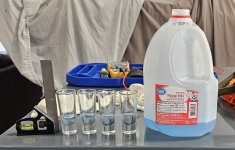
We flowed 18 oz in 30 seconds, showing zero psi (as expected) and 12 gph.
That looks and sounds right. I'll do the math in a minute, but we have verified fuel flow with the mechanical pump.
Right. Don't forget to check the LSI plugs center electrode resistant. Should be 4K to 5K.Next test: continuity of plug wires on the LSE electronic ignition:
15" leads measure 56 ohms
22" leads measure 77 ohms
By my research these MSD 8.5 mm "Super Conductor Spark Plug Wires" should measure 40-50 ohms per foot. So mine look like they measure right where they should. Right?
Time to start on just the mag?
Carl
Yes, that's a good idea. I'll try that.Disable the LSE. (Disconnect coils or whatever is easy). Remove mag p lead. Start engine. Report back.

How about the spark plug wires. Just to double check. The firing order is 1-3-2-4.
I recommended looking for obstructions in the servo. No feedback. Don’t think the op likes my ideas so have stopped offering them.This sounds a bit like a "red shop rag" problem. Various posters have suggested Fuel & Spark, which is good -- but what about air? Is the path from behind the air filter to/through the servo, intake runners, all the way to the valves, clear?
If I understand it right, the mag does not have an impulse coupler. If so, time it to TDC or a few degrees past.Right. Don't forget to check the LSI plugs center electrode resistant. Should be 4K to 5K.
Time to start on just the mag?
Carl
Shut off the LSI for this test. Confirm that the mag plug wires are in the correct location. Confirm that the PLUGS are clean.
Starting and running at TDC on one ignition source allows you to confirm that all 4 plugs have fire.
If you don't get a good start with good spark, check fuel supply by giving a shot of Berryman or Brakleen in the throttle body.
If you have compression, AIR, FUEL (Berryman) and SPARK, it will start and run for a few seconds
Last edited:
I agree with what Gasman said.
A good mag on my mag tester will jump a spark ( 0.215 gap ) at around 175 rpm's. A high torque starter can spin the engine about 250 rpm's or a little more. If the mag is good and there is gas in the cylinder, it will at least run for a few seconds on a prime.
A good mag on my mag tester will jump a spark ( 0.215 gap ) at around 175 rpm's. A high torque starter can spin the engine about 250 rpm's or a little more. If the mag is good and there is gas in the cylinder, it will at least run for a few seconds on a prime.

1bigdog
Well Known Member
Not a bad direction given it would sound and act much like some of the symptoms. And if the obstruction is shifting during different loads, or lack of load when off things would get better/worse. One possibility would be if the alt air port had been opened at some point. Or the carb heat door, depending on how this got modified. I’m guessing he’s tried with the airbox off. If not thats a very good place to start, then break out the borescope.I recommended looking for obstructions in the servo. No feedback. Don’t think the op likes my ideas so have stopped offering them.
I do like that, “red shop rag” problem. Never heard that one.
Norman CYYJ
Well Known Member
Or are we all just being scammed.Not a bad direction given it would sound and act much like some of the symptoms. And if the obstruction is shifting during different loads, or lack of load when off things would get better/worse. One possibility would be if the alt air port had been opened at some point. Or the carb heat door, depending on how this got modified. I’m guessing he’s tried with the airbox off. If not thats a very good place to start, then break out the borescope.
I do like that, “red shop rag” problem. Never heard that one.
I actually provided a series of steps that made sense for a crank no start scenario. Air obstruction is more common in poor running scenarios (the low rpm of starting makes it easier to pull the air past the obstruction. Once it starts, the choking becomes more severe). Here the engine won't even kick on starting, therefore spark & fuel (prime specifically) are more likely.Not a bad direction given it would sound and act much like some of the symptoms. And if the obstruction is shifting during different loads, or lack of load when off things would get better/worse. One possibility would be if the alt air port had been opened at some point. Or the carb heat door, depending on how this got modified. I’m guessing he’s tried with the airbox off. If not thats a very good place to start, then break out the borescope.
I do like that, “red shop rag” problem. Never heard that one.
Next time you try to start the engine, Just for fun, pull some spark plugs after trying to start and cranking the engine little bit and see if the plugs are wet with gas. If they are, it's not a fuel problem. If there wet, it's a ignition pro
And based solely on the video...seeing the black smoke puffs...your direction seem plausible.I actually provided a series of steps that made sense for a crank no start scenario. Air obstruction is more common in poor running scenarios (the low rpm of starting makes it easier to pull the air past the obstruction. Once it starts, the choking becomes more severe). Here the engine won't even kick on starting, therefore spark & fuel (prime specifically) are more likely.
By any chance, do you happen to have one of those PVC valves connecting the oil breather line to the exhaust? If so, disconnect that and try to start the engine. I have seen more than one engine that would not start when the PVC was connected. Some engines would only start with the electric fuel pump running.......then die when the electric fuel pump was shut off. My guess is that eventually the PVC got clogged.
My $.02 this morning.
Steve
My $.02 this morning.
Steve
Well, this is just maddening! Did I mention my RV-4 is stranded in a friend's hangar? I did the above testing and haven't yet found anything wrong:I would argue that none of those fixes caused a richer mixture.
Back to the basics - fuel, air, spark.
Pull plugs. Leave leads connected and ground the threads. Crank and look for spark on all 4.
Attempt starting with just priming. Mixture rich. boost pump on for 3 seconds. Go ico and crank. If it doesn’t kick, prime for 4 seconds, then ico and crank again, then 5, etc. etc. if you can get it to kick over, THEN you begin to focus on fuel delivery. First stop is the servo. Have you cleaned the finger strainer? Any signs of air restriction, try starting with different throttle positions, etc.
If it won’t kick over, then on to compression testing as well as excessive ign advance. You can attempt to start only on the mag. If it starts and runs, you have identified the lse as the culprit. This may or may not work depending upon how powerful your starter is. You need a certain rpm to get a non impulse mag to spark. You can test this via the method above.
Crank no start is probably the most complex troubleshooting scenario. You may need some expert help. I could write pages on the subject. It is a matter of discrete component testing and eliminating variables.
1. Pulled all 8 plugs. Verified spark at 0 degrees and 180 degrees on the LSE, 25 degrees on the Slick mag. Friend thinks the spark looks "weak." I just ordered the new-style coils from LSE. I'll install those when they arrive just to eliminate 25-year-old coils.
2. Lots of start attempts with lots of different techniques from no purge or prime to full purge and lots of prime. Ground crew reports seeing fuel mist from all 4 exhaust pipes after 30-ish seconds of start attempts. The best I've gotten is a few chuffs, then nothing further.
3. Compression test done cold (obviously.) No cheating, no rocking the prop. Just straight to TDC on all 4 cylinders and pressurize:
77, 77, 78, 76. No hissing, no leaks. Pulling through by hand feels normal and the same on all 4.
4. Yesterday I rewired my start button straight to the start solenoid, bypassing the ignition toggle switches, so I can start in any ignition scenario. Tried starts on mag only (non-impulse) with absolutely no pops. Tried starts with both ignitions on. That's when I got a few chuffs, then nothing. I disconnected the mag P-lead to eliminate the mag toggle switch. No pops.
5 (pending): I've purchased an inductive timing light. I'll brave the whirling prop and try to verify the timing on both ignitions.
To reiterate earlier tests, I've pretty much eliminated fuel delivery. Shot glass test shows even flow and the rate is what Don Rivera specified it should be, modulating with throttle, mixture, and purge valve.
I am just deeply frustrated. The few remaining ideas I have are to replace the coils, pull the Hall Effect Sensor and look for oil inside. After that I'm about to send the fuel servo and flow divider to Airflow Performance, send the Plasma II+ to Lightspeed Engineering, and send the Slick mag to a local shop for a 500-hour overhaul. And at that point the airplane will be in his hangar for a couple of months.
Last edited:
Oh, come on. I've been busy trying all these ideas! Yes, I still need suggestions.I recommended looking for obstructions in the servo. No feedback. Don’t think the op likes my ideas so have stopped offering them.
Yes it is. We pulled the air filter to elimnate that. From there we can just see right through the butterfly valve, into the airbox, and into the mouths of the induction runners.This sounds a bit like a "red shop rag" problem. Various posters have suggested Fuel & Spark, which is good -- but what about air? Is the path from behind the air filter to/through the servo, intake runners, all the way to the valves, clear?
Hm, that's a good idea. Might as well try biasing the mag timing just as a troubleshooting attempt. Hadn't thought of that one.If I understand it right, the mag does not have an impulse coupler. If so, time it to TDC or a few degrees past.
Shut off the LSI for this test. Confirm that the mag plug wires are in the correct location. Confirm that the PLUGS are clean.
Starting and running at TDC on one ignition source allows you to confirm that all 4 plugs have fire.
If you don't get a good start with good spark, check fuel supply by giving a shot of Berryman or Brakleen in the throttle body.
If you have compression, AIR, FUEL (Berryman) and SPARK, it will start and run for a few seconds
Hm. No PVC valve, but I do have a Christen inverted system. That's an interesting thought: disconnect the breather hose at the engine fitting to eliminate a stuck inverted selector valve. Easy enough; I'll try it.By any chance, do you happen to have one of those PVC valves connecting the oil breather line to the exhaust? If so, disconnect that and try to start the engine. I have seen more than one engine that would not start when the PVC was connected. Some engines would only start with the electric fuel pump running.......then die when the electric fuel pump was shut off. My guess is that eventually the PVC got clogged.
My $.02 this morning.
Steve
Yes, all 8 plugs were wet and lightly coated dark brown. I cleaned them while out just with solvent and a cloth.Next time you try to start the engine, Just for fun, pull some spark plugs after trying to start and cranking the engine little bit and see if the plugs are wet with gas. If they are, it's not a fuel problem. If there wet, it's a ignition problem.
Here are the before and after pictures of the Tempest plugs on the bottoms of all 4 cylinders (magneto-fired):
Really sounds like the timing is way off. Meaning the spark plug wires are shorting out or maybe wired incorrectly. I would be glad to test your mag for you if ya want to send it to me.Tried starts on mag only (non-impulse) with absolutely no pops. Tried starts with both ignitions on. That's when I got a few chuffs, then nothing. I disconnected the mag P-lead to eliminate the mag toggle switch. No pops.
Ya can't really test the mag on the engine except for whether it works or not. Ya have to pull the mag and put it on a test bench to find fault at different rpm's, from start rpm, to 3000 rpm is what I test to.Yes, all 8 plugs were wet and lightly coated dark brown. I cleaned them while out just with solvent and a cloth.
Here are the before and after pictures of the Tempest plugs on the bottoms of all 4 cylinders (magneto-fired):
View attachment 96561
View attachment 96562
So, that points you to excessive fuel delivery and failure to kick from excessively rich mixture. Pull the 4 ss lines off the flow divider. Mixture to ICO and turn on the boost pump. Does fuel come out? If so, you have a problem inside the servo and it needs to go to don. If fuel doesn’t cone out, next step is to insure that the piston inside the flow divider is going fully down. At idle, the flow divider is what restricts fuel flow. If the piston is stuck in the up position, it will be too rich at idle.. Ground crew reports seeing fuel mist from all 4 exhaust pipes after 30-ish seconds of start attempts. The best I've gotten is a few chuffs, then nothing further.
.
Worth repeating that you cannot endlessly crank away with rich mixtures. Once the plugs are soaked in raw gasoline, they fail to spark. Need to occasionally pull one and insure they are dry. The black stuff in the pic is fine. I am talking about shinny liquid gasoline.
Last edited:
For the purposes of his current problem, I believe you can. Just put a timing light on a plug wire and crank. If the light flashes, that plug is firing. If it doesn’t flash, that plug is not firing. Point the gun at the flywheel and you will know exactly where in the rotation cycle that it is firing. Do need to be cautious of a badly drifted e gap. When the points wear, the egap moves and this reduces the spark energy, sometimes enough to not fire the charge.Ya can't really test the mag on the engine except for whether it works or not. Ya have to pull the mag and put it on a test bench to find fault at different rpm's, from start rpm, to 3000 rpm is what I test to.
Engine won’t start now. Who cares if the mag will fire correctly at 3000 rpm. The immediate problem is insuring it will fire at cranking rpm and idle rpm. Once it starts, we can worry about how it does at 3000 rpm. This is a tough problem and must keep the eye on the prize. Step one is simply get it to attempt to start.
Last edited:
