Van's Air Force

The definitive Van's Aircraft support community! Buying, building or flying an RV? Join our exclusive family of mentors and enthusiasts!

Check your tubes!

RV8Squaz

Well Known Member
Hello.

The rudder cables ride inside a piece of nylon tubing where they exit the fuselage near the tail of the RV-8. I'm sure it's similar in other models. The tubing is held in place with an adel clamp affixed to the the side skin on the inside. In any case, over 2000 hours and 18 years of use, the rudder cables have worn right through the tubing and started wearing into the aluminum side skin. Fortunately, the cables are tougher than the aluminum and didn't damage the cables. However, the aluminum is worn a bit. I'll dress it up a bit with a round file and scothbrite to prevent it from cracking . I caught it early thank goodness.

Any guesses what type of tubing Vans might have used? There's Poly-Flow, Nylo-Seal, and Nylaflow. I'm guessing it's Nylaflow based on the description in the ACS catalog. I'll probably call Vans tomorrow.

Jerry
 
Let us know what kind of tubing Jerry. I rotated mine three times through the years and there is almost no meat left on the sidewall.
 
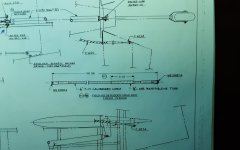
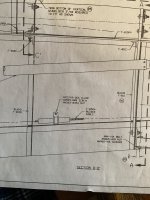
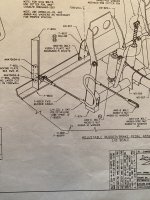
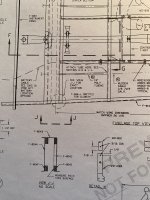
The plans specify 3/8" x .058 polyethelene tube over the rudder cable. It is probably slipped over the cable before the clevis fittings are swaged on. Maybe replacement tubing could be slit so that it can be fit over the cable and oriented so the slit is away from where the cable rubs.

20250818_173159.jpg
 
The plans specify 3/8" x .058 polyethylene tube over the rudder cable. It is probably slipped over the cable before the clevis fittings are swaged on. Maybe replacement tubing could be slit so that it can be fit over the cable and oriented so the slit is away from where the cable rubs.

View attachment 95271
Rather than making a straight slit, I suggest making a spiral slit. That will prevent the cable from working it's way out of the tubing. Perhaps wrap a tie wrap around each end of the slit tubing to keep it closed.
 
Let us know what kind of tubing Jerry. I rotated mine three times through the years and there is almost no meat left on the sidewall.
Will do. Good to know that mine isn’t the only one wearing through the tubing.
 
The plans specify 3/8" x .058 polyethelene tube over the rudder cable. It is probably slipped over the cable before the clevis fittings are swaged on. Maybe replacement tubing could be slit so that it can be fit over the cable and oriented so the slit is away from where the cable rubs.

View attachment 95271
Thank you Paul. I'm pretty sure it's polyethylene now. Oddly, the material is not specified in that section of the plans on my -8. I did find a reference to poly in two other places: the rudder pedal slide assembly and the part of the cable that runs between two bulkheads under the floor. Also, the Nylaflow which is what I originally thought it might be, isn't available in the Spruce catalog for sizes larger than 1/4" The Poly-Flow is available in 3/8". I'll probably just go with that.

Jerry
 

Attachments

  • IMG_4865.jpeg
    IMG_4865.jpeg
    2.2 MB · Views: 33
  • IMG_4863.jpeg
    IMG_4863.jpeg
    2.4 MB · Views: 34
  • IMG_4864.jpeg
    IMG_4864.jpeg
    2.3 MB · Views: 33
Rather than making a straight slit, I suggest making a spiral slit. That will prevent the cable from working it's way out of the tubing. Perhaps wrap a tie wrap around each end of the slit tubing to keep it closed.
Thanks Charlie. I was planning on a spiral slit. The tie wrap is a good idea. It's held by the adel clamp on the forward end. And on my airplane, I have the little fairing that held the aft end in place and made a nice exit for the tubing and cable.

Jerry
 
I’ll bet you will find evidence of the tubing being slit, and I’ll also wager it was a straight cut.
2000 hrs, I’d put it back just the way you find it. Let us know what you find.
 
Thanks Charlie. I was planning on a spiral slit. The tie wrap is a good idea. It's held by the adel clamp on the forward end. And on my airplane, I have the little fairing that held the aft end in place and made a nice exit for the tubing and cable.

Jerry
One other trick is to put a layer of heat shrink over the slit tube once you get t on the cable. The unshrunk heatshrink will go over the cable ends, then you shrink it down to keep the poly tube in place.
 
I’ll bet you will find evidence of the tubing being slit, and I’ll also wager it was a straight cut.
2000 hrs, I’d put it back just the way you find it. Let us know what you find.
Thanks JonJay. There is no slit other than the one I made to cut the tube off.
 
Interesting. Maybe they added the tube in assembly in later kits. Thanks
…or maybe I’m just all wet!
Mine is a relatively early-8 kit. My s/n is 80383. However I probably didn’t order the fuselage until 2000 or 2001. They must have installed the tube before the ends were swaged.
 
Good thing to check at my upcoming inspection! My RV-9A kit was an early SN in 2000 but came with the polyethene tubing on the rudder cables.

See link below--did anyone use these rudder cable fairings? I did--I wonder if they would make any difference in terms of polyethene the tubing wear? My rudder cables seemed like a very nice straight-shot to the rudder horn attach points, so it's hard to understand how the rudder cables would cut completely though the polyethene tubing. So, it makes me wonder if there's a difference between the "A" and "non-A" models here?

 
Last edited:
Good thing to check at my upcoming inspection! My RV-9A kit was an early SN in 2000 but came with the polyethene tubing on the rudder cables.

See link below--did anyone use these rudder cable fairings? I did--I wonder if they would make any difference in terms of polyethene the tubing wear? My rudder cables seemed like a very nice straight-shot to the rudder horn attach points, so it's hard to understand how the rudder cables would cut completely though the polyethene tubing. So, it makes me wonder if there's a difference between the "A" and "non-A" models here?

I have those fairings on my airplane. They had nothing to do with the wear I found on my tubes. The wear was on the inboard side of the tubing against the side skin. It appears to be a straight shot with the rudder centered. However, when the rudder is deflected, the outboard cable is drawn inboard. For example , if the rudder is deflected right, the left cable is drawn inboard toward the side of the fuselage.
 
I have those fairings on my airplane. They had nothing to do with the wear I found on my tubes. The wear was on the inboard side of the tubing against the side skin. It appears to be a straight shot with the rudder centered. However, when the rudder is deflected, the outboard cable is drawn inboard. For example , if the rudder is deflected right, the left cable is drawn inboard toward the side of the fuselage.
I was just thinking that it might be harder to detect for wear with these fairings installed. So, the wear can be seen from the outside of the aircraft is what your saying?
 
I was just thinking that it might be harder to detect for wear with these fairings installed. So, the wear can be seen from the outside of the aircraft is what your saying?
Yes. That’s how I discovered the wear. I wish I had taken a picture before I removed them. The wear was visible on the aft end, on the inboard side of the tubing. I placed mine so that the poly tube extended about 1/16” aft of the aft edge of the fairing. I think this time I’m going to go for 1/4”.
 
I rotated them in the -9 a tiny bit every couple of years as it is obvious that isn't a "lifetime" assembly. I didn't fly it long enough to wear them through on all sides like Vlad.
 
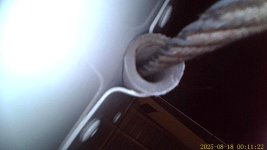
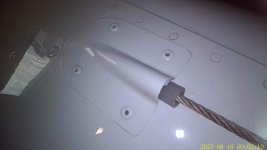
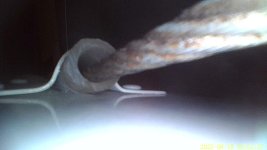
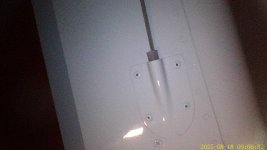
These are what my polyethene rudder cable tubes look like after 21-years and 1800 hours of operation on my RV-9A. The left tube shows some inside wear but at the end only. And, the right side shows virtually no wear. I will probably rotate them 180 degrees at my next condition inspection. The cables came from Vans with a light coating of grease on them and still have some residual grease (always been hangared). More residual grease appears to be on the right side cable. So, I will probably reapply a light coating of Aeroshell grease on both cables to reduce frictional wear. The brown residue you see on the cables is the residual grease.
 

Attachments

  • 1_Poly_Left_Side.JPG
    1_Poly_Left_Side.JPG
    78.5 KB · Views: 60
  • 2_Fairing_Left.JPG
    2_Fairing_Left.JPG
    76 KB · Views: 57
  • 3_Poly_Right_Side.JPG
    3_Poly_Right_Side.JPG
    75 KB · Views: 57
  • 4_Fairing_Right.JPG
    4_Fairing_Right.JPG
    81.5 KB · Views: 58
Last edited:
Back
Top