Van's Air Force

The definitive Van's Aircraft support community! Buying, building or flying an RV? Join our exclusive family of mentors and enthusiasts!

Home Brewed Oxygen System

N427EF

Well Known Member
Sponsor
I am considering an installed, home brewed oxygen system in my RV-10. Any advice or experience you may have is much appreciated.
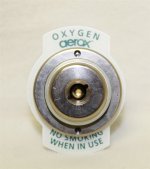
My plan is to install 4 flush oxygen outlets (Aerox) in my overhead console for a convenient plug in of their canulas, no questions here.
A one to four oxygen hose (splitting to each outlet), leading from a bottle mounted in the baggage compartment. This would be a D size bottle
with manual open and close valve along with a blue tooth sensor and app, also from Aerox. This would allow for phone monitoring up front in the cockpit of pressure and quantity of O2.
It would require turning on the O2 valve before a flight as you cannot reach the bottle from the pilot or copilots seat. I do not want the expensive solenoid on and off switch for O2. Most of my flying is not done at oxygen levels however, on my recent trip to OSH, I found the use of oxygen quite handy. Pretty straight forward so far.
Here is where I am conflicted. Having dealt with refill costs and being an experimenter, I have come across medical O2 equipment and bottles at a much cheaper price and convenience.
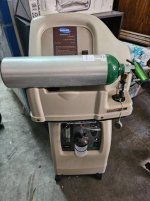
I have acquired an Invacare oxygen generator along with a refill compressor plus 2 D bottles and a large refill tank all for the paltry sum of $350.
The medical O2 bottles use a CGA-870 style regulator and are not interchangeable with Aerox style fittings.
The big question: Is there any good reason not to use one of those bottles instead of the Aerox Bottle? I can fill the medical bottle with Invacares trouble free set up. They too are made of lightweight aluminum and seem to be of the same quality and pressure ratings as aviation DOT bottles.
Their regulator is a bit bulkier but delivers 25LPM enough to supply 4 people all at once.
I do own an oxy/acetylen bottle but a cascading refill system would require a second bottle, now going for the price of about $400 plus cascade and transfill hoses.
Maybe someone has a better idea?
 
I have acquired an Invacare oxygen generator along with a refill compressor plus 2 D bottles and a large refill tank all for the paltry sum of $350.
Congrats on that acquisition! Wow! Can't really comment on the rest, as I use an oxygen concentrator, but can confirm that flying with o2 keeps me feeling fresher than without. If you also make it available to your PAX, they will be less grumpy after a long flight at altitude.
 
Ernst - my only comment s that after doing a couple of “installed” systems, would be worried about not having the capability to turn the bottle off at the valve once you’re in flight. Way back in my youth, I was a technical diver, and our dive shop built and installed high pressure systems. I have had lines and fittings leak/fail, and it can get exciting if you can’t isolate the bottle quickly if it isn’t in reach. I have pneumatic shut-off valves (Mountain High) on both of my installed systems - a bit pricey, but not stupid expensive.

I really would love to have an Inogen system in our RV-3, but the ones I tried years ago had no remote control, and the box has to be in the baggage compartment. I just can’t get happy with something that I can’t control from the pilot seat in flight.
 
With the remote manual shutoff valve, I would have 2 concerns. The first and most likely is that you takeoff without turning it on, then either have to stay low, or land and turn it on. This creates a scenario where you might choose to press your limits of hypoxia rather than stay low or land.
The other is fire risk in a crash. It would be preferred to shut oxygen off is you are in an off field landing situation to prevent an oxygen leak from accelerating a fire.
 
Ernst - my only comment s that after doing a couple of “installed” systems, would be worried about not having the capability to turn the bottle off at the valve once you’re in flight. Way back in my youth, I was a technical diver, and our dive shop built and installed high pressure systems. I have had lines and fittings leak/fail, and it can get exciting if you can’t isolate the bottle quickly if it isn’t in reach. I have pneumatic shut-off valves (Mountain High) on both of my installed systems - a bit pricey, but not stupid expensive.

I really would love to have an Inogen system in our RV-3, but the ones I tried years ago had no remote control, and the box has to be in the baggage compartment. I just can’t get happy with something that I can’t control from the pilot seat in flight.
Do you have a part number for the shut-off valve?
 
I was looking for too on Aerox website but I am not sure what it looks like.
With the remote manual shutoff valve, I would have 2 concerns
Your concerns are well founded and are mine as well.
The last thing I want to do is convert my otherwise trouble free RV-10 and turn it into a fire trap.
I just can’t get happy with something that I can’t control from the pilot seat in flight.
I would much prefer this method and will explore that option.
To be clear, I bought the Invercare system as a refill option not an on board oxygen generator.
Paul, it is my understanding that passed the valve on the bottle we get low pressure O2 supply?
I realize leaks can occur on almost any installation but the flush mounted plug ins on the ceiling would stop flowing
once the canulas are removed.
BTW: The Invacare Platinum 10 that I bought is in great shape but needs a set of new Oxygen sieves to the tune of about $250, so the "dealio" doesn't look that great anymore.
 
Paul, are you referring to this pneumatic valve?

 
Paul, are you referring to this pneumatic valve?

Yes - that looks like the latest version - the ones I have are the previous generation, but they look functionally the same. They are both a remote valve and first stage regulator (at least mine are…..)
 
I am not cheap, a bit frugal probably but the MH is $2300? I would call that borderline "stupid expensive"

The one below is made of stainless steel and has a 2900psi rating. I am aware that it would need to be super clean and free of any type of grease to be safe.
A cockpit switch would act as a shut off in case of an emergency and it would normally be closed unless power is applied, either by turning the master on or manually flipping the switch when O2 is needed. A regulator can be set to max flow to provide O2 supply to all four outlets and the needle valve on the canulas can be adjusted as needed depending on altitude.
Am I entering dangerous territory by considering a valve such as the one listed below?


I remember looking at medical oxygen sometime back and finding it was allowed to be much more humid. The concern is the water content could freeze in the hose or valve cutting off oxygen. I just looked this up and it appears most medical oxygen suppliers dry the air to the same degree as aviation oxygen but it doesn't have to and you have no idea what your concentrator is producing. Also, it doesn't meet the regs when oxygen is required.
 
Yes - that looks like the latest version - the ones I have are the previous generation, but they look functionally the same. They are both a remote valve and first stage regulator (at least mine are…..)
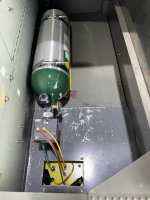
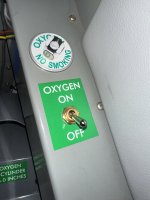
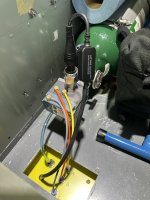
I did this on my RV-8A and I love it. The OP is using a Bluetooth sensor I did the same. I would never go back! In the summer time flying at 17k and 36F outside is perfection! I was going to write up a post on my permanent/removable configuration but haven’t had the time. The idea is the bulk head connections allow for you to completely remove tank, lines and bracket to allow for full use of baggage area. I can do one if there is interest. Here are the pics.

Future considerations are to add a cockpit selectable blow off valve to vent over board in case of forced landing.
 

Attachments

  • IMG_9589.jpeg
    IMG_9589.jpeg
    1.3 MB · Views: 130
  • IMG_9605.jpeg
    IMG_9605.jpeg
    1.2 MB · Views: 117
  • IMG_9591.jpeg
    IMG_9591.jpeg
    1.8 MB · Views: 117
  • IMG_9757.jpeg
    IMG_9757.jpeg
    1.7 MB · Views: 112
Last edited:
I should have expected someone would request chapter and verse, not a bad thing by the way. And the answer may mean we would be okay because according to AI and my quick reading of the AC:

The FAA discusses the use of SAE International Aerospace Standard AS8010 in Advisory Circular (AC) 61-107B, titled Aircraft Operations at Altitudes Above 25,000 Feet Mean Sea Level or Mach Numbers Greater Than 0.75.

Specifically, paragraph 7.b.(1) of AC 61-107B states:
"Only oxygen meeting or exceeding the Society of Automotive Engineers (SAE) International Aerospace Standard (AS)8010, Aviator’s Breathing Oxygen Purity Standard, should be used."

This advisory circular provides guidance for high-altitude operations and emphasizes the importance of using oxygen that meets the AS8010 standard to ensure purity and safety. While AS8010 itself is an industry standard developed by SAE, the FAA endorses its use through this non-regulatory guidance document.

My reading, not AI's, indicates the key points is the AC says "should" not must or will and they are for over 25,000 or mach>0.75.
 
Majorpayne317
what you have is exactly what I am planning to do.
What kind of solenoid valve is that in picture #1?
To be clear, in this thread I am only exploring the hardware issues, medical bottles and associated connection hardware.
It appears that medical bottles refill options are available in abundance and a very reasonable prices on Craigslist or ebay.
 
Majorpayne317
what you have is exactly what I am planning to do.
What kind of solenoid valve is that in picture #1?
To be clear, in this thread I am only exploring the hardware issues, medical bottles and associated connection hardware.
It appears that medical bottles refill options are available in abundance and a very reasonable prices on Craigslist or ebay.

If you want something specific out of the kit just email MH and they will make a custom parts kit for your specific need. They had great customer service and worked with my requests same day via email.

I would say don’t give up on aviator’s breathing oxygen. I did it because I was going to have a fill station either way so why not get the real thing (yes it’s all real and all Oxygen and truly no difference with the way Oxygen is processed at a gas facility).

Airgas locally supplies my fill station tanks. I have to lease two of them on annual terms and refill for the tank is $42 ish plus a dumb NC hazmat charge bringing it to about $65.
 
I see that all of these "solenoid" valves are pneumatic, hence the hefty price?
Am I correct in assuming that an electrically activated solenoid is out of the question?
 
I see that all of these "solenoid" valves are pneumatic, hence the hefty price?
Am I correct in assuming that an electrically activated solenoid is out of the question?
No MH has that too…it just costs more. I also wanted the simplicity of it working in the event of power failure.
 
I remember looking at medical oxygen sometime back and finding it was allowed to be much more humid. The concern is the water content could freeze in the hose or valve cutting off oxygen. I just looked this up and it appears most medical oxygen suppliers dry the air to the same degree as aviation oxygen but it doesn't have to and you have no idea what your concentrator is producing. Also, it doesn't meet the regs when oxygen is required.
Not sure what you mean by "concentrator" in this context. A medical oxygen setup is cylinder, regulator, and cannula/mask. In a non-demand setup, control of FIO2 delivered is determined by type of mask/cannula and by adjusting the flow, usually about 2 liters/min. I can't speak to the FAA regulations, their practical implications, nor the relevance of such regs dating back more than 70 years, but in typical RV and the altitudes we fly, the potential for freezing of the regulator is not a factor.

 
The OP said oxygen generator and I jumped to concentrator. I'm not sure what the oxygen generator produces.
 
The terminology is important and I meant concentrator.
This Invacare set up would simply be used for easy refills00G0G_4XHydFHPvxS_0t20CI_600x450.jpg
 
Oxygen and the FAA is another one of those “how many angels can dance on the head of a pin” arguments where if you demand an absolute, definitive answer from the FAA on what is acceptable, you aren’t going to like what you hear. Never force the bear to tell you something under duress….. The truth is, the O2 Regs go back several generations, well before O2 concentrator technology even existed, back n the bad-old-days when O2 was made and marketed in different grades. The way it is produced in industry, it is all the same (well documented), so pushing the FAA to the point where they have to rule on what is acceptable as “aviator oxygen” is not a good idea….you’ll fidn that nothign will fit the bill (most likely).

And yeah…Mountain High s VERY proud of their equipment, and prices have really shot up…..
 
Oxygen and the FAA is another one of those “how many angels can dance on the head of a pin” arguments where if you demand an absolute, definitive answer from the FAA on what is acceptable, you aren’t going to like what you hear. Never force the bear to tell you something under duress….. The truth is, the O2 Regs go back several generations, well before O2 concentrator technology even existed, back n the bad-old-days when O2 was made and marketed in different grades. The way it is produced in industry, it is all the same (well documented), so pushing the FAA to the point where they have to rule on what is acceptable as “aviator oxygen” is not a good idea….you’ll fidn that nothign will fit the bill (most likely).

And yeah…Mountain High s VERY proud of their equipment, and prices have really shot up…..
True MH is expensive but even with my dad being a machinist it would cost him more in his time to make the same widget as a one off. So there is that, it’s quality stuff and available.
 
And yeah…Mountain High s VERY proud of their equipment, and prices have really shot up…..
Last year when I was designing my own system, I visited the MH booth at OSH and the 'gentleman' who assisted me (who will remain nameless) basically told me I was too stupid to put an O2 system in myself. I actually had to turn and walk away in the middle of his condescending answer to one of my questions. :mad:

That said they do have what one needs to build a system, and I ordered everything I needed from them online. I now have a very functional O2 system, no help from them. I was at their booth this year and waited on by a different person and just bought what I needed without telling them anything. They are pretty proud of their shipping department as well. Small orders are priced the same as a large order: $$$

Alas. Why can't we all just get along!
 
Thank you all for the education.
I may need to bite the bullet on MH equipment or Aerox or a mix of the two.
The most important part from what I have learned so far is the ability of the pilot to control the shutoff valve. MH seems to have the right parts for that.
I can't seem to find any flush mounted outlets from MH but I like the ones from Aerox. Since I already have the Aerox canulas with their adjustable flow meters I'll stick with that. Tubing connections and splitters or manifolds should not present any particular challenges.
 

Attachments

  • 4110-421-2__09850.jpg
    4110-421-2__09850.jpg
    209.1 KB · Views: 14
Thank you all for the education.
I may need to bite the bullet on MH equipment or Aerox or a mix of the two.
The most important part from what I have learned so far is the ability of the pilot to control the shutoff valve. MH seems to have the right parts for that.
I can't seem to find any flush mounted outlets from MH but I like the ones from Aerox. Since I already have the Aerox canulas with their adjustable flow meters I'll stick with that. Tubing connections and splitters or manifolds should not present any particular challenges.
MH has those included in the kit link I sent you. Sure you can do a combination but the version MH has is very nice and it works well with their flow meter. I think the design is more refined. I have the aerox pin needle design with their flow meter and the flow meter isn’t as nice.
 

Attachments

  • IMG_9835.jpeg
    IMG_9835.jpeg
    36.7 KB · Views: 20
MH has those included in the kit link I sent you. Sure you can do a combination but the version MH has is very nice and it works well with their flow meter. I think the design is more refined. I have the aerox pin needle design with their flow meter and the flow meter isn’t as nice.
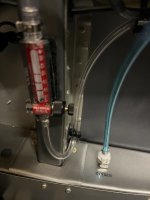
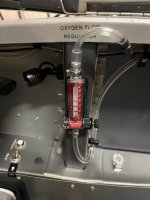
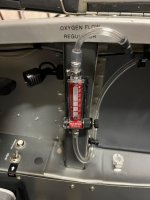
Here is what those bulkhead couplings and flow meter installed look like. Pretty much out-of-the-way yet accessible. I've since added an oxygen timer and a better way to keep the hoses out of the way. These are from Mountain High....

And here is what that system is attached to.............probably not what you will have in your -10!😄
 

Attachments

  • IMG_7610ac.jpg
    IMG_7610ac.jpg
    92.4 KB · Views: 68
  • IMG_7497.jpg
    IMG_7497.jpg
    52 KB · Views: 67
  • IMG_7495.jpg
    IMG_7495.jpg
    61.1 KB · Views: 67
I remember looking at medical oxygen sometime back and finding it was allowed to be much more humid. The concern is the water content could freeze in the hose or valve cutting off oxygen. I just looked this up and it appears most medical oxygen suppliers dry the air to the same degree as aviation oxygen but it doesn't have to and you have no idea what your concentrator is producing. Also, it doesn't meet the regs when oxygen is required.
Medical oxygen has a dew point of around -60c. Medical oxygen comes from the same sources as welding oxygen and moisture that is in Medical oxygen is added at the hospital or clinic where is it used.
 
I use medical O2 and works perfect so far to 16,000 ft with no condensation. A refill is a bottle exchange at pretty much any town with medical O2. Prices have doubled in the last few years to $25.00 a bottle. Most insurance covers it so in effect it costs nothing.

Parts to get set up was a couple hundred dollars.

In my old RV4 I mounted the bottle in the baggage area and turned it on before the flights I needed it on. Not really a difficult thing to remember.

In my 9, its mounted behind the passenger seat and I can reach it from where I sit.

Works perfect and the price was right.

Tim
 
I've been using welding oxygen for over a decade. You guys do you. I wouldn't try to convince anyone to do something they are uncomfortable with. That said, here is a good explanation why I use what I use:

Dr. Brent Blue on oxygen and CO

The whole video is very worthwhile, but if you want to cut to the chase start at about the 8:40 mark.

Thanks,

Joe
 
In my old RV4 I mounted the bottle in the baggage area and turned it on before the flights I needed it on. Not really a difficult thing to remember.
This is what I envisioned. 90 percent of my flying does not require Oxygen and for those flights that do, turning on the O2 valve at pre flight would be simple.
The downside, as being mentioned by several posters is the inability of the pilot to shut off the bottle in case of an in flight emergency.

MH has those included in the kit link I sent you. Sure you can do a combination but the version MH has is very nice and it works well with their flow meter. I think the design is more refined. I have the aerox pin needle design with their flow meter and the flow meter isn’t as nice.
I agree that those regulators have a more refined look.
My understanding is that only the Aerox flush mounted outlets are of a quick disconnect type and will not flow oxygen unless a canula is inserted and the needle valve is set to some flow setting?? In other words, if there was only a manual valve (cheap and simple as Riobison posted) flow of oxygen is effectively interrupted by unplugging the canulas. In the case of a four seater, having simply plugged in 2 canulas for pilot and co pilot, the rear outlets would not need any further shutoff mechanism.
I am aware that there would be low pressure oxygen in the supply lines from the bottle to the outlets but no flow unless the lines were busted up in an in flight emergency and flow would contribute to spreading a fire.

FYI: I do not see myself going above 18000 feet.


This is what I envisioned. 90 percent of my flying does not require Oxygen and for those flights that do, turning on the O2 valve at pre flight would be simple.
The downside, as being mentioned by several posters is the inability of the pilot to shut off the bottle in case of an in flight emergency.


My understanding is that only the Aerox flush mounted outlets are of a quick disconnect type and will not flow oxygen unless a canula is inserted and the needle valve is set to some flow setting?? In other words, if there was only a manual valve (cheap and simple as Riobison posted) flow of oxygen is effectively interrupted by unplugging the canulas. In the case of a four seater, having simply plugged in 2 canulas for pilot and co pilot, the rear outlets would not need any further shutoff mechanism.
I am aware that there would be low pressure oxygen in the supply lines from the bottle to the outlets but no flow unless the lines were busted up in an in flight emergency and flow would contribute to spreading a fire.

FYI: I do not see myself going above 18000 feet.


That’s incorrect. MH flush mount connectors are also quick disconnect.
 
Mine are also a quick disconnect. In the 4 I could do a disconnect on the manifold by my right arm. The disconnect also worked well for the rear passenger if she was talking too much. Quick disconnect and she'd fall asleep🤣
 
This is what I envisioned. 90 percent of my flying does not require Oxygen and for those flights that do, turning on the O2 valve at pre flight would be simple.
The downside, as being mentioned by several posters is the inability of the pilot to shut off the bottle in case of an in flight emergency.
I would like to see or hear of documented situations of an in-flight emergency that would necessitate shutting the flow of an O2 system off.
My understanding is that only the Aerox flush mounted outlets are of a quick disconnect type and will not flow oxygen unless a canula is inserted and the needle valve is set to some flow setting??
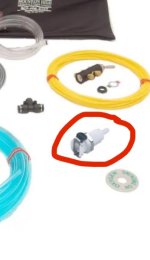
Not true: the Mountain High bulkhead fittings are quick-disconnect and shut the flow of oxygen off. See pictures below
I am aware that there would be low pressure oxygen in the supply lines from the bottle to the outlets but no flow unless the lines were busted up in an in flight emergency and flow would contribute to spreading a fire.
The flow of O2 from an oxygen system ranges from 2 LITERS per minute (typical lower altitudes) to up to 4 to maybe 5 LITERS per minute. So imagine filling up a half gallon bag in a minute; that would be two quart-sized Ziplock bags. That is a relatively small amount of oxygen. Most all civilian systems supplement the oxygen already present in the environment. Nasal cannulas, for example, fit loosely in the nose and supplement the cabin oxygen. The flow of 2Lpm is almost imperceptible. When I first put my system in, I wasn't sure any oxygen was flowing as I couldn't feel it. Hose in a cup of water confirmed there was a positive flow. SO: oxygen leaking from a disrupted system might contribute somewhat to a fire but not much more than the ambient air, especially at a lower elevation, as long as the regulator at the tank was intact.

I guess cutting flow off at the source (oxygen bottle) would make more sense if there were a failure of the oxygen bottle regulator. But if the high pressure of a full bottle (2200 psi) were to be released, it would be rather sudden and, by the time you realized what was happening and flipped the OFF switch, that bottle would be empty.

Just some thoughts. IMHO, of course...........

Photo: no oxygen flowing with a hose fitting disconnected from the bulkhead fitting. This is a Mountain High fitting. The little silver thumb tab allows the line fitting to be disconnected. Pushing the line fitting back in clicks it in place.
 

Attachments

  • IMG_7495.jpg
    IMG_7495.jpg
    61.1 KB · Views: 17
I am using an O2 Generator... BUT I would not go into the high teens with it, and most definitely have a oximetry monitor. They work, using ships electrical power. They are not too big or bulky. The technology, miniaturization has come a long way, very portable now. An oximetry that measures blood O2 saturation is also very affordable. You do not have to fill up a bottle is the bonus. Weight may be a wash or lighter. .

If you love sucking O2 at above 15,000 and FL180 and above get a bottle, because you can go to high saturation if needed. The O2 generators do OK but the higher you go the less O2 they can provide. It should still be enough within reason. They should have a rating % O2 flow up to a XX,XXX altitude. The predictably produce less O2 because there is less O2 be extracted as you climb. You don't need to be on high O2 flow if healthy, non smoker. This is where an oximeter comes in. Most have full rated output to 8,000 or higher. Again you don't need full flow. This is for people with serious breathing issues who need high saturation. You are only "supplementing".

Just be safe, don't mess with hypoxia, it is insidious. I got to do high altitude training Naval Air Station Whidbey Island decades ago as a civilian. It was interesting. I can tell you the effects are real and before you go to sleep, at least for me, is euphoria. The effects sneak up on you, that is why it is insidious. A real eye opener (or closer). See what did there. Ha ha. I know flying for a long time at 12,000 all day, although legal, I can feel it at the end of the day. Even if at lower altitudes say 9.5 O2 is a good thing especially at night (as night vision suffers badly with lack of O2). I know all this is on Pvt pilot test, but we forget and if you get to experience an altitude chamber it will show you how it affects you, which varies from person to person to some degree.

I don't have recommendations and borrowed a friends O2 Gen. I have shopped around to buy one. Some require a prescription to buy and a lot of money. Some are readily available on-line for reasonable price, well under a bottle system. I need to research more, but weight, size O2 output are key. Then there is electrical power. Many can run on their own battery packs. Some come with 110v AC to a DC converter (wall wart). Some are AC only. The one I liked the most was AC only, it checked all the boxes except 12v-15v DC power. However small portable Inverters, 12v DC to 110v AC are easy to get and not expensive. Many have a Cig Lighter jack for12v DC in.

NOTE O2 generators in overhead of passenger airliners are good for 40,000 ft and enough time to get to lower altitude. They are chemical and work for a limited time.
 
Just be safe, don't mess with hypoxia, it is insidious.

Absolutely. This is the most compelling argument against the use of oxygen generators at altitudes over about 14.5k. By the time that it’s apparent that they’re not keeping up, you may already be on the way down. I can see them for use in mitigating the fatigue that goes along with a couple of hours of marginal oxygen saturation, but using them when you really need them is unwise. IMHO.
 
Absolutely. This is the most compelling argument against the use of oxygen generators at altitudes over about 14.5k. By the time that it’s apparent that they’re not keeping up, you may already be on the way down. I can see them for use in mitigating the fatigue that goes along with a couple of hours of marginal oxygen saturation, but using them when you really need them is unwise. IMHO.
My Inogen Rove 6 puts out a large puff of oxygen on every breath and has a pinwheel that spins in the oxygen flow. I have no qualms taking it to 18,000 as it is rated for, or a touch higher if needed. I’m maintaining well up in the 90’s on saturation doing that. I would think it would be just as likely to not notice a small steady flow of oxygen from a continuous flow bottle than a big pulse on every breath from a generator.

Do whatever makes you personally comfortable, but I love the Inogen so far.
 
I'm unclear whether the OP intends to fill an O2 tank using the output of an Inogen concentrator, but I took it that way. Just be aware the output of the concentrator is not 100% oxygen - the website claims 87-96% at 1.26 l/min maximum. That will decrease as the adsorbing media near the end of their service life. Not sure why you'd want to fill a cylinder with less than pure O2. Also, the Inogen and similar are concentrators, not generators, and work by adsorbing some of the nitrogen from the surrounding air, lowering the expelled N2 content from 78% and thereby raising the O2 above 21%. Presumably the 1% argon and misc just goes along for the ride. The airlines use chemical generators, AFAIK, not concentrators. Once lit, they outgas oxygen until depleted.

Full disclosure: I have an Inogen that hasn't seen use since COVID, was intended for the plane but has never been used there, so I have no real world experience with it above 5 feet AGL. I need to get it set up in the plane; wife swore she could feel hypoxia today (and every other time we do a X/C) at 7500 AGL where all I felt was the euphoria of ambient dropping from 85 degree South Carolina coastal air to 60F at altitude. Apple Watch said I was at 93% sat, 96% after a few deep breaths. She certainly gets crabby above about 5.5k, so probably worth the effort.
 
Last edited:
My intent is to use the Invacare set up to refill my own oxygen bottles so I can avoid the $140 charge from our local FBO.
The Invacare set up pictured in post #21 won't fill a bottle if O2 output concentration is less than 90%. With a new sieve installed the output purity is closer to 96%.
If I find a better deal for refills, I might sell the Invacare refill set up.
I also wanted to use the medical tanks/bottles (I am referring to the hardware) because they are so much cheaper than proprietary bottles and valve set ups from
Aviation specific suppliers.
 
Last edited:
I would think it would be just as likely to not notice a small steady flow of oxygen from a continuous flow bottle than a big pulse on every breath from a generator.
I have a regulator that pulses the O2 from the bottle that is mechanically operated by the negative pressure from taking a breath. Conserves O2 better than continuous flow regulators. It is interesting to see my flow meter jump up and down as those pulses are given. It might work better with my face mask than with cannulas but is made to work with cannulas. It can also be adjusted to be continuous flow....
 
My intent is to use the Invacare set up to refill my own oxygen bottles so I can avoid the $140 charge from our local FBO.
The Invacare set up pictured in post #21 won't fill a bottle if O2 output concentration is less than 90%. With a new sieve installed the output purity is closer to 96%.
If I find a better deal for refills, I might sell the Invacare refill set up.
I also wanted to use the medical tanks/bottles (I am referring to the hardware) because they are so much cheaper than proprietary bottles and valve set ups from
Aviation specific suppliers.
Call airgas and see how much they want for 250cu ft bottles. You only need 2 and you can fill your own D cylinder for 10% of the FBO cost.
 
Call airgas and see how much they want for 250cu ft bottles. You only need 2 and you can fill your own D cylinder for 10% of the FBO cost.
If you are only going to use O2 occasionally each year it might be worth your while to just rent the bottle, regulator and buy the nose canola and tubing. Typically rent here is $21/month. I rent the pediatric regulator it will provide plenty of O2 to 20,000ft and small amounts down lower.
 
Lots of info here, thank you.

Here is what I already have:
125 Cu feet steel oxy welding tank, been welding stuff for decades.

I also have an Aerox portable system (4place with D bottle) that was given to me and found the fumbling with hoses and
valves behind the seat somewhat awkward, hence my enthusiasm for a permanent installation.

Newly acquired, (because it was a smoking deal) M122 cu feet medical oxy tank with transfer hose.
Included in this deal were 2 D size bottles with CGA 870 connections,
plus the Invacare oxy concentrator and refill compressor.
All of it for $350.

I am trying to use some of these components plus whatever else I need from Aerox or MH for a permanent installation in my RV-10.

I may not need the Invacare refill equipment and just use my 2 big tanks to refill the smaller D tanks.
I probably already have enough oxygen to last me a lifetime.

Call airgas and see how much they want for 250cu ft bottles. You only need 2 and you can fill your own D cylinder for 10% of the FBO cost.
I checked Airgas and their quote was $400 plus for a 125 cu feet tank of oxygen outright.
This is why I decided to buy the bundle of equipment stated above.
 
I have an Inogen G4. It works well at 12,500 where I tested it on a flight. My oxygen level was 96%. I didnt go higher because at the time I didnt think I would ever fly higher. Now I live near Lame Michigan and it is lot closer to OSH going over the lake than around and think 14,500 would be a better altitude. I think for the short time it would be fine but if I flew over I would take a bottle with me as a backup. I use my G4 anytime I am over 8,000 just to feel better when I land.
 
I have an Inogen G4. It works well at 12,500 where I tested it on a flight. My oxygen level was 96%. I didnt go higher because at the time I didnt think I would ever fly higher. Now I live near Lame Michigan and it is lot closer to OSH going over the lake than around and think 14,500 would be a better altitude. I think for the short time it would be fine but if I flew over I would take a bottle with me as a backup. I use my G4 anytime I am over 8,000 just to feel better when I land.
Hi and thanks for the info. I just acquired an Inogen and wanted to ask how you mounted the unit. I am building an RV14a, so probably behind the seats? What did you do?

Thanks

Des
 
Hi and thanks for the info. I just acquired an Inogen and wanted to ask how you mounted the unit. I am building an RV14a, so probably behind the seats? What did you do?

Thanks

Des
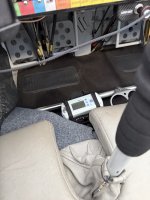
I didnt really mount it - I just put it between the seats or on the floor in the space between my Antisplat egress bar and the spar bulkhead. I like the floor position because it is secure and easily turned on or off from there. Between the seats works but it is already snug in my 9 but in your 14 there should be plenty of room. Maybe a simple hook on the flap motor support? I will check my friends 14 out if I go to the airport tomorrow to see if that would work.

I dont do any aerobatics in my 9 so it isnt as critical for it to be as secure. When I put mine on the floor between the spar and foot bar it is very secure and there is no way it could ever get in the way of the rudder pedals.
 
I have 2 of the inogen POCs in my -10 as well and they are more than adequate for my flying. I use regular medical nasal cannulas and have had no issues so far. But then, I dont do serious flight levels.
 
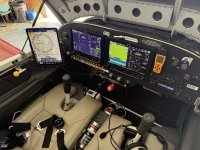
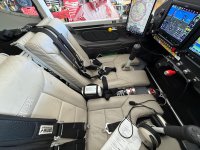
Here are a couple pics of my Inogen in my plane. Either location works well.
 

Attachments

  • IMG_0537.jpeg
    IMG_0537.jpeg
    5 MB · Views: 45
  • IMG_0539.jpeg
    IMG_0539.jpeg
    3 MB · Views: 40
  • IMG_0536.jpeg
    IMG_0536.jpeg
    2.3 MB · Views: 40
Back
Top