bt3vex
Active Member
I just wanted to share my recent story of my Forced Landing. All things considered you can technically call it a "Soft Field Landing".
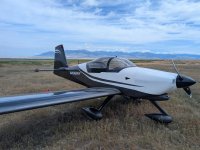
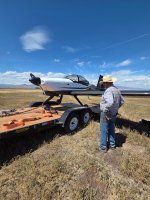
So I am 60 hours into my plane, which has an IO320, EFII System 32 set up. This things runs smooth and starts like a car almost unbelievable how good it runs. Decided to take a flight with another pilot buddy on August 5th, 2025. (NOTE: Oil Changed 5 day earlier, run up 3 times, no issues) Departed KBZN headed towards Twin Bridges all is normal, leaned the engine back everything looks good almost 1 hour of flight time goes by. Heading in to do a flyover of Twin since that airport was closed for new runway, upon the departing climb at roughly 1500 AGL, 2 miles out the engine just starts coughing and running rough. EFIS showed #1 cylinder go dark ( No Readings At All). Quickly losing altitude and unable to create more power we had to make a choice. Option #1: Turn back and try and land somewhere near or on the airport with lots of big tractors and machines everywhere. Option #2: Pick a place in front of us field or road. We went with #2. Took about 5-10 seconds to choose a landing site. That's when the reality hit, we are going to probably crash, also at the same time that is when my commercial training power off 180's kicked in. Flaps full - ballooned up to get over the power lines in the way, once over realized i was too high and a little slow, nose down picked up airspeed back to 80-85 ish... starting to flare. Buddy yells deer in the path ( I instinctively pull up) its ok i have enough speed for it, however now that i got a bit higher the field is running out and we are still floating. (thoughts in my head - Keep nose gear off that ground no matter what, once your wheels touch). I touch right gear first, then left smooth as could be, nose is off we are doing a wheely, however the end of the field and what is normally a ditch is fast approaching. (Thoughts in my head - let off break pull back and maybe we wont flip over and just hit the ditch with the bottom of the plane, may or may not live). When that ditch came we somehow kept rolling. Holy hell there was no ditch just flat field. Kept nose light maximum breaking we come to a complete stop. We lived, somehow we did it. Not a scratch on the plane, somehow I picked the best maintained farm field and missed every gopher hole there was.
Findings of what went wrong:
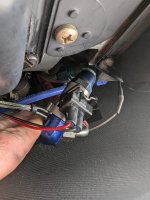
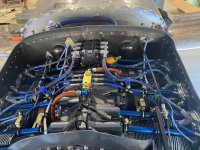
Upon retrieval of the plane - found that both #1 & #3 Cylinder Fuel Injector Ports sheared off. #3 what held in place by a clamp hence why it was producing some power. #1 completely loose - that is why #1 went dark on the EFIS.
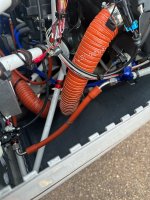
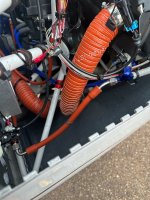
Cause: The fittings were aluminum and the fuel hose was apparently too tight and did not leave enough room for vibrations. Basically slowly tearing them apart. I also believe the weight of the overall set-up could have not helped also. You can see the hose in question from the #3 back to the fuel pressure regulator.
Lessoned Learned:
1. Once you pick your landing site - Commit and stay committed
2. Treat every landing like a soft field that way when you have to do it for real you know how
3. Learn how to wheely your plane (I was taught this and practiced it regularly always thought it was fun to do)
4. Practice power off 180's
5. Look for single point failures and include them in your preflight inspections
So I am 60 hours into my plane, which has an IO320, EFII System 32 set up. This things runs smooth and starts like a car almost unbelievable how good it runs. Decided to take a flight with another pilot buddy on August 5th, 2025. (NOTE: Oil Changed 5 day earlier, run up 3 times, no issues) Departed KBZN headed towards Twin Bridges all is normal, leaned the engine back everything looks good almost 1 hour of flight time goes by. Heading in to do a flyover of Twin since that airport was closed for new runway, upon the departing climb at roughly 1500 AGL, 2 miles out the engine just starts coughing and running rough. EFIS showed #1 cylinder go dark ( No Readings At All). Quickly losing altitude and unable to create more power we had to make a choice. Option #1: Turn back and try and land somewhere near or on the airport with lots of big tractors and machines everywhere. Option #2: Pick a place in front of us field or road. We went with #2. Took about 5-10 seconds to choose a landing site. That's when the reality hit, we are going to probably crash, also at the same time that is when my commercial training power off 180's kicked in. Flaps full - ballooned up to get over the power lines in the way, once over realized i was too high and a little slow, nose down picked up airspeed back to 80-85 ish... starting to flare. Buddy yells deer in the path ( I instinctively pull up) its ok i have enough speed for it, however now that i got a bit higher the field is running out and we are still floating. (thoughts in my head - Keep nose gear off that ground no matter what, once your wheels touch). I touch right gear first, then left smooth as could be, nose is off we are doing a wheely, however the end of the field and what is normally a ditch is fast approaching. (Thoughts in my head - let off break pull back and maybe we wont flip over and just hit the ditch with the bottom of the plane, may or may not live). When that ditch came we somehow kept rolling. Holy hell there was no ditch just flat field. Kept nose light maximum breaking we come to a complete stop. We lived, somehow we did it. Not a scratch on the plane, somehow I picked the best maintained farm field and missed every gopher hole there was.
Findings of what went wrong:
Upon retrieval of the plane - found that both #1 & #3 Cylinder Fuel Injector Ports sheared off. #3 what held in place by a clamp hence why it was producing some power. #1 completely loose - that is why #1 went dark on the EFIS.
Cause: The fittings were aluminum and the fuel hose was apparently too tight and did not leave enough room for vibrations. Basically slowly tearing them apart. I also believe the weight of the overall set-up could have not helped also. You can see the hose in question from the #3 back to the fuel pressure regulator.
Lessoned Learned:
1. Once you pick your landing site - Commit and stay committed
2. Treat every landing like a soft field that way when you have to do it for real you know how
3. Learn how to wheely your plane (I was taught this and practiced it regularly always thought it was fun to do)
4. Practice power off 180's
5. Look for single point failures and include them in your preflight inspections