

Van's Air Force
You are using an out of date browser. It may not display this or other websites correctly.
You should upgrade or use an alternative browser.
You should upgrade or use an alternative browser.
Kawasaki Aircraft Engines!
- Thread starter Walt
- Start date

- Status
- Not open for further replies.

pretty cool to see competition like this headed towards our indusrty. would be nice to see someone break lyc evil grip on the market.

N10KE
Well Known Member
Porsche tried and failed. Rotax would be a logical choice but they cancelled their 300 hp turbo V-6. Toyota certified an amazing version of their UZ V8 (one of the most reliable automotive engines ever made) but gave up on that. Honda would also be a likely choice (and Viking apparently agrees). Maybe Kawasaki will come through but given the pedigree of those that have tried and given up - I’m a bit skeptical.
Additionally, so many builders were (and continue to be) negative on the Rotax “motorcycle/snowmobile/ATV” engines - it’s not a stretch to think that engines from Kawasaki will get a pretty cold reception.
Additionally, so many builders were (and continue to be) negative on the Rotax “motorcycle/snowmobile/ATV” engines - it’s not a stretch to think that engines from Kawasaki will get a pretty cold reception.
Last edited:

One thing that may make a difference this time around is the explosion in popularity of experimental aircraft. It is possible that in the past all those other manufacturers got scared away from the certification process and all the things that go with it? It is certainly feasible that Kawasaki could offer an experimental only version without all of the challenges and most of the risks. In today's world, that still represents a substantial part of the market.Porsche tried and failed. Rotax would be a logical choice but they cancelled their 300 hp turbo V-6. Toyota certified an amazing version of their UZ V8 (one of the most reliable automotive engines ever made) but gave up on that. Honda would also be a likely choice (and Viking apparently agrees). Maybe Kawasaki will come through but given the pedigree of those that have tried and given up - I’m a bit skeptical.
Additionally, so many builders were (and continue to be) negative on the Rotax “motorcycle/snowmobile/ATV” engines - it’s not a stretch to think that engines from Kawasaki will get a pretty cold reception.
The market was also much smaller back then. New airplane sales and therefore new engine sales were fairly small. If you look at what's going on at the Lycoming factory today, you can see the level of potential revenue available from new engines is quite robust.

That would be logical, wouldn’t;t Larry? Teh fact that the experimental market is larger than the certified production shoudl make us a target-rich environment… you’d think! Unfortunately, it hasn’t worked that way for the past many decades - companies big enough to produce a clean-sheet engine design have studiously stayed away from those of us building “flying lawn chairs” and other such dangerous contraptions on the advice of their legal teams. I’ve been pleased to follow the Delta-Hawk project on the RV-14, because it is really the first time a new engine maker has been willing to do the work with an E-AB builder.One thing that may make a difference this time around is the explosion in popularity of experimental aircraft. It is possible that in the past all those other manufacturers got scared away from the certification process and all the things that go with it? It is certainly feasible that Kawasaki could offer an experimental only version without all of the challenges and most of the risks. In today's world, that still represents a substantial part of the market.
The market was also much smaller back then. New airplane sales and therefore new engine sales were fairly small. If you look at what's going on at the Lycoming factory today, you can see the level of potential revenue available from new engines is quite robust.
The sad fact is that our market will never be big enough to buy enough engines to be noticeable on the corporate bottom line of anyone that builds consumer engines - and the lawmakers see nothing but liability in the word “experimental”. I always hope that will change, but I keep waiting…..

sansoneservices
Well Known Member
I almost bought a Mooney years ago because I like them and the price was reasonable. Expected it to be Lycoming powered and discovered it had a Porsche 911 six cylinder boxer style engine. Did some research and reported performance and reliability was good. Porsche decided the liability was too high a risk and discontinued production and support. Best of luck to Kawasaki, hopefully we will have more choices
I get that completely and makes a lot of sense for replacement engines. But if you were to look at that lycoming backlog, I have to speculate that the majority of it is destined for EAB and not certified. If the trends continue as they have for the last few years, at some point the %age of new engines going into EAB aircraft will far out pace certified and someone will want a piece of that market. Just imagine what lyc's financial reports must look like today - costs up 50% and sales price up 100%. Somewhere down the line someone is going to want a piece of that.That would be logical, wouldn’t;t Larry? Teh fact that the experimental market is larger than the certified production shoudl make us a target-rich environment… you’d think! Unfortunately, it hasn’t worked that way for the past many decades - companies big enough to produce a clean-sheet engine design have studiously stayed away from those of us building “flying lawn chairs” and other such dangerous contraptions on the advice of their legal teams. I’ve been pleased to follow the Delta-Hawk project on the RV-14, because it is really the first time a new engine maker has been willing to do the work with an E-AB builder.
The sad fact is that our market will never be big enough to buy enough engines to be noticeable on the corporate bottom line of anyone that builds consumer engines - and the lawmakers see nothing but liability in the word “experimental”. I always hope that will change, but I keep waiting…..
I get the liability issues., However, if you dig deeper than first look, which i am sure attorneys are not doing, there is wayyyy less liability and risk selling an engine to an eab customer than cessna or cirrus and that doesn't include the margin crushing AD issues. look at what superior did. if certified they give you a new engine and if eab, they said we're sorry.
historically, i fully agree this is fantasy, but at some point in time, the market catches up with a new reality. A guy can hope anyways.

I don’t think it’s any surprise that many of the auto manufacturers got their start in avaiation, or had a big role, but left those markets or advanced past the GA market.
Off the top of my head:
Alfa Romeo
Fiat
BMW
Ford
Porsche
Mitsubishi
Honda
Rolls Royce
Bugatti
Saab
I’m sure others could fill in more….
As Paul stated, we just are not, or were not, a very attractive group for these big money players.
I hope Kawasaki pulls through, but 5 years is a long way out there.
Off the top of my head:
Alfa Romeo
Fiat
BMW
Ford
Porsche
Mitsubishi
Honda
Rolls Royce
Bugatti
Saab
I’m sure others could fill in more….
As Paul stated, we just are not, or were not, a very attractive group for these big money players.
I hope Kawasaki pulls through, but 5 years is a long way out there.


Yamaha is also in preliminary development...
N10KE
Well Known Member
Great, another motorcycle engineYamaha is also in preliminary development...

Yamaha built the Ford SHO engine and worked with Toyota/Lexus on the LFA engine plus the heads on the 5 liter V8 used in my LC500. Amazing sound, performance and reliability. Bring it on…

Negatives include high initial cost and inefficiency at lower altitudes.You guys know way more than I, but I wonder if turbo prop engines will find a niche. Several in development. Lighter and burn Jet A. Sounds too good to be true.
I believe the opposite - 200K certified airframes out there need replacement engines on some frequency - say every 20 years. That's 10K certified engines a year, split between Lycoming and Continental. Plus about a thousand new aircraft. So 11K/yr. There are 30K experimental airframes out there that need engines every 20 years (or more) plus 1K new experimental airframes. Maybe a total demand of 2500 engines, some of which are Rotax.But if you were to look at that lycoming backlog, I have to speculate that the majority of it is destined for EAB and not certified.
So my opinion (even if my estimates are quite a bit off) is that engine sales and engine rebuilds are 80% driven by the certified market. Regardless, if Kawasaki can make inroads in the Experimental and Drone world, they can still make a fair bit of money and learn a bit in the process.
Last edited:
thanks for the numbers. didn't realize they were that skewed.I believe the opposite - 200K certified airframes out there need replacement engines on some frequency - say ever 20 years. That's 10K certified engines a year, split between Lycoming and Continental. Plus about a thousand new aircraft. So 11K/yr. There are 30K experimental airframes out there that need engines every 20 years (or more) plus 1K new experimental airframes. Maybe a total demand of 2500 engines, some of which are Rotax.
So my opinion (even if my estimates are quite a bit off) is that engine sales and engine rebuilds are 80% driven by the certified market. Regardless, if Kawasaki can make inroads in the Experimental and Drone world, they can still make a fair bit of money and learn a bit in the process.
They are probably reasonable, but I wouldn't wager a beer on 'em. ;-)thanks for the numbers. didn't realize they were that skewed.
Not sure how true, but I've heard somewhere that a turbine engine is relatively easy to design from scratch or to scale up or down from an existing design, but they need 200-250 kts and higher airspeed to work efficiently. The Vne on our airframes may be too slow for the turbineI wonder if turbo prop engines will find a niche

Last edited:
Interesting they would introduce one engine with a reduction drive & not the other. New engines that are light & powerful are useless unless they also offer reliable PSRUs to go with them. Leaving it to the end users to develop reliable PSRUs is a recipe for failure.
EAB has had plenty of alternate engine offerings over the years - GM, Ford, Subaru, Isuzu to name a few, and the lack of a reliable PSRU killed most of those efforts.
8500rpm is useless for our needs, even ducted fan applications!
EAB has had plenty of alternate engine offerings over the years - GM, Ford, Subaru, Isuzu to name a few, and the lack of a reliable PSRU killed most of those efforts.
8500rpm is useless for our needs, even ducted fan applications!
Ironically, lycoming started out building auto engines. Well, actually sewing machines, but auto engines were the business before aero engines.I don’t think it’s any surprise that many of the auto manufacturers got their start in avaiation, or had a big role, but left those markets or advanced past the GA market.
Off the top of my head:
Alfa Romeo
Fiat
BMW
Ford
Porsche
Mitsubishi
Honda
Rolls Royce
Bugatti
Saab
I’m sure others could fill in more….
As Paul stated, we just are not, or were not, a very attractive group for these big money players.
I hope Kawasaki pulls through, but 5 years is a long way out there.

I like the idea that a motorcycle engine company decides to build aircraft engines based on its legacy motorcycle engines. You can find my post advocating the idea. I was thinking of LSA level performance, and not the +180 HP for regular EAB. However, looking at Kawasaki web brochure, some of the horsepower numbers are probably wishful thinking. Also to generate these high horsepower numbers, you have to find ways to efficiently cool the engine because more HP means more heat. We know how to handle aircooled engines. We also know how to design radiators for liquid cooled engines as in WW2 fighters but the aircraft designed for them will look different. I am waiting for a test mule to find out what is the penalty for all the radiators and ducting, and not to mention the gearbox.
Not much. Ross of sds has been very successful with the subaru engine in his 6. He has posted a lot in the past about radiators and airflow. I believe he had little to no drag penalty. This is not rocket science.I like the idea that a motorcycle engine company decides to build aircraft engines based on its legacy motorcycle engines. You can find my post advocating the idea. I was thinking of LSA level performance, and not the +180 HP for regular EAB. However, looking at Kawasaki web brochure, some of the horsepower numbers are probably wishful thinking. Also to generate these high horsepower numbers, you have to find ways to efficiently cool the engine because more HP means more heat. We know how to handle aircooled engines. We also know how to design radiators for liquid cooled engines as in WW2 fighters but the aircraft designed for them will look different. I am waiting for a test mule to find out what is the penalty for all the radiators and ducting, and not to mention the gearbox.
The history of Subaru engines in RV has shown a lot of very inefficient radiator designs, including the Egg frontal intake radiators. There were a lot of overheating. The Delta hawk people seem to know what they are doing in getting the firewall forward design with liquid cooling in mind.Not much. Ross of sds has been very successful with the subaru engine in his 6. He has posted a lot in the past about radiators and airflow. I believe he had little to no drag penalty. This is not rocket science.
A hangar neighbor with a zenith powered with an automotive engine also has cooling issue. The builder added a cooling sprayer unit in front of the radiator did little to help with high engine temp when flying in the SoCal area. The point is cooling efficiency seems to be neglected when people start using automotive, and now motorcycle engine
I am not suggesting that most didn’t get it wrong and have issues. I only said there is a smart guy here who spent a lot of time getting it right and it works very well for him. My point was, with the right resources behind you, this is not hard to do. I was saying a company like kawasaki can easily figure this out, not that joe average assembling a pre punched kit in his garage can. This is real engineering and most folks building kits do not have those skills.The history of Subaru engines in RV has shown a lot of very inefficient radiator designs, including the Egg frontal intake radiators. There were a lot of overheating. The Delta hawk people seem to know what they are doing in getting the firewall forward design with liquid cooling in mind.
A hangar neighbor with a zenith powered with an automotive engine also has cooling issue. The builder added a cooling sprayer unit in front of the radiator did little to help with high engine temp when flying in the SoCal area. The point is cooling efficiency seems to be neglected when people start using automotive, and now motorcycle engine
There are guys like dan that show us the weeks worth of work to design and fabricate an effective variable exit cowl. Very hard to do well. Most guys come here and say part a doesn’t fit well into part b, what should i do? No surprise that the majority of folks cannot design a radiator cowl that works effectively. You need a whole bunch of science and research, along with the skills to fabricate that into parts to make that work.
Any company intending to sell engines into the rv market will include critical things like cowls and cooling parts, just like DH is doing. They can also be dedicated cooling enclosures for the belly, similar to the AC kit makers use. When done right, they cool well and are low drag. That is what ross made for his subaru. Several posts discussing the details here. A lot of engineering to get it right.
Last edited:
8500 RPMs direct drive would turn a 24 inch ducted fan at a good tip speed. About 600 MPH. Not to exceed the speed of sound. Now if it was a constant speed ducted fan, it might work.even ducted fan applications!
Busy flight school aircraft fly 500 hours per year, sometimes more, driving the overhaul market.
250 kt (probably more) for a jet, turbo props work at slower speeds. But back to Mel's point, they are expensive and burn *a lot* of gas. Turbines are also much lighter than piston engines which makes for very long noses and really needs purpose designed fuselage.Not sure how true, but I've heard somewhere that a turbine engine is relatively easy to design from scratch or to scale up or down from an existing design, but they need 200-250 kts and higher airspeed to work efficiently. The Vne on our airframes may be too slow for the turbine

Lufthans
Well Known Member
As mentioned, cooling is a big thing. Basic thermodynamics. The temperature difference between a radiator and the oncoming air is less than that of a hot cylinder head and the oncoming air. So you need more air to extract the same amount of heat.
Luckily, the liquid cooling aspect means that you can extract that heat in a place where the extra air doesn't necessarily mean extra drag. Think the infamous P51 Meredith effect. If you fail to take advantage of this fact and opt for simple installation by putting the radiators firewall forward, you will suffer from high drag (AND likely problematic cooling).
But there are more nuts to crack with this automotive stuff. Like fuel system. Rule #1: don't suck on fuel. If you use fuel injection (and there is no reason why you shouldn't), then do things properly. Look at the engineering in auto engines and copy those practices. Don't think you can adapt an aircrafts fuel system and get away with it. You WILL be battling vapour lock if you do. Engineer it properly and it will run on anything that smells like fuel.
Yet another example: DON'T try to graft the electrical system in a regular aircraft setup. Your engine will need electrons to run, just as much as it needs fuel. It can be done safely, but it requires effort to design and build a system that is reliable. Typical aircraft electric systems aren't designed for this.
Good automotive/ alternative engine conversions CAN be done. There are those of us out here who are successfully flying them. Ross has been mentioned in this thread. Ralph here has. Without blowing my own horn - just yesterday I've returned from a fly-in two countries away (that's countries, with an R), without bringing as much as a screwdriver along with me. I doubt you'll find anyone who will tell it's easy though. In a world of IKEA-like kit aircraft, the typical builder is not used to, equipped to, or willing to be engaged in this level of engineering. This makes these kind of engines a niche within a niche within a niche. And with that a very tough business proposition. I've seen the Yamaha engine in person. They look very well thought-out. But I wish them well....
Luckily, the liquid cooling aspect means that you can extract that heat in a place where the extra air doesn't necessarily mean extra drag. Think the infamous P51 Meredith effect. If you fail to take advantage of this fact and opt for simple installation by putting the radiators firewall forward, you will suffer from high drag (AND likely problematic cooling).
But there are more nuts to crack with this automotive stuff. Like fuel system. Rule #1: don't suck on fuel. If you use fuel injection (and there is no reason why you shouldn't), then do things properly. Look at the engineering in auto engines and copy those practices. Don't think you can adapt an aircrafts fuel system and get away with it. You WILL be battling vapour lock if you do. Engineer it properly and it will run on anything that smells like fuel.
Yet another example: DON'T try to graft the electrical system in a regular aircraft setup. Your engine will need electrons to run, just as much as it needs fuel. It can be done safely, but it requires effort to design and build a system that is reliable. Typical aircraft electric systems aren't designed for this.
Good automotive/ alternative engine conversions CAN be done. There are those of us out here who are successfully flying them. Ross has been mentioned in this thread. Ralph here has. Without blowing my own horn - just yesterday I've returned from a fly-in two countries away (that's countries, with an R), without bringing as much as a screwdriver along with me. I doubt you'll find anyone who will tell it's easy though. In a world of IKEA-like kit aircraft, the typical builder is not used to, equipped to, or willing to be engaged in this level of engineering. This makes these kind of engines a niche within a niche within a niche. And with that a very tough business proposition. I've seen the Yamaha engine in person. They look very well thought-out. But I wish them well....

Or prop strikes!This doesn't take into account new airframes.
One of the biggest stumbling blocks for putting some oddball auto engine in say an RV you immediately hurt it’s resale value! Buyers like proven stuff, a known quantity, why do you think Maccers is so successful? You can get the exact same reliable burger world wide! I’ll stick to my Dinosaur Lyc engine as I know I can sell it at a drop of a hat
There are leaders and there are followers; if everyone decides to follow, progress stops…One of the biggest stumbling blocks for putting some oddball auto engine in say an RV you immediately hurt it’s resale value! Buyers like proven stuff, a known quantity, why do you think Maccers is so successful? You can get the exact same reliable burger world wide! I’ll stick to my Dinosaur Lyc engine as I know I can sell it at a drop of a hat
Lufthans
Well Known Member
On my -3B, I'm ripping off a perfectly good O-320 to replace it with a Subaru STi. I KNOW that not only am I spending a sh**load of money on the new engine installation, I am indeed destroying resale value at the same time.
And I don't care. It's my plane. And after all is said and done, the performance, smoothness and ease of operation of a Subaru is so much more to my liking than those of these ridiculously archaic Lycomings that the effort and €€€ are worth it to me. Besides, if there is one thing that I am bad at is actually deciding to sell stuff. So I'm pretty sure that this one will be a keeper too .
.
(And how much fun will 280 hp be on an RV3? Even if it means throttling way way back in level flight to keep it under Vne. If my calculations are correct, I might be touching on 6000 fpm climb rates. Yeeehaaa)
And I don't care. It's my plane. And after all is said and done, the performance, smoothness and ease of operation of a Subaru is so much more to my liking than those of these ridiculously archaic Lycomings that the effort and €€€ are worth it to me. Besides, if there is one thing that I am bad at is actually deciding to sell stuff. So I'm pretty sure that this one will be a keeper too
.(And how much fun will 280 hp be on an RV3? Even if it means throttling way way back in level flight to keep it under Vne. If my calculations are correct, I might be touching on 6000 fpm climb rates. Yeeehaaa)
Kawasaki Heavy Industries has made airplane airframes before, from WWII to present, some their own designs and others on license. They are not new to aviation, but I have doubts this engine will see light of day. Hope I am wrong
Rotax developed a large displacement high HP Lycoming / Continental killer. That was canceled when they were bought out by Bombardier.
Remember Porsche Mooney. Add in automotive based engine conversions, promises broken and dreams gone or met reality.
Market for GA and small engines is such a very tiny fraction compared to automotive. When Kawasaki, makes more engines in one year than the entire history of piston powered aviation, they may realize it's not viable at such small scale. Add in the liability. Tough and small market.
Most commercial engines are turbine.
I will say Yamaha's snowmobile Apex 3 cylinder engines when highly strung making ++200 hp, which guys adapt on their STOL planes, is impressive. For STOL competition when over boosted and revved to insane RPM's, the near 300HP is impressive. Not for daily driver reliability I imagine.
Plugging along, direct drive air cooled horizontal opposed 4 or 6 jug Lycoming is for me, what I want and need in an aircraft engine.
Rotax developed a large displacement high HP Lycoming / Continental killer. That was canceled when they were bought out by Bombardier.
Remember Porsche Mooney. Add in automotive based engine conversions, promises broken and dreams gone or met reality.
Market for GA and small engines is such a very tiny fraction compared to automotive. When Kawasaki, makes more engines in one year than the entire history of piston powered aviation, they may realize it's not viable at such small scale. Add in the liability. Tough and small market.
Most commercial engines are turbine.
I will say Yamaha's snowmobile Apex 3 cylinder engines when highly strung making ++200 hp, which guys adapt on their STOL planes, is impressive. For STOL competition when over boosted and revved to insane RPM's, the near 300HP is impressive. Not for daily driver reliability I imagine.
Plugging along, direct drive air cooled horizontal opposed 4 or 6 jug Lycoming is for me, what I want and need in an aircraft engine.
Last edited:
"...Plugging along, direct drive air cooled horizontal opposed 4 or 6 jug Lycoming is for me, what I want and need in an aircraft engine..."
Lead or follow, you made your choice but don't you think it would be nice to replace a 60+ year old design and step into the 21st century?
Is there something out there that can do this? That remains to be seen. It is, however, impossible if no-one tries...
Lead or follow, you made your choice but don't you think it would be nice to replace a 60+ year old design and step into the 21st century?
Is there something out there that can do this? That remains to be seen. It is, however, impossible if no-one tries...
Zoch Aero Diesel
If they eeeevvveeer get it to market?
If you want to geek out on alternative engines, here is a new and updated video of the Zoch Aero Diesel.
It is the only diesel I would ever consider and it is full of innovation, radical new designs, super light and very efficient.
They seem to have a couple of prototypes ready but after 40 years of displaying it at OSH, I am not sure I'll see the day it flies.
The 300hp version is lighter than the IO-390EXP, just saying.
If they eeeevvveeer get it to market?
It is the only diesel I would ever consider and it is full of innovation, radical new designs, super light and very efficient.
They seem to have a couple of prototypes ready but after 40 years of displaying it at OSH, I am not sure I'll see the day it flies.
The 300hp version is lighter than the IO-390EXP, just saying.


Franklin Engine Company started in 1902 building cars with air cooled engines. Their greatest success started in WWII and ended in the late 40's. The company changed ownership many times and one of those owners badly damaged the company. Now owned by a Polish company???
Lufthans
Well Known Member
Wooooooowwww,
Now put THAT in a Nemesis NXT.....

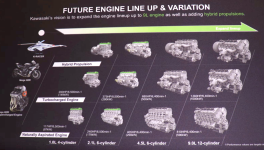
I think Kawasaki understands the amount of heat transfer needed to cool the proposed engines. Here is a snapshot of Kawasaki website. It understands the tight confine of the FWF is not an appropriate place to mount the radiator. Of course, we already knew this in WW2. There were countless of NACA studies on radiator heat transfer at that time.Just curious, but instead of trying to cram the radiators in the already cramped FWF, how difficult would it be to mount them in the wing with scoops ala spitfire. Too much drag penalty? No room to run hoses through the cockpit?

Lufthans
Well Known Member
This is exactly what I have done in my Jodel. Works wonderfully well. It helps that my wing has a 6 ft chord and only one big box spar and no rear spar. So ample room to make a good expanding duct to slow the air down, do my cooling thing, and contract it again to minimise drag.Just curious, but instead of trying to cram the radiators in the already cramped FWF, how difficult would it be to mount them in the wing with scoops ala spitfire. Too much drag penalty? No room to run hoses through the cockpit?
Some views here (taken from my buddies RV7, to stay on topic a bit):
(I've once taken my thermostat out. On a 95F day, I couldn't get my coolant temp over 150F. Not by running it on the ground for 20 minutes, not by full-power climbs to altitude. This setup works extremely well)
On my -3, I'm building a P-51 scoop in stead though. Not enough space in the wing and that rear spar that is in the way
Last edited:
"...Plugging along, direct drive air cooled horizontal opposed 4 or 6 jug Lycoming is for me, what I want and need in an aircraft engine..."
Lead or follow, you made your choice but don't you think it would be nice to replace a 60+ year old design and step into the 21st century?
Is there something out there that can do this? That remains to be seen. It is, however, impossible if no-one tries...
Follow? You mean everyone follows Lycoming and Continental. Have you seen how a Lyc or TCM are made, the materials, manufacturing processes and QC? As state of the art as you can get. Where did these engines come from, Ford Model A? No. It came from the equivalent of billions in R&D for military engines and 40 yrs of intense development in aircraft engines in general. They are optimized aircraft engines. Lycs have sodium filled exhaust valves and Nickel Silicon Carbide (NSC) cylinder coatings. Of course the crankshaft is forged, as are the rods and pistons... On and on. They are amazing examples of engineering. Just because it is long lived and successful does not make it obsolete. This is where people get it wrong. Bottom line put up an engine and let's side by side fly them.
Make your choice? You imply there is a choice? Building an RV designed around an Lyc there is a choice (RV-12 Rotax). I am following the logical choice, not some auto conversion or pie in the sky new great engine yet to be design. The DeltaHawk... let's see. Fingers crossed. Cost wise I am out. Never buy a new engine with out real world numbers and significant number flying. DeltaHawk really wants to be an OEM engine for certified airplanes. There are many others in the diesel aircraft world with deeper pockets and already flying, They are not setting the world on fire... I do love me some diesel (my VW TDI is diesel) and would love to see them in the market at competitive price, weight and HP to a Lycoming. That just is not reality from my eyes, at least so far.
RV-12 Rotax? I check people out in RV-12 as a CFI all the time. I love burping it. Ha ha. They have or can have issues galore, cost more to buy and more to maintain than the ubiquitous Lycoming, and on a HP to HP or apples to apples basis not that fuel efficient or "modern". Rotax is a Horz Opposed 4 banger... 4-stroke... OH valves push rods.... hummm who did that before? Oh Lycoming and Continental. Rotax just made teeny tiny piston and Revved it with a gear box. The GEAR box or PSRU is the thing I hate about all high turning aircraft engines as they are weak links. However Rotax did a good job. However it has inspections and can and do fail requiring lots of money and God forbid an off field landing. They did a good job for the LSA, airplanes needing 150hp or less, but it's not Lycoming. Ever see a Rotax race at Reno or Red Bull Air Race... Apples and Oranges. Rotax has reached the max with 916S at 137 horsepower for continuous. They claim 160HP for T/O time limited. Lycoming 4-Cyl can run at 100% all day, day after day making 160HP to 210HP. MODERN! The Rotax is lighter. But cost the price of a new 916S. Not anti Rotax, I think for the niche they fill they did well with Bombardier huge global backing. BTW Rotax is not that modern, the 4 cyl Rotax has been around for 36 yrs (with incremental improvements like Lycoming, just that Lyc has done it for 65 yrs.) I don't get this MODERN argument at all.
The "21st Century" is a canard, propaganda people say wishfully. There is NOTHING new under the sun or modern. A Lycoming is not antiquated, just optimized and well proven and refined for and as an aircraft engine from the start. Oh sure electronic ignition. Lyc and TCM have that, but the Mag is still solid. What about EFI - sure great in a car, not so useful in a plane. Carb and mechanical FI is very reliable and no electricity needed. However both Lyc and TCM have FADEC if your really have to have it. Circus tried IOF-550 in test and went back to the IO-550T. The FADEC (powerlink) was complicated and not really needed. The Prop control was really a mechanical interlink with throttle so not true FADEC which came out for turbine aircraft engines.
BTW compromises come with MODERN, you have a highly electrically dependent. The Dimond DA62 twin diesel (based on a Benz engine) has had two loss of power accidents I know of due to "modern-ness". Sure Lycoming can have a failure but a Carb or Mechanical FI and Mags is electrically independent and proven reliable.
This romantic emotional "21st century" is wishful thinking. I welcome it. I have a masters in engineering and know math, physics and science. More relevant I raced cars and bikes and airplanes, and following this topic of "modern" or alternate engines for GA planes for 40 yrs... I have seen it all and look forward to every new MODERN engine. I just have a wait and see attitude. After 40 yrs still waiting. I'm jaded and would LOVE to have some 21st century engine, that makes more HP at half the fuel burn, lighter, and cost half the cost and TBO of 10,000 hrs. I'm waiting. If you want true modern a Turbine is the way to go, but that is not well suited for the private GA plane needing low HP and low utilization. (BTW there was a small 180HP turbine that was coming to market, still waiting a few years ago.)
Last edited:
Lead or Follow in the context of new technology. Lycoming (and continental) technology is ancient. The O-540 was first run in 1957, 68 years ago. The design has not changed appreciably since then. FYI, sodium filled valves were introduced in the 1920s and the NSC coating was developed in 1967. Amazing examples of engineering? Maybe sixty years ago... I never said that it doesn't work or is not reliable. My comment was directed at technological progress; it is a dinosaur compared to any modern day engine. The whole point is that if no-one attempts to move technology forward, it will forever stagnate, hence my comment about lead or follow. You have chosen to follow a design that is more than six decades old.Follow? You mean everyone follows Lycoming and Continental. Have you seen how a Lyc or TCM are made, the materials, manufacturing processes and QC? As state of the art as you can get. Where did these engines come from, Ford Model A? No. It came from the equivalent of billions in R&D for military engines and 40 yrs of intense development in aircraft engines in general. They are optimized aircraft engines. Lycs have sodium filled exhaust valves and Nickel Silicon Carbide (NSC) cylinder coatings. Of course the crankshaft is forged, as are the rods and pistons... On and on. They are amazing examples of engineering. Just because it is long lived and successful does not make it obsolete. This is where people get it wrong. Bottom line put up an engine and let's side by side fly them.
The choice you made was to stick with six decade old design; there isn't anything wrong with that. There is also nothing wrong with trying to progress, like DH and others are trying to do. Only time will tell.Make your choice? You imply there is a choice? Building an RV designed around an Lyc there is a choice (RV-12 Rotax). I am following the logical choice, not some auto conversion or pie in the sky new great engine yet to be design. The DeltaHawk... let's see. Fingers crossed. Cost wise I am out. Never buy a new engine with out real world numbers and significant number flying. DeltaHawk really wants to be an OEM engine for certified airplanes. There are many others in the diesel aircraft world with deeper pockets and already flying, They are not setting the world on fire... I do love me some diesel (my VW TDI is diesel) and would love to see them in the market at competitive price, weight and HP to a Lycoming. That just is not reality from my eyes, at least so far.
RV-12 Rotax? I check people out in RV-12 as a CFI all the time. I love burping it. Ha ha. They have or can have issues galore, cost more to buy and more to maintain than the ubiquitous Lycoming, and on a HP to HP or apples to apples basis not that fuel efficient or "modern". Rotax is a Horz Opposed 4 banger... 4-stroke... OH valves push rods.... hummm who did that before? Oh Lycoming and Continental. Rotax just made teeny tiny piston and Revved it with a gear box. The GEAR box or PSRU is the thing I hate about all high turning aircraft engines as they are weak links. However Rotax did a good job. However it has inspections and can and do fail requiring lots of money and God forbid an off field landing. They did a good job for the LSA, airplanes needing 150hp or less, but it's not Lycoming. Ever see a Rotax race at Reno or Red Bull Air Race... Apples and Oranges. Rotax has reached the max with 916S at 137 horsepower for continuous. They claim 160HP for T/O time limited. Lycoming 4-Cyl can run at 100% all day, day after day making 160HP to 210HP. MODERN! The Rotax is lighter. But cost the price of a new 916S. Not anti Rotax, I think for the niche they fill they did well with Bombardier huge global backing. BTW Rotax is not that modern, the 4 cyl Rotax has been around for 36 yrs (with incremental improvements like Lycoming, just that Lyc has done it for 65 yrs.) I don't get this MODERN argument at all.
The "21st Century" is a canard, propaganda people say wishfully. There is NOTHING new under the sun or modern. A Lycoming is not antiquated, just optimized and well proven and refined for and as an aircraft engine from the start. Oh sure electronic ignition. Lyc and TCM have that, but the Mag is still solid. What about EFI - sure great in a car, not so useful in a plane. Carb and mechanical FI is very reliable and no electricity needed. However both Lyc and TCM have FADEC if your really have to have it. Circus tried IOF-550 in test and went back to the IO-550T. The FADEC (powerlink) was complicated and not really needed. The Prop control was really a mechanical interlink with throttle so not true FADEC which came out for turbine aircraft engines.
Again, you have made your own choice. As far as your talking points on electronic ignition and fuel injection, maybe we should look at the billions, if not trillions of hours logged by modern day auto engines to determine reliability. Pick any auto engine manufacturer; they test more engines to destruction in a year than lycoming builds. Note that I am NOT saying that you can just substitute an auto engine for a lycoming. The point is that those auto engines have progressed over the last six decades, and the lycoming has not.
BTW compromises come with MODERN, you have a highly electrically dependent. The Dimond DA62 twin diesel (based on a Benz engine) has had two loss of power accidents I know of due to "modern-ness". Sure Lycoming can have a failure but a Carb or Mechanical FI and Mags is electrically independent and proven reliable.
Not sure why you added your resume in there but our backgrounds seem very similar.This romantic emotional "21st century" is wishful thinking. I welcome it. I have a masters in engineering and know math, physics and science. More relevant I raced cars and bikes and airplanes, and following this topic of "modern" or alternate engines for GA planes for 40 yrs... I have seen it all and look forward to every new MODERN engine. I just have a wait and see attitude. After 40 yrs still waiting. I'm jaded and would LOVE to have some 21st century engine, that makes more HP at half the fuel burn, lighter, and cost half the cost and TBO of 10,000 hrs. I'm waiting. If you want true modern a Turbine is the way to go, but that is not well suited for the private GA plane needing low HP and low utilization. (BTW there was a small 180HP turbine that was coming to market, still waiting a few years ago.)
I am also waiting to see something new. The whole point though, is if no-one attempts to move BEYOND a six decade old design, there will NEVER be a modern solution.
I am actually betting that viable electric power will show up before a viable ICE engine will...
is that a joke that i am somehow not getting? You aren’t serious, are you?. Have you seen how a Lyc or TCM are made, the materials, manufacturing processes and QC? As state of the art as you can get.
While some boxer engines use nickasil, lycoming is definitely not one of them. Porsche did years ago, but not lycoming. Maybe you are thinking of nitriding, which is a hardening process for steel, which is what lyc cylinders are made of.Nickel Silicon Carbide (NSC) cylinder coatings.

If I could find a way to make that 4.0L I6 from my old Jeep Cherokee fit in my RV, I'd do it in a heartbeat. That thing will still be running when we are all extinct.I admit to some lust for that geared inline six.
Trivia detail, engine geek edition: a straight six has no moments or inertias of the first or second order...it's smooth.
Those things just don’t die, excluding the head warping issue late in their run.If I could find a way to make that 4.0L I6 from my old Jeep Cherokee fit in my RV, I'd do it in a heartbeat. That thing will still be running when we are all extinct.
Lead or Follow in the context of new technology. Lycoming (and continental) technology is ancient. The O-540 was first run in 1957, 68 years ago. The design has not changed appreciably since then. FYI, sodium filled valves were introduced in the 1920s and the NSC coating was developed in 1967. Amazing examples of engineering? Maybe sixty years ago... I never said that it doesn't work or is not reliable. My comment was directed at technological progress; it is a dinosaur compared to any modern day engine. The whole point is that if no-one attempts to move technology forward, it will forever stagnate, hence my comment about lead or follow. You have chosen to follow a design that is more than six decades old.
The choice you made was to stick with six decade old design; there isn't anything wrong with that. There is also nothing wrong with trying to progress, like DH and others are trying to do. Only time will tell.
Again, you have made your own choice. As far as your talking points on electronic ignition and fuel injection, maybe we should look at the billions, if not trillions of hours logged by modern day auto engines to determine reliability. Pick any auto engine manufacturer; they test more engines to destruction in a year than lycoming builds. Note that I am NOT saying that you can just substitute an auto engine for a lycoming. The point is that those auto engines have progressed over the last six decades, and the lycoming has not.
Not sure why you added your resume in there but our backgrounds seem very similar.
I am also waiting to see something new. The whole point though, is if no-one attempts to move BEYOND a six decade old design, there will NEVER be a modern solution.
I am actually betting that viable electric power will show up before a viable ICE engine will...
You did not get my resume. I do work on data and facts. The idea of MODERN is meaningless, is my point. The 21st Century canard is just not a fact and irrlevent strawman. We are discussing what is better, not entry into service. You are comparing a Lycoming to a "21st Century" engine. We know what a Lycoming is as you say we have 6 decades of experience. Your "21st Century" engine is not an actual engine. Doha!
"21st Century and Beyond!" is aspirational and sounds good, said Buzz Lightyear. I am not a Luddite, and I admit (as I said above) I'm jaded, have "modern engine" fatigue after 40 yrs of study on this topic. I am waiting for modern. I see nothing new in last 40 yrs or at least nothing better than a Lycoming for the RV or has not already been tried. You are keeping this 21st engine a secret. Please share. The insane amount of aircraft designs over last 100 years is amazing. It is not like people have not tried. Napier Sabre is a British H-24-cylinder, liquid-cooled, sleeve valve, piston aero engine makes my head hurt. Nothing is as complicated as that thing in 2025 and it was first run in 1938. There were smart people back then.
You keep making same illogical fallacious argument it was designed in 1957. Yawn. So what. I know. Tell me something I don't know. What your point is? Is there some new physics, materials, design that is a quantum leap? No. It is an engine that takes Dinosaur juice into power by suck, squeeze, bang, blow. You are being pedantic my friend. There is no point to your point. 4-stroke, OH pushrod valve, direct drive horizontally opposed air-cooled "Boxer" engines of the 100's of engine configurations is a great design for little planes. You think?
There is a WORLD of engine designs especially in the 20th century, well understood, endless variations of everything under the sun, has been tried, and some of these engines were WILD. Fascinating topic.. The more famous ones: Rolls-Royce Merlin, Bristol Hercules was a 14-cylinder two-row slide valve radial, Pratt & Whitney R-4360 Wasp Major, Wright R-3350 (compound) Turbo-Cyclone, all developed in the 30's and 40's and 50's. These engines are the origin of the humble Lyc in the nose of almost ever GA plane and Van's RV/ You say 1957, it really goes back to 1876, when the Otto Cycle engine (4-stroke) was developed. Yes many different cycles have been tried as well. My point is 21st Century engine is meaningless. We have gone past ICE to turbines. No one can make a low cost turbine with spacific fuel consumption that is comparable to a Lycoming in the low HP category, The small turbines in helicopters are great but those are million dollar aircraft. I flew small Garrett TPS331 and PT6 they are great. I also flew Pratt & Whitney JT15D, CFM56, Rolls-Royce RB211, General Electric CF6-80, W4000. These are really nice. No one is developing small GA engines because (well Kawasaki says they are, will) because the market is small and Lycoming is pretty awesome. There are some diesels on the market, some in certified planes. DeltaHawk of course is in the news. It is not new, but a 2-stroke supercharged/turbo diesel. I think that technology goes back to the 1930's.
You should get in your DeLorean and go back to the Future of the 20st Century see the wide variety of engines... NOTHING NEW.... EVERYTHING HAS BEEN TRIED.... There were: Inline, V, inverted V, Radial, Slant.... air-cooled, water cooled ALL before 1956. Topic is well understood. The Lycoming is an out growth of tremendous development and R&D.
You also do not seem to appreciate a 1958 Lycoming (air-cooled flat direct drive engines) have had many incremental improvements, and model or configuration changes from 115 HP to 450 HP. The design was and is not stagnant stuck in 1957. The base design is solid. Should mention Continental is similar but different.
I can tell you if you fly your Lyc often, operate with in limits, maintain it, they will go way past TBO. I know. Done it many times. We have a club plane with 2600 hrs, runs like a tip. I owned and flew a PA23-160 (twin Apache) , both engines 2200 hrs. Oil consumption was 1 qt in 12 hrs, 78/80 Comp. All these planes flew daily. Mike Bush (famous in avciation) has a IO360 that went 5000 hrs before TBO and flys a twin with engines at x1.5 TBO. They are GOOD engines.
The "round" wheel or gear, pulley appeared around 3500 BC, many millenniums ago. I am going with the old ROUND design and not "modern" wheel shape. Get my point? Your argument of age of design is not logical or factual, only emotional.
I understand how you think, I respectfully disagree, and we can agree to disagree. In the mean time I want to go fly coast to coast in my RV.... Lycoming . Other planes I fly, SEL and MEL, are Lyc and TCM, Atmo and turbocharged. Powerful, reliable and integrated direct drive hydraulic prop. MODERN! I am flying not dreaming.
So if we are going on emotion and appeals to authority....
Richard "Dick" VanGrunsve is pretty smart. Right. I remember a quote he made late 80's or early 90's. "The best engine conversion is to convert $25,000 and turn it into a Lycoming." That price held up pretty close up until 2019, Van has picked the Lycoming for almost ALL of his models and he has tried, Continental, Franklin, flew them. This is not my first Rodeo. RV's are designed around a Lycoming's by Van's Aircraft, because they are good engines and frankly obvious choice since RV's came out in 1970's. There is your choice.
If you want to go "modern" you have made your choice. We all can't wait what Lycoming killer you put in your RV. Many have tried. I can't wait to see the next modern engine come (and go). If anything will over take Lycoming and TCM it will come out of the power sports industry (snowmobiles, jet skies, outboard boat engines, quads, motorcycles). The issue will be they all REV fast and all need PSRU. I don't care for them. I think DIRECT drive hydraulic prop air-cooled flat 4 or 6 is the sweet spot. Getting my resume out again, I did work in design and certification of planes. There are millions of compromises and CHOICES in designing anything. People who are less technical throw stones... whine and cry about something, but never designed anything. They have a point, sure XYZ is not perfect but it was based on a total design (and cost sometimes). If you think you can design a better aircraft engine many tried: UL power, Jabiru, Rotex (not Rotax) and dozens of car engine adaptations, conversions go ahead. If you reason is you think Lycoming's are BAD go for it. If you do it just for MODERN sakes than that is not wise.
Gaslighting is very popular in the 21st Century, don't believe your lying eyes, go with feelings. Well let my pull my resume out again. Followed this topic for 40 yrs, about same time I became a pilot, been RV building and flying. No one came up with any engine superior to the Lycoming, an overall winner, in time to build, weight, speed, resale, reliability and maintenance since I have been following this topic. Prove me wrong. Good is good. Lycoming perfect? No of course not but....
If a builder wants to fly, put a Lycoming in. You want to tinker go "modern", I can say without fear that builder making that alternate "CHOICE" for modern will experience one or more of the following:
- more expensive,
- more weight,
- more drag (water cooled),
- lower performance,
- more tinkering per hour of flying
- add X10 build time and be more of a hanger queen than a flying plane.
- prop likely fixed or electric, less performance more expensive, inferior to hydraulic.
- lower resale of aircraft
I could care less if a the base configuration was first developed the late 50's. Look I was "developed" (born) in the late 1960's and I still awesome. Ha ha. Lycoming has gone from parallel to angle valves, 4, 6 and 8 cylinder, turbo and supercharged, geared and water cooled (TCM Voyager and aftermarket Lyc water cooled jugs). They developed many engines, not to mention radials and turbines. This is not a black smith pounding out horse shoe engines. The Lyc factory cost $100's of millions, has inhouse processes few if anyone can do today, precision casting, Nitriding gaseous infusion, state of art CNC equipment, scanning electron microscope, QC tracking of every part. More important is SUPPORT, with Maintenance and Overhaul manuals, Service Bulletins, customer support and parts, with wide distribution of parts and support. Not to mention PMA parts make cost lower. NO ONE can compete. Get a part for your boutique Wiz Bang modern engine...
Modern and 21st Century is not a thing in aviation. What is a thing is proven, reliable, light, powerful, and configured to be installed in an airplane, and well supported.
"The choice you made was to stick with six decade old design;" as if I am wrong. I reject your argument as a strawman, red herring. We are not taking FIRST entry into service but WHAT IS BETTER? I am waiting for your MODERN engine... Dream or fly. I CHOOSE to fly.
My point is there is NO choice. Lycoming is the clear winner. Show me where I am wrong, ostensibly, factually. You are not realistic and fail to say WHAT is the other CHOICE? "Modern", or 21st "Century" is cliché' a canard, not science, math or physics. You have emotion but no point. It is 2025, so what is this OTHER choice?
I am not out in the wilderness or ignorant. Not my first rodeo. Lycoming for the RV is THE CHOICE. Obviously is my preposition. You can say 21st century all day but I am not swayed by that. It is an emotional argument.
I know you are NOT a FOLLOWER but a LEADER... I applaud you. I'm not a rebel without a clue. and although in my career when I lead I have a plan. I have no plan for a new engine, but support your efforts in the 21st Century. I don't mind going with the status quo when it is ostensibly, quantitatively and obviously the best CHOICE in 2025... It is 100% irrelevant when it was designed. There are few of any true new designs to compete in the 160-350HP category, in everything that matters. Rotax is nipping at the 150 hp market with their high rev screaming 139 hp engine, but if you think Rotax is modern or better good luck. I hope it is. I train people in RV-12. It's ain't bad, but it ain't a Lycoming going 190mph TAS. Keep in mind Lycoming benefits from the experience and being a certified design and as I said support, manuals, knowledge base. Not the least is RV kits are tailored to Lycs.
What "alternative" modern engine do you propose? If you have no answer I won the debate.

Last edited:

Follow? You mean everyone follows Lycoming and Continental. Have you seen how a Lyc or TCM are made, the materials, manufacturing processes and QC? As state of the art as you can get. Where did these engines come from, Ford Model A?
Without comment on your entire walls of text, I just found this part to be hilarious.
I was at the Factory back in September. I was surprised to learn that they couldn't get anyone to manufacture pistons any more, so they bought an otherwise obsoleted set of machines from a UK auto engine builder who had recently upgraded their process.
Last edited:
Without comment on your entire walls of text, I just found this part to be hilarious.
I was at the Factory back in September. I was surprised to learn that they couldn't get anyone to manufacture pistons any more, so they bought an otherwise obsoleted set of machines from a UK auto engine builder who had recently upgraded their process.
I guess you got me.... Ha ha. Oh no bad for you, I have Google and AI says:
Lycoming has invested in and implemented in-house piston manufacturing processes to ensure their supply and quality control. This means they are actively manufacturing pistons themselves rather than solely relying on external suppliers, contrary to the suggestion that they cannot get them manufactured. Lycoming has a machine to make pistons and crankshafts right in the factory. (I never said they did not outsource some parts, but so what.)
The decision to bring piston manufacturing in-house followed a period where Lycoming experienced challenges with relying on outsourcing and aimed to improve cost-efficiency and supply chain reliability. (Read Pandemic and China. Why do people root against America? USA USA USA made. Yeah! Rotax? Austria outsourced to MEXICO. Just saying I am pro America. )
While the aviation industry, including Lycoming, has faced challenges related to supply chain disruptions and backlogs, particularly concerning cylinders, this does not directly imply that Lycoming cannot manufacture pistons themselves. Instead, their in-house capabilities position them to have more control over the production of this crucial component. (Our Flight Club's O-235 C-152 IFR trainer had a cracked cylinder. We ordered a new one in 2020, lead time 12 mo, but an O-320 jug was available (supply and demand, a lot less O-235's around than O-320's). This was pandemic time, and never said parts for planes are not an issue. Even for large jets, but try a boutique "modern" GA engine. I got horror stories of large losses in money for the owners for days. Good luck. BTW The C-152 has been flying happly, with used cylinder we sourced and had OH'ed. We have the new jug as a spare. Bringing back manufacturing and jobs to America is important to assure we have critical items not only in aviation. Don't worry Lycoming is here to save the day, be happy. Lycoming engines or the company are not perfect as a strawman is tired. Go dream of that "modern" engine that will never come. Ha ha. I am kidding. I am sure the next revolutionary engine is around the corner that will kill the Lycoming.  What is going to kill Lycoming and GA overall is politics if we let it. )
What is going to kill Lycoming and GA overall is politics if we let it. ) What are you talking about? As far as SUPPLY CHAIN issues from the Pandemic that was an issue and parts were hard to get for everyone...
I am going to disregard your comment as hearsay, rumor, innuendo and half truth spun into a misleading narrative. Sorry.
Hilarious indeed.
Last edited:
- Status
- Not open for further replies.
