


Van's Air Force

The definitive Van's Aircraft support community! Buying, building or flying an RV? Join our exclusive family of mentors and enthusiasts!

RV-7 IO-360 Thunderbolt with dual P-Mags. AOG FIXED!

I had a similar experience with my -10.

Walt and some others hit on it....bus voltage during start. My symptoms also started after 40 hours or so.

You can't see it clearly on most monitor systems, but if your battery(s) are getting to be something other than brand new, your bus voltage can easily drop below 10V for that split second that the starter is pushing a piston thru its compression stroke. That is the same time when the PMAG is preparing to fire a spark (TDC for starting). If the ship's voltage to the PMAG drops much below 10 volts, NO SPARK IS SENT.

I bet $5 that your "backfire" was a spark (waste type) that actually fired AFTER you released the start switch when the voltage returned north of 10 volts.

Find a 12v source of some kind that's not the aircraft battery and directly power a PMAG for a starting test. Make sure that test battery is powering only the PMAG and not back feeding anything. If it fires right up regularly, you have found the culprit.

I have spoken with Brad at EMAG about this issue. I was hoping they could design a capacitor with a diode setup to keep the voltage up on these things for start, but no luck.

My first attempt at a fix was to power my panel buses directly from the battery contactor using a #6 wire versus taking it from the side of the engine starter solenoid. That raised the panel voltage some at start, but the problem still existed intermittently.

My next solution was to put a receptacle under the instrument panel that would accept a plug from a cheap power pack of 8 AA batteries found on Amazon. This directly powered a PMAG. (Remember to turn ship's power off when starting so that your battery pack is supplying power only to the PMAG.) After start, unplug the battery pack and turn on ship's power.

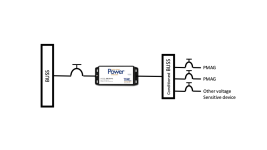
After a while I went with a more permanent solution...I put the PMAG ship's power on a "Conditioned Bus" that is powered by a TCW unit that keeps that bus powered at 12V during start. No problems since.
This is a great reply and (I believe) exactly what is happening. I am reading a voltage drop but not significant at the g3x screen readout. I will put a good multimeter on the pmag wire itself and see what is going on. At first, I just couldn’t believe voltage was an issue because the battery is cranking the engine quite well. BTW, Brad at Pmag suggested the exact same thing.
DCBROWN- WHAT IS A “CONDITIONED BUSS” AND HOW CAN I make one? If this is the problem I would like a more permanent solution then wiring a battery pack up under the dash.
Thanks for the replies. And YES. I did ohm the plugs before install and twice after the issue started. I also switched back to the old plugs to see.
Lastly, I will be going over all wiring and connections between battery and pmags. Thanks.
 
This is a great reply and (I believe) exactly what is happening. I am reading a voltage drop but not significant at the g3x screen readout. I will put a good multimeter on the pmag wire itself and see what is going on. At first, I just couldn’t believe voltage was an issue because the battery is cranking the engine quite well. BTW, Brad at Pmag suggested the exact same thing.
DCBROWN- WHAT IS A “CONDITIONED BUSS” AND HOW CAN I make one? If this is the problem I would like a more permanent solution then wiring a battery pack up under the dash.
Thanks for the replies. And YES. I did ohm the plugs before install and twice after the issue started. I also switched back to the old plugs to see.
Lastly, I will be going over all wiring and connections between battery and pmags. Thanks.
Off of my main power buss at the instrument panel, I fed a TCW intelligent power stabilizer and then to another small buss. TCW makes a 4a and 8a version. 4a is fine for ignition unit(s), if you want to power EFIS type equipment with it as well, I suggest the 8a. See attachment.

1752172134331.png
 

Attachments

Last edited:
Off of my main power buss at the instrument panel, I fed a TCW intelligent power stabilizer and then to another small buss. TCW makes a 4a and 8a version. 4a is fine for ignition unit(s), if you want to power EFIS type equipment with it as well, I suggest the 8a. See attachment.

View attachment 92130
GAD27 has the same function built in if you have one of those installed.
 
Come on! You don’t think I checked all that? I’m hurt.
<SNIP>… with all of the advice, wisdom, suggestions, experience, and efforts offered on this forum it would be awesome to know if you have resolved the problem yet. Inquiring minds awaiting.
 
Last edited by a moderator:
FIXED! Thanks to the help at P-mag and you all. Here is what happened.

Review: 53 hrs on the new plane and never had an issue starting. Hot, cold, flooded, whatever.
A Bit over 2 weeks ago I was giving short rides on a very hot day and on the 6th ride the plane just cranked and cranked. - no fire.
Left me sitting that day and most of the next when all of a sudden and with no help from me it just fired up and ran great.

Forward 2 weeks and 3 attempted flights. ( fired right up 1 day. No fire the other 2). I couldn’t figure out why. Changed plugs, checked compression, re-timed, pulled fuel injectors and flow checked, etc. etc…

P-mag tech help said “I’ll bet you a steak dinner is is your voltage dropping below 8V on cranking”. Seems the P-mags go into “safe mode” or something when the voltage drops below 8 and won’t spark.
I said, “No way! I have 13+ on the buss and battery is lithium- fully charged. “

Well, I did not check voltage AT THE MAG. When I did- I had 8.4V at the mag! 13.7 at the battery and 13.4 on the buss. What is up!?

Started tracing wires and found that my mag power at the main buss just after the fuse had a VERY LOSE screw connection at the buss. Tightened the lose connection and BAM. 13.4V at the mag. Plane starts right up. Cold and hot.

3 missed flights in the last 2 weeks and I was doubting everything from Lycomings longevity to my ability to start any internal combustion engine. Now I owe my wife a trip! Thanks again for the advise.

Safe flying!
 
FIXED! Thanks to the help at P-mag and you all. Here is what happened.

Review: 53 hrs on the new plane and never had an issue starting. Hot, cold, flooded, whatever.
A Bit over 2 weeks ago I was giving short rides on a very hot day and on the 6th ride the plane just cranked and cranked. - no fire.
Left me sitting that day and most of the next when all of a sudden and with no help from me it just fired up and ran great.

Forward 2 weeks and 3 attempted flights. ( fired right up 1 day. No fire the other 2). I couldn’t figure out why. Changed plugs, checked compression, re-timed, pulled fuel injectors and flow checked, etc. etc…

P-mag tech help said “I’ll bet you a steak dinner is is your voltage dropping below 8V on cranking”. Seems the P-mags go into “safe mode” or something when the voltage drops below 8 and won’t spark.
I said, “No way! I have 13+ on the buss and battery is lithium- fully charged. “

Well, I did not check voltage AT THE MAG. When I did- I had 8.4V at the mag! 13.7 at the battery and 13.4 on the buss. What is up!?

Started tracing wires and found that my mag power at the main buss just after the fuse had a VERY LOSE screw connection at the buss. Tightened the lose connection and BAM. 13.4V at the mag. Plane starts right up. Cold and hot.

3 missed flights in the last 2 weeks and I was doubting everything from Lycomings longevity to my ability to start any internal combustion engine. Now I owe my wife a trip! Thanks again for the advise.

Safe flying!
I'll be the first -- You had a screw loose! 🤣
 
FIXED! Thanks to the help at P-mag and you all. Here is what happened.

Review: 53 hrs on the new plane and never had an issue starting. Hot, cold, flooded, whatever.
A Bit over 2 weeks ago I was giving short rides on a very hot day and on the 6th ride the plane just cranked and cranked. - no fire.
Left me sitting that day and most of the next when all of a sudden and with no help from me it just fired up and ran great.

Forward 2 weeks and 3 attempted flights. ( fired right up 1 day. No fire the other 2). I couldn’t figure out why. Changed plugs, checked compression, re-timed, pulled fuel injectors and flow checked, etc. etc…

P-mag tech help said “I’ll bet you a steak dinner is is your voltage dropping below 8V on cranking”. Seems the P-mags go into “safe mode” or something when the voltage drops below 8 and won’t spark.
I said, “No way! I have 13+ on the buss and battery is lithium- fully charged. “

Well, I did not check voltage AT THE MAG. When I did- I had 8.4V at the mag! 13.7 at the battery and 13.4 on the buss. What is up!?

Started tracing wires and found that my mag power at the main buss just after the fuse had a VERY LOSE screw connection at the buss. Tightened the lose connection and BAM. 13.4V at the mag. Plane starts right up. Cold and hot.

3 missed flights in the last 2 weeks and I was doubting everything from Lycomings longevity to my ability to start any internal combustion engine. Now I owe my wife a trip! Thanks again for the advise.

Safe flying!
It sounds like you owe someone a steak dinner!

Skylor
 
Didn't a bunch of people ask you to check volts at the pmag way back in the beginning of this? Glad you got it resolved, but a simple check way back would have saved you a bunch o grief...just saying.
 
The only ‘common’ thing to both pmags for starting is power and ground. You may want to check voltage at the pmag while cranking.
See page 13 of the manual regarding voltage requirements during starting.
POST #18 WALT is the clear WINNER! Kudos! (I have to wonder why a loose screw only reduces voltage? not interrupts voltage) Congratulations on a successful repair!
 
The only ‘common’ thing to both pmags for starting is power and ground. You may want to check voltage at the pmag while cranking.
See page 13 of the manual regarding voltage requirements during starting.
This would imply both power or ground use the same wire to the two pmags? Is that typical? (I am not a P Mag user but interested in the proper wiring) Seems separate wiring, and CB's to each P-Mag a safer way to go?
 
It sure sounds like a single point of failure...

It might be worthwhile to post a schematic here, so that others can weigh in on any risk they see in it.

Ideally it would show, everything, from both battery terminals through to the pmag power and ground terminals.
 
This would imply both power or ground use the same wire to the two pmags? Is that typical? (I am not a P Mag user but interested in the proper wiring) Seems separate wiring, and CB's to each P-Mag a safer way to go?
I would ‘assume’ a single power wire feeds both breakers. Nothing technically wrong with that as they’re such low current draw.
 
This would imply both power or ground use the same wire to the two pmags? Is that typical? (I am not a P Mag user but interested in the proper wiring) Seems separate wiring, and CB's to each P-Mag a safer way to go?
Always a single point of failure somewhere, but P-Mags generate their own power if list. Pick your poison.

I have a bus off the Master. Two P-mag circuits go inside to two breakers then the switches then back to the mags.
Separate grounds to same point on the engine ground.
 
The only ‘common’ thing to both pmags for starting is power and ground. You may want to check voltage at the pmag while cranking.
See page 13 of the manual regarding voltage requirements during starting.
And a single ground can feed both pmags?

For my essential bus Stein used a copper bus bar to cross connect power to the circuit breakers. Seems more robust than a single wire and easily checked on condition inspection. I realize pmags generate their own power but only above 900 RPM.
 
Last edited:
Glad you got it fixed, @toolmanmike . I'd suggest if something this fundamental got missed, you need to have a "safety stand down" and check other things in your aircraft - this is the moment to do this, perhaps with a sharp-eyed buddy, before you take more kids flying.
 
Please run two independent lines from two independent screws on the bus to your two Pmags.

I had the same kind of issue during Phase 1. A shared wire with a marginal crimp at the Y to the Pmags. It worked great 95% of the time. The voltage dropped too low during stall testing and I had an off airport landing.

Listen carefully to the single point of failure advice. There is no reason a single screw needs to affect both Pmags.
 
Back
Top
