Van's Air Force

The definitive Van's Aircraft support community! Buying, building or flying an RV? Join our exclusive family of mentors and enthusiasts!

Cotter pin on axle nut issues

RNB

Well Known Member
Sponsor
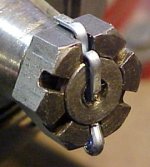
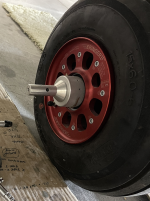
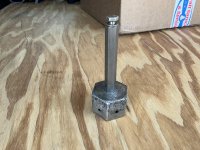
Tire, tube, and brakes worked on by a very experienced mechanic. He was unable to get the cotter pin through the pictured part, said to gently bend the pin, get it mostly though, then finesse through the final holes. He said not to hammer as it would bend the pin. So for now the cotter pin is through just the axle. Note: wheel pants off for a while now. I’ve been told to get the pictured part installed with a good cotter pin prior to flying.

Does this part keep the wheel on in some fashion or is it just for attaching the wheel pants?
Does anyone have the cotter pin part number or exact dimensions for me to order? I need to overnight it due to scheduling hence am asking instead of spending hours searching old responses.
Any tips or tricks to get the pin installed?
I might visit big box hardware store also.

Picture attached might show one hole through IS bore larger.

RV 10, stock.
 

Attachments

  • IMG_0185.jpeg
    IMG_0185.jpeg
    4 MB · Views: 134
The nut holds the wheel on the axle. It absolutely must be in place and secured with a pin. It also applies a small preload onto the bearings, so needs to be on at close to the correct torque (barely finger snug). In a pinch, a steel pin acquired from an auto parts store would be OK temporarily. Take the original one in and get the same size.

But if all this is foreign to you, you might want to get an A&P to do it.
 
  • Like
Reactions: RNB
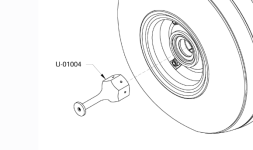
That is the wheel retention nut. it keeps the wheel on, but also doubles as the attach point for the wheel pant. The "big" part of the nut is tightened snug on the axle, then backed off until the cotter pin goes through the axle and nut. You DO NOT torque that big nut down tight, or you'll burn up the wheel bearings. The small bolt holds the wheel pant on.
 
  • Like
Reactions: RNB
Tire, tube, and brakes worked on by a very experienced mechanic. He was unable to get the cotter pin through the pictured part, said to gently bend the pin, get it mostly though, then finesse through the final holes. He said not to hammer as it would bend the pin. So for now the cotter pin is through just the axle. Note: wheel pants off for a while now. I’ve been told to get the pictured part installed with a good cotter pin prior to flying.

Does this part keep the wheel on in some fashion or is it just for attaching the wheel pants?
Does anyone have the cotter pin part number or exact dimensions for me to order? I need to overnight it due to scheduling hence am asking instead of spending hours searching old responses.
Any tips or tricks to get the pin installed?
I might visit big box hardware store also.

Picture attached might show one hole through IS bore larger.

RV 10, stock.
MS24665-379 or 360 (2.5 and 2.0 in) will work (ACS) or 3.2 by 71 mm. It's needed. I've seen some oblong out the hole slightly to get it in. (A new one is straighter and easier to install) Note: MS24665 seems to use cadmium steel or stainless steel. Available in both at ACS.

Screenshot 2025-07-12 112815.png
 
Last edited:
  • Like
Reactions: RNB
The cotter pin alignment issue is a common one. The cotter pin hole is drilled through the externally threaded axle. To insure hole alignment with the nut, folks drill the axle through the hole in the nut on one side, then the other. This often leads to the holes being slightly out of alignment, or slightly out of parallel to each other, hence the need to bend the cotter pin to get it through.
 
The nut holds the wheel on the axle. It absolutely must be in place and secured with a pin. It also applies a small preload onto the bearings, so needs to be on at close to the correct torque (barely finger snug). In a pinch, a steel pin acquired from an auto parts store would be OK temporarily. Take the original one in and get the same size.

But if all this is foreign to you, you might want to get an A&P to do it.
It was an AP/ia builder that could not get it on.
 
The bending was described as being because the edge of the rim blocks the pin from lining up with the hole.
 
Be sure the AP understands that there should be a bit of preloading of the wheel bearings. Most small aircraft wheels get the nut snugged then backed off slightly. Not on Matco.
danny
 
  • Like
Reactions: RNB
Be sure the AP understands that there should be a bit of preloading of the wheel bearings. Most small aircraft wheels get the nut snugged then backed off slightly. Not on Matco.
danny
They use a very standard tapered roller bearing. Never heard of pre-loading a tapered roller bearing. and have installed 100's of them. Strongly suggest you double check that, as you can easilly burn them up. you are probably thinking of the nose wheel bearing which needs enough preload on the integrated seals to not rotate, but not enough to load the bearing itself.
 
Or just follow the plans when it comes to pre-load: (None)

Screenshot 2025-07-12 121938.png
 

Attachments

  • Screenshot 2025-07-12 120022.png
    Screenshot 2025-07-12 120022.png
    202.5 KB · Views: 25
Last edited:
  • Like
Reactions: RNB
They use a very standard tapered roller bearing. Never heard of pre-loading a tapered roller bearing. and have installed 100's of them. Strongly suggest you double check that, as you can easilly burn them up. you are probably thinking of the nose wheel bearing which needs enough preload on the integrated seals to not rotate, but not enough to load the bearing itself.
Yeah, seemed odd to me too. These are standard kit from Van's. I read the instructions...slight preload. Ill dig them up later.
BTW it's mains.
danny
 
  • Like
Reactions: RNB
MS24665-379 or 360 (2.5 and 2.0 in) will work (ACS) or 3.2 by 71 mm. It's needed. I've seen some oblong out the hole slightly to get it in. (A new one is straighter and easier to install) Note: MS24665 seems to use cadmium steel or stainless steel. Available in both at ACS.

View attachment 92268
Thank you, ordered.
 
Also, some cotter pin trivia..

Pin should be orientated so that tails are bent across bolt shaft, not around shaft. Is it going to work its way out in your case? Not likely, but might as well do it right!

PinBent.jpg
 
They use a very standard tapered roller bearing. Never heard of pre-loading a tapered roller bearing. and have installed 100's of them. Strongly suggest you double check that, as you can easilly burn them up. you are probably thinking of the nose wheel bearing which needs enough preload on the integrated seals to not rotate, but not enough to load the bearing itself.
If they were Matco here are instructions for preloading bearings with integrated seal
 

Attachments

  • IMG_0549.png
    IMG_0549.png
    813.4 KB · Views: 26
Last edited:
If they were Matco here are instructions for preloading bearings with integrated seal
I do not believe the main wheel bearings have integrated seals, so the instructions are similar to all other TR bearings - tighten until rotational drag forces are increased slightly, then back off a bit. Nothing there about preloading them. The bearings with integrated seals have a different process to insure the seal is loaded enough to insure it doesn't spin with the wheel, without preloading the bearing itself.

Preloading TR bearings will burn them up pretty quickly as they are not designed for that.
 
Last edited:
  • Like
Reactions: RNB
Preloading TR bearings will burn them up pretty quickly as they are not designed for that.
Some tapered roller bearings are preloaded. I just installed new TR bearings in my truck's differential. They are preloaded to 30 in lbs! You can hardly turn them by hand. It might have more to do with lubrication. In the case of a differential, they are constantly being flooded with hot cycling gear oil. For a wheel bearing, not the case.
 
With the wheel off the ground I slowly rotate the wheel while tightening the nut by hand. Then line up the cotter pin with just a LITTLE BIT more. I don't see a need for preloading tapered roller bearings
 
  • Like
Reactions: RNB
Some tapered roller bearings are preloaded. I just installed new TR bearings in my truck's differential. They are preloaded to 30 in lbs! You can hardly turn them by hand. It might have more to do with lubrication. In the case of a differential, they are constantly being flooded with hot cycling gear oil. For a wheel bearing, not the case.
I believe the differential being flooded with gear oil doesn't experience the same dynamics as a greased roller bearing. As you suggested
 
Some tapered roller bearings are preloaded. I just installed new TR bearings in my truck's differential. They are preloaded to 30 in lbs! You can hardly turn them by hand. It might have more to do with lubrication. In the case of a differential, they are constantly being flooded with hot cycling gear oil. For a wheel bearing, not the case.
familiar with that process, have done a few. I believe that is to account for heat and wear in. If the bearings going in are used, the preload is typically half of new, as the wear in has already taken place. Those diffs get pretty hot and when they do, they expand and then there is little to minimal preload. They have to strike a balance between too loose and too tight in that application. Also in that application, the bearing is pressed onto the shaft or otherwise held captive with a crush sleeve. In a wheel bearing application it is a slip fit and that changes the dynamics. If the bearing rollers are too tight against the outer race, the inner race will spin on the axle shaft and wear it away. This can't happen in a press fit application. You want all of the motion via the rollers.

You won't kill the bearings if you put them in a bit snug, but when you start talking about preload, you have usually gone too far in a wheel bearing application.
 
Last edited:
Yeah, seemed odd to me too. These are standard kit from Van's. I read the instructions...slight preload. Ill dig them up later.
BTW it's mains.
danny
Just FYI I'm not suggesting that someone follow instructions posted by a stranger. Just wanting to inform the OP that there are differences in the instructions. I have the standard Matco stuff and have learned (sometimes the hard way) to read the instructions. Maybe I shouldn't have called it preload but the manual says bearing cones and seals shouldn't rotate. It also says when all the play is out tighten to the next slot and insert pin. Different from the certified planes I work on.
danny
 
I don’t get the preload, everything was held in place by a retention clip.
Also, some cotter pin trivia..

Pin should be orientated so that tails are bent across bolt shaft, not around shaft. Is it going to work its way out in your case? Not likely, but might as well do it right!

View attachment 92291
source?
 
Just open the cotter pin holes in the axle nut to the next drill size up, or big enough to get the pin through easily. Remember the pin hole in the axle was originally drilled by hand, so probably not perfectly aligned to the holes in the nut. I had to open the holes on my old Matco axle nuts after a few years of use. As far as adjusting the bearings to some preload; consider that the nut has to rotate 60 deg in or out to use a different hole pair, so you're going to get what you get with this airplane.

FYI, Beringer wheels happen to come with axle nuts which have ~3/16" cotter pin holes in them, so bigger holes won't hurt a thing.
 
Last edited:
NASM33540 Rev. J is the current standard. It states that either across the nut or around the nut are acceptable within the standard.
 
Also, some cotter pin trivia..

Pin should be orientated so that tails are bent across bolt shaft, not around shaft. Is it going to work its way out in your case? Not likely, but might as well do it right!

View attachment 92291
That is definitely the way I do most cotter pins (there are several acceptable methods), but it won’t work in the case of the RV-10 axle bolt becasue the support strut for the wheel pant is in the way. This post just confuses the person sign the question because it doesn’t apply!
 
That is definitely the way I do most cotter pins (there are several acceptable methods), but it won’t work in the case of the RV-10 axle bolt becasue the support strut for the wheel pant is in the way. This post just confuses the person sign the question because it doesn’t apply!
Yes I understand this. I can't bend them all the way across the bold on my RV-4 either, but I still bend them in that direction as it's best practice. Too big a deal being made of this minor point..
 
Here’s what I do, so far it hasn’t failed me.
With some pliers, bend the cotter pin near the head. You should have a long straight piece left, that is long enough to go thru both holes, while the bend is sufficient so the head doesn’t hit the rim. Make sure the tail (end with two halves) doesn’t spread at all. Once thru both holes, straighten the head, insert the rest of the way in.
BTW, some people have experienced a failure with that part, right where the hex rod is bolted to the large nut. An improved after-market part is available, and I think Vans sells an improved part too.
 
Yes I understand this. I can't bend them all the way across the bold on my RV-4 either, but I still bend them in that direction as it's best practice. Too big a deal being made of this minor point..
Minor point is this method although correct can’t work! The OP is talking about a RV-10. I'm sure thousands of airframes can use your method, but this is not one and as others have said does not apply. What direction would you bend them for this application?

Screenshot 2025-07-12 191918.png


Minor point is this method although correct can’t work! The OP is talking about a RV-10. I'm sure thousands of airframes can use your method, but this is not one and as others have said does not apply. What direction would you bend them for this application?

View attachment 92368
I see your point, and to that, as you know, this is not a castellated nut. I bend them over on the flat one each way. Take care that the cotter pin isn’t too long and is properly seated against the flat so it can not make contact with the wheel if it rotates.
By the way, the method shown in post #14 won’t work on most applications in our RV’s unless you clip one leg of the cotter pin as in most of our applications, if not all, the nuts are flushed against a washer.a shorter cotter pin may not have the length to properly wrap over the bolt end, with recommended thread exposure.
So, not really applicable regardless….
 
Last edited:
Here’s what I do, so far it hasn’t failed me.
With some pliers, bend the cotter pin near the head. You should have a long straight piece left, that is long enough to go thru both holes, while the bend is sufficient so the head doesn’t hit the rim. Make sure the tail (end with two halves) doesn’t spread at all. Once thru both holes, straighten the head, insert the rest of the way in.
BTW, some people have experienced a failure with that part, right where the hex rod is bolted to the large nut. An improved after-market part is available, and I think Vans sells an improved part too.
AircraftSpecialty, great parts to go with Beringer wheels !

Screenshot 2025-07-12 200355.png
 
Also, some cotter pin trivia..

Pin should be orientated so that tails are bent across bolt shaft, not around shaft. Is it going to work its way out in your case? Not likely, but might as well do it right!

View attachment 92291
This will not work for most, if not all RV applications. See above post…..#29.
 
Here’s what I do, so far it hasn’t failed me.
With some pliers, bend the cotter pin near the head. You should have a long straight piece left, that is long enough to go thru both holes, while the bend is sufficient so the head doesn’t hit the rim. Make sure the tail (end with two halves) doesn’t spread at all. Once thru both holes, straighten the head, insert the rest of the way in.
BTW, some people have experienced a failure with that part, right where the hex rod is bolted to the large nut. An improved after-market part is available, and I think Vans sells an improved part too.
This is how i do it on my 10 as well and it works. Key is keeping the tail ends from spreading apart.
 
Back
Top