Van's Air Force

The definitive Van's Aircraft support community! Buying, building or flying an RV? Join our exclusive family of mentors and enthusiasts!

RV-3B Dave's in Colorado

After removing the RH Pmag and changing some fittings, I managed to eliminate the interference and still have one of the hoses fit.

It helped to have a strong shop light oriented carefully, as well as removing some of the LH Pmag’s leads. And I did buy a specialized wrench which proved essential.

This has proved quite frustrating because I was reluctant to remove a Pmag and not sure what else I'd have to remove or what that would lead to. Had to overcome a considerable bit of hesitation. During that period, I made a batch of Gougeres (cheese puffs) and a couple loaves of bread. The pizzas, steak and batch of brats also helped relieve my kit plane anxiety. It’s so nice to be able to start and actually finish something over a couple days.

All in all, if I were doing this again, I would not install an Airwolf remote filter. Nothing wrong with the system, merely that it doesn’t fit gracefully in an RV-3B with an O-320-D2A. Be warned. Besides, if this keeps up, I’ll be too fat to fit in it.

Sorry, no photos this time. Might get one next time, though.

Dave
 
I’ll be too fat to fit in it
Can't see that happening, somehow ;)
Such a project is a constant source of frustrations, new problems rearing their ugly heads around the corner... and yet offer such satisfaction when cracked. Those are some of the rewards.
Really happy for you that you keep going at it, kudos!
 
There’s been some slight progress. Right now 4 of the ten hoses are installed. 3 more have their changes figured out. The remains 3 will need full redesigns.

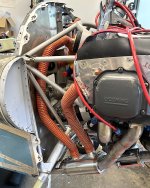
Here are some photos of hose C, which goes to the oil cooler. Here’s the engine end followed by the oil cooler end.

Hose C end 1.jpeg

Hose C end 2.jpeg

You can see how I trimmed the bottom of the firesleeve in an attempt to obtain some clearance.

This is one of the 3 hoses that need to be changed but which I’ve figured out.

I bought some more non-aircraft hose from the hardware store to use for trial fitting.

An unrelated issue is that the oil filler tube interferes with the engine mount, always has. This is not uncommon, I understand, with RVs. Mine is a bit over 6” from the gasket at the base to the cap. Here, you can see the effect of the current interfering fit on the paint on the cap.

Oil Filler Tube.jpeg

I called up Lycoming’s support and learned that the LW-15970 is 3” for that measurement, which will work on this plane. The threads at the top and bottom match. The tech support person suggested that as this is an experimental, that I trim the dipstick to suit my own levels. Aircraft Spruce sells these tubes for $245.95 as of July 7, 2025. Lycoming will not sell it direct to me; Spruce is an authorized dealer.

I know that various people have done various mods to their tubes to shorten theirs, but I don't plan to do that. There's a part that fits so I'll take the expedient path.

Dave
 
There’s been some slight progress. Right now 4 of the ten hoses are installed. 3 more have their changes figured out. The remains 3 will need full redesigns.

Here are some photos of hose C, which goes to the oil cooler. Here’s the engine end followed by the oil cooler end.

View attachment 91908

View attachment 91909

You can see how I trimmed the bottom of the firesleeve in an attempt to obtain some clearance.

This is one of the 3 hoses that need to be changed but which I’ve figured out.

I bought some more non-aircraft hose from the hardware store to use for trial fitting.

An unrelated issue is that the oil filler tube interferes with the engine mount, always has. This is not uncommon, I understand, with RVs. Mine is a bit over 6” from the gasket at the base to the cap. Here, you can see the effect of the current interfering fit on the paint on the cap.

View attachment 91910

I called up Lycoming’s support and learned that the LW-15970 is 3” for that measurement, which will work on this plane. The threads at the top and bottom match. The tech support person suggested that as this is an experimental, that I trim the dipstick to suit my own levels. Aircraft Spruce sells these tubes for $245.95 as of July 7, 2025. Lycoming will not sell it direct to me; Spruce is an authorized dealer.

I know that various people have done various mods to their tubes to shorten theirs, but I don't plan to do that. There's a part that fits so I'll take the expedient path.

Dave
Dave, another choice that might work as well or better - there is a filler tube and dip stick that is about 11" long. That puts the filler end closer to the cowl so you don't need a long-necked funnel, and its an easier reach inside to check the dip stick. The cylindrical tube portion would be adjacent to the engine mount tube, so you would have adequate clearance for that. Also - I believe Superior Air Parts has one that is a fraction of the cost of the Lycoming one. The Lycoming p/n is 75736. Its about $140--$170 depending on aftermarket source.
 
Steve, thanks, that's a great suggestion. I spent some time this morning measuring and figuring and decided it would not fit either. After a bit I remembered something... way back when I was first contemplating this, several years ago, that's the filler tube I removed for the current one. And I checked and the one you suggested is in my removed parts box. It still doesn't fit well.

If anyone wants it, without the dipstick or cap, bare 75736 tube, I'll let it go for $100 plus shipping. It's been run at Lycoming and once more on a test stand, otherwise new. Send me a PM.

But I did some general checking and found that I could get the shorter one for $150 used or $182 new. This an improvement -- so thanks for the push.

Dave
 
While I was working on the never-ending hose chapter of this saga, I spent a few minutes trimming the #3 aft baffle to provide more clearance for the manifold pressure sense line.

Baffle Trimmed.jpeg

Since one of the hoses had a conflict with the engine mount, I adjusted the forward end of the oil cooler higher by 3/8”. That resolved that issue.

Now the hoses are waiting for stuff to arrive and for Oshkosh to be over.

I mocked-up the cabin heat and carb heat ducts, using Spruce’s VENA hoses. These are not the same as the SCAT hoses I’d gotten for my C180 39 years ago. They both are one-layer with wire inside, but the original had a removable wire; I’d peel it out of the ends, snip it off, and use red RTV to seal the wire end inside the duct and to seal the end of the duct. It was easy to install and remove these ducts, and after nearly 40 years and 1,600 hours, it still is.

The VENA’s internal wire is too well bonded in to do that. In fact, the only way I found to get a relatively clean cut on the end was to use a pneumatic cut-off disc. These fit okay but were a little snug.

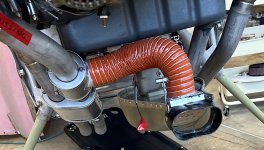
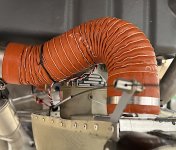
For the cabin heat, routing the longer duct was difficult. I might perhaps have hinted that there’s little room between the firewall and the engine. Believe it. But eventually I figured out where it goes. As you might see in the photo, some clamping will be necessary. The supply duct is shorter and I made this one about an inch too short, as you can see in the photo.

Cabin Heat Ducts.jpeg

The mock-up carb heat hose fit relatively nicely by comparison. I’ll have to bend the flapper valve control arm to clear it, though. It does not touch the oil pan. Also the FAB is not fully installed right now. It's only affixed to the carb for this fitting.

Carb Heat.jpeg

All three of the ducts now have their flight versions on order from Custom Ducts, highly recommended to me by David Howe. Here’s the link:

Link to Custom Ducts

These will have silicone ends.

Dave
 
Been working on small stuff while the hoses are out for their re-do.

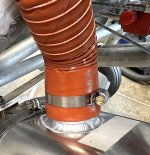
The custom ducts are in and I’m in the middle of mounting them. Can’t do them all because that’ll inhibit access to the hoses. Here’s an end of one of them.

Duct End.jpeg

The wire inside is encapsulated in silicone so it can’t poke out and be a problem. These are nice products!

I did get most of the sensors installed, the simpler installations anyway. The electrical hookup remains.

The GRT Hall effect amperage sensor goes over a wire that’s already installed. Naturally, it won’t fit over the terminal ends so I made a new one. I’m using the smaller of the two sizes, the one limited to 50 amps. Its hole size fits nicely over some shrink tube, with additional layers of shrink tube as stoppers.

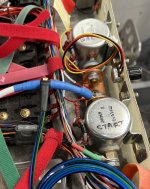
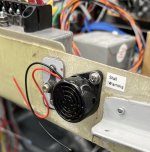
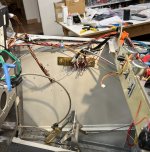
I was given a piezo horn for my stall warning. I’m installing it as an adjunct to the headset tone. When I was laying out the panel and avionics shelf this wasn’t part of the plan. The horn is attached to the back rib of the shelf pointing at the firewall where I hope the sound will be reflected back to me. Its volume control is on the same rib in between the master and starter contactors.

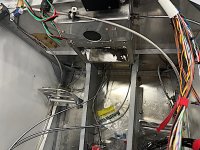
The first photo shows the GRT Hall amp sensor in blues and greens as well as the stall warning volume adjust. The stall warning horn system is not yet wired up.

GRT+Vol.jpeg

And here’s the horn.

Horn.jpeg

Dave
 
Been working on small stuff while the hoses are out for their re-do.

The custom ducts are in and I’m in the middle of mounting them. Can’t do them all because that’ll inhibit access to the hoses. Here’s an end of one of them.

View attachment 93974

The wire inside is encapsulated in silicone so it can’t poke out and be a problem. These are nice products!

I did get most of the sensors installed, the simpler installations anyway. The electrical hookup remains.

The GRT Hall effect amperage sensor goes over a wire that’s already installed. Naturally, it won’t fit over the terminal ends so I made a new one. I’m using the smaller of the two sizes, the one limited to 50 amps. Its hole size fits nicely over some shrink tube, with additional layers of shrink tube as stoppers.

I was given a piezo horn for my stall warning. I’m installing it as an adjunct to the headset tone. When I was laying out the panel and avionics shelf this wasn’t part of the plan. The horn is attached to the back rib of the shelf pointing at the firewall where I hope the sound will be reflected back to me. Its volume control is on the same rib in between the master and starter contactors.

The first photo shows the GRT Hall amp sensor in blues and greens as well as the stall warning volume adjust. The stall warning horn system is not yet wired up.

View attachment 93975

And here’s the horn.

View attachment 93976

Dave
Your starter diode appears wrong. Starter solenoids usually have a s term on left and an i term on right. the s term is the 12v in to activate solenoid. The i term is a bridge of the contacts (12 v). The diode cathode is correctly placed, but the anode needs to go to ground, not 12v, in order to do its job of shunting excess energy. It will also prevent the solenoid from releasing, as once the contacts close, you now have a 12 v source for the solenoid winding via the i term. Not familiar with that solenoid, so very possible it is a grd and not an i term, but not likely. If it is an i term, it needs to get fixed.

Same possible issue on master, but don’t know what the right post is.
 
Last edited:
Your starter diode appears wrong. Starter solenoids usually have a s term on left and an i term on right. the s term is the 12v in to activate solenoid. The i term is a bridge of the contacts (12 v). The diode cathode is correctly placed, but the anode needs to go to ground, not 12v, in order to do its job of shunting excess energy. It will also prevent the solenoid from releasing, as once the contacts close, you now have a 12 v source for the solenoid winding via the i term. Not familiar with that solenoid, so very possible it is a grd and not an i term, but not likely. If it is an i term, it needs to get fixed.

Same possible issue on master, but don’t know what the right post is.
I believe you will find that the coil David is using is a Cole-Hersee 24047 Solenoid - Intermittent Duty, with the activating circuit completely independent from using the housing as a ground. There is not I pole on the style. Van's uses the Cole-Hersee 24021 (or equivalent), which does have the I-pole for energizing the start capacitor on older model Ford, FWD & I H C trucks.

Just Sayin ...

HFS

Those of us (builders) who didn't use the airframe for ground, used this type of contactor (or equivalent) to independently carry the ground load back through "summing" busses to the battery negative pole. (Take note Rob Woodard)
 
Last edited:
I believe you will find that the coil David is using is a Cole-Hersee 24047 Solenoid - Intermittent Duty, with the activating circuit completely independent from using the housing as a ground. There is not I pole on the style. Van's uses the Cole-Hersee 24021 (or equivalent), which does have the I-pole for energizing the start capacitor on older model Ford, FWD & I H C trucks.

Just Sayin ...

HFS
thanks for pointing that out. As I said, I was not familiar with that style, but just wanted to be sure the builder checked it.
 
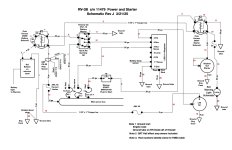
Here's the schematic. The picture on it showing the solenoids are copies of the Cole Hersee ones (HFS had it right, of course). The wiring to the solenoids physically matches this schematic - did I do it wrong?

Schematic - Power, Starter Rev J.jpg

Dave
 
Here's the schematic. The picture on it showing the solenoids are copies of the Cole Hersee ones (HFS had it right, of course). The wiring to the solenoids physically matches this schematic - did I do it wrong?

View attachment 94021

Dave
No, you did it right. My apologies, as I was not familiar with that style of solenoid. The style I am used to is different. Was only trying to help out. Didn't mean to set you on alert.
 
No problems, Larry. I'm not the best builder generally and totally not electrically knowledgeable. I'll take - or at least consider - any assistance I'm offered. That's one of the reasons, besides completeness and good documentation for the next owner, that I include part numbers on the schematics.

Besides, when I saw "cathode" and "anode" in your post, I knew it was beyond me.

Dave
 
Great to see your progress Dave, it's looking really good. I'm finally building the new tail for my RV-4FB. Hoping to get it back in the air this winter.
 
Glad to see this, Ryan. I was wondering how you were coming.

After the hoses arrived from their re-do, I put them in. What was sort of astonishing is that they all fit and are now all hooked up. I figured that some of them would need to go back for a third trip but as of this moment, they are all installed.

Last 3 Hoses.jpeg

Naturally, when they were complete, I realized I’d forgotten order a couple of the brake lines and another. That got done and now they are all installed. No more hoses to install. Good work, TS Flightlines!

Sounds good, huh? I had to remove the RH Pmag to facilitate one hose and lost one of its hold-down lugs. That little thing just disappeared. I know it didn’t go into the accessory case anyway, but besides that, I don’t have a clue. I ordered another and even after that, the lost one didn’t suddenly reappear. Doesn’t that violate the Law of Lost Things?

I bought a borescope to double-check that the lug hadn’t fallen into the accessory case. All’s good there, it’s not inside the case, and moments after I put the borescope away I found it on top of the engine, so I suppose this was an extended example of the Law. How it got there, I haven’t a clue.

Pmag came through with outstanding and immediate service. Thanks very much to them!

Started adding Adel clamps. The first was through the firewall for one of the heater hoses. The right-angle drill’s valve locked on, giving me two speeds: high and off. Then I saw an o-ring on the floor and for a bad moment thought it went somewhere to an engine accessory. Fortunately it was for a broken plastic part of that drill. Anyway, the first few Adel clamps are installed.

At this point there are still a number of Adel clamps to install. I think that one or two are visible, uninstalled, in the photo. This is very much an on-going effort.

Looking ahead to the cabin vents, since there doesn’t appear to be any place to install a NACA vent without either the inlet or the cabin vent nozzle interfering with something important like, well, me, I decided to install the RV10 vent kits close to where Rob Holmes put them on his RV-3B. I had both the NACA vent kit, a Steinair nozzle for it and the RV10 air vent kit on hand.

I checked with Rob and he confirmed that these RV10 vents and locations were effective. He also mentioned that they are easier to block during washing the plane than the NACA types.

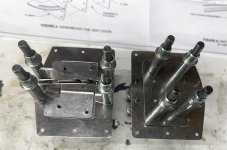
This is VENT SIDEWALL KIT in Van’s store, for $33.83 as of September 2025. There are two of the vents in the package. The store says that there’s a newer version, CA LV-3 VENTILATOR, but doesn’t provide any details of it. There’s also a knob kit which some people use that costs an additional $20 or so, which was included in my 2021 kit. In this photo, they are clecoed together.

Cabin Air Vents.jpeg

I have reference photos from when his plane was out here, but they really aren’t good enough to show here. When I get mine installed, then you’ll see where to put them.

A long time ago I got a ride in an early RV-12 which had these, and thought that they were very, very effective, even on the ground.

Dave
 
I started installing these vents and now have the left one in. Riveting was fun! I haven’t done any riveting in a long while. I made it easier on myself by getting a few soft rivets, and those things are sweet. Their strength doesn’t even seem to be listed in MIL-HDBK-5, so they are not at all structural. But ten of them per vent? Probably okay.

LH 1.jpeg

Then I located and made the cut-out for the RH vent. Cutting out the rectangular holes involved these tools:
Small drill just inside the corners,
Dremel cut-off disk for the straight cuts,
Nibbler to remove some excess material (the Dremel isn’t that precise),
Dremel drum sander to do some rough smoothing,
Assorted files to finalize the edges and corners.
Cutting the holes was a bit of a pain, but I should not complain; it went quickly enough.

The riveting was fun. I like those soft rivets. But I only used them for the perimeter stiffener to the skin. I used “oops” rivets for the flapper itself because they took less countersinking and I could use the squeezer. The two vents used 32 rivets.

RH 1.jpeg

The interior panels are currently out of the plane. That white bracket holds the oxygen regulator.

The vents are shown open for illustrative purposes. I’ve included enough of the structure so that you can get an idea where I put them.

I used a bolt instead of a screw for the left-hand one for installation convenience. Functionally, they’re the same.

And now the cabin venting system is complete, with these on the sides for fresh air and the cabin heat going through the firewall.

The file below, "VAF Blog...." is a table of contents to date.

Dave
 

Attachments

Last edited:
Just a note before today’s entry:

I save these pages as a PDF. I’m using a Mac and Firefox. Here’s what I’ve found.
1. The Firefox browser smears some text and photos, making portions unusable. Firefox didn't do that in the past.
2. The Safari browser doesn’t do that, but it puts all 50 posts on only 5 PDF pages, making the entirety unusable.
3. The Brave browser puts good stuff on the proper number of pages.
4. I haven't installed Chrome and have no plan to do that.

In another thread I was accused of not cutting any corners. For the record, I’ll cut or round off any corners that I possibly can. I figured out roughly how much weight I save doing that and found that it can’t possibly be justified that way. But I like it.

After getting all the Adel clamps I could possibly use FWF, I slowly came to realize that the hose lengths and access really don’t suggest Adel clamps in most instances for the hoses. I ordered some PTFE spiral wrap t prevent chafing instead. That’s the more expensive but high temperature (500 F) and corrosion-resistant type. You can get some from McMaster, not cheap. After it came, I learned that the expanded diameter on their website is wildly over-rated. They say it opened up to 1”, the size I got, and its practical maximum opening is 5/16”. Its passive ID is 1/8”.

I ordered some of their high-strength spiral wrap, in 1/4” and 3/8” ID to replace the PTFE kine. This stuff is HDPE and it’s good for 280 F. This works, and I stuck some on hoses that are too short for Adel clamps but which might chafe something. Since it came in 10’ lengths, I used a little on wiring in appropriate places.

And wiring is the job of the day. There are lots of sensor wires on this plane, probably inevitable these days, but still irksome. Using Van’s sensor manifold, all my pressure sensors are near one another, which is handy. The odd manifold pressure sensor was such a pain to connect the wires to that I said the devil with it and ordered the alternate kind from Dynon which is physically like the oil and fuel pressure sensors.

One set of wires, mostly the pressure sensors and the CHT and EGT wires for that side of the plane, head across the firewall to the left side, while a similar set of wires goes out under the battery in the right cowl cheek extension. The CHT and EGT wires are also split so that they come out on the side of their cylinders. The RH cheek extension has a full bulkhead so I put a grommet there. The LH has only a ring bulkhead which wasn’t wide enough for a grommet, so I attached an Adel clamp to that one.

And that’s what I’ve been up to, just a lot of hook up stuff in tight places. Frankly, I hate this. And I’m not very good at it.

Dave
 
I’ve been trying to wire up the engine and its sensors, as well as securing stuff to prevent chafe while permitting engine motion. In the tight volume FWF on my RV-3B, it’s been difficult. Especially because I’ve had to figure things out myself.

The Dynon installation manual is excellent. Today I got the Red Cube fuel flow sensor hooked up. The first mystery was that Dynon’s EMS has three wires for this, power, ground and sense. The Red Cube has three coming out, power, ground and sense. They are red, black, white and green. Green? Wire number four? Huh?

Turns out this is a Red Cube artifact. The cable coming out of that has all four wires but the green one isn’t used, at least on the Dynon Skyview installation. In fact, as received, it had been trimmed back inside the sheathing. But I removed a bit of the sheathing for the connections and there it was, in all its green glory. When I understood it wasn’t needed, I cut it back.

The second thing wasn’t actually a mystery, it was an unusual connection. The Red Cube uses proprietary connectors that it feels are more reliable than crimp connectors. Maybe they are and maybe they aren’t, but they are certainly more awkward to install. I placed them at different wire lengths so that they wouldn’t bunch up, and I used 1/4” shrink tube to cover them. Their exteriors are not conductive so that wasn’t a requirement, but I felt more comfortable with the shrink tube around them. I did miss one thing though. 1/4” shrink tube doesn’t shrink down to 22 AWG wire, so I should have used some intermediate shrink tube there.

Here is an excerpt from the Dynon HDX wiring schematics, a separate file from the installation manual. This convinced me that the green wire from the Red Cube could be ignored.

Red Cube Wires.png

The Pmags need some wires out from the panel switches for power and the P-leads. Those are already connected to the switches. At first I thought that I’d screwed up by bringing them to the right side where all the rest of the avionics shelf and EMS wires are routed, thinking that the left side made more sense for the left Pmag switch’s wires. Then I remembered that they must go to the same side as all the rest or I wouldn’t be able to open the shelf, which uses the wire bundles as a sort of hinge, to get access to the bottom.Those of you who have airplanes where there’s minimal access to things sure have my sympathy. Mine isn’s great in this regard but it’s readily doable, with a little work.

And here’s the really good part: I marked them, right or left, and which Pmag pin they went to. I saw that and for a warm feeling; sometimes I can do the right thing.

I routed the left ones around the cockpit and out the cowl cheek extension.

The oil temp sensor is connected.

Both the hot side and the cold side temp sensors under the cowl got connected.

I’m making slow progress tying up the ignition leads.

All the ground wires, which I’ve been collecting in a large bundle, finally got their Faston connectors added and attached to the forest of tabs on the RH side of the fuselage. The wires had been left long to allow routing and trimming. I added identification labels to each one, learning that it was best not to shrink the labels until after the wires were attached to the tabs. That way I can orient the labels so that they are visible. So far I’ve used 25 of the 40 tabs.

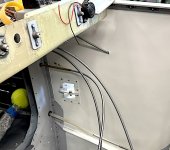
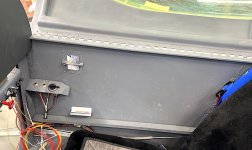
In the photo below, the forest of tabs is on the cabin sidewall. The wires to it are tied up, although they look ragged. The firewall, to the left, needs more timing and so does the remainder of the plane. I’m not nearly as good as this as I thought I’d be. But I’m slowly getting there.

The bundle coming diagonally down from the firewall, through the longeron and disappearing into the sidewall continues forward out into the FWF area through the cowl cheek extension. The single white and black wire that leaves the bundle for the ground tabs is teh ground from a temperature sensor on the engine.

Ground Tabs.jpeg

Dave
 
After I’d gotten a set of ferrules and squeezer for the Pmag wiring, but before I wired those, I realized that the stall warner could benefit from them, too. Now that’s done.

One thing that had stymied me was the red, white and black wire for the carburetor ice sensor. It goes between the carb, the carburetor heat muff and the throttle cable, and I really did not want it to snag the throttle. In the middle of one night, I figured out that I could glue a few inches of that carbon kite spar tube that I used way back when to mount the landing light in the wing as a stand-off, gluing it to the outside of the FAB. I had gotten some extra tubes for water, that stuff is light and stiff.

I worked out how to do it, how to shape it to fit the curve in the FAB wall, which has a compound curve. Then I thought that I’d better put the carb heat hose on to make sure it clears everything. With that on, not only did the hose clear the throttle and the carb heat control, it made a handy place to tie the pesky carb ice sensor wire to. Done.

In the photo, the carb heat control is also shown.

ARP Wire.jpeg

I am currently grounded for medical reasons. Hope to get back in the air soon though.

The Dynon EGT and CHT sensors have armored cables. These attach to the connection wires from the EMS. This is conceptually easy enough and I have the connectors and tools to do it. On my plane, these wires go through the cowl cheek bulkheads rather than the firewall. For some reason, the armored cables are just exactly the wrong length to easily route, considering that they need to allow for engine movement and some future maintenance. I won’t say I’m stymied because I do have a notion where to run them, but it’s another area where I’m lagging a bit.

But what the heck; I can’t fly now anyway.

Dave
 
It's been a pile of days since I posted, sorry.

I've been doing this and that. I am ungrounded again, and in fact have been flying somewhat regularly, including on New year's Day, for my 26th annual NYD flight. Here and there, I've been working on the kit plane too.

Incidentally some friends asked me a while ago, what I call it. They were expecting an airplane name and were disappointed when I told them I call it "the kit plane." But it does differentiate it from my C180.

The EGT and CHT wires are now terminated and connected. They aren’t pretty. The connections, 1/4” Faston, male and female, are relatively huge. They would work better on a larger plane, like any of the other RVs or perhaps a DC-6. I think it would be better to use Dsub pins with shrink tube over them, and might call Dynon to see if I can do that. Maybe. Sometimes I get lazy and they are probably understaffed for the holiday… Maybe. But as of early February, I still haven't.

I decided to give the plane a holiday gift this year, so it’s getting a GPS-2020. I’d been holding off on that because I could install it anytime, but creeping price increases drove me to it. When it arrived, I poked among my parts bins and found a bin that had screws that fit and exactly enough of them. The antenna is now physically installed in the mount that I’d built a few years ago under the canopy on the back fuselage top. We're looking at the back of the canopy and frame, which are open, and the top of the fuselage under it. (Extra credit question below for observant readers). The GPS antenna's screws dropped right into the fitting I'd made for it a long time ago.
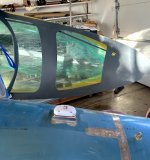
GPS.jpeg

The GPS has more than plenty of wire. The Dynon Skyview EFIS connector also has a few feet of wire. All in all, I believe I have enough wire for the task and maybe another couple of airplanes too. I had expected that I’d attach it to the back of the baggage bulkhead, passing the wires through a grommet, around the periphery down to the bottom and thence forward. A minor impediment arose: I can no longer physically get to that location, at least not easily. Another impediment: the cockpit work platform I’d made no longer fits in, because the flap control lever is in the way. This is honestly the only reason I can possibly imagine for electric flaps.

Still, since I can’t use it to get to the baggage area, it’s moot.

I made four tabs and glued them to the seat bulkhead and laced the wires to those. Running the wires up to the EFIS’s 37-pin connector took two new holes, drilled carefully so as not to ruin existing wires, some swearing, some stretching and then the wires were in place.

I was faced with either removing the wires that came with the 37-pin connector and installing these, or splicing them to these. I elected to do that, using the Dsub pins as described above.

Done.

After some other wiring bits that needed doing, it was time to install the engine’s breather hose. I had the breather hose that Van’s sells and could not figure out how to possibly fit it in the tight, busy FWF area. Then it occurred to me to reverse the how end to end, and with a tiny bit of trimming, it fits just fine. A surprise. I even had the hose clamps for both ends. I still need to install the breathers drop tube and that’ll require yet another purchase. Pending.

The GRT Hall effect current sensor was next. Its wires were neatly coiled up on the avionics shelf waiting for some love and attention, which they certainly no longer expected. I attached the black ground wire to the ground FOT and the green sense wire went to the EMS37 pin 22. The blue power wire still needs attaching to the white and red 5V sensor power supply line. These took me a little time, mostly because life, which seems to be interfering more and more these days, got in the way. But eventually these, too, got connected.

A bit ago, I’d wrapped some of the ignition leads in that self-adhering tape. It protected them against chafe in the tiny FWF space. Turns out that’s a no-no, so I recently unwrapped them. I’m in the middle of re-doing them.

I like to use that black lacing to tie up wires. I had a left-over roll from when I was in the military more than 50 years ago. Unfortunately it accidentally got thrown in the trash one sad day and I had to buy another. Remembering how I disliked the feel of the wax, I bought a different kind.... and didn't care for that at all. So I had to buy another roll of the waxed kind. Probably enough for another 100+ years. Good news is that the new waxed lace doesn't spread its stickiness around like the old stuff did.

Dave
P.S. Did you notice the canopy's third latch tube extending aft? It's between the canopy and frame. The eye of the eyebolt pokes through the oval hole in the frame and the latch tube slides right into it. If you noticed those details, good for you! Extra credit.

 
Got the both Pmags hooked up.

The LH one was particularly difficult. I had to remove the oil cooler to do it. The hardest part was getting the terminals of the wires through the Adel clamp. It would have been impossible to affix them after running the wires through it, and yes, I tried. That Adel clamp with the empty bolt near the bottom is the forward attach point for the oil cooler.

LH Pmag.JPG

Cleaned up the ugly CHT and EGT probe’s connectors. They came with Faston connectors pre-connected. These are terribly bulky in the small FWF space on an RV-3B. I checked with Dynon Support and they said that yes, it was okay to cut those off and use Dsub connectors held together with shrink tube. Here's the before picture:

Before.JPG

And here's the after picture:

After.JPG

Dave
 
A quick note. I have not worked on the RV-3B for over a week, since I was busy gathering together all that I needed to sell my C180. I’ve had the C180 for 40 years and when it flew away, it was a bit hard.

180 Gone S.jpeg

Now I’m looking for an RV-4. Thanks to Mosaic, I’m flying as a Sport Pilot now so a 2-seater is what I need. I’ll miss the take-off, climb and load-carrying capability of the C180, have to admit, but if I can find an RV-4 with a 360 and CS prop, that should do nicely.

If you know of one for sale, please PM me. Thanks!

Dave
 
I hadn’t clamped the LH Pmag vacuum line to the Pam when I stuck it on. At least it’s on. Turns out that this is probably as inaccessible a location as it’s possible to find on this wee airplane. After some serious head scratching, I determined that it’s at least conceptually possible to access it if I removed one of the remote filter mount’s hoses at that end, and one of the oil cooler’s hoses too. Clamping it only took me three nights. Now both ignitions are all hooked up but not timed.

In the course of doing that, I realized that the tire inner tubes, which I evidently installed around four or five years ago, were essentially flat. See post 594. They each had about 5 psi, and they started with 50 psi. The tubes are Michelin Airstop, which have always been good on my C180; but after that length of time, they’d let the pressure seep out. Can’t blame them for that. I can't hold my breath that long either. I filled them up to 50 psi and discovered that the 480x150x5 tires hadn’t flattened all that much in the period - standing on one of them, I can walk the plane forward and aft in the little space available to do that. At least I can with air in the tires.

As I mentioned earlier, selling my C180 after 40 years and looking for an RV-4 has taken much time. I’m getting back to this plane. If I get an RV-4, it’ll probably need a few things, so I’ll start a similar-named thread for that one. I said “if” because after going to look at one and deciding it needed too much work for me, I’m now wondering if I want to go to the trouble to get another airplane or basically quit flying.

But I am continuing to work on this kit plane project. I enjoy that. If I get surprised and it suddenly becomes flyable, I can always get the transition training I'm foregoing now. I certainly have plenty of hangar space in which to put it now.

Dave
 
A smidgeon of progress, finally. I did have to wait for several parts to arrive, not only for today’s episode but for a couple others. You know the drill, one part from that vendor, two from this one and two more from another one.

I’ve got both exhaust hangers on and done. The photo shows the LH one. It would be very difficult to take ap picture of the RH one since there are too many things in the way.

LH Exhaust Hanger.JPG

The exhaust and the hangers are Vetterman, ordered from and made by Larry himself. I remembered to lightly flare the tubes to help prevent them from sliding. We’ll see if that works here.

On the LH side the exhaust pipe bend kept the hanger from being closer to the engine. On the RH side it was the cabin heat and carb heat muffs. Always something, huh?

Still no RV-4 and in fact, I'm not looking very hard at the moment. But willing if a decent one pops up.

Dave
 
Back
Top