Van's Air Force

The definitive Van's Aircraft support community! Buying, building or flying an RV? Join our exclusive family of mentors and enthusiasts!

Fuel tank rivets not flush

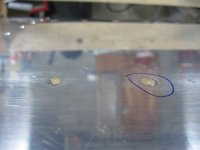
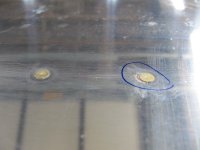
I need some advice on riveting on the tank. I just started my first tank and finished back riveting the stiffeners. About halfway thru I checked the rivets and they didn't seem to be setting flush. So, I made sure to hold down the skin and stiffener onto the back plate when I riveted. It didn't seem to make any difference. I can run my finger across some of the rivets and feel the edge.
I've been reviewing some of the other posts on the forum and had a few thoughts. I thought maybe the dimples aren't deep or sharp enough. Too much pressure on the rivet while setting? The instructions on the c frame say you can't over dimple, but can you under dimple? I usually run the dies together and then give them another 1/4 turn before I tighten them.
I'm debating whether to stop before I install any ribs and rebuild. Any advice on what the problem is? Am I being too OCD?

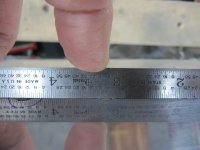
Here are a few pics.
IMG_1433.JPGIMG_1434.JPG
 
 
I need some advice on riveting on the tank. I just started my first tank and finished back riveting the stiffeners. About halfway thru I checked the rivets and they didn't seem to be setting flush.
There are several options.

First, you can get a set of fuel tank dimpling dies. They create a slightly deeper dimple that will help your rivets set deeper. You would need to re-dimple both the skin and the ribs.

Second, the already mentioned rivet shaver.

Third, you can use a roloc wheel or some other abrasive on a die grinder to gently polish the rivet heads to the point they are flush.


From clevtool:

“TECH INFO:
These dies make a dimple 0.007" deeper than our standard dimple dies to allow for the proseal under the rivet head. Historically builders have had to use a 'rivet shaver' bit which can easily get out of control. With these dies used on the TANK SKIN and on the TANK RIBS the rivets will set perfectly flush after riveting.
Also if you purchase the dies they can be used on the substructure of the entire airframe. If you have ever noticed that the skin and the substructure dimples don't nest perfectly we have created a special die for those discerning builders that is 0.011" deeper for the ribs and stiffeners, allowing the dimples to nest together rather than smashing together during the riveting process. If you purchase the tank dimple dies we recommend that since you have them, use them on the substructure of the rest of the airplane too!”
 
Yes. You can under dimple with a C-frame. Whack that puppy hard twice. Dies should leave a doughnut shaped witness mark.

You can probably shave them.

I used Tank dies. Results were nice.
 
Are you using a c-frame or a DRDT? If it’s a DRDT, guessing that’s your culprit. I’d adjust it and dimple some test pieces until you’re satisfied. Or get a C-frame. They’re cheap and hard to screw up.
 
I'm using a DRDT. I'll have to tighten it down. Most of the pressure from the DRDT comes from the frame flexing. It looks like the dimples aren't crisp enough. I've never had a problem, but the skin was .025 or thinner. I'm going to order the tank dies and a shaver. I'll shave what I can and use the tank die for the ribs and remaining skin dimples. At least they are on the underside. Hopefully the paint will fill in.

Thanks for all the help. John IMG_1437.JPG
 
Honestly, they look *okay*, but the witness marks around the dimple from the die are pretty light. You might also be putting too much pro seal underneath the rivet. Sealing is best accomplished from covering the shop ends well inside the tank. If they really bother you, sure, you can shave it, but then you're removing strength from the rivet. Roughing up and then painting will cover most of what you're perceiving.
 
Honestly, they look *okay*, but the witness marks around the dimple from the die are pretty light. You might also be putting too much pro seal underneath the rivet. Sealing is best accomplished from covering the shop ends well inside the tank. If they really bother you, sure, you can shave it, but then you're removing strength from the rivet. Roughing up and then painting will cover most of what you're perceiving.
I agree with the above post. Unless your goal is an award winning polished finish this will not even register as an issue. If the previous sentence is your goal, then stop listening to advice from the internet! Ok, just kidding there. But truthfully, is it a bit OCD? Maybe. They don’t look that bad in the picture.

As for the DRDT, as the continual working of the DRDT when dimpling progresses along on a dimpling task, such as dimpling a tank skin, you need to keep an eye on that nut at the top of the threaded arm holding the dimple die. The one up where it comes down out of the body of the DRDT. That nut is what dials in the amount of pressure that is applied to the dimple die when you pull down the lever. It can, and will, loosen over continual use of the lever.
 
I agree with the above post. Unless your goal is an award winning polished finish this will not even register as an issue. If the previous sentence is your goal, then stop listening to advice from the internet! Ok, just kidding there. But truthfully, is it a bit OCD? Maybe. They don’t look that bad in the picture.

As for the DRDT, as the continual working of the DRDT when dimpling progresses along on a dimpling task, such as dimpling a tank skin, you need to keep an eye on that nut at the top of the threaded arm holding the dimple die. The one up where it comes down out of the body of the DRDT. That nut is what dials in the amount of pressure that is applied to the dimple die when you pull down the lever. It can, and will, loosen over continual use of the lever.
When I use my R2D2. Sorry I mean my DRDT i put a lot of muscle in to it and always get a well formed dimple on .032.
 
Steve,

When you screw the dies together how much more of a turn do you give it before you tighten the nut? I've given it an additional turn. It seems to produce a better dimple. I ordered some new dies from Clevland. I think my others were economy dies. Maybe not the best.
I may be a bit OCD, but "attention to detail" was driven into my head a long time ago. I watched the video from Vans a few times. I'll go back and review again. I am going to use the tank dies and see what the difference it makes.
Thanks for the feedback. It's all appreciated.

John
 
John I just did a test on mine. After the dies just touched I turned it about 1.5-1.75 turns. Its like a compound bow. Should need some good pressure to get it past the over-center but not too much. Also your DRDT needs to be screwed down on a bench. When I used mine I just threw two lag bolts into the opposing corners into my heavy duty bench. It needs to be affixed securely to whatever surface you are working on.
I agree with the above assessment that those couple of rivets don't look bad. You should see a strong witness mark around the dimple when completed.
I also agree that the sealing should be focused on the interior, not in the dimple.
You'll know when it's correctly set. Turn it a quarter more can't compress the handle, back it off a quarter, wow requires still too much force, another quarter turn and it will be just right.

I'll also add I have the Avery and Cleaveland dies and they have worked great for my build. Economy dies are not the place to compromise.
A
 
Last edited:
I was going to suggest you should secure the back of the dimpler. I don't use lag bolts but do use some heavy clamps to hold it down to the table. I noticed a pretty good improvement when I started doing that.
 
Dry fit the rivets and verify that they are perfectly flush before you do anything else.
If they are, then you are getting pro seal under the head. Or possibly you are not holding enough pressure on the stiffener against the back riveting plate when riveting.
If they aren’t flush when dry, then the dimple is too shallow.
You have a couple of options.
Redimple the skin before you do any more riveting if you can.
Otherwise, use the blind rivet dimple tool and redo the shallow ones, or if they are just slightly higher you can touch up the dimple with a deburring tool. (However don’t get too carried away with that method.)
Definitely watch Scott’s video. He gives great tips on both back riveting and riveting using the bucking bar.
It’s possible your only issue is riveting technique.
Good luck.
 
If you elect to use a rivet shaver, you need to know the maximum thickness that can be removed according to the FAA Regs - I don't think it's very much, but needs to be adhered to in order to maintain joint conformity ...

HFS
 
If you elect to use a rivet shaver, you need to know the maximum thickness that can be removed according to the FAA Regs - I don't think it's very much, but needs to be adhered to in order to maintain joint conformity ...

HFS
Excellent point.
Also, while you can use a shaver bit in a micro countersink, I have had mixed results. A quality rivet shaver will set you back several hundred dollars new.
There’s a big difference. A true shaver is spinning at some odd 20k rpm for a reason.
 
Dry fit the rivets and verify that they are perfectly flush before you do anything else.
If they are, then you are getting pro seal under the head. Or possibly you are not holding enough pressure on the stiffener against the back riveting plate when riveting.
If they aren’t flush when dry, then the dimple is too shallow.
You have a couple of options.
Redimple the skin before you do any more riveting if you can.
Otherwise, use the blind rivet dimple tool and redo the shallow ones, or if they are just slightly higher you can touch up the dimple with a deburring tool. (However don’t get too carried away with that method.)
Definitely watch Scott’s video. He gives great tips on both back riveting and riveting using the bucking bar.
It’s possible your only issue is riveting technique.
Good luck.
You may be right about the riveting technique. The proseal makes it slippery. I may have allowed the bit to slide and push over a few of the shop heads.
 
Excellent point.
Also, while you can use a shaver bit in a micro countersink, I have had mixed results. A quality rivet shaver will set you back several hundred dollars new.
There’s a big difference. A true shaver is spinning at some odd 20k rpm for a reason.
The thought of using a shaver makes me wince. I can see it going horribly wrong. I don't think any of the rivets stick up enough to make a shaver an option for me. I think I can sum it up as poor dimples and poor technique on my part.
 
Steve,

When you screw the dies together how much more of a turn do you give it before you tighten the nut? I've given it an additional turn. It seems to produce a better dimple. I ordered some new dies from Clevland. I think my others were economy dies. Maybe not the best.
I may be a bit OCD, but "attention to detail" was driven into my head a long time ago. I watched the video from Vans a few times. I'll go back and review again. I am going to use the tank dies and see what the difference it makes.
Thanks for the feedback. It's all appreciated.

John
Alpha Charlie Delta beat me to the answer. What he said.
 
I used a regular dimple die on my tanks and used a popsicle stick shaped to v shaped tip to scoop out the proseal before inserting the rivets;
all the tank rivets are flush. I prefer the metal to metal contact of the entire rivet head for maximum structural integrity so avoided the tank dimple dies.
It's easier to drill out your rivets now, practice on a test setup until you get your flow sorted out, as opposed to fixing leaks later on.
You are asking the right questions and I'm confident you will sort it out! :)
 
They look about the same as mine. Could be worse, lots of airplanes don't even bother with flush rivets:)
Does the tank leak? If not, no worries..
 
Back
Top