While I was flying it appeared I lost my alternator and with a Lithium Iron Phosphate battery it didn’t last long until I lost my entire panel.
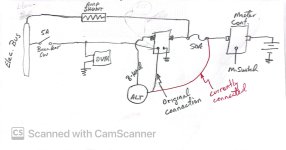
I have my field wire connected to the control terminal on a contactor so I can physically disconnect the B-lead from the system if an over voltage situation occurs. The field wire continues to the alternator to excite the internal regulator on a denso mini alternator. I have a B&C OV module to trip the 5A breaker switch on the field wire going to the control terminal contactor so it will automatically disconnect the B-lead from the bus.
I went to an alternator shop and they said the alternator was good. I checked the voltage on the field wire coming from the panel and it checked good. I even replaced the 5A breaker switch with another switch I had in the panel that was unused. I borrowed a charged battery and started the engine and had no voltage increase indicating it was charging. I even increased the rpm to 2000 to make sure I was over the threshold rpm to active the regulator. I called an alternator shop in my hometown and they said to connect the field wire from the alternator directly to the battery which I did but actually connected it on the other side of the master contactor so when I shut it down the regulator wouldn’t drain the battery. I fired up the plane and immediately it was charging the battery and I flew the plane home. Prior to this happening I had flown the plane for about 30 hrs. Does anyone know why all of a sudden the regulator wouldn’t active even though battery power voltage was present at the control terminal on the contactor where the field wire continued onto the alternator?
I currently have the field wire from the alternator connected to the Master contactor. Is there any reason why I shouldn’t leave it as is other than to kill voltage going to the internal volt regulator?
Thanks
I have my field wire connected to the control terminal on a contactor so I can physically disconnect the B-lead from the system if an over voltage situation occurs. The field wire continues to the alternator to excite the internal regulator on a denso mini alternator. I have a B&C OV module to trip the 5A breaker switch on the field wire going to the control terminal contactor so it will automatically disconnect the B-lead from the bus.
I went to an alternator shop and they said the alternator was good. I checked the voltage on the field wire coming from the panel and it checked good. I even replaced the 5A breaker switch with another switch I had in the panel that was unused. I borrowed a charged battery and started the engine and had no voltage increase indicating it was charging. I even increased the rpm to 2000 to make sure I was over the threshold rpm to active the regulator. I called an alternator shop in my hometown and they said to connect the field wire from the alternator directly to the battery which I did but actually connected it on the other side of the master contactor so when I shut it down the regulator wouldn’t drain the battery. I fired up the plane and immediately it was charging the battery and I flew the plane home. Prior to this happening I had flown the plane for about 30 hrs. Does anyone know why all of a sudden the regulator wouldn’t active even though battery power voltage was present at the control terminal on the contactor where the field wire continued onto the alternator?
I currently have the field wire from the alternator connected to the Master contactor. Is there any reason why I shouldn’t leave it as is other than to kill voltage going to the internal volt regulator?
Thanks