This assumes that the prop governor was not touched or changed:
I recommend a through visual inspection of the prop, the area around the nose of the engine to be sure it's nice & dry & clean (so you can detect any prop seal leakage) which should be no different than before however I have seen prop to crank oil seal o-ring that leaked for various reason. I also like to see people do a blade track check about 10cm from the tips to validate correct assemble etc. Then, with cowling off - take plane outside & again check area for loose dirt, rocks, pebbles etc - never want those around a new prop OH - position so that you can do a NORMAL Mag check & prop cycle exercise (in to the wind is always a plus). Start & warm engine oil till 100F or so - then as Walt said bring RPM's up slowly to get to 1800 or wherever you do your normal check. Slowly bring back the blue prop lever and wait for a reaction - the governor will be generating enough added oil pressure to start filling the crank snout & the dry prop innards... this may take tens of seconds before prop starts reacting properly. Cycle the prop a few times noting expected vs actual responses.... then do a quick mag check - back to idle and shut down. Visual check all around front of engine for any signs of oil leakage or any out of normal situations. Verify crankcase oil level (prop & snout can hold more than you might think plus what you lost pulling prop & cleaning snout. Cowl-up for a test flight. If you have EFIS with engine monitoring (every second data points) then don't spend alot of time on your Tach... do a normal takeoff and stay in T-pattern for a circuit - get a feel for engine smoothness overall and note anything out of Non-standard for your plane. If after 1 circuit your comfortable with everything - then go fly some wider & higher circuits - when really comfy - go back to normal flying. Check the RPM with full power + blue knob full fwd and in a slight shallow dive - make sure RPM's not exceed redline (2700) by more that 10-20 rpm (this is governor limited) - you can verify from EFIS data also. Over the next several flights - line up & wait holding your brakes - give it full power and note Max rpm - this will be data for setting low pitch stop... your looking for 50-75RPM below redline (2700) for static full power RPM's with no wind unloading the prop. Make sure you read your prop Ops & Install manual - it will detail these numbers. Finally after maybe 10 hrs of ops so that everything has settled - you may want to consider dynamically balancing prop shooting for 0.2IPS as "excellent".
Do not worry if you see very minor signs of grease weeping from blade roots on 1st several flights - will be a little assemble slop working its way out - clean after every flight & monitor - 99% of the time it disappears quickly.
Good luck.




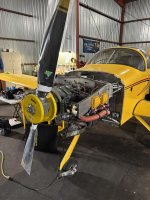


 . Always a confidence-builder...