Van's Air Force

The definitive Van's Aircraft support community! Buying, building or flying an RV? Join our exclusive family of mentors and enthusiasts!

Engine Overhaul Fraud - my nightmare

skirting_virga

Well Known Member
Patron
Alright folks, I've been on the fence about posting anything for the past couple weeks, but I think this is significant enough to be worth discussing. Maybe it will help someone avoid the problem I have on my hands. Hopefully there are not other affected engines out there. I'll just state that actual badness occurred about 8 years ago and I do not personally know the guy who did it. Everyone I've interacted with in regards to my plane has been honest, to the best of my knowledge.

I decided last year that I'm much more of a pilot than I am a builder, and that if I'm going to work on a plane it had better be a *completed* airplane that needs minor maintenance and upgrades. With this in mind, I set out to buy an RV. Ultimately I ended up with an 8A after what seemed like a thorough pre-purchase inspection by a highly qualified A&P IA. This post isn't intended to be about him, or the builder/seller. The engine was overhauled in 2017, purchased by the plane builder, and installed sometime around 2019 for the first flight in 2020. The plane was completed in 2020, flown 50h/year and sold in 2024. The seller had oil analysis going back to the beginning and the filter pleats from a recent 25h oil change. The engine had great compression and low oil burn - about a quart every 12-16 hours. I believe I did due diligence in determining the airplane was sound.

I flew the plane for 4 months at almost 20h/mo hobbs time, including down time for a prop swap, GAMI injectors, starter swap, static ports, stick swap, O2 install, and oil change. It flew well, the engine was smooth, and seemed to make close to rated power. It didn't burn much oil and had good oil pressure. I took it to 16,500 feet. I flew over the rockies several times and did a few 500+ nm XC flights. It performed pretty well, although the cruise speed seemed to be a little slow, which I attributed to high DA where I live. I had a lot of fun and felt competent behind the stick.

At the first oil change (50h tach) I noticed a small quantity of metal flakes in the filter. I elected to keep flying it to see if the problem worsened, which was, in retrospect, questionable judgement. At the second oil change (+16h tach), there were significantly more metal flakes in the filter than the previous 50h oil change. At this point I was convinced I had a serious problem and tried to solicit information here on VAF. Ultimately I decided I wasn't comfortable with the engine without a thorough exam, and pulled it off the plane for a shop to IRAN.

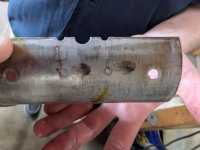
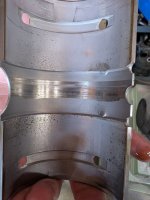
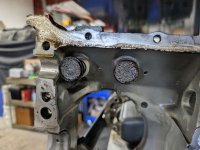
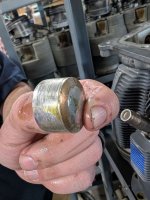
The trusted engine shop got back to me recently and described the engine as a train wreck. At this point, it has 260h SMOH. The camshaft is severely worn. The lifters are pitted and corroded. The piston caps were loose and generating aluminum shavings. The front main bearing was installed incorrectly, denting the bearing into the crank. The assembly of the case halves was faulty, resulting in excessive oil leakage and fretting. In short, some parts may have been overhauled competently, but the person who assembled the engine made bad mistakes. These mistakes could have killed me or the prior owner due to catastrophic failure in flight, and the engine may have been only a few hours from abrupt mechanical failure.

So what went wrong? I looked at the logbook entries and found the engine overhaul entry full of spelling errors. That's fine - lots of people aren't great at written english but may have a talent with engines. There is a list of receipts of new or overhauled parts that went into the engine. Several reputable shops provided these parts. The logbook entry is signed A_______ K________ ####### A&P IA

I looked him up in the airman registry. There are 3 entries with the same first and last name. One is a retired A&P who lives in the wrong state. Another is a recent private pilot with IR. The third is an entry that corresponds with the listed certificate number, who lives in the correct state, has only a student pilot certificate (issued 1999) and no mechanic certificates. As far as I can tell, barring inaccuracy of the airman registry, there's a guy out there who was building engines with no credentials and claiming to be an A&P IA. He sold one such engine to the builder of my plane, and may have sold others. I can only conclude that he intentionally misrepresented himself as an A&P IA to lend the appearance of competence to the work he was doing, but the findings of the engine shop suggest he was wildly unqualified. He built an engine that was a ticking time bomb and passed it off as a "major overhaul" by a competent mechanic.

I'm more than a little upset. This plane should have gone years without needing any major work based on the apparent history, logbook entries, and inspection. Fixing it is going to be very expensive and detracts from my purpose in buying the plane: flying the damn thing instead of building it.


So I'm in need of an angle-valve engine. It is likely impossible to overhaul my engine for a cost much less than a brand new Lycoming from Vans with the appropriate discount. If the crank and case are faulty, it could be $60k for an overhaul. The present wait time for a new Lycoming through Vans is 18 months, which is a ridiculous amount of time to have to wait for an engine for my previously-running plane that has been down 6mo already. If there's anyone out there building a 7/8 or 14, who needs to delay their delivery date for warranty reasons, I believe I could order a Vans-discounted YIO-360-A1B6 or YIO-390-EXP119 with this plane's serial number and trade for your earlier delivery. The only silver lining to this fiasco would be an upgrade to something with a warranty and the reasonable belief of reliability. A 390 for only a few thousand more than what the 360-A1B6 costs would certainly feel a bit better. I realize that's a long shot, but otherwise I'm paying a full new engine price for just an overhaul.
 

Attachments
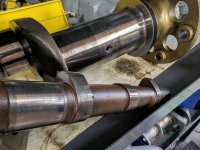
  • camshaft.jpg
    camshaft.jpg
    198.6 KB · Views: 885
  • front main 2.jpg
    front main 2.jpg
    133 KB · Views: 699
  • front main.jpg
    front main.jpg
    179.8 KB · Views: 641
  • lifters.jpg
    lifters.jpg
    170.5 KB · Views: 613
  • piston caps.jpg
    piston caps.jpg
    198.9 KB · Views: 736
Last edited:
I can empathize with your situation.

I bought an O-360 core for my 7. A supposed engine builder, who had a nice add in a certain aviation magazine, sounded like he knew what he was doing when I spoke to him. I brought my engine to him to rebuild. I had the case sent to CSI as he recommended for an inspection and an oiling system mod. He then rebuilt the engine for what I thought was a reasonable price. For final assembly of the 7 I took it to the airport I was moving to, which was a new one for me. After meeting the engine builder at the AMO shop on the field, who I learned had 40 years of experience and a very good reputation, I told him who had done my engine. He rolled his eyes and said the guy had been in court a few times for issues with his rebuilds. Now I was nervous so I had him do a bulk inspection to ease my mind. He found the crank flange had a crack, there were 2 pitted exhaust valves, the rod bolts were O-320 bolts, the cylinders were out of spec, etc, etc... So after spending a bunch more money I had a good engine I could trust which has been trouble free for over 800 hrs. Unfortunately there are shysters everywhere and we don't know what we don't know.

Good luck with your engine search!
 
I'm sorry about your situation. I hope you can find an engine sooner than later. As an instructor at an A&P school, I saw the front main bearing mis-installed on Lycomings more than once. The engine wouldn't even turn on the stand without a lot of effort. Surprising that yours didn't start shedding chips right from the beginning.

Our 6A had an engine in it which was overhauled by a shop in Florida and sold to the builder we bought the plane from. It always had fairly high oil consumption and at 700 hrs was oil fouling plugs so much that we didn't feel safe about going anywhere. Decided to do a top end. The jugs were worn way past re-bore limits so I ordered new ones and started looking at the cam. Well, you can guess what I found. The cam was badly worn and corroded, lifters were spalled, and the cases were fretted. At least I was able to use the crank shaft and rods after re-furbishing. After overhauling the engine I found that I needed to re-pitch the prop to prevent overspeeding and gained about 8 knots. That engine was sick from the get go. I'm pretty sure the overhauler was an airboat guy and just threw whatever worn out parts he could find in it to make a sale. It was only going in an experimental after all. There are unscrupulous people out there.

Ed
 
Gosh, that is a sad story for sure. The upside that comes to mind is this. If you spend $$$$ on another engine, It will be more like moving money around rather than outright spending it. The money will be in the plane and a new or freshly overhauled engine will hold value for a good while. When you sell... you'll get some of the money back.
 
I'm sure many of us can tell stories like this, sadly. This is one of those areas where it pays to do a lot of homework before making a choice. It's not just the money that could be lost.
 
was the engine overhauled at a recognized trusted place? If not, then I would say some of the blame is on the purchaser.
Caveat emptor

When I was shopping the priciest plane on the market had a used lycoming installed in it when new, from someone the seller described favorably. The seller said negative things about getting a prebuy from Vic.

The 2nd most expensive plane also had a used lycoming installed when new.

I think this is an area where profits are made.
 
I'm sure many of us can tell stories like this, sadly. This is one of those areas where it pays to do a lot of homework before making a choice. It's not just the money that could be lost.
I guess, to my thinking, you would have to be a sociopath to sell an unsound airplane engine as sound. You'd have to know that you could kill the person who uses it, and you'd have to be sick to want to do something like that for money.


was the engine overhauled at a recognized trusted place? If not, then I would say some of the blame is on the purchaser.
I can cite at least one instance of an engine built by a national, reputable shop, sold to an A&P IA, that ended up having used parts, and failed catastrophically at 400h. If a sophisticated buyer like that can miss it, I don't stand a chance. Transactions like that are not made with perfect knowledge.

  1. Most potential airplane buyers are not subject matter experts and are dependent on the analysis of others.
  2. Most sellers would balk at pulling a jug to inspect the cam. They rightfully don't want a "maintenance induced failure".
  3. Many, if not most sellers of highly desirable planes in the last few years don't have to wait on the seller who wants to pay Vic to fly out (opposite side of the country). They can just sell to the next guy who doesn't while you're waiting to line up the inspection. I missed out on a top notch 9A that way. In the end it would have cost me less than this airplane, been closer to exactly what I want, and probably have been much more reliable. But the seller didn't have to wait for me to verify it was good, he just sold it to the first guy who showed up with a check. By your standards, you'd have to be an A&P or take huge risks to buy an airplane - not unlike the trend of houses selling with the inspection waived. For the most desirable examples, it's a seller's market
 
Last edited:
I guess, to my thinking, you would have to be a sociopath to sell an unsound airplane engine as sound. You'd have to know that you could kill the person who uses it, and you'd have to be sick to want to do something like that for money.


I can cite at least one instance of an engine built by a national, reputable shop, sold to an A&P IA, that ended up having used parts, and failed catastrophically at 400h. If a sophisticated buyer like that can miss it, I don't stand a chance. Transactions like that are not made with perfect knowledge.

  1. Most potential airplane buyers are not subject matter experts and are dependent on the analysis of others.
  2. Most sellers would balk at pulling a jug to inspect the cam. They rightfully don't want a "maintenance induced failure".
  3. Many, if not most sellers of highly desirable planes in the last few years don't have to wait on the seller who wants to pay Vic to fly out (opposite side of the country). They can just sell to the next guy who doesn't while you're waiting to line up the inspection. I missed out on a top notch 9A that way.

For me that would be a defeatist attitude (I don't stand a chance) and not how I like to operate.

I approached buying recognizing that I was still the new guy at the poker table. I went WAY overboard on my first plane, had some scares. I was still not a subject matter expert. So I took an approach to try and line as much in my favor as possible. I think you likely tried to do the same.

I just wanted to make sure I had an engine I could trust as much as possible. If an installed engine had been overhauled, I valued it less than factory new. If an installed engine had been overhauled by "some guy" then I was not going to be able to pay premium prices. The plane I bought was a highly desirable model in a tight market. But that could not push me into making decisions.

Did you read the log books before making an offer?
Did you see the misspellings?
Did you check references on the engine builder?

For me, it was reasonable to not trust unknown entities cobbling together an engine and then selling at top of market. If there were price concessions that allowed me to stratify risk, then I would have considered it. I did not blame the sellers for having nicely equipped shiny new birds at top of market, but the engine did not command a premium from me.

In hindsight, wouldn't you now counsel others to be weary of where the engines come from? Wouldn't you now say that Factory overhauled to new tolerances beats field overhaul by unlicensed person?

I'd sure as heck publish the log entry publicly!
 
I guess, to my thinking, you would have to be a sociopath to sell an unsound airplane engine as sound. You'd have to know that you could kill the person who uses it, and you'd have to be sick to want to do something like that for money.


I can cite at least one instance of an engine built by a national, reputable shop, sold to an A&P IA, that ended up having used parts, and failed catastrophically at 400h. If a sophisticated buyer like that can miss it, I don't stand a chance. Transactions like that are not made with perfect knowledge.

  1. Most potential airplane buyers are not subject matter experts and are dependent on the analysis of others.
  2. Most sellers would balk at pulling a jug to inspect the cam. They rightfully don't want a "maintenance induced failure".
  3. Many, if not most sellers of highly desirable planes in the last few years don't have to wait on the seller who wants to pay Vic to fly out (opposite side of the country). They can just sell to the next guy who doesn't while you're waiting to line up the inspection. I missed out on a top notch 9A that way.
Sadly, these kinds of problems are an inherent risk for anyone buying a plane. Each of your problems was buried deep inside the engine and would not be caught on any pre-buy, unless you pulled cylinders. That is not a small project and very few sellers are going to let a prospective buyer disassemble the engine. When I advise buyers during a pre-buy, I discuss the risks of lifter spalling. We talk about general use patterns and how they can increase or decrease risk. However, ANY engine can develop this problem and make sure buyers know this is a possibility and need funds available to deal with it.

It should be noted that pretty much all overhauled engines utilize a decent portion of used parts, including those coming from lycoming themselves. This NOT poor workmanship, assuming the parts are properly tested and re-worked as necessary to put them within ovrhaul limits or possible new limits.. I am sure there are bad actors throwing a bunch of defective parts in an engine, but wanted to clarify that used parts, in and of themselves, are not necessarilly poor workmanship.

Larry
 
For me that would be a defeatist attitude (I don't stand a chance) and not how I like to operate.


Did you read the log books before making an offer?
Did you see the misspellings?
Did you check references on the engine builder?
Really? You would not buy a plane where there were spelling errors in the logbook? Certainly there are methods to attempt to identify risk, but they require knowledgeable folks to guide you. I did a prebuy once and found the oil pressure lower than I liked on the engine run. I pulled the regulator and found 8 washers in there. I told the buyer that these are clues as to how the engine was maintained and possibly built. Found a few other short cuts as well. I advised a pass, as there were likely several other issues overlooked or inadequately addressed that we could not see. The A&P working on the plane for many years was HIGHLY regarded locally. References from those with no knowledge are always suspect.

There is no substitute for experience when attempting to assess risk via inadequate access. Sadly correct spelling and grammer does not insure success.

When doing prebuys, it is all about assessing the 10% you can see and using that information to speculate on the other 90% you can't see. It is like detective work and it requires expertise. Consider this a recommendation for thorough pre buys from people knowledgeable on what you are buying. For the record, holding an A&P cert does not necessarilly make someone competent. Obviously most of them are pretty good, but more than a handfull are pretty bad, just like any other field.
 
Last edited:
For me that would be a defeatist attitude (I don't stand a chance) and not how I like to operate.
This is more of a retrospective take. I realize that I believe I did due diligence and I didn't stand a chance.
I approached buying recognizing that I was still the new guy at the poker table. I went WAY overboard on my first plane, had some scares. I was still not a subject matter expert. So I took an approach to try and line as much in my favor as possible. I think you likely tried to do the same.

I just wanted to make sure I had an engine I could trust as much as possible. If an installed engine had been overhauled, I valued it less than factory new. If an installed engine had been overhauled by "some guy" then I was not going to be able to pay premium prices. The plane I bought was a highly desirable model in a tight market. But that could not push me into making decisions.

Did you read the log books before making an offer?
Did you see the misspellings?
Yes. A long list of receipts for overhauled parts from shops with a good reputation. There are lots of talented mechanics who couldn't proofread an 8th grade essay, and as privately judgemental as I can be about that I try to separate it from their other skills.

Did you check references on the engine builder?
No, and I'm not sure how I would have. Not Googleable and no shop page.

For me, it was reasonable to not trust unknown entities cobbling together an engine and then selling at top of market. If there were price concessions that allowed me to stratify risk, then I would have considered it. I did not blame the sellers for having nicely equipped shiny new birds at top of market, but the engine did not command a premium from me.
This was not a top of market plane, but the concessions were not, I believed, because of the engine. My criteria was solid engine/prop/airframe. Panel and paint were secondary. I took good oil analysis, good compression, good cyl borescope, low oil burn and having survived 200 SMOH with no squawks to be evidence of a low-time, well vetted engine.

Just finding an airplane with an engine that hasn't spent 10+ years being neglected can be a feat. Good luck finding one that isn't sold within a day or two, or valued at historic prices. If you're shopping on a budget, you don't stand a chance.

It's wildly common for airplane owners who are aging out to drag their feet on selling until the last minute, at which point the engine is, IMO, neglected and prone to internal corrosion. This plane was one of a smaller pool that seemed to be flown regularly.

In hindsight, wouldn't you now counsel others to be weary of where the engines come from? Wouldn't you now say that Factory overhauled to new tolerances beats field overhaul by unlicensed person?
I agree but if the criteria is going to be a new Lycoming or one of the major engine shops, potentially the majority of the airplane market is unsellable.

I'd sure as heck publish the log entry publicly!
I may.
 
Have you contacted your FSDO about this?
FSDO doesn't care, as close as I can tell. Their standards for what amounts to forensic chain of custody are impossible. The FSDO would have to be standing over the guy's shoulder while he assembled it to be sure something was done wrong, and he doesn't have any mechanic certificates to take action against. Civilly, representing himself as A&P IA would be fraud, but they don't regulate that.
 
FSDO doesn't care, as close as I can tell. Their standards for what amounts to forensic chain of custody are impossible. The FSDO would have to be standing over the guy's shoulder while he assembled it to be sure something was done wrong, and he doesn't have any mechanic certificates to take action against. Civilly, representing himself as A&P IA would be fraud, but they don't regulate that.
Did the FSDO tell you that or are you inferring based upon your own research. The FAA typically takes a dim view on rouge maintenance operations which is why I ask.
 
Did the FSDO tell you that or are you inferring based upon your own research. The FAA typically takes a dim view on rouge maintenance operations which is why I ask.
I had someone who has regular contact with the FSDO and wanted to help out inquire at length. I think the result was that a hotline complaint is the way to do it, but it's likely the guy isn't operating anymore anyways.
 
Anytime I see an "overhaul" or "IRAN" by anything other than a reputable shop I tell potential buyers to beware and budget accordingly.
With the price of engines these days I suspect this will become more prevalent as time goes on.
I've also pretty much quit doing prebuys due to things like this and similar issues.
 
Anytime I see an "overhaul" or "IRAN" by anything other than a reputable shop I tell potential buyers to beware and budget accordingly.
With the price of engines these days I suspect this will become more prevalent as time goes on.
I've also pretty much quit doing prebuys due to things like this and similar issues.
What makes it so bad is that this predates the price of engines skyrocketing and parts becoming unavailable (assembled in 2017, likely some parts ordered in 2016). It has to be 10x worse now.
 
What makes it so bad is that this predates the price of engines skyrocketing and parts becoming unavailable (assembled in 2017, likely some parts ordered in 2016). It has to be 10x worse now.
+1

the insane price escalation we have seen recently must make the temption pretty strong for smaller shops trying to remain competitive. Sadly, we are left trusting that people will do the honorable thing.

One thing for buyers to look for are yellow tags in the logbooks. When we send parts out for testing and rework, all the large reputable shops will send yellow tags on the parts. This is required in the certified world, so they just do it an all parts. That said, some don't keep them and just because they are not there doesn't mean the work wasn't done. When I did my overhauls, I didn't keep the yellow tags, but did document the work order numbers. Reading this thread, I wish I had kept them.
 
Anytime I see an "overhaul" or "IRAN" by anything other than a reputable shop I tell potential buyers to beware and budget accordingly.
With the price of engines these days I suspect this will become more prevalent as time goes on.
I've also pretty much quit doing prebuys due to things like this and similar issues.
I know of two shops within 120 miles of me that quit doing prebuys on G.A. aircraft because they were sued. Both won their case but paid thousands in the process of defending themselves. Last I knew one of these shops was for sale, partially because of this. And for this reason, I no longer work on aircraft unless it is for friends and usually pro bono.
 
I agree with Walt, I've done numerous prebuys and will discount an engine that has not gone through a well-known Repair Station overhaul shop. With a field or A&P overhaul, you just don't know the experience level you are getting.
 
My engine desirability list:
Factory new Lycoming/Continental
Factory new other (Barrett, Mattituck)
Zero timed overhauled engine at the above.
SMOH/STOH from reputable shop- an engine that meets spec but not new tolerances.
Other shop engine
Non standard engine (Corvette/Subaru)
There might be others to consider or rank.
 
My engine desirability list:
Factory new Lycoming/Continental
Factory new other (Barrett, Mattituck)
Zero timed overhauled engine at the above.
SMOH/STOH from reputable shop- an engine that meets spec but not new tolerances.
Other shop engine
Non standard engine (Corvette/Subaru)
There might be others to consider or rank.
The demand for the above is why the wait is 12-18mo, and why it's going to cost me the same as a factory-new engine to get an overhaul, not zero-timed, at a good (but not nationally known) shop. The resale value of my plane would be higher if I wait a year and a half to get one from Lycoming and that's kind of bullshit. Especially with the rod bushing AD where shops knew Lycoming was using bad tolerances for years. But they own the market and have access to parts, while 3rd parties have a bunch of stuff they can't get.

I don't want to fly my plane next in 2027.
 
The demand for the above is why the wait is 12-18mo, and why it's going to cost me the same as a factory-new engine to get an overhaul, not zero-timed, at a good (but not nationally known) shop. The resale value of my plane would be higher if I wait a year and a half to get one from Lycoming and that's kind of bullshit. Especially with the rod bushing AD where shops knew Lycoming was using bad tolerances for years. But they own the market and have access to parts, while 3rd parties have a bunch of stuff they can't get.

I don't want to fly my plane next in 2027.
I consider a new IO-370 from TCM or one of their approved builders to be at least as good as Lyc. (maybe better).
 
I consider a new IO-370 from TCM or one of their approved builders to be at least as good as Lyc. (maybe better).
Am I mistaken in thinking that no third party builds the angle valve (i.e. IO-360-A1B6 or similar)? I think it comes down to cylinders are only produced by Lycoming...
 
I noticed at least one thing in this tale of woe that haven’t been mentioned. It appears that after overhaul, the engine sat, unrun, for 3, maybe 3.9 years (months not stated) before first run. Depending on how well it was preserved, that may have been too long, and corrosion may have set in. Just a thought. Now, my tale: in the mid 1990’s I was in a 3 person partnership in a 182, and it was overhaul time. We thought we did our due diligence. We only asked for quotes from established overhaul shops. Checked them out with Cessna Pilot’s association. Communicated with the owner, etc. Without going into details, it turned into a nightmare, cost us thousands of extra dollars. What went wrong? Well, what we didn’t know - nor did any of our references - was that between our signing the agreement and the work starting, the owner retired and turned the business over to his son. Who promptly ran it into the ground. Five years later it was gone. A hard lesson. At least I had two partners who shared the pain.
 
I noticed at least one thing in this tale of woe that haven’t been mentioned. It appears that after overhaul, the engine sat, unrun, for 3, maybe 3.9 years (months not stated) before first run. Depending on how well it was preserved, that may have been too long, and corrosion may have set in. Just a thought.
That's a good thought and I guess nobody can say for sure.

6/28/2017:
Preform run test using [redacted] test stand and there services preform compression check, change oil, and cut filter no metal found. Install new filter and oil using 20W-50 Aviation Anti-rust oil ran enging for 10 mins

That's what the log entry says (spelling/grammar errors typical). It was installed on the plane 11/30/2018, so a little under 1.5 years after the test run. The plane was built in a very dry place and the engine would have been there, probably pickled, for a few years before the first flight in early 2020. By my math that's about 2.5 years from engine test run on the stand to first flight. I think that's pretty close to a best case scenario for a kit under construction. This wasn't a 10+y build.

Just wanted to say sorry you had this happen. Thanks for sharing.
I appreciate it. I think it could happen to almost anyone.
 
The logbook entry is signed A_______ K________ ####### A&P IA

I looked him up in the airman registry. There are 3 entries with the same first and last name. One is a retired A&P who lives in the wrong state. Another is a recent private pilot with IR. The third is an entry that corresponds with the listed certificate number, who lives in the correct state, has only a student pilot certificate (issued 1999) and no mechanic certificates. As far as I can tell, barring inaccuracy of the airman registry, there's a guy out there who was building engines with no credentials and claiming to be an A&P IA.
I'd really be all over the appropriate FSDO, and maybe higher up, to root this out. If true, this is outright fraud AND a potential safety of flight issue, and shouldn't be allowed to just "slide by".

I might consider consultation with a legal professional, as well, if it turns out the "A&P IA" wasn't.
 
I'd really be all over the appropriate FSDO, and maybe higher up, to root this out. If true, this is outright fraud AND a potential safety of flight issue, and shouldn't be allowed to just "slide by".
I don't think it should slide by either but the FSDO basically said they can't prove anything and won't investigate. Granted there are other FSDOs (i.e. in his area) I could ask....

I might consider consultation with a legal professional, as well, if it turns out the "A&P IA" wasn't.
Honestly, the guy is probably judgement-proof. I would consider starting with an angry letter from an attorney and I know where he lives.
 
I don't think it should slide by either but the FSDO basically said they can't prove anything and won't investigate. Granted there are other FSDOs (i.e. in his area) I could ask....


Honestly, the guy is probably judgement-proof. I would consider starting with an angry letter from an attorney and I know where he lives.
Well, then spread the word about the guy. Might be saving someone's life, you know.

Just the facts.
 
That's a good thought and I guess nobody can say for sure.

6/28/2017:
Preform run test using [redacted] test stand and there services preform compression check, change oil, and cut filter no metal found. Install new filter and oil using 20W-50 Aviation Anti-rust oil ran enging for 10 mins

That's what the log entry says (spelling/grammar errors typical). It was installed on the plane 11/30/2018, so a little under 1.5 years after the test run. The plane was built in a very dry place and the engine would have been there, probably pickled, for a few years before the first flight in early 2020. By my math that's about 2.5 years from engine test run on the stand to first flight. I think that's pretty close to a best case scenario for a kit under construction. This wasn't a 10+y build.


I appreciate it. I think it could happen to almost anyone.
Lifter spalling is a tough one. We know it starts with corrosion but there is not much good data on the conditions that are enough to start it. It is not that common on flight school engines that run several times per week. After that it gets dicey. Some engines sit for years and don’t get, yet others do. Plenty of engines that sit for 2-3 months every winter and get and others don’t. Unsure if simply ambient moisture levels alone make the difference. A lot has to do with moisture in the oil and how well the oil clings to the lifter bases. I am of the belief that it is better to not run the engine than to run it for only 10 minutes. But that is just me speculating that the moisture will be in the oil and not sure that is correct.

Where and when it happened on your engine is unclear, but confident it started with corrosion. It takes a while for the very slight pitting to turn into what is in your pics.
 
Last edited:
Where and when it happened on your engine is unclear, but confident it started with corrosion. It takes a while for the very slight pitting to turn into what is in your pics.
The new engine will have a drybot or similar. I often fly 2-3x per week in good weather but need an engine first...
 
As an AP/IA and RV-4 builder, I have done my share of advice, good, bad and indifferent as well as "pre-buys" on many aircraft. It is nearly impossible to read between the lines of every detail and assure a potential buyer he is getting a 100% accurate review of everything. I try to look for the obvious build quality, systems installs and general condition of what can be seen. I've all but quit doing pre-buys, simply because it is nearly impossible to validate everything, which is what most folks want out of it. The certified world is no different than the experimental world, and the same questionable hard to prove history exists. Buying used is always a risk, but it's also usually the only option if you aren't willing or capable of the long road to a build.
 
Buying used is always a risk, but it's also usually the only option if you aren't willing or capable of the long road to a build.
This. And I have also been repeatedly amazed by the amount of purposeful fraud I’ve seen in the used airplane world. How do these people sleep at night. Truly sociopathic behavior.
 
Buying my engine parts from a shop I personally visited and had checked out and then assembling the engine with an A&P over my shoulder seemed to have been a good choice. all new parts with the exception of the case which was magna-flowed and signed off. All docs in my engine log were typed cut and pasted for legibility (I'm a terrible writer). Only issue was a leaky front seal after 50 hrs which I replaced with a certified A&P/IA assisting. Over 400 hours when I sold the airplane (RV7) to my partner. Good experience and knowledge gained from being hands on. It helped being experienced as a field service tech with Xerox for 17 years, plant engineer and quality engineer with 6 sigma black belt and not hesitant to check qualifications/certificates of any one touching my engine.
 
As an AP/IA and RV-4 builder, I have done my share of advice, good, bad and indifferent as well as "pre-buys" on many aircraft. It is nearly impossible to read between the lines of every detail and assure a potential buyer he is getting a 100% accurate review of everything. I try to look for the obvious build quality, systems installs and general condition of what can be seen. I've all but quit doing pre-buys, simply because it is nearly impossible to validate everything, which is what most folks want out of it. The certified world is no different than the experimental world, and the same questionable hard to prove history exists. Buying used is always a risk, but it's also usually the only option if you aren't willing or capable of the long road to a build.
I agree - and this is why I just haven’t wanted to get into the Pre-Buy “business” … thre are just too many things that you are not going to see in a couple of hours of poking around (engine internals for one thing), and buyers might put too much faith in a report from an experienced mechanic that if they are told “its good”….that there aren’t going to be any lurking problems. A good pre-buy mitigates many of the risks of buying used - but not all of them. There are always going to be residual risks that the buyer has to accept. I just don’t have the time or temperament to be in between buyers and sellers.
 
I agree - and this is why I just haven’t wanted to get into the Pre-Buy “business” … thre are just too many things that you are not going to see in a couple of hours of poking around (engine internals for one thing), and buyers might put too much faith in a report from an experienced mechanic that if they are told “its good”….that there aren’t going to be any lurking problems. A good pre-buy mitigates many of the risks of buying used - but not all of them. There are always going to be residual risks that the buyer has to accept. I just don’t have the time or temperament to be in between buyers and sellers.
I have also quit doing pre-buy inspections. I always told the prospective buyer to be prepared to spend another $15k to $20k on any purchase, telling them that they might get an hour on the plane or a hundred hours but be mentally ready to spend that extra amount. I also never told someone to buy a plane But I would tell them to walk away.
 
No longer able but when I did do pre-buys, I would ALWAYS tell the potential buyer that while we can look at indicators of engine condition (oil sample record, history, oil filter cut, compressions) unfortunately NONE of us are born with x-ray vision. There's just no way to know if that rod bolt was torqued correctly or if there is some sort of bearing issue unless some other clue is available. Also, its unrealistic to think that someone is going to spend hours and hours researching each piece that went into an engine. I agree that ANY used aircraft buyer must be financially ready to spend the big bucks. I went forty years without it and then, my last plane, bit me. Long story short but there was a "cheap" way to fix it and a "right" way to fix it. I opted for the later and I felt a lot of comfort knowing that a reputable shop had been compketely thru the engine when the new owner left with it.

Now, someone that's not an A&P IA signing it as such, that needs to be looked into.
 
I have also quit doing pre-buy inspections. I always told the prospective buyer to be prepared to spend another $15k to $20k on any purchase, telling them that they might get an hour on the plane or a hundred hours but be mentally ready to spend that extra amount. I also never told someone to buy a plane But I would tell them to walk away.
Except that an engine problem has become 60-80k and 12-18 months. I'm not sure how you guard against that level of downside risk in the present day. Especially where engines seem to wear cams and spall lifters even when cared for reasonably.

Now, someone that's not an A&P IA signing it as such, that needs to be looked into.
There are different levels of dishonesty but that seems almost criminally dishonest to me.
 
Now, someone that's not an A&P IA signing it as such, that needs to be looked into.
When I posted about taking this to the FSDO, this was what I was actually referring to, not whether his product was sketchy; that's covered under caveat emptor. Not a lawyer but seems to me mispresenting his qualifications and using that as a basis for conducting business is fraud.
 
This is true for anything used that's for sale. Cars, houses, motorcycles...
And new stuff, even at large sellers. Counterfeit spark plugs come to mind. As prices rise, so does the threat of fraud and counterfeit as everyone is looking/hoping for a deal and way more like to lower there due diligence.
 
Alright folks, I've been on the fence about posting anything for the past couple weeks, but I think this is significant enough to be worth discussing. Maybe it will help someone avoid the problem I have on my hands. Hopefully there are not other affected engines out there. I'll just state that actual badness occurred about 8 years ago and I do not personally know the guy who did it. Everyone I've interacted with in regards to my plane has been honest, to the best of my knowledge.

I decided last year that I'm much more of a pilot than I am a builder, and that if I'm going to work on a plane it had better be a *completed* airplane that needs minor maintenance and upgrades. With this in mind, I set out to buy an RV. Ultimately I ended up with an 8A after what seemed like a thorough pre-purchase inspection by a highly qualified A&P IA. This post isn't intended to be about him, or the builder/seller. The engine was overhauled in 2017, purchased by the plane builder, and installed sometime around 2019 for the first flight in 2020. The plane was completed in 2020, flown 50h/year and sold in 2024. The seller had oil analysis going back to the beginning and the filter pleats from a recent 25h oil change. The engine had great compression and low oil burn - about a quart every 12-16 hours. I believe I did due diligence in determining the airplane was sound.

I flew the plane for 4 months at almost 20h/mo hobbs time, including down time for a prop swap, GAMI injectors, starter swap, static ports, stick swap, O2 install, and oil change. It flew well, the engine was smooth, and seemed to make close to rated power. It didn't burn much oil and had good oil pressure. I took it to 16,500 feet. I flew over the rockies several times and did a few 500+ nm XC flights. It performed pretty well, although the cruise speed seemed to be a little slow, which I attributed to high DA where I live. I had a lot of fun and felt competent behind the stick.

At the first oil change (50h tach) I noticed a small quantity of metal flakes in the filter. I elected to keep flying it to see if the problem worsened, which was, in retrospect, questionable judgement. At the second oil change (+16h tach), there were significantly more metal flakes in the filter than the previous 50h oil change. At this point I was convinced I had a serious problem and tried to solicit information here on VAF. Ultimately I decided I wasn't comfortable with the engine without a thorough exam, and pulled it off the plane for a shop to IRAN.

The trusted engine shop got back to me recently and described the engine as a train wreck. At this point, it has 260h SMOH. The camshaft is severely worn. The lifters are pitted and corroded. The piston caps were loose and generating aluminum shavings. The front main bearing was installed incorrectly, denting the bearing into the crank. The assembly of the case halves was faulty, resulting in excessive oil leakage and fretting. In short, some parts may have been overhauled competently, but the person who assembled the engine made bad mistakes. These mistakes could have killed me or the prior owner due to catastrophic failure in flight, and the engine may have been only a few hours from abrupt mechanical failure.

So what went wrong? I looked at the logbook entries and found the engine overhaul entry full of spelling errors. That's fine - lots of people aren't great at written english but may have a talent with engines. There is a list of receipts of new or overhauled parts that went into the engine. Several reputable shops provided these parts. The logbook entry is signed A_______ K________ ####### A&P IA

I looked him up in the airman registry. There are 3 entries with the same first and last name. One is a retired A&P who lives in the wrong state. Another is a recent private pilot with IR. The third is an entry that corresponds with the listed certificate number, who lives in the correct state, has only a student pilot certificate (issued 1999) and no mechanic certificates. As far as I can tell, barring inaccuracy of the airman registry, there's a guy out there who was building engines with no credentials and claiming to be an A&P IA. He sold one such engine to the builder of my plane, and may have sold others. I can only conclude that he intentionally misrepresented himself as an A&P IA to lend the appearance of competence to the work he was doing, but the findings of the engine shop suggest he was wildly unqualified. He built an engine that was a ticking time bomb and passed it off as a "major overhaul" by a competent mechanic.

I'm more than a little upset. This plane should have gone years without needing any major work based on the apparent history, logbook entries, and inspection. Fixing it is going to be very expensive and detracts from my purpose in buying the plane: flying the damn thing instead of building it.


So I'm in need of an angle-valve engine. It is likely impossible to overhaul my engine for a cost much less than a brand new Lycoming from Vans with the appropriate discount. If the crank and case are faulty, it could be $60k for an overhaul. The present wait time for a new Lycoming through Vans is 18 months, which is a ridiculous amount of time to have to wait for an engine for my previously-running plane that has been down 6mo already. If there's anyone out there building a 7/8 or 14, who needs to delay their delivery date for warranty reasons, I believe I could order a Vans-discounted YIO-360-A1B6 or YIO-390-EXP119 with this plane's serial number and trade for your earlier delivery. The only silver lining to this fiasco would be an upgrade to something with a warranty and the reasonable belief of reliability. A 390 for only a few thousand more than what the 360-A1B6 costs would certainly feel a bit better. I realize that's a long shot, but otherwise I'm paying a full new engine price for just an overhaul.
I have an angle valve lycoming on my 7A with 1100 smoh. I will be selling this engine this summer when my new lycoming arrives.
 
I really hate hearing this and disgusted. I am so so very sorry. I just saw a 200HP IO360 on line. IT was in Europe however. It says it has 60hrs since total overhaul (TT 2060) for about $14k. It goes on to say no prop strike (dials out at 0.000), and was removed because plane had unrepairable corrosion? Log books, blah blah blah.

It SOUNDS so fantastic I don't need an engine, was going to inquire and buy it may be. Again too good to be true?
 
I really hate hearing this and disgusted. I am so so very sorry. I just saw a 200HP IO360 on line. IT was in Europe however. It says it has 60hrs since total overhaul (TT 2060) for about $14k. It goes on to say no prop strike (dials out at 0.000), and was removed because plane had unrepairable corrosion? Log books, blah blah blah.

It SOUNDS so fantastic I don't need an engine, was going to inquire and buy it may be. Again too good to be true?
Yeah, you don’t really need to read between the lines on that one. Getting rid of engine just after spending major bucks for overhaul is red flag. Who puts a dial indicator on to test fot runout if you didn’t have a prop strike?
 
Back
Top