Van's Air Force

The definitive Van's Aircraft support community! Buying, building or flying an RV? Join our exclusive family of mentors and enthusiasts!

Have I ruined my new engine?

IO390

Well Known Member
Patron
Maybe I’m being paranoid, but here’s the background:

Overhauled engine, with cases done by Divco, crank repaired and polished, rods balanced, Superior cylinders ported/polished by Lycon, new cam with DLC lifters etc… it’s an O320-D2A with a whirlwind constant speed prop. One Bendix mag and one Lightspeed Plasma 2. I have the carb fitted with the largest size jet for maximum fuel.

I did the rebuild with a very experienced licenced engineer (the UK equivalent to an A&P IA with an engine specific add on to his licence, allowing him to carry out overhauls which a regular mechanic can’t do here in the UK).

The engine has been running well and smooth, however #3 is hotter than the others and is sitting around 395 F in a 80% power setting. 4hrs in and that hasn’t changed at all. Here is the log data from the first flight:

Flight log data

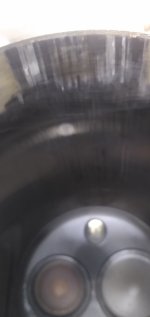
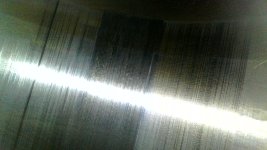
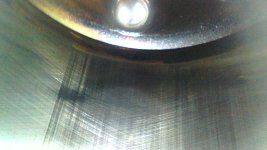
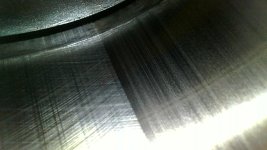
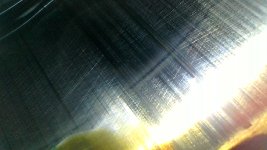
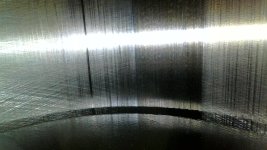
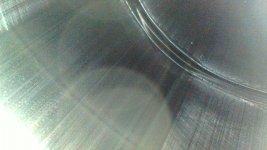
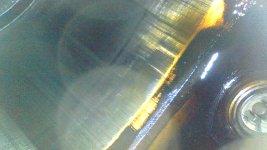
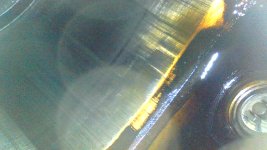
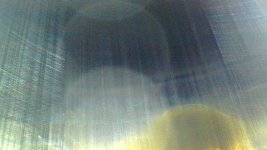
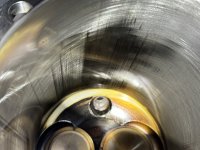
The baffle wrap around #3 wasn’t super good so I did take the cowl off today to make some minor changes. While the cowl was off I figured I would look in the cylinders and saw what appears to be scuffing: defined areas where the cross hatch has totally disappeared. It’s my understanding that this is bad news on any engine and definitely should not be the case on a brand new engine.

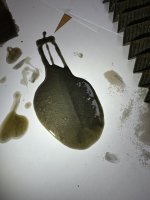
Splitting the filter showed a reasonable amount of metal however I am told this is normal for a first run. The oil that I drained from the filter looks glittery, like metallic paint, when viewed in light. Here are some

photos:
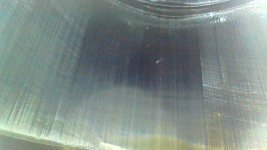
Image_2025-03-31 14_47_09_003.jpeg

Image_2025-03-31 14_58_42_477.jpeg
IMG_8664.jpeg

I described this to the engineer and he said that I shouldn’t worry and to change the oil, and fly more. He has not yet viewed the Borescope photos though.

I have done another flight and drained the oil, so I will fly some more and see what happens. In the meantime can anyone tell me if I should worry. The engine runs great, is smooth and much more powerful than before. But I’m pretty convinced that these cylinders are toast, can anyone provide some opinions?
 
Maybe I’m being paranoid, but here’s the background:

Overhauled engine, with cases done by Divco, crank repaired and polished, rods balanced, Superior cylinders ported/polished by Lycon, new cam with DLC lifters etc… it’s an O320-D2A with a whirlwind constant speed prop. One Bendix mag and one Lightspeed Plasma 2. I have the carb fitted with the largest size jet for maximum fuel.

I did the rebuild with a very experienced licenced engineer (the UK equivalent to an A&P IA with an engine specific add on to his licence, allowing him to carry out overhauls which a regular mechanic can’t do here in the UK).

The engine has been running well and smooth, however #3 is hotter than the others and is sitting around 395 F in a 80% power setting. 4hrs in and that hasn’t changed at all. Here is the log data from the first flight:

Flight log data

The baffle wrap around #3 wasn’t super good so I did take the cowl off today to make some minor changes. While the cowl was off I figured I would look in the cylinders and saw what appears to be scuffing: defined areas where the cross hatch has totally disappeared. It’s my understanding that this is bad news on any engine and definitely should not be the case on a brand new engine.

Splitting the filter showed a reasonable amount of metal however I am told this is normal for a first run. The oil that I drained from the filter looks glittery, like metallic paint, when viewed in light. Here are some

photos:
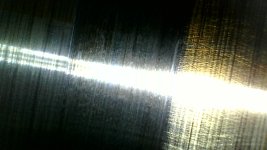
View attachment 84292

View attachment 84293
View attachment 84294

I described this to the engineer and he said that I shouldn’t worry and to change the oil, and fly more. He has not yet viewed the Borescope photos though.

I have done another flight and drained the oil, so I will fly some more and see what happens. In the meantime can anyone tell me if I should worry. The engine runs great, is smooth and much more powerful than before. But I’m pretty convinced that these cylinders are toast, can anyone provide some opinions?
4 hrs is a little early to assume the worst. Change oil, fly another 4hrs, bore scope again. I have seen similar photos on new rings installed with insufficient ring gap. Too small a ring gap can cause excessive wear.
 
4 hrs is a little early to assume the worst. Change oil, fly another 4hrs, bore scope again. I have seen similar photos on new rings installed with insufficient ring gap. Too small a ring gap can cause excessive wear.
Thanks, the engineer has now seen the photos and says it’s nothing to worry about on a new engine.

I did not check the ring gap, as this was done by LyCon. The 8130 says “rings were fit”
 
I would be concerned about all of the cross hatching disappearing like that. My engine has 800 hours, and I see some scuffing, but there is still cross hatching visible 'under' the scuffs. What you have looks like it has wiped away a pretty significant amount of metal in a very short time. I would be suspicious that #3 did not get the rings fit correctly.

Do the other cylinders show similar wear? If that one has been running hot, and its the only one that shows the wear, it starts to add up to a story. You might need to replace that cylinder, or at least have it re-honed and put new rings in and start over. But no need to act hastily I don't think. Change oil and fly. See what the oil consumption ends up being.

The only minor concern about continued operation is the amount of fine metal you are putting through everything else. In particular, the prop governor can fill up with metal if it is fine enough to get past the screen on the governor gasket. So if there is a similar amount of metal (glittery oil) after another four hours, it may be time to take action.
 
Last edited:
Look at the top of the steel barrel of the clyinder just before the flange. Is it discolored, has the paint bubbled, or does it look like its been hotter the the other ones. It looks to me like there is some aluminum micro welded to the clyinder. Is that the top side of # 3. I'm curious.
 
Thanks for the responses.

All the cylinders have similar markings, though I would say that #3 has the most considerable mark. All four have scuffing that completely removes the cross hatching though. The cylinder doesn’t seem to have got too hot, the paint on the barrels is unaffected.

I have sent the details to LyCon and will see what they say. Hopefully they will provide some reassurance.
 
What oil for break in. What type of ground run protocol??? What were the hottest CHT's you saw on initial flights. Was the engine cranked with one set of spark plugs removed until oil pressure came up, before first start??
Any stained CHT above 400 is an issue prior to rings seating.
 
What oil for break in. What type of ground run protocol??? What were the hottest CHT's you saw on initial flights. Was the engine cranked with one set of spark plugs removed until oil pressure came up, before first start??
Any stained CHT above 400 is an issue prior to rings seating.

Aeroshell W100 straight mineral oil.

Highest CHT I have seen is 425 in initial climb, and not for long. You can see the first flight in the log file I shared in my first post.

I was very careful to fill the oil galleries when assembling the engine, and cranked it without plugs to get oil pressure prior to startup.
 
Last edited:
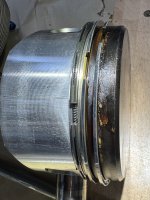
The top side of # 1 and 3 and the bottom side of #2 and 4 are the major thrust sides of the cylinder/piston combination. They will exhibit more wear then the opposit side of the cylinder. Check the minor side of the cylinder with a bore scope to see if the minor side shows similar wear pattern. If it continues to wear it could end up like this piston and cylinder. And, it was still running fine.
 

Attachments

  • #3 Cylinder.jpg
    #3 Cylinder.jpg
    475.1 KB · Views: 278
  • #3 Piston.jpg
    #3 Piston.jpg
    872.9 KB · Views: 277
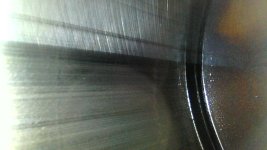
Image_2025-03-31 14_58_14_385.jpegImage_2025-03-31 14_47_34_382.jpegImage_2025-03-31 14_49_49_037.jpeg
Some more photos: I inspected 1, 2 and 3 but only saved photos in 1 and 3. The worst scuff is in 3 and 1 wasn’t as bad, but still
Had scuffing present. I don’t think this is heat related because #1 has been cool this entire time.

I’ll fly until 10hrs and then check again.
 
Out of my lane, but Superior has had some issues lately. Friend same scenario as you, on second set o360, and something isn’t right still. Good luck.
 
My cylinders look worse then that - still going strong 20+ years and 1500 hours later. People want perfection, but these engines are far from perfect. They are relatively crude, imperfect machines. Antique technology really. You will encounter all sorts of problems. You just don't want catastrophic problems, but that is extremely unlikely.
 
Funny to think that 30 years ago none of us would have a worry in the world about this engine. You know, in the days before regular borescope use, oil samples, and engine monitors. Not saying I'm not happy to have all of those things, but the change in mindset and new technology can drive one nuts. We had a good speaker yesterday at our EAA meeting, and he made a comment about "in the old days, if we had oil pressure and temperature, we flew!"
 
Maybe I missed it - But what brand are the cylinders, how many hours,
Thank you for the additional info.
 
They’re new Superior cylinders, 4hrs runtime before the images above.

I’ve just discovered that I have been using the wrong oil: Aeroshell w100 which is an ashless dispersant oil, not a straight mineral oil such as Aeroshell 100 or 80. I’m pretty worried that I need to take the engine apart now, lest I make it even worse by running scuffed pistons.
 
I completely disagree with your mechanic! That is NOT light scuffing and is NOT normal for break in. That is real wear! The cross hatch is completely gone in 10 hours. You typically won’t see it anywhere near that bad at tbo. That goes wayyyyyy beyond scuffing. Your oil does NOT look like normal break in particles! It is showing you that real metal wear is taking place.

Imho, that cylinder needs to come off NOW and find out what is happening. You can likely hone and re-ring to get it running.

My first guess is a cracked compression ring or foreign material in the ring land. Also possibly too small of a ring end gap. With superior kits, it is up to the assembler to measure the clearance and file the rings down. They ship them oversized. This is confusing to some, as lyc ships them ready to install. Do you remember doing this step? They send a one page installation sheet outlining the steps involved and the clearance measuring points. Hopefully someone read it and followed it.

Definitely time to find a better mechanic. You should not trust his opinion, regardless of his certification.
 
Last edited:
They’re new Superior cylinders, 4hrs runtime before the images above.

I’ve just discovered that I have been using the wrong oil: Aeroshell w100 which is an ashless dispersant oil, not a straight mineral oil such as Aeroshell 100 or 80. I’m pretty worried that I need to take the engine apart now, lest I make it even worse by running scuffed pistons.
AD is fine for break in. It is all the other additives that are problematic.
 
I completely disagree with your mechanic! That is NOT light scuffing and is NOT normal for break in. That is real wear! The cross hatch is completely gone in 10 hours. You typically won’t see it anywhere near that bad at tbo. That goes wayyyyyy beyond scuffing. Your oil does NOT look like normal break in particles! It is showing you that real metal wear is taking place.

Imho, that cylinder needs to come off NOW and find out what is happening. You can likely hone and re-ring to get it running.

My first guess is a cracked compression ring or foreign material in the ring land. Also possibly too small of a ring end gap. With superior kits, it is up to the assembler to measure the clearance and file the rings down. They ship them oversized. This is confusing to some, as lyc ships them ready to install. Do you remember doing this step? They send a one page installation sheet outlining the steps involved and the clearance measuring points. Hopefully someone read it and followed it.

Definitely time to find a better mechanic. You should not trust his opinion, regardless of his certification.
Just saw the second set of pics. Note how the wear pattern goes above the line where the rings stop their upward travel. This tells us that the wear is not just coming from the rings. Some metallic object has attached itself to the piston and is wearing the cylinder wall as it travels up and down. You can also see the heat signature marks in the wear area, showing you how hot it is getting from all the friction. This explains all the glitter in your oil. It is your cylinder walls
 
I completely disagree with your mechanic! That is NOT light scuffing and is NOT normal for break in. That is real wear! The cross hatch is completely gone in 10 hours. You typically won’t see it anywhere near that bad at tbo. That goes wayyyyyy beyond scuffing. Your oil does NOT look like normal break in particles! It is showing you that real metal wear is taking place.

Imho, that cylinder needs to come off NOW and find out what is happening. You can likely hone and re-ring to get it running.

My first guess is a cracked compression ring or foreign material in the ring land. Also possibly too small of a ring end gap. With superior kits, it is up to the assembler to measure the clearance and file the rings down. They ship them oversized. This is confusing to some, as lyc ships them ready to install. Do you remember doing this step? They send a one page installation sheet outlining the steps involved and the clearance measuring points. Hopefully someone read it and followed it.

Definitely time to find a better mechanic. You should not trust his opinion, regardless of his certification.
Larry - he said that LyCon wrote on the flight approval document (1830) that the rings were "fit". But I wonder if they missed one? It really does look like a ring size problem doesn't it.
 
Larry - he said that LyCon wrote on the flight approval document (1830) that the rings were "fit". But I wonder if they missed one? It really does look like a ring size problem doesn't it.
Sorry, I only read the original post and felt so bad for the op that I started replying. Also didn’t want to read a bunch of posts saying it is an intake leak. Yes, it definitely looks like a ring end gap problem, but really need to see the full cylinder circumference to validate that . I would expect at least light scuffing on a good 70%. The inconsistency though is the low chts. A zero ring gap will create serious heat and seriously fast.

I am more thinking that the ring cracked from the 0 gap, or some other reason, and a portion got lodged cock eyed in the ring land. That’s what the pics tell me.

I would trust lycon did the gapping. However we have all broken a ring during installation; at least those that do this kind of thing a lot. It just happens sometimes. It is a delicate process using tools that don’t allow you to be delicate. You smash the piston in with a hammer, while hoping the sleeve was tight enough for the ring not to catch.
 
Last edited:
Sorry, I only read the original post and felt so bad for the op that I started replying. Also didn’t want to read a bunch of posts saying it is an intake leak. Yes, it definitely looks like a ring end gap problem, but really need to see the full cylinder circumference to validate that . I would expect at least light scuffing on a good 70%. The inconsistency though is the low chts. A zero ring gap will create serious heat and seriously fast.

I am more thinking that the ring cracked from the 0 gap, or some other reason, and a portion got lodged cock eyed in the ring land. That’s what the pics tell me.

I would trust lycon did the gapping. However we have all broken a ring during installation; at least those that do this kind of thing a lot. It just happens sometimes. It is a delicate process using tools that don’t allow you to be delicate. You smash the piston in with a hammer, while hoping the sleeve was tight enough for the ring not to catch.
Thanks for the responses. I agree that this is not normal and this is why I’ve been after second opinions.

Thing is, this isn’t on just one cylinder. I’ll get a full set of Borescope images today and post them up.
 
I’ve now inspected all four cylinders, and they exhibit similar scuffing. Number 4 is actually the worst.

1:

Image_2025-04-01 12_06_40_791.jpeg


2:

Image_2025-04-01 12_07_58_270.jpeg

3:

Image_2025-04-01 12_09_01_177.jpeg

4:

Image_2025-04-01 12_09_36_806.jpeg

Image_2025-04-01 12_09_48_152.jpeg

Yikes! 4 is the worst.

I’ll pull a cylinder and see where I end up.
 

Attachments

  • Image_2025-04-01 12_09_36_806.jpeg
    Image_2025-04-01 12_09_36_806.jpeg
    965.3 KB · Views: 38
  • Image_2025-04-01 12_08_44_231.jpeg
    Image_2025-04-01 12_08_44_231.jpeg
    897.7 KB · Views: 44
As BH1166 stated in post #11, Superior had an issue with some cylinders - improper machining I heard. IF this is your issue, the cylinders would be covered under Superior’s 3 year warranty (my opinion). As I recall, you have 30 days after discovery of the issue to file a claim. I would think Lycon knows about this issue and after they see your pics and give you feedback, you and your engineer should have a better idea what to do next.
 
You have a bore scoring
The top side of # 1 and 3 and the bottom side of #2 and 4 are the major thrust sides of the cylinder/piston combination. They will exhibit more wear then the opposit side of the cylinder. Check the minor side of the cylinder with a bore scope to see if the minor side shows similar wear pattern. If it continues to wear it could end up like this piston and cylinder. And, it was still running fine.
Where did you get these pistons?
 
I have similar, but not as severe, scoring on one cylinder. I started noticing light scuffing a few years ago. Until this year, the cross hatching could be seen through the scoring. At this CI, the wear has continued and I can no longer see the cross hatching.
I know this isn’t going to fix itself. However, compressions are good so I continue to watch. This is very different on a 950 hour cylinder than a new engine with all cylinders exhibiting the same symptom.
My wear is exactly like what I see in these pictures for that one cylinder, just not quite as severe, yet……

For the experts - what is the downside of running a cylinder in this state that checks out otherwise? As others stated, before the age of modern diagnostics, if it passed compression checks, you ran it….
 
Bottom line is you let the cylinders get hot during breakin
Bob, would you please define "hot"? The max T the OP reached was 419°F on #3 for a short moment, as is nicely visible in the linked FlySto log in post #1.

You could leave things alone and monitor.
This has already been suggested. Not sure about if this was your engine, but if it'd be mine I would like to first clear things up.

the downside of running a cylinder in this state that checks out otherwise?
First it is not only 1 cylinder, but all of them. Then these are new cylinders/pistons/rings, after 4 hours run time. Also, as already mentioned by others above, running that engine more will be spreading all those particles thru the engine. This includes the governor, oil pump, some eventually in the prop, bearings, cooler, vernatherm, pressure valve, rockers, etc.
 
No worries @JonJay, now you had me go back and re-read your post, apologies :ROFLMAO:
I wouldn't do anything in your case, as you state it yourself, this is wear. Probably normal wear. If your compressions, and oil analysis are good, I wouldn't worry about it.
Cross-hatching will mostly disappear over the hours, at least on the non-chromed cylinders, and none was visible on the 6 and 12 on my old engine, which also had corrosion and some scuffing.
 
Last edited:
I have a small sample size of my own experience to draw from, but that oil showing that much metal glitter would scare the hell out of me. I've never seen anything like that.
+1

The load of metallic particles in the oil should be screaming at you to pull the cylinders to investigate. It is way beyond the level of wait and see what happens IMHO. If you don't know what is causing the wear, you don't know if it is done or will get worse. You have worn away a good amount of cylinder wall metal in just 10 hours. The likelihood of this resolving itself is low and that metal will not redeposit itself and make new cross hatch. Most would prefer to start the cyl wear cycle from the beginning/new vs something that is already as bad as one would see at tbo.

Just sharing opinions here and can do as you see fit. However, you have spent a lot of $ to get a like new engine, so why accept anything less. Cost to re hone and re ring is quite low in the grand scheme of things.

Wait and see can create a lot more metal. This metal circulates through the oil system and acts like sand paper, scratching all sorts of other parts. not really something to look past.
 
Last edited:
I remember now that I have seen oil that looks like that once before. It was in the transmission of a bulldozer that completely let go.
 
I have similar, but not as severe, scoring on one cylinder. I started noticing light scuffing a few years ago. Until this year, the cross hatching could be seen through the scoring. At this CI, the wear has continued and I can no longer see the cross hatching.
I know this isn’t going to fix itself. However, compressions are good so I continue to watch. This is very different on a 950 hour cylinder than a new engine with all cylinders exhibiting the same symptom.
My wear is exactly like what I see in these pictures for that one cylinder, just not quite as severe, yet……

For the experts - what is the downside of running a cylinder in this state that checks out otherwise? As others stated, before the age of modern diagnostics, if it passed compression checks, you ran it….
no real downside except increased oil consumption. Without the cross hatch, the rings push more oil into the combustion side of the rings and it burns off. The larger the area with no cross hatch, the greater the burn rate.
 
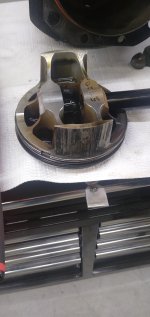
I pulled #2, which was the least affected but the easiest to access for removal. I’m glad I did, the cylinder is toast. There’s a groove approx an inch wide that measures 0.0027 deep- and you can feel it with your finger.

The others are worse from the scope images so will post photos when I remove them.

IMG_8721.jpeg

IMG_8715.jpeg

There is scuffing on the top of the piston skirt, but the damage in the bore coincides with the top ring.
 
I pulled #2, which was the least affected but the easiest to access for removal. I’m glad I did, the cylinder is toast. There’s a groove approx an inch wide that measures 0.0027 deep- and you can feel it with your finger.

The others are worse from the scope images so will post photos when I remove them.

View attachment 84399

View attachment 84400

There is scuffing on the top of the piston skirt, but the damage in the bore coincides with the top ring.
glad to hear you chose this path. wish you all the luck in resolving it. With that much wear, honing is not an option. Will need to bore them 10 over and get new pistons
 
Ring gap at the top of the choke is 0.008, in the bottom is approx .0042

That’s just on this cylinder which is the least affected, I don’t know about the others yet. But this cylinder has correct gaps.

The damage to the cylinder is from one end of the ring forcing into it, as one side of the groove begins gradually and it ends abruptly at the other side. I really don’t think I got it too hot as there are no signs of overheating in the barrel or on the piston, and CHT and oil were not hot.
 
We have found a problem which I believe to be the cause of the failure.

Compression ring to piston gap is supposed to be between .0025 and .0055, and we can’t even get a .0015 feeler in there.

The old pistons measure fine within this range, despite 800hrs of carbon buildup.

This would suggest that the rings could become stuck as the ring groove is so narrow.
 
Are those the standard pistons that come with the Superior kits, or are they something special that Lycon provided with the cylinders? Did Lycon do the ring gapping and install rings on the pistons?
Thank you.
 
Are those the standard pistons that come with the Superior kits, or are they something special that Lycon provided with the cylinders? Did Lycon do the ring gapping and install rings on the pistons?
Thank you.
Standard superior pistons that came with the kits.

Lycon did the ring gap and installed the pistons, so this is literally the only part of the engine we didn’t check before assembly. The engine builder insisted on measuring EVERYTHING else, it took forever.

Waiting to hear back from Ken at Lycon. I am assuming at this point that the other pistons are the same problem, I will find out later in the week when I pull the other jugs
 
+1

The load of metallic particles in the oil should be screaming at you to pull the cylinders to investigate. It is way beyond the level of wait and see what happens IMHO. If you don't know what is causing the wear, you don't know if it is done or will get worse. You have worn away a good amount of cylinder wall metal in just 10 hours. The likelihood of this resolving itself is low and that metal will not redeposit itself and make new cross hatch. Most would prefer to start the cyl wear cycle from the beginning/new vs something that is already as bad as one would see at tbo.

Just sharing opinions here and can do as you see fit. However, you have spent a lot of $ to get a like new engine, so why accept anything less. Cost to re hone and re ring is quite low in the grand scheme of things.

Wait and see can create a lot more metal. This metal circulates through the oil system and acts like sand paper, scratching all sorts of other parts. not really something to look past.

glad to hear you chose this path. wish you all the luck in resolving it. With that much wear, honing is not an option. Will need to bore them 10 over and get new pistons
Thanks, I know what damaged bores looked like which is why I had a hard time listening to the "fly it 10hrs and see" approach. That might work if you get a few unexplained flecks of metal in the filter one time, but half the cylinder walls ground away and the oil looking like a tin of metallic paint is a different story.

I need to get the other cylinders off but even this one issue suggests an incredible QC failure from superior. It's really annoying as I thought I was doing everything right and paying extra to buy cylinders through Lycon (I'm based in the UK so this is going to be more difficult to resolve) but had we bought the kits normally we'd have checked the ring clearances and not installed out of tolerance pistons.

Hopefully the bottom end is OK as I spent a load of money getting everything done.
 
We have found a problem which I believe to be the cause of the failure.

Compression ring to piston gap is supposed to be between .0025 and .0055, and we can’t even get a .0015 feeler in there.

The old pistons measure fine within this range, despite 800hrs of carbon buildup.

This would suggest that the rings could become stuck as the ring groove is so narrow.
The rings are a 1/2 Keystone design. When you measure the ring clearance on the ring land, the ring has to be measured with the ring out against the cylinder wall. Meaning, the mating outside edge of the ring has to be at the same outside dimension as the piston. Use a straight edge against the piston and let the ring touch the straight edge as if it were the cylinder wall. Then measure the clearance under the ring to piston land. It should be .0025 to .0055 as you said. If it is less then .0025, the ring will bind in the piston and wear the cylinder wall. when I got my pistons and measured the ring land and ring clearance, the rings actually protruded out of the ring land. I had to have the ring lands re-machined deeper to adjust the clearance to spec. Special tool made to cut deeper into the piston and the right taper on the top of the ring land.
 
Last edited:
The rings are a 1/2 Keystone design. When you measure the ring clearance on the ring land, the ring has to be measured with the ring out against the cylinder wall. Meaning, the mating outside edge of the ring has to be at the same outside dimension as the piston. Use a straight edge against the piston and let the ring touch the straight edge as if it were the cylinder wall. Then measure the clearance under the ring to piston land. It should be .0025 to .0055 as you said. If it is less then .0025, the ring will bind in the piston and wear the cylinder wall.
That's what we did to measure the clearance. I had the benefit this evening of a very experienced mechanic being in the hangar, and he spent a good couple of hours inspecting all the various dimensions of the cylinder and piston. The clearance on these new pistons was so small a .0015 feeler would not fit.

Also the new Superior piston was 0.014 out of round - I'm surprised they can manufacture something this poorly, or is this intentional?
 
That's what we did to measure the clearance. I had the benefit this evening of a very experienced mechanic being in the hangar, and he spent a good couple of hours inspecting all the various dimensions of the cylinder and piston. The clearance on these new pistons was so small a .0015 feeler would not fit.

Also the new Superior piston was 0.014 out of round - I'm surprised they can manufacture something this poorly, or is this intentional?
The pistons should be a little smaller at the wrist pin diameter than at the thrust side of the skirt diameter.
 
Back
Top