Van's Air Force

The definitive Van's Aircraft support community! Buying, building or flying an RV? Join our exclusive family of mentors and enthusiasts!

Cylinder Base Temperatures?!

Ironflight

VAF Moderator / Line Boy
Mentor
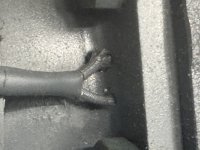
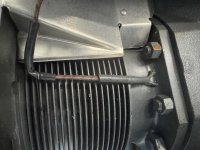
So today we hoisted our 25-year-pickled 540 off its shipping pallet and onto a work stand, and Hmmm…what the heck are these things? I had seen teh thermocouple wires and fancy disconnects disappearing under the cylinders, and assumed they were CHT connections. But on further examination, the two wires for each one go into tiny holes in the cylinder base flanges, implying Cylinders base Temps?

A little background - this engine was owned and operated back in the late 90’s by Found Aircraft company in Canada. They clearly used it on developmental airframes, swapping it between several tail numbers for about 250 hours. I suspect that they were measuring temperatures to develop better cooling solutions maybe? Oh - there are similar connectors/wires coming out of the alternator - with one of them labeled “front bearing temp”.

I guess aside from the curiosity over these, I guess there is a question of if it does any harm to just leave them (messy), just cut them off (easiest), or…connect them to some GP inputs and watch cylinder base temps…..

Anyone ever seen anything like these before?
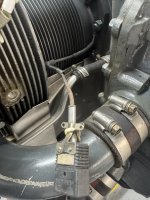
IMG_6107.jpegIMG_6106.jpegIMG_6105.jpegIMG_6107.jpegIMG_6106.jpegIMG_6105.jpeg
 
So today we hoisted our 25-year-pickled 540 off its shipping pallet and onto a work stand, and Hmmm…what the heck are these things? I had seen teh thermocouple wires and fancy disconnects disappearing under the cylinders, and assumed they were CHT connections. But on further examination, the two wires for each one go into tiny holes in the cylinder base flanges, implying Cylinders base Temps?

A little background - this engine was owned and operated back in the late 90’s by Found Aircraft company in Canada. They clearly used it on developmental airframes, swapping it between several tail numbers for about 250 hours. I suspect that they were measuring temperatures to develop better cooling solutions maybe? Oh - there are similar connectors/wires coming out of the alternator - with one of them labeled “front bearing temp”.

I guess aside from the curiosity over these, I guess there is a question of if it does any harm to just leave them (messy), just cut them off (easiest), or…connect them to some GP inputs and watch cylinder base temps…..

Anyone ever seen anything like these before?
View attachment 81333View attachment 81334View attachment 81335View attachment 81333View attachment 81334View attachment 81335
That would actually be pretty interesting knowing how temps vary. Maybe enough to keep compulsive obsessive people awake at night.
 
Wondering if they penetrate deeper into the case to measure something other than cylinder base temps? I would investigate further. If they were measuring front bearing temps, then perhaps they were also measuring main bearings as well.
 
If it's a thermocouple to measure cylinder base temperature, why two holes?
Tear down findings will be of interest, likely these ARE TC's but where & why - separate penetrating wires tell me not measuring cylinder flange (accelerometers for vibration ?, strain gauges ?).
Possibly no piston skirt squirters installed and temps being measured. Condition of cyl's and your decision to either reman or replace will likely be driver here.
Is curious.
 
That is just too odd of a placement for temp measuring. If you wanted true barrel temps, you would just stick a pad onto the outter barrel further up, closer to where the heat is being generated. The flange area is going to measure closer to case temp, as the flange is where you will get a lot of heat transfer from the jug to the case.

Is that a two prong electrical plug on the end of the wire? It looks like it from the pic. That would imply some type of heating element. The wires look more like a heater appliance than a thermocouple to me. My guess is those holes go through the case as well and lead to a heating element in the sump. If so, that is a bit scarry, as if the insulation wears away you can energize the case with 120V.

Also possible that it terminates to a temp sensor somewhere inside the case. Definately looks like just an access point to get wires inside the engine. Possibly measuring oil temp in the sump, which we know is very different than the temp of the oil passing by the std OT sensor.
 
Last edited:
So today we hoisted our 25-year-pickled 540 off its shipping pallet and onto a work stand, and Hmmm…what the heck are these things? I had seen teh thermocouple wires and fancy disconnects disappearing under the cylinders, and assumed they were CHT connections. But on further examination, the two wires for each one go into tiny holes in the cylinder base flanges, implying Cylinders base Temps?

A little background - this engine was owned and operated back in the late 90’s by Found Aircraft company in Canada. They clearly used it on developmental airframes, swapping it between several tail numbers for about 250 hours. I suspect that they were measuring temperatures to develop better cooling solutions maybe? Oh - there are similar connectors/wires coming out of the alternator - with one of them labeled “front bearing temp”.

I guess aside from the curiosity over these, I guess there is a question of if it does any harm to just leave them (messy), just cut them off (easiest), or…connect them to some GP inputs and watch cylinder base temps…..

Anyone ever seen anything like these before?
View attachment 81333View attachment 81334View attachment 81335View attachment 81333View attachment 81334View attachment 81335
Cut them off
 
Keep the idea coming guys - I hadn’t thought of heaters….wiring isn’t very large, but the contacts on the connectors could probably handle some current.

The wiring with the label “Front Bearing” is just going to the alternator - not the engine, and the connectors are identical to the ones on the wiring to the cylinder bases…so unless they were also heating the alternator - or just had a box of those connectors to use up - that might be a red herring….

We’re going to pull the cylinders to change the O-rings anyway, so we’ll find out as we head inbound. meanwhile, I am going to check the logs again more carefully - they are very complete (and the engine is still certified), so there should be a mention of this system!
 
It will be interesting to see how those probes (regardless of what they are), are held in place. Whatever the wires lead to will need to be removed to pull the cylinders and let the cylinders slide past the piston skirts?? Is that shiny spot in the pics a rivet head? Questioning minds want to know...

edit... do those wires go into the base flange at 90 degrees or into the cylinder. Hard for me to tell?
 
It will be interesting to see how those probes (regardless of what they are), are held in place. Whatever the wires lead to will need to be removed to pull the cylinders and let the cylinders slide past the piston skirts?? Is that shiny spot in the pics a rivet head? Questioning minds want to know...

edit... do those wires go into the base flange at 90 degrees or into the cylinder. Hard for me to tell?
Paul---while youre at it, change the 25 year old rubber hoses for the cylinder drains.
 
We’re going to pull the cylinders to change the O-rings anyway
Suggest you pull the galley plugs and install oil squirters while it’s open. A very easy and inexpensive mod that you will likely appreciate down the road.

Also, MY Rocket engine was purchased in the early 2000’s from Found Aircraft. Mine was still new in the crate however. Check to make sure yours is not subject to the crank AD (mine was, and I missed it on pre buy)
 
Keep the idea coming guys - I hadn’t thought of heaters….wiring isn’t very large, but the contacts on the connectors could probably handle some current.

The wiring with the label “Front Bearing” is just going to the alternator - not the engine, and the connectors are identical to the ones on the wiring to the cylinder bases…so unless they were also heating the alternator - or just had a box of those connectors to use up - that might be a red herring….

We’re going to pull the cylinders to change the O-rings anyway, so we’ll find out as we head inbound. meanwhile, I am going to check the logs again more carefully - they are very complete (and the engine is still certified), so there should be a mention of this system!
Did you measure the electrical resistance? That may give you a clue. I would expect a thermocouple to be around 5-15 ohms and a heater would be several hundred ohms.
 
Last edited:
That is just too odd of a placement for temp measuring. If you wanted true barrel temps, you would just stick a pad onto the outter barrel further up, closer to where the heat is being generated. The flange area is going to measure closer to case temp, as the flange is where you will get a lot of heat transfer from the jug to the case.

Is that a two prong electrical plug on the end of the wire? It looks like it from the pic. That would imply some type of heating element. The wires look more like a heater appliance than a thermocouple to me. My guess is those holes go through the case as well and lead to a heating element in the sump. If so, that is a bit scarry, as if the insulation wears away you can energize the case with 120V.

Also possible that it terminates to a temp sensor somewhere inside the case. Definately looks like just an access point to get wires inside the engine. Possibly measuring oil temp in the sump, which we know is very different than the temp of the oil passing by the std OT sensor.

If you look close you can see it’s an Omega Engineering thermocouple connector with +/- markings.
 
Last edited:
That is not how you would typically install a thermocouple. The welded junction bead that joins the two wire types to form the thermocouple would have to be on the back side of the flange in a relief slot, and that would be a more invasive installation than anyone would bother with. I suppose each wire could be potted into its hole with some conductive epoxy, and the junction would be formed by the aluminum bridge between the wires. It would be more typical to drill one hole and pot the welded TC junction in the hole.

That said, that is the type of connector that is often used for thermocouples.

I'm surprised these holes didn't cause oil leaks, which suggests they don't go all the way through the flange.

I would be a little concerned about cracking of the base flange radiating out from the holes.
 
I do have an rpm drop on my 320, but another way to check is to watch EGTs. There should be some perceptible drop with the carb heat, and/or EGT raise after the carb heat is returned to cold.
 
Keep the idea coming guys - I hadn’t thought of heaters….wiring isn’t very large, but the contacts on the connectors could probably handle some current.

The wiring with the label “Front Bearing” is just going to the alternator - not the engine, and the connectors are identical to the ones on the wiring to the cylinder bases…so unless they were also heating the alternator - or just had a box of those connectors to use up - that might be a red herring….

We’re going to pull the cylinders to change the O-rings anyway, so we’ll find out as we head inbound. meanwhile, I am going to check the logs again more carefully - they are very complete (and the engine is still certified), so there should be a mention of this system!
Seems to me, if you wanted to know the temps in this area, it would be quicker and easier to simply use a "ring terminal" [aka Spark Plug] type J thermocouple placed under the cylinder base nuts.
 
Seeing that this was a test mule engine, I wonder if they instrumented it for after market turbo testing or other performance enhancing experiments.
 
Keep the idea coming guys - I hadn’t thought of heaters….wiring isn’t very large, but the contacts on the connectors could probably handle some current.

The wiring with the label “Front Bearing” is just going to the alternator - not the engine, and the connectors are identical to the ones on the wiring to the cylinder bases…so unless they were also heating the alternator - or just had a box of those connectors to use up - that might be a red herring….

We’re going to pull the cylinders to change the O-rings anyway, so we’ll find out as we head inbound. meanwhile, I am going to check the logs again more carefully - they are very complete (and the engine is still certified), so there should be a mention of this system!
No offense but I would not pull cylinders just to change base o rings. You're opting to disturb piston ring seating on the idea that maybe the base o ring will leak? How about mounting and running the engine to check for leaks. Then if there's a leak at the cyl base you can pull that jug. Sounds like you're pulling jugs for fun
 
No offense but I would not pull cylinders just to change base o rings. You're opting to disturb piston ring seating on the idea that maybe the base o ring will leak? How about mounting and running the engine to check for leaks. Then if there's a leak at the cyl base you can pull that jug. Sounds like you're pulling jugs for fun
Ring seating is an activity not a state. Piston rings go up and down the cylinder walls a million times each flight. How do you disturb anything by sliding the pistons down and pushing out the pin? You don’t even need to remove the pistons from the cylinder.
 
No offense but I would not pull cylinders just to change base o rings. You're opting to disturb piston ring seating on the idea that maybe the base o ring will leak? How about mounting and running the engine to check for leaks. Then if there's a leak at the cyl base you can pull that jug. Sounds like you're pulling jugs for fun
Well I understand your concern, but 25 year old O-rings are well beyond their sell-by date. The main reason Lycoming recommends a 12 year TBO for their engines are aging rubber seals. I chatted about this with my favorite engine builders (some pretty significant names in our industry, and everyone concurred - this is well past a time for “maybe I should think about changing the seals”. At the same time, everyone agrees that the metal parts are fine (we’ve borescoped it….). So its not just for fun - it’s because I’d ratehr not pull the engine apart for leaks after getting the airplane flying.
 
My experience in applying thermocouples to measure the temperature of things like this would be to apply what is called the “law of intermediate metals” to measure the temperature of the cylinder base internal to the metal flange rather than its surface. A good technique when you want to measure what the effects of rocket motor exhaust are on a structure not just the temperature of the thermocouple that is bonded to the surface of the structure. This even word as you erode the structure in the case of a rocket motor plume impinging on a ships deck plates.

In this case they drilled two holes in the cylinder base with a diameter that allows them to press one of the thermocouple (TC) wires into it. The second TC alloy wire is pressed into the other hole. Usually a punch was used to sewage the wire in place and make a good electrical connection. At this point you have the equivalent of two thermocouples with each generating an emf equivalent to the seebeck effect. The thermocouples created by the contact with the intermediate metal, in your case the cylinder base, balance each other so that the TC is seen as the same as the original TC constant. A Type K TC created by this method is the same as a single bead Type K TC that we are familiar withe in the measurement of CHT or EGT. It’s just that in this case we are measuring the internal temperature of the casting without boring a relatively large hole in the casting and installing a TC probe into the hole which could degrade the base flanges physical properties.

Short answer. These are simple thermocouples installed by some very knowledgeable and crafty designers and instrumentation engineers. Play on!
 
My experience in applying thermocouples to measure the temperature of things like this would be to apply what is called the “law of intermediate metals” to measure the temperature of the cylinder base internal to the metal flange rather than its surface. A good technique when you want to measure what the effects of rocket motor exhaust are on a structure not just the temperature of the thermocouple that is bonded to the surface of the structure. This even word as you erode the structure in the case of a rocket motor plume impinging on a ships deck plates.

In this case they drilled two holes in the cylinder base with a diameter that allows them to press one of the thermocouple (TC) wires into it. The second TC alloy wire is pressed into the other hole. Usually a punch was used to sewage the wire in place and make a good electrical connection. At this point you have the equivalent of two thermocouples with each generating an emf equivalent to the seebeck effect. The thermocouples created by the contact with the intermediate metal, in your case the cylinder base, balance each other so that the TC is seen as the same as the original TC constant. A Type K TC created by this method is the same as a single bead Type K TC that we are familiar withe in the measurement of CHT or EGT. It’s just that in this case we are measuring the internal temperature of the casting without boring a relatively large hole in the casting and installing a TC probe into the hole which could degrade the base flanges physical properties.

Short answer. These are simple thermocouples installed by some very knowledgeable and crafty designers and instrumentation engineers. Play on!
I agree - I suggested this too, but it is really important to have electrical and thermal conductivity at the junctions to the base material. They make conductive epoxy for this purpose to pot the wires into.
 
Could it be a vib sensor (vibration)? I worked at GE for a little while and we had them on high pressure and low pressure spools in a couple different locations. If the engine was used for testing, it might give some indication of vibration differences along the crankshaft.
 
The thermocouples created by the contact with the intermediate metal, in your case the cylinder base, balance each other so that the TC is seen as the same as the original TC constant. A Type K TC created by this method is the same as a single bead Type K TC that we are familiar withe in the measurement of CHT or EGT. It’s just that in this case we are measuring the internal temperature of the casting without boring a relatively large hole in the casting and installing a TC probe into the hole which could degrade the base flanges physical properties.

Short answer. These are simple thermocouples installed by some very knowledgeable and crafty designers and instrumentation engineers. Play on!

Obviously you're a member of their tribe. Thank you Phil, great answer!
 
Dan, why not? The thermocouple won't introduce any paint or other insulation.
Potential relaxation of stud preload. We tend to think of it as loss of torque, but nut torque is only a poor proxy for preload.

At the conceptual level, installed preload should be higher than anticipated dynamic load, so the stud has limited exposure to stress cycles. Loss of preload and exposure to stress cycles eventually results in stud breakage. It is particularly critical with the short studs, as even a layer of paint extruding out from under the nut can relax preload enough to expose the stud to cycles.

Same principle applies to connecting rod bolts.

The long studs through the case would be far less critical. You could probably put a hard TC ring under them, but see Phil's note above; the instrumentation folks were likely shooting for internal temperature.
 
My experience in applying thermocouples to measure the temperature of things like this would be to apply what is called the “law of intermediate metals” to measure the temperature of the cylinder base internal to the metal flange rather than its surface. A good technique when you want to measure what the effects of rocket motor exhaust are on a structure not just the temperature of the thermocouple that is bonded to the surface of the structure. This even word as you erode the structure in the case of a rocket motor plume impinging on a ships deck plates.

In this case they drilled two holes in the cylinder base with a diameter that allows them to press one of the thermocouple (TC) wires into it. The second TC alloy wire is pressed into the other hole. Usually a punch was used to sewage the wire in place and make a good electrical connection. At this point you have the equivalent of two thermocouples with each generating an emf equivalent to the seebeck effect. The thermocouples created by the contact with the intermediate metal, in your case the cylinder base, balance each other so that the TC is seen as the same as the original TC constant. A Type K TC created by this method is the same as a single bead Type K TC that we are familiar withe in the measurement of CHT or EGT. It’s just that in this case we are measuring the internal temperature of the casting without boring a relatively large hole in the casting and installing a TC probe into the hole which could degrade the base flanges physical properties.

Short answer. These are simple thermocouples installed by some very knowledgeable and crafty designers and instrumentation engineers. Play on!
That is the information I was looking for! It fits what I am looking at exactly - there appears to be no obvious TC junction between the wires - they just seem pressed into the shallow holes in the base metal, and your description fits that perfectly - you’re definitely one of those clever instrumentation engineers like I used to know (and be impressed by) back in the days when I played with spaceships! Total count of these things on this engine are (6) on the cylinder bases, (3) on the alternator, and (2 - one each) on the Mags. The alternator is going in the museum, as are the mags, but it’s so tempting to hook the others up just to see what they do. However, I like a clean installation up front, so I’ll probably ditch them all….
 
If these are indeed simply potted into shallow holes, should be easy to confirm by a simple yank. If the incessant whining by my instro team is any indication, just looking at them will cause the connections to fail.
 
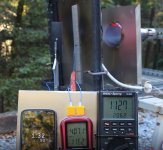
Just to sort of close this out, my neighbor (KP’s Home Shop Machinist, Bob Hadley) was curious enough about this (because he did an article on homemade J-junction thermocouples a few years back) that he dropped by with his DVM that speaks thermocouples, and we hooked it up to these things. they all read about the same room temperature. We then hit them with a heat gun, and sure enough - they work great! Tugging on one installed in the mag, it popped right out of the shallow hole. Mystery solved, and while they are cool to have, I will probably remove them just to clean things up.
 
Paul, I once asked our friends at Lycoming about lower cylinder temperatures, in relation to forum discussion about silicone/glass cylinder baffle wraps. No one knew, as the development engineers who did are long gone (apparently also true 25 years ago). If you were to leave perhaps one of those probes, and maybe run two wires back to the cockpit, and maybe connect them to Bob's "DVM that speaks thermocouple" after you get flying...

970 and 002.jpg
Just to sort of close this out, my neighbor (KP’s Home Shop Machinist, Bob Hadley) was curious enough about this (because he did an article on homemade J-junction thermocouples a few years back) that he dropped by with his DVM that speaks thermocouples, and we hooked it up to these things. they all read about the same room temperature. We then hit them with a heat gun, and sure enough - they work great! Tugging on one installed in the mag, it popped right out of the shallow hole. Mystery solved, and while they are cool to have, I will probably remove them just to clean things up.
 
Just to sort of close this out, my neighbor (KP’s Home Shop Machinist, Bob Hadley) was curious enough about this (because he did an article on homemade J-junction thermocouples a few years back) that he dropped by with his DVM that speaks thermocouples, and we hooked it up to these things. they all read about the same room temperature. We then hit them with a heat gun, and sure enough - they work great! Tugging on one installed in the mag, it popped right out of the shallow hole. Mystery solved, and while they are cool to have, I will probably remove them just to clean things up.
Dan H & Paul, thanks for the compliment. I consider that a high honor coming from both of you. I stand on the shoulders of some great mentors in the area of instrumentation and its related physics that made those early first spaceships get into orbit. I hope that our generation can be looks on the same way. - LaRosta
 
The instrumentation detail is solved, but I can comment on the location and why - -as an engineer that has been involved engine development and installation validation , I ordered the engineering requirements document for my IO360 from Lycoming. It has the cylinder base location as a temperature limit point for a cooling validation. I installed a thermocouple in that precise location per the Lyc documents to quantify the effects barrel fin wrapping. We all talk about CHT and Oil temps, but this is the only location for cylinder temps below the head. One can wrap the barrels nearly closed and the CHT is not affected, but the cylinder base temps go up. I wrapped with only 1 inch wide open at the top and the base temps were well under the limit.
I would guess the OP's engine had thermocouples installed at the factory for doing installation validation/approval.
 
Last edited:
I ordered the engineering requirements document for my IO360 from Lycoming. It has the cylinder base location as a temperature limit point for a cooling validation.

So there is a Lycoming document with lower cylinder temperature limits? So what is the limit...or range?
 
So there is a Lycoming document with lower cylinder temperature limits? So what is the limit...or range?
Below is a copy from the specifications requirements. It sounds like all the validation points in the document have TC's in Pauls engine.


"5. * Cylinder Temperature. Maximum permissible cylinder head temperature, as measured with a bayonet type AN5541 thermocouple, is 500F. For maximum engine life the cylinder head temperature should not exceed 475F above 75 percent power and 435F at 75 percent power and below. Maximum permissible cylinder base temperature measured at the lowest point on the leeward side of the cylinder in the fillet of the base flange is 325F. Engines intended for prototype installation can be ordered with cylinder base thermocouples installed."
 
Cylinder base temperatures could be quite interesting for LOP operations.

The explanation for cooler CHT at the same power when LOP implies that the cylinder barrel temperatures should be higher. But is it measurable, significant? An opportunity to measure the temperatures might answer that question.
 
Maximum permissible cylinder base temperature measured at the lowest point on the leeward side of the cylinder in the fillet of the base flange is 325F.

Holy cow. That's way more than I thought. What are you actually seeing on your wrapped cylinder?
 
Back
Top