

Van's Air Force
You are using an out of date browser. It may not display this or other websites correctly.
You should upgrade or use an alternative browser.
You should upgrade or use an alternative browser.
Scotch Brite wheel for deburring
- Thread starter Morriem
- Start date


My personal favorite, and at a way better price than the 3M wheel. (Note, you'll likely need a bushing to adapt the 1" hole to fit smaller bench grinders).
Doh! Redacted previous link, this is the correct wheel.
 www.haascnc.com
 www.haascnc.com
Doh! Redacted previous link, this is the correct wheel.
6" Haas Deburr Wheel, 1" Width x 1" Bore, Aluminum Oxide, Density 8, Medium-Grade
6" Aluminum Oxide Deburr Wheel, 1" Width x 1" Bore, Hardness 8, Medium-Grade
6" Haas Deburr Wheel, 1" Width x 1" Bore, Silicon Carbide, Density 8, Fine-Grade | Haas Tooling
Shop 6" Haas Deburr Wheel, 1" Width x 1" Bore, Silicon Carbide, Density 8, Fine-Grade - Deburr Wheels at Haas Tooling.
www.haascnc.com
Last edited:

This is the same that Van's sells if they still do. This one has deburred thousands upon thousands of RV parts. I have used up 4 of these over the years on 3 RV projects.
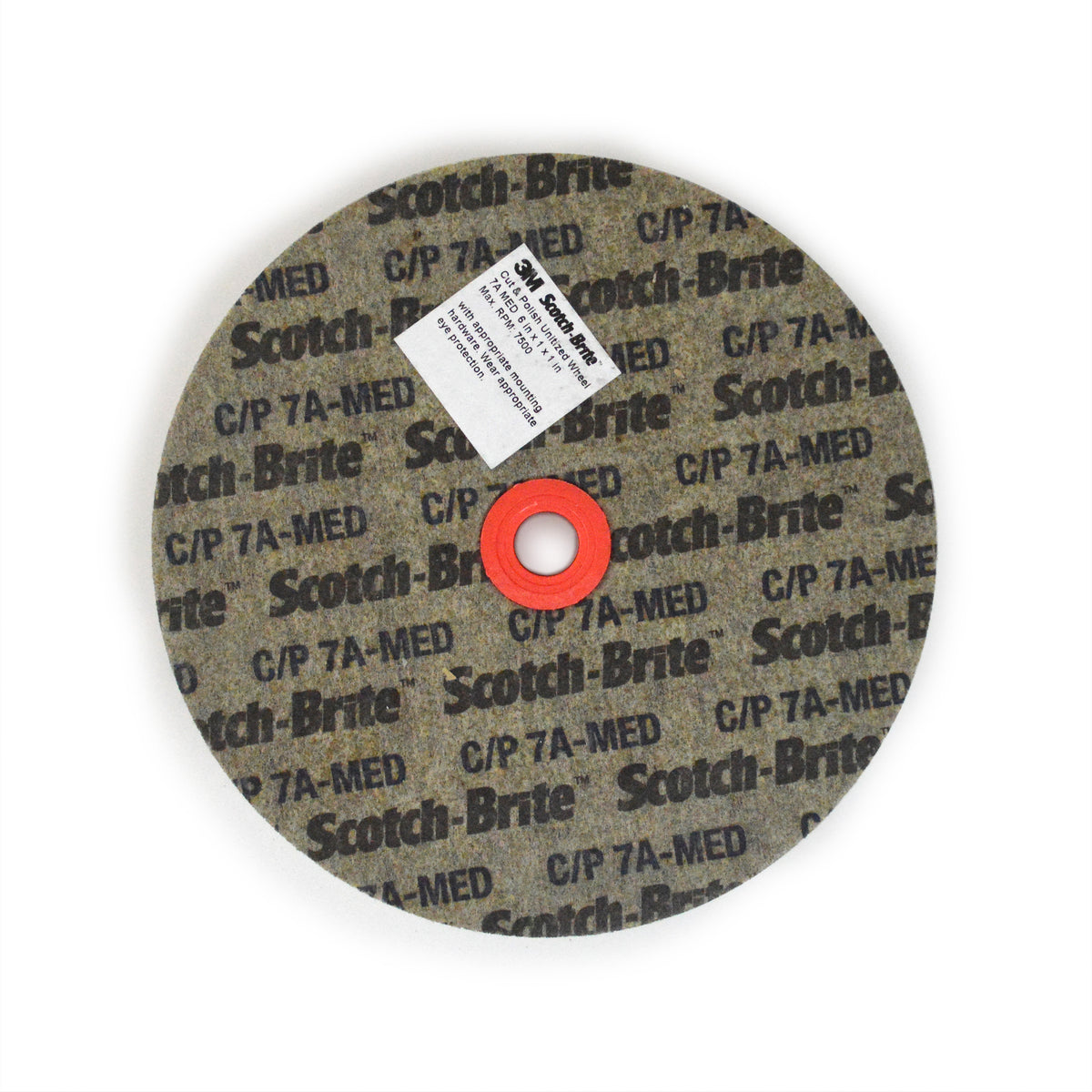

If you get both the standard medium density and a light deburring one, you'll use them both. Cleaveland has them.

Any concerns with the silicon carbide and corrosion? Early on in my build I was using silicon carbide wet and dry sandpaper on aluminum and an experienced aircraft engineer advised against this due to the risk of corrosion from the carbon in the abrasive. So now I use only aluminum oxide abrasives.My personal favorite, and at a way better price than the 3M wheel. (Note, you'll likely need a bushing to adapt the 1" hole to fit smaller bench grinders).
6" Haas Deburr Wheel, 1" Width x 1" Bore, Silicon Carbide, Density 8, Fine-Grade | Haas Tooling
Shop 6" Haas Deburr Wheel, 1" Width x 1" Bore, Silicon Carbide, Density 8, Fine-Grade - Deburr Wheels at Haas Tooling.
Reference: AC 43.13-1B Table 6-1 "Do not use silicon carbide abrasive" on aluminum alloys.

CessnaTPA
Well Known Member
Be sure to get a 6 inch bench grinder and not a 8There are several types/hardness grades of scotch brite deburring wheels for bench grinders.. What type/description/model number is best for aircraft aluminum deburring?

Beat me to it. The unitized aluminum oxide wheels work really well...Any concerns with the silicon carbide and corrosion? Early on in my build I was using silicon carbide wet and dry sandpaper on aluminum and an experienced aircraft engineer advised against this due to the risk of corrosion from the carbon in the abrasive. So now I use only aluminum oxide abrasives.
Reference: AC 43.13-1B Table 6-1 "Do not use silicon carbide abrasive" on aluminum alloys.
I totally agree with this. The medium density wheel will quickly eat into thinner aluminum. The light deburring wheel has a lot of room for error while still quickly deburring most edges. I mostly only use the medium density wheel for thick parts with rough edges to quickly remove the roughness and then polish in one pass on the light wheel. If I were to only get one wheel, I'd get the light wheel. But I like having both.If you get both the standard medium density and a light deburring one, you'll use them both. Cleaveland has them.
Any concerns with the silicon carbide and corrosion? Early on in my build I was using silicon carbide wet and dry sandpaper on aluminum and an experienced aircraft engineer advised against this due to the risk of corrosion from the carbon in the abrasive. So now I use only aluminum oxide abrasives.
Reference: AC 43.13-1B Table 6-1 "Do not use silicon carbide abrasive" on aluminum alloys.
Yes and yes, I grabbed the wrong link from their site, thanks for the catch!Beat me to it. The unitized aluminum oxide wheels work really well...
They offer a Silicone Oxide wheel which I updated my post with.
$23, and free shipping if you spend over $100... (or free overnight shipping for their winner's circle members).
Last edited:
I had the medium wheel and it worked great, and then I discovered the fine wheel.... Now I've got the medium wheel on the right and the fine wheel on the left. I use them both, depending on how much material I'm trying to remove. The fine one gets the most use. Having both is money very well spent.
Mine are 3M. I'd like to have a Haas, and support F1 in a tiny way!
Mine are 3M. I'd like to have a Haas, and support F1 in a tiny way!

I've seldomly ever used a bench mounted wheel, and in 46 years of structures work , I've deburred some stuff. My personal preference is a small 90 degree die grinder and the 2 & 3 inch red and blue scotch Brite pads. Not only can you get in the corners and work a radius, but to me, it's much faster and more controllable. Once you "launch" a piece from the big bench wheel into the floor at sonic speed you may agree. There are times, when the big wheel is nice, but it's very hard to beat a 90 and the pads. Just my 2 cents.
The bench wheel does come with a learning curve for sure!I've seldomly ever used a bench mounted wheel, and in 46 years of structures work , I've deburred some stuff. My personal preference is a small 90 degree die grinder and the 2 & 3 inch red and blue scotch Brite pads. Not only can you get in the corners and work a radius, but to me, it's much faster and more controllable. Once you "launch" a piece from the big bench wheel into the floor at sonic speed you may agree. There are times, when the big wheel is nice, but it's very hard to beat a 90 and the pads. Just my 2 cents.
I have done sheet metal work for years and agree with fixinflyguy, 90 degree grinder. I use mostly blue 3M style ads. Granger carriers them and I buy by the box.
I've seldomly ever used a bench mounted wheel, and in 46 years of structures work , I've deburred some stuff. My personal preference is a small 90 degree die grinder and the 2 & 3 inch red and blue scotch Brite pads. Not only can you get in the corners and work a radius, but to me, it's much faster and more controllable. Once you "launch" a piece from the big bench wheel into the floor at sonic speed you may agree. There are times, when the big wheel is nice, but it's very hard to beat a 90 and the pads. Just my 2 cents.
Best of both worlds. 2” roloc unitized for your 90 deg. This is my go-to.
3M™ 7100000860 EXL High Performance Unitized Wheel, 2 in Dia Wheel, No Hole Center Hole, 15/64 in W Face, Medium Grade, Aluminum Oxide Abrasive | DGI Supply
Scotch-Brite™ Roloc™ EXL Unitized Wheel is strong and effective for edge deburring and finishing. This wheel performs well in a variety of metal working applications and machined parts where close tolerances are important.
Very cool didn't know about these. How fast does it wear out?
The link you show and some other places too require a box of 60 as minimum order.
This place has 15 at a time:

 www.hanessupply.com
The link you show and some other places too require a box of 60 as minimum order.
This place has 15 at a time:
Scotch-Brite™ 7100000860 Roloc™ EXL Unitized Wheel, XL-UR, 2A Medium, TR, 2 in
Roloc™ EXL unitized wheel is strong and effective for edge deburring and finishing. This wheel performs well in a variety of metal working applications
I'd love links to these lighter/finer wheels.

The speed of "wear out" depends on alot. you'll learn to preserve them by keeping from edging or digging them, over pressuring, ect. I run my 2" pads on a mandrel cut down to 1" dia . (rubber) and the pads can flex better. They don't come cheap, but they are well worth it. I don't use the thin ones much, kind of prefer the ones that are 3/16" or so thick. Red cuts pretty fast, blue is final pass if needed.Very cool didn't know about these. How fast does it wear out?
The link you show and some other places too require a box of 60 as minimum order.
This place has 15 at a time:
Scotch-Brite™ 7100000860 Roloc™ EXL Unitized Wheel, XL-UR, 2A Medium, TR, 2 in
Roloc™ EXL unitized wheel is strong and effective for edge deburring and finishing. This wheel performs well in a variety of metal working applications

I have, and frequently use all three methods mentioned. I have a box full of Roloc wheels given to me by a body shop friend, a bench grinder with two different 6” wheels, and a couple 2” unitized wheels for my 90* die grinder. All of them have their purpose. I haven’t built another airplane in almost three years, and probably won’t again, but many of the mods I make on my current RV6, and lots of other non-aviation stuff I make or work on, is facilitated by using one of these tools. Along with my bench sander, I almost never make something for my home, my hangar, or my airplane without using one or all of these tools. Like bacon, nobody ever said “this is to many(much) tools(bacon). Life is short - do it right.

Like Scott, I use all the methods, depending on what’s appropriate for the task at hand. I have made more parts on my Scotchbrite wheels on the bench grinder than I can ever remember! I keep a new wheel on one side, and one that is al worn to a curvy shape on the other - that way I can do straight edges on one, and easily do corners on the other. I also find the old “V-block” pull tool to be very handy for long straight edges…..I have, and frequently use all three methods mentioned. I have a box full of Roloc wheels given to me by a body shop friend, a bench grinder with two different 6” wheels, and a couple 2” unitized wheels for my 90* die grinder. All of them have their purpose. I haven’t built another airplane in almost three years, and probably won’t again, but many of the mods I make on my current RV6, and lots of other non-aviation stuff I make or work on, is facilitated by using one of these tools. Along with my bench sander, I almost never make something for my home, my hangar, or my airplane without using one or all of these tools. Like bacon, nobody ever said “this is to many(much) tools(bacon). Life is short - do it right.

I've used the 7A-Medium 4" Scotchbrite wheel on my bench grinder since the very beginning. I've used on everything from shaping angle stock and flat stock to deburring and rounding corners on thinner 2024 Alclad. Still using the original wheel, though I do have a spare in the cabinet.

I also prefer a 7M. Word of advise...
Put a polishing wheel on the opposite side. One hit on a grinding wheel will ruin most parts. Yes. I learned the hard way. I actually made a cardboard wheel I keep on the opposite side. Not much good, but it helps balance the grinder and no damage if anything hits it. It's made from a bunch of pieces of cardboard with cereal box in between. All glued together then compressed between wood blocks in a vise. Drill the arbor hole. Mount it. Smooth it down with a file. It runs very smooth. I occasionally use it to polish stuff.
Put a polishing wheel on the opposite side. One hit on a grinding wheel will ruin most parts. Yes. I learned the hard way. I actually made a cardboard wheel I keep on the opposite side. Not much good, but it helps balance the grinder and no damage if anything hits it. It's made from a bunch of pieces of cardboard with cereal box in between. All glued together then compressed between wood blocks in a vise. Drill the arbor hole. Mount it. Smooth it down with a file. It runs very smooth. I occasionally use it to polish stuff.
I have one of those I’ve been meaning to use. Do you smooth out the roughness at all before using the v-block tool?I also find the old “V-block” pull tool to be very handy for long straight edges…..

Hopefully obvious tip: Never ever use a deburring wheel on a bench grinder on a large wing skin. Ask me how I learned.
Yes - with a Vixen file on a wooden handle - that takes the bumps off before using the V-Block.I have one of those I’ve been meaning to use. Do you smooth out the roughness at all before using the v-block tool?

Let me open myself to some ridicule. Save your bench grinder with all the related guards, part rests, etc.
I bought a cheap bench buffer from Harbor Freight that I use for finishing. For the cheap price, it's paid for itself many times over having never had to take the time swapping wheels on it. More flexible use as the wheels have much more "exposure" than that on a bench grinder. I use it a lot.
While I'm admitted tool wh0re, can't say I'm as proud of all of them. In this case, the el cheapo has proven its worth.
Link to tool
I bought a cheap bench buffer from Harbor Freight that I use for finishing. For the cheap price, it's paid for itself many times over having never had to take the time swapping wheels on it. More flexible use as the wheels have much more "exposure" than that on a bench grinder. I use it a lot.
While I'm admitted tool wh0re, can't say I'm as proud of all of them. In this case, the el cheapo has proven its worth.
Link to tool
I bought the same one. Works great.Let me open myself to some ridicule. Save your bench grinder with all the related guards, part rests, etc.
I bought a cheap bench buffer from Harbor Freight that I use for finishing. For the cheap price, it's paid for itself many times over having never had to take the time swapping wheels on it. More flexible use as the wheels have much more "exposure" than that on a bench grinder. I use it a lot.
While I'm admitted tool wh0re, can't say I'm as proud of all of them. In this case, the el cheapo has proven its worth.
Link to tool

If you'd like to order quantities as low as 1, you can get them at Aircraft Spruce and Zoro.com.Very cool didn't know about these. How fast does it wear out?
The link you show and some other places too require a box of 60 as minimum order.
This place has 15 at a time:
Scotch-Brite™ 7100000860 Roloc™ EXL Unitized Wheel, XL-UR, 2A Medium, TR, 2 in
Roloc™ EXL unitized wheel is strong and effective for edge deburring and finishing. This wheel performs well in a variety of metal working applications
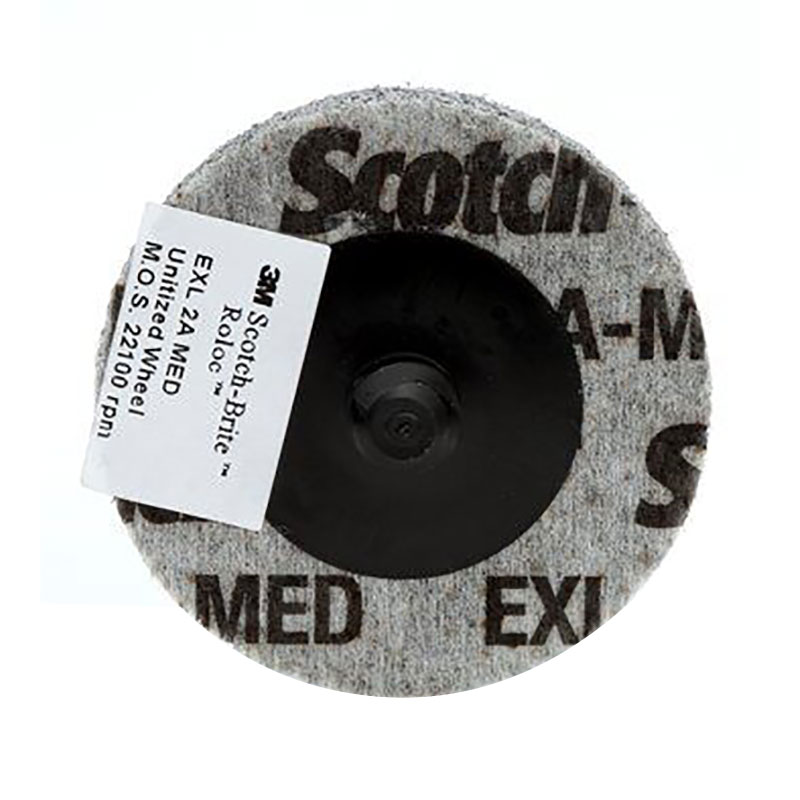
3M Tr Exl Unit Wheel 2 Med 2A | Aircraft Spruce
3M Tr Exl Unit Wheel 2 Med 2A The Scotch-Brite Roloc EXL Unitized Wheel is strong and effective for edge deburring and finishing. Manufactured with compressed, non-woven fibre construction and uniform grain distribution, this wheel produc

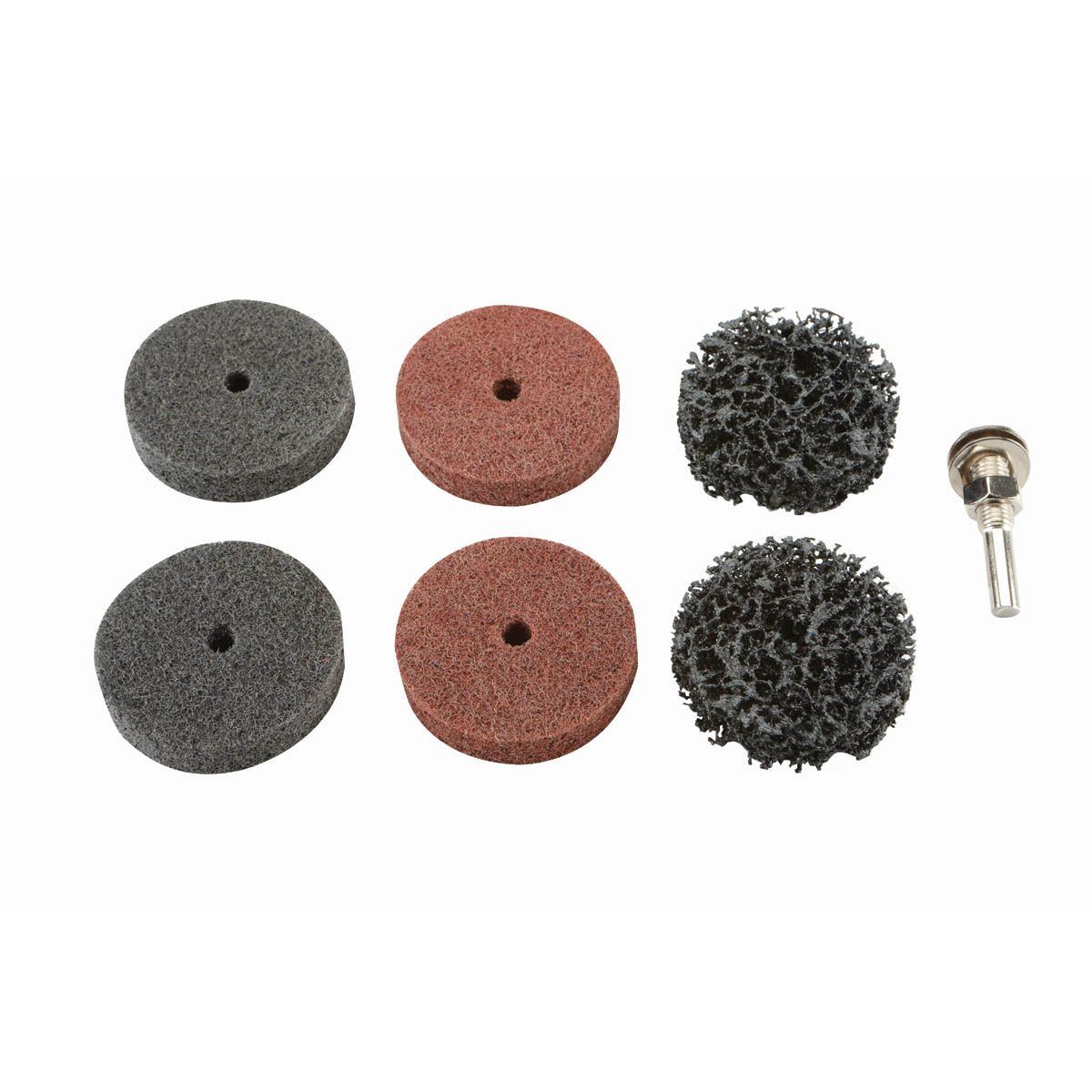
I love these very inexpensive conditioning wheels from HF. I also have one of the 3M wheels that I use, but the HF wheels produce a much cleaner result. I would say its good to have both. I often start with the 3M, and a finish pass with the HF wheels. I no longer debur rivet holes with a traditional deburr tool or bit. I just run one of these (gray or maroon) wheels on each hole. Very quick, and almost no chance of over doing it.
 www.harborfreight.com
2 in. Conditioning/Stripping Kit
Amazing deals on this 2In Conditioning & Stripping Kit at Harbor Freight. Quality tools & low prices.
