Van's Air Force

The definitive Van's Aircraft support community! Buying, building or flying an RV? Join our exclusive family of mentors and enthusiasts!

Spalling prognosis

RBD

Well Known Member
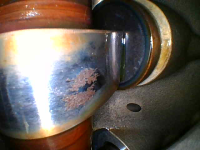
Plane sat for a few years; don’t do that to yours! Pulled a jug and found what we were(n’t) looking for. The shop lightly polished the rust off to see what level of damage is actually done to the cam; you can see the before and after below. Curious to hear from those with experience what the outlook is. My understanding is that once the hardened surface is compromised, it become a matter if when, not if, the cam starts eroding to the point of needing replacement. Is that 50 hours or 500? Replace now? Fly and monitor sump screen and oil filter? Rough cost (parts and labor) to replace would be helpful, too. Engine has 500 hrs since new. O-360
 

Attachments

  • 07FE7320-ABA1-4432-8EE3-14453CBD4566.png
    07FE7320-ABA1-4432-8EE3-14453CBD4566.png
    321.3 KB · Views: 446
  • 29958B11-14E0-4003-BFB3-29838A7D4E7C.jpeg
    29958B11-14E0-4003-BFB3-29838A7D4E7C.jpeg
    502.2 KB · Views: 444
Plane sat for a few years; don’t do that to yours! Pulled a jug and found what we were(n’t) looking for. The shop lightly polished the rust off to see what level of damage is actually done to the cam; you can see the before and after below. Curious to hear from those with experience what the outlook is. My understanding is that once the hardened surface is compromised, it become a matter if when, not if, the cam starts eroding to the point of needing replacement. Is that 50 hours or 500? Replace now? Fly and monitor sump screen and oil filter? Rough cost (parts and labor) to replace would be helpful, too. Engine has 500 hrs since new. O-360
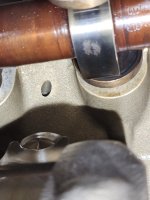
It can vary (OEM, OH vendor, etc) but the nitrided surface is typically only 3-6 thousands IIRC. Personally, I'd start the wheels in motion to replace ASAP. Others will say to watch the oil analysis, etc. but ultimately, you have to be in a position of trust with the PP.
 
Second photo suggests it's one of the shared lobes, so twice the damage opportunity per rotation.

Relatively new engine, so I'd tear it down now, before spalled material can damage something else. If it hasn't been run there's a pretty good chance you can replace nothing but the cam, maybe a tappet, maybe buy some pushrods to set the dry tappet clearances.
 
Not what you wanted to hear (see), but I'm with Dan. This early in the damage game, and with the current cost of engines, I'd work the problem right now before it spreads to other components.
 
Absolutely, positively tear it down now before further damage occurs. It's not going to do anything but get worse.
 
It appears to me the lifter has already spalled so a refreshing as soon as possible as noted above is definitely in order. I've seen this movie, the common lifters in my O-320 spalled due to corrosion and wiped out the cam lobe. The engine still ran pretty well but it was ready for overhaul. This is where your engine is headed if it remains in service.

overhaul-6.jpg


overhaul-13.jpg
 
I’m going to agree with everyone else - at this point, you have a good top end (probably), so you’re looking at a lower end, split the case IRAN.

Bite the bullet, tear it down, send the parts off and be ready for spring!
 
As the saying goes, pay me now or pay me more later. If you wait to replace/repair the cam and possibly lifters and the engine starts making metal it will go through the engine creating all sorts of part replacement opportunities like pistons, cylinder honing/replacement, oil pump, oil cooler etc etc. I had this happen on an engine at 35 hrs where the lifters were ground and improperly hardened. Better to do it now.
 
I'm not knowledgeable or experienced enough to comment on your specific issue. Why was a jug pulled?

The prebuy on my 10 pointed out some corrosion on some cylinders such that the bulk of the opinions given were for me to walk away from the plane.
I bought it, flew it home, change the oil after a bit, sent it to Blackstone to follow the numbers.
compressions good.
I'm now 40-50 hours of flight into things.

It was very unsettling to ignore the majority of the advice online.

 
Couple of years ago a local pilot crashed fatally, partly the result of pushing known engine problems too far. Cessna with Lycoming 360. Cam was trash, broken rings on two cylinders, intersection takeoff leaving a bunch of runway behind.
 
Thanks for the replies, all. They help affirm our plan of action and that we're not crazy for thinking this is a big deal. It's an unfortunate reality for all involved that the plane sat (1/4 mile from the ocean) for a few years.

@RNB, the jug was pulled as part of a pre-buy inspection. We know that the plane has been sitting for a few years; what we found is exactly why we looked in the first place.
 
You already have your conclusion, but as an engine guy I was surprised at the internal damage that occurs when continuing to run and engine like this. The little flakes fly around inside the case and get on the cylinder walls and eat the piston skirts along with getting into all the other places bits should not be. It would be ugly.

Wise, you are, for this inspection.
 
To close this out with an FYI for anyone that is curious: we got quotes from reputable engine shops ranging from $12,500 to $17,000 to split the case and replace the cam. Those are minimums depending on what else was found (we would have added all new DLC tappets for additional cost.) Those prices don't include removing/replacing the engine. Seller is holding firm at the price we negotiated before finding this issue, so we're walking from the deal. If anyone has (or knows of) a nice -6 or -7 for sale that isn't on the usual sites, please let me know.
 
It's of little consolation but the saying "Sometimes the best deals are ones you don't make" has been both popular and accurate for a long time.

- There is something else better out there
- The owner/seller now has increased his liability. No defense against this now known defect

Best of luck in your continued search
 
Plane sat for a few years; don’t do that to yours! Pulled a jug and found what we were(n’t) looking for. The shop lightly polished the rust off to see what level of damage is actually done to the cam; you can see the before and after below. Curious to hear from those with experience what the outlook is. My understanding is that once the hardened surface is compromised, it become a matter if when, not if, the cam starts eroding to the point of needing replacement. Is that 50 hours or 500? Replace now? Fly and monitor sump screen and oil filter? Rough cost (parts and labor) to replace would be helpful, too. Engine has 500 hrs since new. O-360
I'm currently in the exact position you are. My decision was to immediately pull the engine, split the crankcase halves, install new cam, (1) new tappet body.. your engine is low Time so that's all you need. That's under $1k in parts but lots of labor. My engine has 1700hrs so I replaced many more engine parts
 
I'm currently in the exact position you are. My decision was to immediately pull the engine, split the crankcase halves, install new cam, (1) new tappet body.. your engine is low Time so that's all you need. That's under $1k in parts but lots of labor. My engine has 1700hrs so I replaced many more engine parts
Out of curiosity, how many hours of labor?
 
I'm currently in the exact position you are. My decision was to immediately pull the engine, split the crankcase halves, install new cam, (1) new tappet body.. your engine is low Time so that's all you need. That's under $1k in parts but lots of labor. My engine has 1700hrs so I replaced many more engine parts

I'm curious, do you have to replace the main bearings when you split the case?
 
Is the primary cause of this spalling simply due to letting the plane/engine sit without running it?
 
  • Like
Reactions: RBD
Is the primary cause of this spalling simply due to letting the plane/engine sit without running it?
I don't have first hand knowledge but from reading this forum that is the case. Condensation on the cam causes corrosion that leads to this. As I understand the cams are nitride surface hardened. Slight surface corrosion eats through the hardening resulting in this.

If my understanding is correct this is a good example to illustrate Lycomings are over priced, antiquated tech, that should be modernized. Thousands of motorcycles, yard equipment, generators etc, are air cooled, with cams in the high point of the engine. And thousands of them sit all winter without being touched and never have this problem.
 
Is the primary cause of this spalling simply due to letting the plane/engine sit without running it?
I'm going to be attacked for this but for the last 40+yrs I've been told by engine geniuses: if you can't fly the plane, ground runs are good provided you shut down after oil temp reaches normal operating point. In other words HOT.. the idea was hot oil will boil out moisture and lubricate everything. Now we're told running is bad 🤪 fireworks coming
 
You need not suffer fireworks, or the agony of who to believe. We already have members who have measured crankcase humidity levels in detail (search is your friend), and you can easily do the same, before and after any runtime scheme you choose.
 
They no doubt could... but that would be bad for the business. Same story as for gas...
Bad for business as in a large investment in engineering, testing, and certification. Multiply that by each engine you are going to modernize (320, 360, 390, six cylinder variants...) The ROI is based on how much you could increase the price per unit on the not very large volume of new engines you sell. Thus I agree, bad for business as your profit will decrease. And it is all about this quarter's profit.

Optionally, only modernize the non-certified engines. Cost saved! But fewer units to amortize it over.
 
Anyone else pull the dipstick and run a fan into the engine lower cowl outlet until the oil and engine is much cooled? I like to do it during my postflight checks. Breather line flow clears all the crankcase vapors in under 15 minutes. If using a dehydrator, hook up after and your silica beads can be oven-dried sans fumage.
 
Anyone else pull the dipstick and run a fan into the engine lower cowl outlet until the oil and engine is much cooled? I like to do it during my postflight checks. Breather line flow clears all the crankcase vapors in under 15 minutes. If using a dehydrator, hook up after and your silica beads can be oven-dried sans fumage.
Yep . . .but don't wait until it is cool. I use a 15 liter/min purge for 5 min then switch to desiccant flow for 60 min. I made a PSA pressure swing adsorption dryer with 2 ft of 2" PVC and it yields 15 LPM of air with -45F dew point. PSA is a self regenerating cycle. It seemed like overkill so I haven't developed more complicated timer control system for it. It only uses 20 LPM of 100 psi air, so even a pancake compressor has a long off time in the cycle.
 
Bad for business as in a large investment in engineering, testing, and certification. Multiply that by each engine you are going to modernize (320, 360, 390, six cylinder variants...) The ROI is based on how much you could increase the price per unit on the not very large volume of new engines you sell. Thus I agree, bad for business as your profit will decrease. And it is all about this quarter's profit.

Optionally, only modernize the non-certified engines. Cost saved! But fewer units to amortize it over.
Knowledge of metallurgy and hardening processes has come a long way since these engines were designed. Modernization to cure this problem would cost about 2 hrs engineering to re-write specs, some heat treating equipment, and a few steps added to the manufacturing process. It'd cost roughly $60 per engine of profit. Plus reduced sales in replacement parts which I think is the main reason they don't.

Admittedly I don't know the certification details, are things like metallurgy and heat treatment spelled out that tightly? If so you are correct, that would be a huge roadblock for any improvement.
 
Anyone else pull the dipstick and run a fan into the engine lower cowl outlet until the oil and engine is much cooled? I like to do it during my postflight checks. Breather line flow clears all the crankcase vapors in under 15 minutes. If using a dehydrator, hook up after and your silica beads can be oven-dried sans fumage.
Yes
 
Knowledge of metallurgy and hardening processes has come a long way since these engines were designed. Modernization to cure this problem would cost about 2 hrs engineering to re-write specs, some heat treating equipment, and a few steps added to the manufacturing process. It'd cost roughly $60 per engine of profit. Plus reduced sales in replacement parts which I think is the main reason they don't.

Admittedly I don't know the certification details, are things like metallurgy and heat treatment spelled out that tightly? If so you are correct, that would be a huge roadblock for any improvement.
My assumption was that it would take more than some changes in metallurgy and hardening. I may be mistaken, but I thought one of the main reasons you hear about the cam issues in Lycomings is because the cam is above the crank and the lobes just get splash lubrication. Leaving them 'high and dry' so to speak.
 
My assumption was that it would take more than some changes in metallurgy and hardening. I may be mistaken, but I thought one of the main reasons you hear about the cam issues in Lycomings is because the cam is above the crank and the lobes just get splash lubrication. Leaving them 'high and dry' so to speak.
Cam position is the explanation I've heard too. I just don't buy it based on the many engines I mentioned with similar configuration and similar sporadic use. A BMW motorcycle owner doesn't have to replace cams every spring. :unsure:
 
Cam position is the explanation I've heard too. I just don't buy it based on the many engines I mentioned with similar configuration and similar sporadic use. A BMW motorcycle owner doesn't have to replace cams every spring. :unsure:
Maybe you should talk to Lycon. Interesting info at https://www.supercub.org/forum/threads/computer-optimized-cam.22273/ maybe they know if some of the options are more resistant. Or you can educate them on possible improvement. They don't seem afraid to do things to the beast.
 
Just a un-scientific and completely unverifiable data point here. A regional engine overhaul shop here in the PNW claims that they have not seen any cam lobe damage due to corrosion on factory Lycoming's with roller tappets.
 
  • Like
Reactions: RBD
Back
Top