
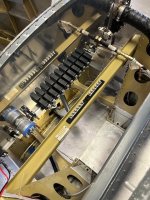
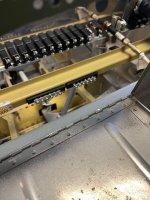
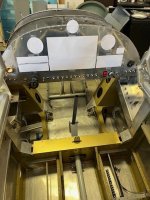
I am building an RV8 and need input for placement of the main and avionics buss bars and grounding pins. Attached are a couple of photos where I think they could be mounted. Looks like the strut connecting the two gear towers could work - close to the breakers and the strut could support wire bundles. I do have the hinged avionics bay access door. Also attached is a photo of the panel so you can visualize avionics and back-up instruments protruding into the bay. Any critique or alternate ideas appreciated. Thanks.

Van's Air Force
You are using an out of date browser. It may not display this or other websites correctly.
You should upgrade or use an alternative browser.
You should upgrade or use an alternative browser.
RV8 Buss Bar Locations
- Thread starter dmatre
- Start date



I did the avionics bay door to the baggage area, and found that it's much easier to access things by removing the instrument panel and putting it in your lap. When you need to get up, a couple of clecos puts it back in place temporarily. I also used the auto fuses similar to Al, and a pair of "forest of tabs" for grounds. On the panel, dedicated ground point. Bob Nuckolls (https://www.kitplanes.com/author/robert-l-nuckolls/) at AeroElectric Connection (http://www.aeroelectric.com/) makes a great case that auto fuses eliminate the need for "acres of breakers" and a "bus bar".
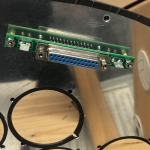
I recommend his book - I learned a lot from it. It is an excellent foundation for aircraft electrical design and wiring, at least it was for me.
I recommend his book - I learned a lot from it. It is an excellent foundation for aircraft electrical design and wiring, at least it was for me.
Thanks Mickey. Yeh, I now get how fuses can reduce the massive area needed for breakers. However, I am building a relatively simple plane (VFR Day/Night) keeping some old school feel (mags and back-up analog gauges) with new tech (GRT Sport EFIS and their EIS). I do like the ability to see the status of a breaker in the cockpit for immediate identification of a problem. Another good book is Aircraft Wiring Guide by Marc Ausman.I did the avionics bay door to the baggage area, and found that it's much easier to access things by removing the instrument panel and putting it in your lap. When you need to get up, a couple of clecos puts it back in place temporarily. I also used the auto fuses similar to Al, and a pair of "forest of tabs" for grounds. On the panel, dedicated ground point. Bob Nuckolls (https://www.kitplanes.com/author/robert-l-nuckolls/) at AeroElectric Connection (http://www.aeroelectric.com/) makes a great case that auto fuses eliminate the need for "acres of breakers" and a "bus bar".
View attachment 77784
I recommend his book - I learned a lot from it. It is an excellent foundation for aircraft electrical design and wiring, at least it was for me.

I mounted the busses on the inside of the door facing the avionics compartment. I made a tray across the crossmembers to mount the radio remote, EFIS BU battery, ground buss etc. Worked out ok.
View attachment 77774
Thanks for the response and love the quick disconnect fasteners on the access door. Beautiful work on your plane. The shelf idea is great and will consider.

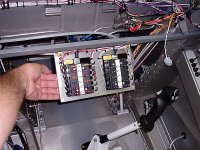
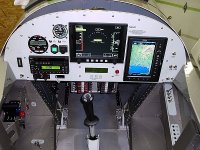
Thanks Walt.May want to upgrade breakers to klixon pullable.
Good suggestion Dan. Thanks.Not a fan of live bus bars facing up. Facing down means nothing can ever drop on them. And yes, using fuse blocks eliminates them entirely.

dmatre,
If you move your breakers and switches to the side wings and the arm rest, you greatly simplify maintenance, upgrades and modifications as removing the center panel to work it on the bench is a simple 15 minute task.
No need for shelves, access holes to the baggage compartment and such.
Side note. I never use copper buss bars. I know Cessnas and such use them but for me they just seem alike an accident waiting to happen.
Carl
If you move your breakers and switches to the side wings and the arm rest, you greatly simplify maintenance, upgrades and modifications as removing the center panel to work it on the bench is a simple 15 minute task.
No need for shelves, access holes to the baggage compartment and such.
Side note. I never use copper buss bars. I know Cessnas and such use them but for me they just seem alike an accident waiting to happen.
Carl
Attachments
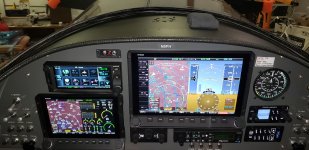
Thanks Carl. Another RV owner mentioned that removing the EFIS unit also provides access. I am trying to keep the plane simple, so I suspect I will not need a shelf.dmatre,
If you move your breakers and switches to the side wings and the arm rest, you greatly simplify maintenance, upgrades and modifications as removing the center panel to work it on the bench is a simple 15 minute task.
No need for shelves, access holes to the baggage compartment and such.
Side note. I never use copper buss bars. I know Cessnas and such use them but for me they just seem alike an accident waiting to happen.
Carl
Yep - but not as much access as you would think. Assuming you have other stuff in the panel (GPS navigator, comm, audio panel and such) this access does little to help with trays. The trays tend to be the biggest issue.Thanks Carl. Another RV owner mentioned that removing the EFIS unit also provides access. I am trying to keep the plane simple, so I suspect I will not need a shelf.
As I’ve posted in the past, the rule is “never on your back with your head under the panel”.
Carl
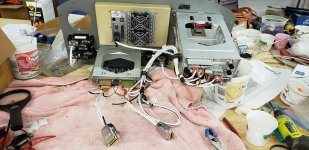
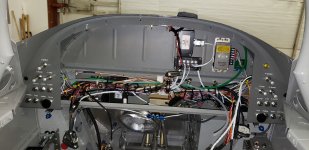
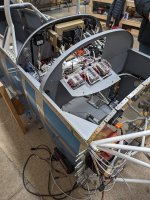
Very helpful. Thanks for the extra effort and photos.Photos of the center panel in and out of the plane.
Carl
