Are you going to ask for permission or beg for forgiveness.
Not sure I follow the question.
Since all these runs will take time I’d suggest recording the fuel on board for each run. When you’re done you can apply a first order (square root of weight) correction during data analysis. I also agree with the last poster: you may find it difficult (e.g., on the edge of stall speed) to stop the prop. And, once stopped, you’ll need the starter to get it moving again.
We'll top the tanks off before the test and the FT-60 is recorded in the G3X data. Should be able to account for burnt fuel post-flight pretty easily.
With the engine off, from a test hazard standpoint, this is not a low risk test if assessed prior to mitigation. Approach with caution, over planning is better than under. Based on my experience working with tests of this type, I offer the following (potentially incomplete) considerations and rhetorical questions:
With respect to data quality, I'd recommend trying to do repeated configuration pairs of descents on opposing headings as close to perpendicular to the opposing winds as possible.
Double check your low pitch setting. Your description for descent deck angle at 90 kias is a bit surprising, that's not much above best glide.
With respect to restarts, I'd recommend starting at the high airspeed and stepping down, rather than the planned opposite. My experiences with engine off had the prop windmilling quite happily and restarting without a fuss once fuel was reintroduced. Ensure you understand the minimum RPM required for the ignition system to fire. How about your fuel system config? Do you want to keep the HP pumps going while the engine is off? Recommend creating checklists for, respectively, shutting down, restarting, and securing the engine.
Plan now for if the prop is barely windmilling whether you want to increase airspeed to try to drive RPM higher or slow to try to stop it so you can engage the starter.
Consider where you're going to start the test relative to the airport. Recommend starting away, headed towards the airport, distance based on geography and expected glide ratios. You mention stopping at 2500 ft, but what does that mean? Recommend having a knock off altitude: test point is over, time to restart the engine. Recommend having an abort altitude: no more restart attempts, it's time to land engine off. Consider securing fuel/ignition cutoffs at this point to avoid surprise restart/hiccups at an inopportune time. Consider having knockoff and abort geography points, ideally tied to altitude, for if your glide has passed the airport or you're descending quicker than anticipated, giving you opportunity mitigate.
Consider your instrumentation, I believe the G3X can display a dynamic glide ring; how can you integrate this into your decision making to make life simple during the test?
What's your radio tuned to? Who is operating it?
What kind of headset are you using? Noise cancelling headsets can mask sounds that may be informative.
Practice power off 180s/approaches to the runway(s) you anticipate using. Use multiple different entry points (location, speed, altitude) to the pattern. Use the altitude consumed in this practice to inform your decision altitudes.
Brief risks and decision altitudes. Are you going to wear chutes, and if so, at what point do you bail? At what point do you decide you can't make the airport and land in a field? Which one(s)? You mention taking your wife, are you both comfortable with the risks individually, and for each other?
Consider what wind/weather conditions are disqualifying for this test.
Good luck. Be safe.
Appreciate the inputs. There's a lot of good points there and I have some follow-up questions.
1. Sink rate/glide is with respect to the air mass and indicated airspeed, so why do you suggest repeats with 180 degree headings and perpendicular runs to the winds? Not sure what that buys you unless you're using GPS speed or ground speed in the post flight?
2. Our phase 1 testing showed a best glide of 73 KIAS. Nowhere close to what other RV's are showing of ~90 KIAS for best glide. We have adjusted the low pitch stops since then, but only by about 25 rpm. Recompleting our glide calculations is part of why we want to re-do this testing.
3. The altitude comments are valid. I'll set up away from the airport to be in a high key position no lower than 4000' (where the engine restarts would begin) and be in a low-key dead stick setup by 2500' (where restart attempts would stop). We'll add a high altitude build-up for restart technique development and determine minimum speed to stop the prop, and minimum speed for windmill RPM >300 before we start into the glide testing. The SDS won't fire below that, and above that I'm confident it will start easily.
4. Radio would be on CTAF. If the wife comes along for the testing, she'll be the one communicating.
Are you totally comfortable landing dead stick incase it doesn’t start? Does your wife understand and accept the risks? Why do you set your prop governor at 2650 instead of 2700? That’s probably 10 or 15 hp you are leaving behind. I would get that prop governor set to the full 2700 and low pitch stops set to 2650 static. I agree 20 degrees nose low seems excessive at idle.
Using
as a reference, each 100 RPM gets you ~8 hp at sea level and ~4hp at altitude. The math backs that up too, assuming constant torque between 2650 and 2700, you lose 4 hp due to the RPM. But, point taken. My last few data sets are 1Hz, so I likely missed the peak, but I see 2650 static, and 2630 for most of the climb. I'm happy with the static, but I'll back the governor off for the full 2700 RPM.
A lot of good thoughts have already been expressed. The only thing I’ll add (having done a lot of this kind of testing, is that there is no reason to have an extra body onboard - why risk two people when you only have to risk one? Since you’ve got G3X recording, that’s all you need - the data will be far more accurate in post-flight reduction than anything you or your wife will scribble down. I rarely do manual data collection anymore.
If you’re current with dead-stick landings, the risks are much lower….but I still wouldn’t take an extra body, even if it is another test pilot - there’s no up-side, only increased risk.
Oh - my experiments also says that you’ll probably want 1,000’ stabilized data-takes. it is hard to get stabilized with the descent rates you’re going to have in just 500’.
Paul
Will shoot for 1000' ft or 30 seconds of stabilized data based on yours and Vac's comment. I'll discuss the risks with the wife. Our entire careers have been spent with a control room and chase planes. I'm an FTE, not a test pilot, so my workload will be high during these tests to start with. It helps having one person dedicated to running the test, and one person dedicated to flying the airplane. Trying to hit all the parameters and manage the systems will require a lot of heads-down flying, having an extra set of eyes to keep a look outside, call the floor, and verify test technique is value added. I don't think its beyond my skill to accomplish, but we will assess risks vs skill and mitigate to the best of our abilities. It is a very valid point you make.
Vac,
Your post was too long to quote. I'll verify the AHRS matches the canopy rail angle, just so we can compare data sets. I like the idea of determining the residual thrust effects, so I'll modify the test plan slightly. What do you mean "7 and 4 use 23013.5 section"? We don't have absolute AoA on the aircraft, just the G3X AoA display which is a relative display that gives X degrees of warning before stall. Happy to take your air data boom off your hands if you're done with it though.
Ballast aircraft for ~1825lbs at test start, stop testing at 1775lbs to center around max gross for most 7's. We're tagged at 1900 GW, so this is legal for our plane.
1. Reset AHRS to match canopy rail angle, or at least document the angle difference so we can remove the offset-post flight. Re-complete stall testing to calibrate G3X built in AoA display and capture data for 1.3Vs testing.
1. Develop engine restart procedures for both windmill and prop stopped at high altitude.
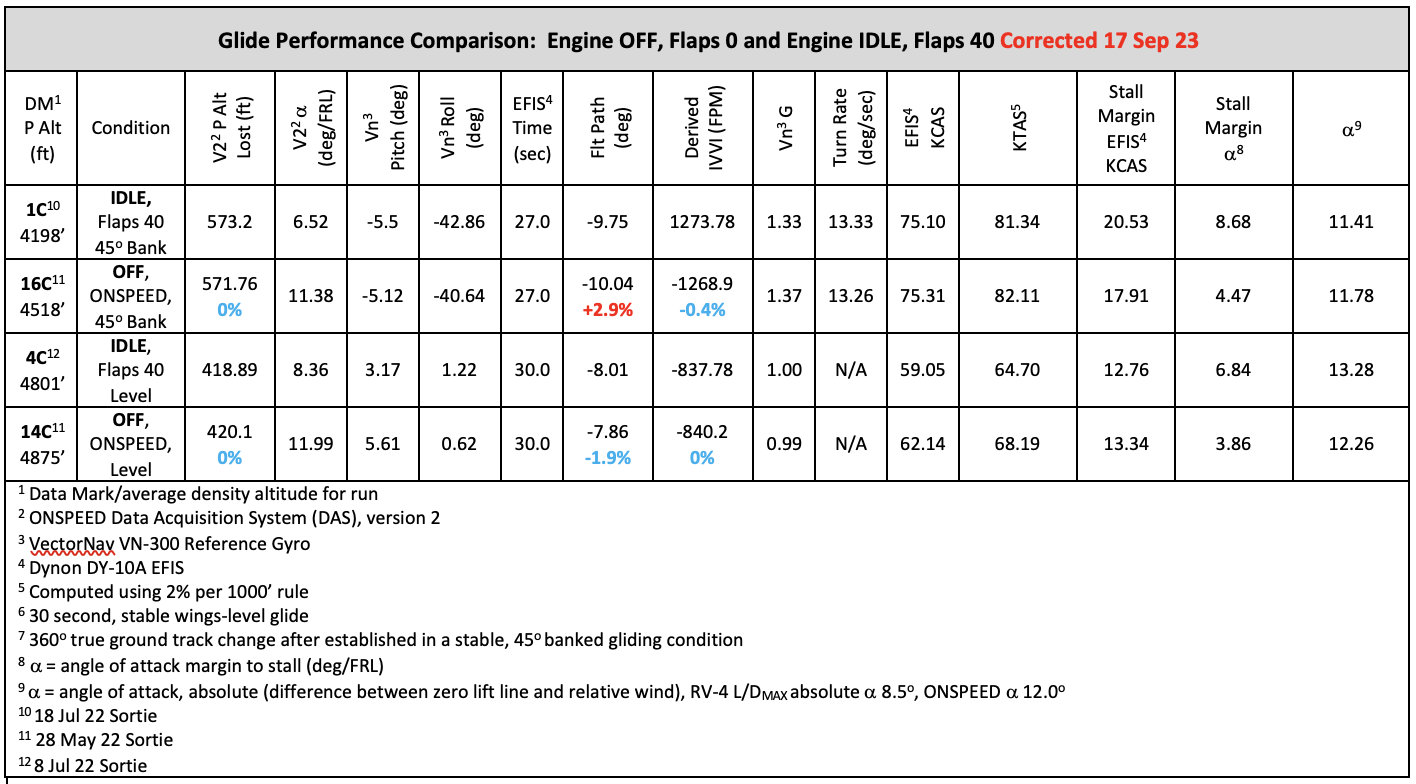
2. Capture 30 seconds or 1000' at each airspeed (60-90 plus 1.3Vs @ max gross) with engine running prop fine and engine running prop coarse.
3. Capture 360 turn 45 degree bank at the end of each airspeed point for maneuvering effects.
4. Capture engine off prop stopped data at each airspeed.
5. Capture engine off prop wind milling (fine/coarse) for any airspeed <=90 that supports wind milling.
6. Once engine off best glide speed is determine, investigate various MP/RPM/flap configurations to determine zero thrust conditions for prop stopped and prop wind milling, if applicable.





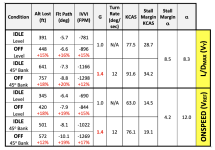
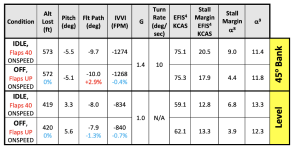
 , I'm over the top of an Eglin Aux field with two runways. Lessons learned, for what they are worth: 30 seconds on parameters wing's level and 360 degrees of turn, on parameters using 45 degrees of bank (if you are interested in maneuvering glide performance). Load the expert version of the TLAR app (if you are an iOS guy) and that will help with energy management in the event of non-start post run. Paul is correct, one body on board for high-risk DT is sufficient, but kudos to your wife! Ballast for MAGW, if desired. Don't be surprised if your alternator belt (assuming you have one) squeals a bit when you bump the starter. Don't bother with a windmill re-start, but ensure KIO altitude is high enough to effect one, if required (min 3K' AGL), you can correct all of the data down to SL. Depending on pitch, a windmill is going to require 125-150 indicated. Select the highest speed option for data recording. If you have a camera mounted, dictation is more effective than notes--you can compile those when you debrief the "film" (dating myself):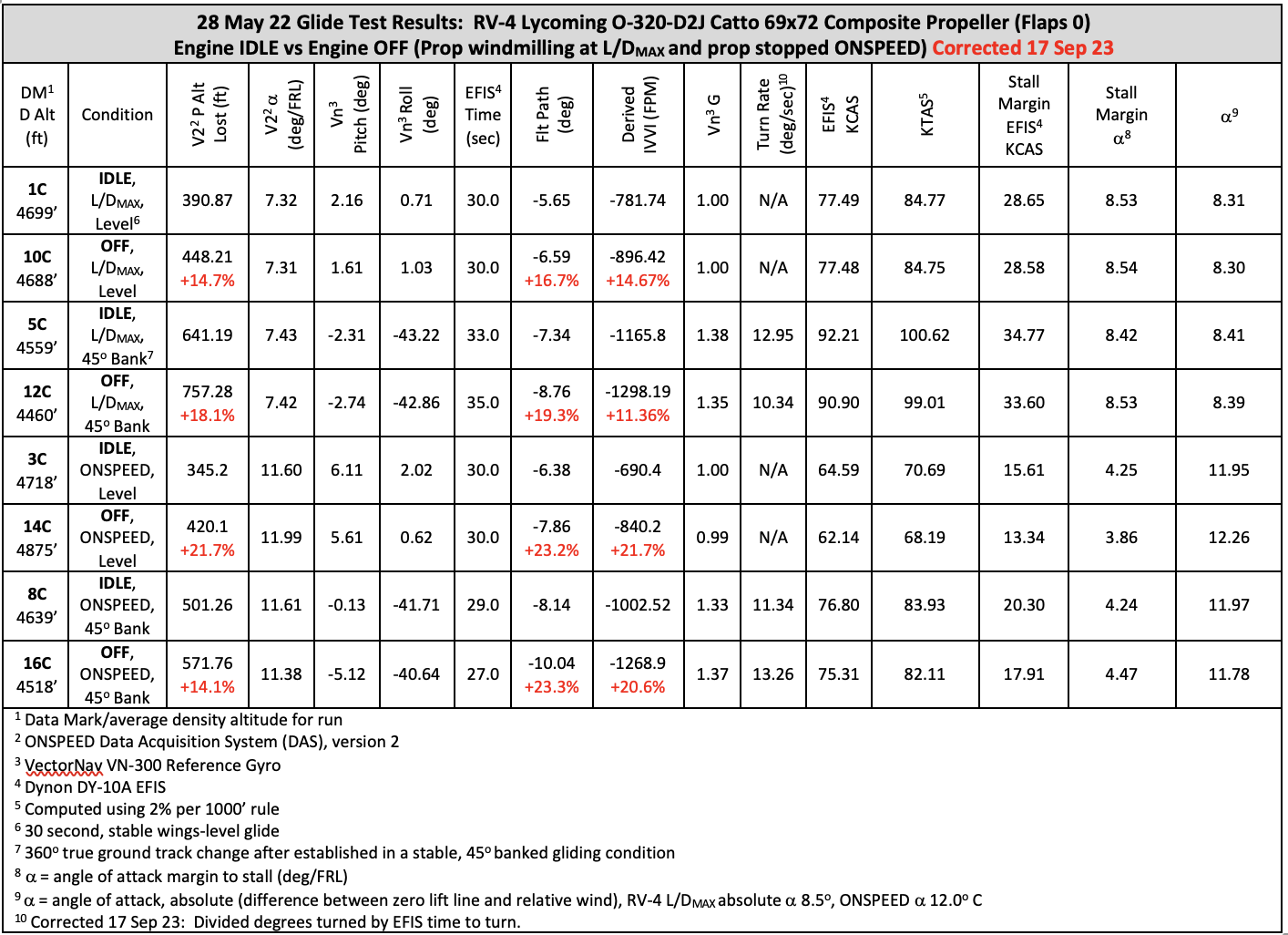
 . How embarrassing is that? You can start with "hey Boomer, we got this..."
  You guys will do great as a team!
  inflight emergency…