Van's Air Force

The definitive Van's Aircraft support community! Buying, building or flying an RV? Join our exclusive family of mentors and enthusiasts!

Hartzell Blended Airfoil / Prop Flange Bushings

rsr3

Well Known Member
I could do with a bit of help - firewall forward is definitely a steep learning curve each and every day!

I went to mount the prop so that I can start work on the cowlings and discovered that not all prop flanges are equal. Well, specifically, prop bushings.

I've tried searching, I've measured, I've studied my prop manual, I've read Hartzell manual 193, I've studied SI 1098 but the bushings I think I've got don't seem to tally with that document.

I have a Hartzell BA prop. 6 x 1/2" bolts. According to the back of the prop, one of the prop bushings must be flush. The others are not flush, as they sit inside the prop hub around the bolts. See below:
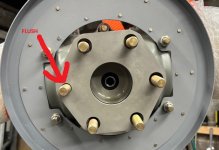
prop.jpg

My crankshaft flange, however, has six identical bushings (locater for the starter ring gear aside) which means that one must be changed. See below:
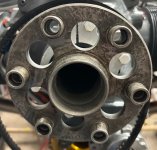
crank flange.jpg

My crankshaft flange is 0.38" thick.
The starter ring gear is 0.25" thick.
The bushing outer diameter is 0.75".

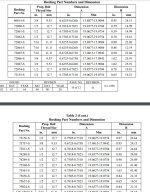
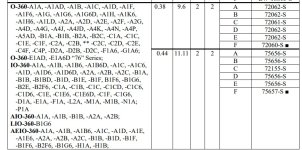
So, according to SI 1098, with a dimension A of 0.75" and B of 0.96", I believe all of my current bushings are 72656-S. But none of those apply to the 0.38" thick flange, which I definitely have?
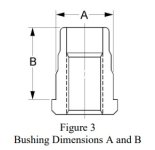
ab.jpg
table.jpgbushings.jpg


Other than a mild intrigue as to why the bushings I think I have fitted should be for the 0.44" flange rather than my 0.38" flange according to SI1098, I believe that the flush bushing that I require is 72155-S. I.e. dimension B is 0.38" for the flange + 0.25" for the starter ring gear = 0.63" or ~0.65"

Would it be acceptable to trim my current longer bushing down flush with the starter ring gear or must I replace it with the correct, unaltered bushing? I'm sure with a die grinder I could get it nicely flush, with care?

Secondly, because all of my current bushings are identical apart from the "0" bushing that locates on the starter ring gear, which one of the six bushings should be the one to be trimmed / replaced? Again, I'm struggling to find info on whether this propeller needs to be clocked. Some anecdotal reports suggest 2/8 o'clock.

The Hartzell manual says consult the engine manual and my engine is rebuilt / modified and therefore does not conform to any one particular manual. A search of generic Lycoming owners manuals did not reveal any information with respect to prop bushing either.

Can anyone point me to where I can find the answers to the above, please?
 
The clocking, absent delibrate modification, is controlled by the different bushing sizes being in specific locations on the flange and by the propeller hub. Many (most) of the configurations actually have two flush bushings.

The correct locations for the different bushings is indicated in that same Lycoming Service Instruction, 1098, by calling out the bushing positions alphabetically with respect to the #1 cylinder crank pin on page 2 of the instruction, and then by listing the correct part number for that alpha location. So if you put cylinder #1 at TDC, bushing A is lined up with cylinder #1, and the rest follow the diagram.

I would recommend replacing the bushings, rather than trying to grind them down. Also, if, as you surmise, the bushings for a thick flange have been installed on a thin flange then you will have issues at the other locations as well in that they will protrude past the starter ring gear farther than they should.

Lycoming product support is very helpful, I'd recommend giving them a call if you have questions.
 
Lycoming has a published document with where the prop bushings are located on different engines. Yes you should clock your prop the way Lycoming recommends or according to another document that has a certain position to minimize vibrations / harmonics.

If the above link I inserted does not work in the future, search for the latest Service Instruction 1098. (1098Q dated April 08, 2024 when I posted this.)

Some engines were setup for fixed pitch props, some for constant speed when the engine left Lycoming. The propeller flange bushing location was just one of the differences. Yes it is possible to change the bushing from one dash engine to a different dash engine. When I converted my B2B to constant speed operation, I had to change one of the bushings to accept the prop.
 
The clocking, absent delibrate modification, is controlled by the different bushing sizes being in specific locations on the flange and by the propeller hub. Many (most) of the configurations actually have two flush bushings.

The correct locations for the different bushings is indicated in that same Lycoming Service Instruction, 1098, by calling out the bushing positions alphabetically with respect to the #1 cylinder crank pin on page 2 of the instruction, and then by listing the correct part number for that alpha location. So if you put cylinder #1 at TDC, bushing A is lined up with cylinder #1, and the rest follow the diagram.

I would recommend replacing the bushings, rather than trying to grind them down. Also, if, as you surmise, the bushings for a thick flange have been installed on a thin flange then you will have issues at the other locations as well in that they will protrude past the starter ring gear farther than they should.

Lycoming product support is very helpful, I'd recommend giving them a call if you have questions.
I’m looking at SI1098 and I’m confused about two things:

1. Looking at Fig 2, Type 2 Prop Flange Bushing Location. The picture shows the No. 1 Crankpin at the 12 o’clock position. If the No. 1 piston was at TDC, wouldn’t that crankpin be at the 9 o’clock position? The pictures indicate that the view is from the front of the engine looking aft. Then, as pictured, if the crankshaft was turning counter clockwise in the normal direction, the piston would still be moving toward the top of the cylinder halfway through its travel. What am I missing?

2. Right above those figures, line 5. states, “each bushing location configuration has a reference point (indexed part number) indicated by a ◼️. I see that, that bushing has a different part number, but what exactly does this mean and what is the importance of this?

Thanks for your help!

Jerry
 
I’ve worked out that the black square denotes the pin that the starter ring gear locates on to. (The ring can only go on one way).

Identifying the no. 1 crank pin is also something that has got me confused. When I locate the starter ring gear correctly, and put the TDC marking at the top of the ring (in line with the case join) my “black square” bushing is in the E position but according to Lycoming’s document it should be in F!

IMG_0491.jpeg

The engine is a bit of a hybrid now - we replaced a solid crank with a hollow crank, overhauled parallel valve cylinders, O-360-A2A case, AFP injection and Superior cold air sump. Not sure of the donor engine of the crank - I left all that to my engineer.
 
I’ve worked out that the black square denotes the pin that the starter ring gear locates on to. (The ring can only go on one way).

Identifying the no. 1 crank pin is also something that has got me confused. When I locate the starter ring gear correctly, and put the TDC marking at the top of the ring (in line with the case join) my “black square” bushing is in the E position but according to Lycoming’s document it should be in F!

View attachment 76389

The engine is a bit of a hybrid now - we replaced a solid crank with a hollow crank, overhauled parallel valve cylinders, O-360-A2A case, AFP injection and Superior cold air sump. Not sure of the donor engine of the crank - I left all that to my engineer.
I wonder if Figure 2. simply indicates that bushing A is referenced to the no. 1 crankpin. And it has nothing to do with whether the no. 1 piston is at TDC or not.

This occurred to me at 2 am.
 
I wonder if Figure 2. simply indicates that bushing A is referenced to the no. 1 crankpin. And it has nothing to do with whether the no. 1 piston is at TDC or not.

This occurred to me at 2 am.
I was also confused by Figure 2. It was explained to me by the folks at BPE that the diagram was intended for use by engine builders with the crank vertical on an engine stand. I was told to rotate the diagram 90* so that the A bushing is at the 9 o'clock position with the #1 piston at TDC. It took me three calls to BPE and one to Lycoming tech support before any of it made sense. Hope this helps,
 
I was also confused by Figure 2. It was explained to me by the folks at BPE that the diagram was intended for use by engine builders with the crank vertical on an engine stand. I was told to rotate the diagram 90* so that the A bushing is at the 9 o'clock position with the #1 piston at TDC. It took me three calls to BPE and one to Lycoming tech support before any of it made sense. Hope this helps,
Thanks Steve! That helps immensely. I was beginning to come to that conclusion. You saved me some phone calls.
 
I’m looking at SI1098 and I’m confused about two things:

1. Looking at Fig 2, Type 2 Prop Flange Bushing Location. The picture shows the No. 1 Crankpin at the 12 o’clock position. If the No. 1 piston was at TDC, wouldn’t that crankpin be at the 9 o’clock position? The pictures indicate that the view is from the front of the engine looking aft. Then, as pictured, if the crankshaft was turning counter clockwise in the normal direction, the piston would still be moving toward the top of the cylinder halfway through its travel. What am I missing?

2. Right above those figures, line 5. states, “each bushing location configuration has a reference point (indexed part number) indicated by a ◼️. I see that, that bushing has a different part number, but what exactly does this mean and what is the importance of this?

Thanks for your help!

Jerry
1) The comment about TDC was my own, it's not referenced in the service instruction. TDC is (to me) the easiest way to confirm where the #1 crankpin is and therefore how the flange is oriented on an assembled engine. So that's why the document figure doesn't represent TDC.
2) If you look at the dimension tables, you'll see that the identified bushings have a different (larger) size for the A diameter, which is why the starter ring gear can only go on in one orientation.

I know a bit about this because I have had to work with bushing changes and it interfaces with our part; but because these are Lycoming's parts/engines, I defer to their documents and tech support as the final authority.
 
So is it as simple as referencing the bushings to the larger ringer locator bushing so as to get them in the right order if the starter ring bushing only goes in one place?

For what it’s worth, I now have my unnecessary longer bushing removed using two sockets and a G clamp. Let’s see if I can get a new shorter one back in so easily.

Sabre Manufacturing were priced incredibly competitively compared to Lycoming, for anyone that might be in the market.

Thanks all - useful as ever!
 
So is it as simple as referencing the bushings to the larger ringer locator bushing so as to get them in the right order if the starter ring bushing only goes in one place?
In theory, yes, but in doing so you assume that the locator bushing is in the correct location. In this instance, I would personally hesitate to make that assumption.
For what it’s worth, I now have my unnecessary longer bushing removed using two sockets and a G clamp. Let’s see if I can get a new shorter one back in so easily.
Again, I'll point out that, apparently, the others are wrong as well, and may result in different engagement (both into the hub and to the studs) than they were designed for.
 
1) The comment about TDC was my own, it's not referenced in the service instruction. TDC is (to me) the easiest way to confirm where the #1 crankpin is and therefore how the flange is oriented on an assembled engine. So that's why the document figure doesn't represent TDC.
2) If you look at the dimension tables, you'll see that the identified bushings have a different (larger) size for the A diameter, which is why the starter ring gear can only go on in one orientation.

I know a bit about this because I have had to work with bushing changes and it interfaces with our part; but because these are Lycoming's parts/engines, I defer to their documents and tech support as the final authority.
Thank you so much for clarifying this. It's all starting to make sense now. I was hoping you would reply. I figured you know a lot about this!

Jerry
 
So is it as simple as referencing the bushings to the larger ringer locator bushing so as to get them in the right order if the starter ring bushing only goes in one place?

For what it’s worth, I now have my unnecessary longer bushing removed using two sockets and a G clamp. Let’s see if I can get a new shorter one back in so easily.

Sabre Manufacturing were priced incredibly competitively compared to Lycoming, for anyone that might be in the market.

Thanks all - useful as ever!
When I initially mounted my prop, I did it 180* out. The result was that it pushed the over sized bushing almost out of the flange. In my conversation with BPE they explained when installing bushings they used a bolt with a washer with the same thread size as the prop hub bolts and a tube of appropriate length between the bolt head/washer and the prop flange to draw the bushing into the flange. I used a length of schedule 80 PVC and drew in quite easily.
 
In theory, yes, but in doing so you assume that the locator bushing is in the correct location. In this instance, I would personally hesitate to make that assumption.

Again, I'll point out that, apparently, the others are wrong as well, and may result in different engagement (both into the hub and to the studs) than they were designed for.
Just to revisit this….

Thanks everyone for the input, including TParker. Rest assured your advice was not falling on deaf ears - I was just taking a little time to catch up with where you were!

I ended up replacing all bushings with the correct ones. No matter how much I hoped it was going to somehow work out with the original bushings, they did need to come out. For what it is worth, removing and replacing with oversize sockets and a g-clamp / 1/2” bolt worked very well.

Thanks again. Prop mounted!!
 
Back
Top