
I'm finalizing my RV-10 electrical design and I wanted some feedback on the size of wire for the starter. I have the battery and contactor in the tailcone and 2AWG from the contactor to the firewall. The question is: do I want 2AWG or 4AWG from the starter contactor to the starter? It's a fairly short run (my guess is 3-4ft) and should have very short bursts of current. I have seen both 2AWG and 4AWG when reviewing other electrical designs.

Van's Air Force
You are using an out of date browser. It may not display this or other websites correctly.
You should upgrade or use an alternative browser.
You should upgrade or use an alternative browser.
Starter: 2AWG or 4AWG
- Thread starter kirkbauer
- Start date


2AWG. Short run, no reason not to have the same as from the battery to the starter solenoid.
Side note, I find welding cable superior to Tefzel for all #6, #4 and #2 cable runs.
Carl
Side note, I find welding cable superior to Tefzel for all #6, #4 and #2 cable runs.
Carl
AZSteve053
Well Known Member
I will add a +1 for #2 AWG, starter is a big draw, 6cyl engine, possible cold Wx & thick oil, a long way from battery.... A no brainer for me. I would also make the ground return wire from the engine crankcase to air frame as large as you can reasonably do even though it's only (hopefully) going to be 2-3ft maximum.2AWG. Short run, no reason not to have the same as from the battery to the starter solenoid.
Carl

Nuckols Aeroelectric Connection diagrams call for 4 AWG to the starter and I thought about it but went with 2 AWG because the cost difference was insignificant and only a little bit more weight.
Another tip is to make sure there is a good ground return path between the starter and battery negative. The path should not cross through the engine case left and right due to resistance. You can either run a ground lead from the starter frame to the firewall, or make a short local jumper to connect the starter frame to the same half of the case as the engine ground strap to the battery. Pic attached of the jumper on mine.
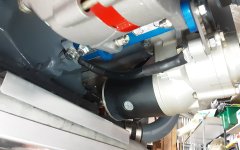
Another tip is to make sure there is a good ground return path between the starter and battery negative. The path should not cross through the engine case left and right due to resistance. You can either run a ground lead from the starter frame to the firewall, or make a short local jumper to connect the starter frame to the same half of the case as the engine ground strap to the battery. Pic attached of the jumper on mine.
Last edited:
Norman CYYJ
Well Known Member
The best is also a run of #2awg copper from the starter directly to the battery. Much better current carrying capacity than the AL airframe.

If the wire was 4 feet long the difference in resistance between a 2ga vs 4ga would be 0.0004 ohms. Even if the starter drew 200 amps (my 4 cyl draws less than 150) the difference in voltage drop would be 0.08 volts. In terms of power available to the starter you would loose 0.7 percent.I'm finalizing my RV-10 electrical design and I wanted some feedback on the size of wire for the starter. I have the battery and contactor in the tailcone and 2AWG from the contactor to the firewall. The question is: do I want 2AWG or 4AWG from the starter contactor to the starter? It's a fairly short run (my guess is 3-4ft) and should have very short bursts of current. I have seen both 2AWG and 4AWG when reviewing other electrical designs.
Last edited:

He’s building a -10…it can draw twice that.If the wire was 4 feet long the difference in resistance between a 2ga vs 4ga would be 0.0004 ohms. Even if the starter drew 200 amps (my 4 cyl draws less than 150) the difference in voltage drop would be 0.08 volts. In terms of power available to the starter you would loose 0.7 percent.
Really no reason to not use 2 awg. It is a short, straight run.
The best is also a run of #2awg copper from the starter directly to the battery. Much better current carrying capacity than the AL airframe.
Now I was going to use the chassis for ground because as I understand it, it is a lot bigger (in practice) than even a #2 wire. I checked my #2 wire on my meter and it says 0.2 Ohms which is also what I get when I check between any two rivets on the airframe. Although I'm not sure how accurate my meter is at that level.
How to ground the engine is a never ending debate. Some thoughts:
- Old school ground straps. When I see this I wonder how much grease and such is associated with the engine case and strap bolt.
- RV-14 style “use the engine mount, not the common firewall ground point to ground the engine”. As many builders use the Van’s RV-14 wiring kit, and they are flying, I acknowledge this works but I would not do that.
- Multiple engine grounds. If one is good then three are better? If a single good ground falls off you will know it immediately as the engine will not crank.
- Multiple engine ground paths. This one will bite you. For example the lug on your ground strap breaks from vibration fatigue and you try to start the engine, the starter return current will look for any path it can find to ground. This is how you blow up EMS modules and such. Most install instructions warn on this. Example is the pMag install instructions.
- There is no gain to having a bigger ground wire than the positive wire going to the starter. I keep it simple, I use the same #2 welding wire (in black) as ground as I do the positive starter terminal (in red). I always ground the engine on the nice ground lug that is on the starter. The starter is using the current, have the ground where it is most needed.
- The engine ground cable goes to the same, big brass bolt on the firewall as the battery ground. The “Forest of Tabs” is a convenient way to do this (the tabs on the cabin side of the firewall).
Carl
- Old school ground straps. When I see this I wonder how much grease and such is associated with the engine case and strap bolt.
- RV-14 style “use the engine mount, not the common firewall ground point to ground the engine”. As many builders use the Van’s RV-14 wiring kit, and they are flying, I acknowledge this works but I would not do that.
- Multiple engine grounds. If one is good then three are better? If a single good ground falls off you will know it immediately as the engine will not crank.
- Multiple engine ground paths. This one will bite you. For example the lug on your ground strap breaks from vibration fatigue and you try to start the engine, the starter return current will look for any path it can find to ground. This is how you blow up EMS modules and such. Most install instructions warn on this. Example is the pMag install instructions.
- There is no gain to having a bigger ground wire than the positive wire going to the starter. I keep it simple, I use the same #2 welding wire (in black) as ground as I do the positive starter terminal (in red). I always ground the engine on the nice ground lug that is on the starter. The starter is using the current, have the ground where it is most needed.
- The engine ground cable goes to the same, big brass bolt on the firewall as the battery ground. The “Forest of Tabs” is a convenient way to do this (the tabs on the cabin side of the firewall).
Carl
I love it when facts enter the conversation!If the wire was 4 feet long the difference in resistance between a 2ga vs 4ga would be 0.0004 ohms. Even if the starter drew 200 amps (my 4 cyl draws less than 150) the difference in voltage drop would be 0.08 volts. In terms of power available to the starter you would loose 0.7 percent.
This discussion is in the first few pages of the AeroElectric Connection. The internal resistance of the battery and the resistance of the master and starter contactors along with the wire connections dominate the resistance of that short wire run. Follow your heart. It’s a third of a pound difference.
Last edited:
I can’t find a reference for that.He’s building a -10…it can draw twice that.
Really no reason to not use 2 awg. It is a short, straight run.
B&C and Sky-Tech both list something under 200 amps for Lycoming starters
Last edited:

Plus 1 on the use of welding cable wire for this. First time application = "where has this been my whole life"2AWG. Short run, no reason not to have the same as from the battery to the starter solenoid.
Side note, I find welding cable superior to Tefzel for all #6, #4 and #2 cable runs.
Carl
Windy Nation is a well known supplier.

Jjackh10
Well Known Member
Now I was going to use the chassis for ground because as I understand it, it is a lot bigger (in practice) than even a #2 wire. This is a more complex question than at first glance. did you prime the interior? If so which scratches around which rivets is the current going to pass through and are there enough of them to prevent 1 being the easiest path?
The reference was a clamp on Fluke amp meter.I can’t find a reference for that.
B&C and Sky-Tech both list something under 200 amps for Lycoming starters
Ambient temp was 55 degrees, 9:1 CR.
I guess you would have to consider it transient as with my EFII system it starts in 2-3 revolutions…

The measured resistance of the ground path from the rear mounted negative battery terminal to the firewall ground on my epoxy primed -8 was 0.002 ohms. Less than the 0.0025 ohms if I would have used 2 gauge copper wire. You have to use the 4 wire ohmmeter technique to get an accurate measurement of resistance this low.Now I was going to use the chassis for ground because as I understand it, it is a lot bigger (in practice) than even a #2 wire. I checked my #2 wire on my meter and it says 0.2 Ohms which is also what I get when I check between any two rivets on the airframe. Although I'm not sure how accurate my meter is at that level.
Last edited:
The peak inrush current is very high but that’s over in milliseconds. Is the average current over 400 amps?The reference was a clamp on Fluke amp meter.
Ambient temp was 55 degrees, 9:1 CR.
I guess you would have to consider it transient as with my EFII system it starts in 2-3 revolutions…
I don’t think so but next time I’m working on it, I will try to get more data.The peak inrush current is very high but that’s over in milliseconds. Is the average current over 400 amps?
Point is, why would you go to the trouble of running 12+ feet of 2awg and then run the last two feet as 4awg?
This ought to be entertaining.
The OP asked specifically about the wire gauge choice for this particular wire. Rather than reply with “just do it the way I did” I tried to quantify what the difference between 2 gauge and 4 gauge was. The result assuming a 200 amp starter current suggested it didn’t make much difference. Even if it is 400 amps it doesn’t make much difference. It would be nice to verify what the 6 cylinder starter actually required.
Last edited:

If you only have one, and it fails, the current will try to find a way to return, and will probably be successful. The problem is that the path it takes will probably cook things on its way. I followed the aeroelectric connection recommendation and installed two ground straps from the engine to the same point that I ground the battery.- Multiple engine grounds. If one is good then three are better? If a single good ground falls off you will know it immediately as the engine will not crank.
Mickey's RV8 Site | Ground point on firewall
 www.rv8.ch
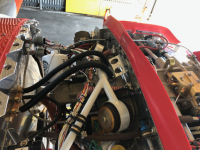

I mounted my battery aft of the firewall on the 9A, and used 2 AWG cable for the starter. For ground I had a couple copper bus bars I cut down, mounted one on each side of the firewall bolted together, sandwiching the firewall between them, with #2 on the inside going to the battery, and length of #2 from the engine case to that ground bar. Makes an excellent central ground point for both sides of the firewall.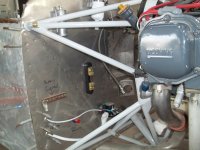
Last edited by a moderator:
If you don’t mind paying $80/ft, here is the flexible aerospace version of welding cable:
 www.glenair.com
For my RV-10, I’m using regular #4 Tefzel between the batteries and contactors, then #2 to the starter solenoid, and #4 to the starter. For me, that strikes a balance between flexibility at the connections and temperature rise while starting (the long #2 run is in conduit under the floor while the #4 runs are in free air).
-Bob
TurboFlex® Flexible Power Distribution Cables - Glenair
Glenair, Inc: Ultra-Flexible Power Distribution Cables and Turnkey High-Voltage Cable Assemblies with Glenair Signature Connectors. Series 96.
www.glenair.com
For my RV-10, I’m using regular #4 Tefzel between the batteries and contactors, then #2 to the starter solenoid, and #4 to the starter. For me, that strikes a balance between flexibility at the connections and temperature rise while starting (the long #2 run is in conduit under the floor while the #4 runs are in free air).
-Bob
Because that short length of 4awg can carry the same load as the 12+ feet of 2awg...... or close enough.I don’t think so but next time I’m working on it, I will try to get more data.
Point is, why would you go to the trouble of running 12+ feet of 2awg and then run the last two feet as 4awg?
This ought to be entertaining.
Many appliances have cords sized to carry the current needed for the length supplied. That does not mean the appliance will function properly connecting it to the same gauge 25 foot extension cord.
You are missing the point; what do you gain by using the smaller wire?Because that short length of 4awg can carry the same load as the 12+ feet of 2awg...... or close enough.
Many appliances have cords sized to carry the current needed for the length supplied. That does not mean the appliance will function properly connecting it to the same gauge 25 foot extension cord.
Flexibility, bend radius, and less force on the terminals. The weight difference is negligible for that short of a length.You are missing the point; what do you gain by using the smaller wire?
-Bob
Don’t know what model you are building but my -10 was a straight run; no bend radius or additional force on the terminals. Also, the terminals for 4 awg are proportionally smaller and consequently lighter than the ones designed for the 2 awg wire.Flexibility, bend radius, and less force on the terminals. The weight difference is negligible for that short of a length.
-Bob
To be honest, I haven’t hung the engine yet. But at the back, the run between the batteries and contactors was pretty tight with #4. I’m using Burndy crimp connectors.Don’t know what model you are building but my -10 was a straight run; no bend radius or additional force on the terminals. Also, the terminals for 4 awg are proportionally smaller and consequently lighter than the ones designed for the 2 awg wire.
-Bob
I used #2 AWG welding cable to make the jumper connections in the back...I have 5 contactors there and it wasn't an issue. I used a Tesco Hydraulic crimper for all my terminal ends.To be honest, I haven’t hung the engine yet. But at the back, the run between the batteries and contactors was pretty tight with #4. I’m using Burndy crimp connectors.
-Bob
I assume 3 of them are for main batt, aux batt, and crossfeed but what are the other 2 for? Is your starter contactor also mounted in the back? I have 4 in the back, same 3 as above, but one for external power.I used #2 AWG welding cable to make the jumper connections in the back...I have 5 contactors there and it wasn't an issue. I used a Tesco Hydraulic crimper for all my terminal ends.
-Bob
I am running a modified split bus with crosstie based on the Z-14. That accounts for three contactors.I assume 3 of them are for main batt, aux batt, and crossfeed but what are the other 2 for? Is your starter contactor also mounted in the back? I have 4 in the back, same 3 as above, but one for external power.
-Bob
I am also using a bus manager. Building it again, I would likely change some things but this is working great. That said, the bus manager is wired directly to both batteries. Those are 8 AWG wires, and I wanted a way to positively disconnect them and isolate the batteries. The solution was two more contactors. When I leave the airplane, I open those two contactors and it completely isolates the batteries.
Hope that clarifies it for you.
Something else to think about...
If you pull your panel power from the battery side of the starter contactor your panel voltage will experience the voltage drop and the ups/downs that occur as the starter is cranking the engine. On my -10, as best as I can tell, the voltage at the starter contactor falls into the 9.5-10.5 volt range with starter engaged. Some electronics may not like that. My E-Mags six-cylinder electronic ignition units (Pmags) won't throw a spark with the voltage that low. My Dynon HDX sometimes thinks I have lost ship power, reverts to back-up battery, and load sheds (shuts down) one of my COM 25 radio heads.
I did add a 6AWG dedicated wire from the battery contactors to the panel itself, hoping to avoid the voltage drop resident on the 2AWG cable during start. I'm not sure that helped all that much.
My next solution to the ignition issue was to add a direct power source to them so I could feed a very small 12V battery for starting only. I ended up ultimately wiring the ignition units to a TCW IPS power supply to keep the voltage up during start.
If you pull your panel power from the battery side of the starter contactor your panel voltage will experience the voltage drop and the ups/downs that occur as the starter is cranking the engine. On my -10, as best as I can tell, the voltage at the starter contactor falls into the 9.5-10.5 volt range with starter engaged. Some electronics may not like that. My E-Mags six-cylinder electronic ignition units (Pmags) won't throw a spark with the voltage that low. My Dynon HDX sometimes thinks I have lost ship power, reverts to back-up battery, and load sheds (shuts down) one of my COM 25 radio heads.
I did add a 6AWG dedicated wire from the battery contactors to the panel itself, hoping to avoid the voltage drop resident on the 2AWG cable during start. I'm not sure that helped all that much.
My next solution to the ignition issue was to add a direct power source to them so I could feed a very small 12V battery for starting only. I ended up ultimately wiring the ignition units to a TCW IPS power supply to keep the voltage up during start.
Last edited:
By far the biggest voltage drop on startup is from the battery itself. You might check the voltage at the battery terminals cranking. My EarthX 680 drops from 13.2 unloaded to 11.2 at the battery itself. The buss voltage drops to 11. My avionics is OK with anything above 10.
Last edited:
I should try that with something with a highersample rate than the Dynon system. All I can do is average what I see from the Dynon voltage display.By far the biggest voltage drop on startup is from the battery itself. You might check the voltage at the battery terminals cranking. My EarthX 680 drops from 13.2 unloaded to 11.2 at the battery itself. The buss voltage drops to 11. My avionics is OK with anything above 10.
Emag, after my troubles starting, was the one that advised me of the issue of, for their six-cylinder units at least, failing to throw sparks during RV-10 starts. Their suggested solution was a really small 12v stand-alone that could, via a plug or switch, be used to power the Emag directly during start only.
