
Perhaps the ones with the rubber end caps are used on Marine applications of that same Ford V8 engine?So, why are so many of these Ford PMGR solenoids failing at such low hours? Skylor had an interesting theory: on airplanes, the ring gear and starter nosecone are exposed and pull in dust and grit kicked up by the prop and deposit that dust on the plunger of the solenoid, which eventually binds it up. To be clear, I'm talking about the smaller metallic cylinder, not the white plastic part. The clearance is pretty tight on that plunger. Of the three I've had fail in 750 hours, all have had sticky plungers. Cars have their ring gear and starter nose enclosed with a dust shield.
Or, the problem is cheap offshore-sourced parts. Including the ones that Sky-Tec supplies.
As shown below, the solenoids we're using look like this:
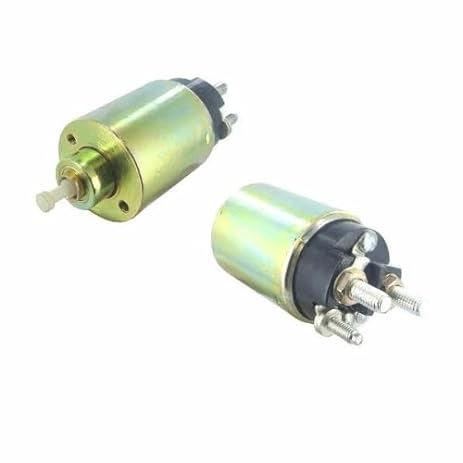
There are ones available which have rubber dust caps on the plunger; need to check if they will fit in the Sky-Tec housing. If so, could be an improvement.
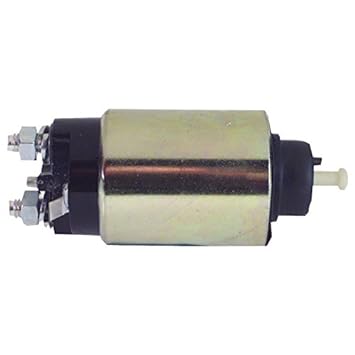
EDIT (10/1/24): that Brazilian one above with the rubber cap lasted 4-1/2 years, or about 250 hours. Still longer than the SMP above.

Van's Air Force
You are using an out of date browser. It may not display this or other websites correctly.
You should upgrade or use an alternative browser.
You should upgrade or use an alternative browser.
SkyTech LS starter solenoid
- Thread starter Mike S
- Start date

I did the following Co $250 overhaul kit and my skytec starter works great. Just follow the DIY video, excellent


BruceEicher
Well Known Member
For what it’s worth the O’Rielly BWD S5613 has just turned over 1000 hours on Hula’s Hobbs, which translate to over 500 hours TT on the solenoid with probably 350or more starts. Amazing the difference in products, or dumb luck…Brand and part numbers...
For me the stock solenoid showed signs at 300 hours/3 year?s and failed at 400hr/4yr round numbers.
I replaced it from Napa with Echlin Ignition ECH ST421 which lasted less than a year and failed with almost no warnings.
Now it is replaced from O?Rielly with BWD S5613, only a few hours on it but working fine.
I have now on the shelf a spare from Amazon a Standard Motor Parts SS754
And another VAFer used Auto Zone?s Duralast SS1115
Any reports of which has been better or worse for you?

One more point to consider - for those that turn the key and don't even hear "thunk" - is the ground connection of the starter relay on the firewall. When you turn the key to start, power goes to the coil of the starter relay which pulls in a plunger on the relay and connects power to the starter - which then energizes the solenoid and starter motor. But in my case I once failed to even get a "thunk" of the short-duty starter relay mounted on the firewall. I verified 12 volts going TO the relay, but it would not pick. I found that the rivets holding the relay to the firewall were slightly loose and "working" and contact from the ground side of the relay coil was intermittent to the firewall - thus the relay would not always pick.
Moral of the story - remember electricity is a full-circuit path. You have to get power TO the device, and BACK away from it to the battery. Any break in the circuit anywhere is still a break in the circuit.
Moral of the story - remember electricity is a full-circuit path. You have to get power TO the device, and BACK away from it to the battery. Any break in the circuit anywhere is still a break in the circuit.

RV8Squaz
Well Known Member
Hey guys,
Just got the dreaded “clunk” or “thunk”. My airplane is an RV-8, with a Lyc IO-360A1A and a Sky-Tec LS starter. I’ve been flying 17+ years and 1900+ hours.
In the past, the solenoid issue was very predictable. It would start happening intermittently when warm and get worse and worse. I’ve replaced the solenoid with a BWD unit 2 or 3 times in the past and I was good to go. This time it seems a bit different.
The clunk is happening even when cold. I ordered a Standard part but then realized I had a spare BWD in the hangar. I installed the BWD and no joy. I thought it might be dead since it’s been sitting in the hangar for a few years. I then installed the Standard part and it worked. Great, problem solved I thought. Cowled it up and prepared to go fly. No joy on start up. Pulled the airplane back into the hangar and went home.
I think something else might be up. I don’t believe it to be the battery, a Concorde RG-25 X/C. It’s relatively new, about a year old, and showed no signs of decreasing starting performance. I’ll check the open circuit voltage, but I’m pretty sure it’s 12.5 v +.
I wired my starter circuit per the Sky-Tec optional Experimental wiring diagram shown here:
The only difference is that in place of the pictured starter switch, I have a push-button switch on my Infinity stick grip wired to a 20 amp relay sold by B&C. I also have a common toggle switch on the panel that bypasses the switch on the stick. It doesn’t however bypass the relay. I can probably wire a jumper to bypass the relay, but as long as I’m going to be under the floor, I might as well just replace the relay.
I’ve looked over the Sky-Tec troubleshooting guide but I’m a little hesitant to take those measurements while attempting to start. Something is drawing down the voltage enough to de-power my VM1000C engine monitor display. I can certainly measure voltage drops and resistance in a static condition and that’s my next move in addition to checking the battery.
Any other ideas, on how to methodically proceed with troubleshooting?
At almost 20 years and 2000 hours, the relay and the starter certainly don’t owe me anything. But I don’t want to sink money into a starter only to find out it’s something else.
If I do replace the starter, I’m interested in replacing it with a B&C unit. Being a fuel injected airplane, I have the induction snorkel that goes from the left cowl inlet to the forward facing fuel servo. Do you know if the B&C starter has the same form factor as the Sky-Tec and will it fit without modification to the snorkel?
Thanks for your help!
Just got the dreaded “clunk” or “thunk”. My airplane is an RV-8, with a Lyc IO-360A1A and a Sky-Tec LS starter. I’ve been flying 17+ years and 1900+ hours.
In the past, the solenoid issue was very predictable. It would start happening intermittently when warm and get worse and worse. I’ve replaced the solenoid with a BWD unit 2 or 3 times in the past and I was good to go. This time it seems a bit different.
The clunk is happening even when cold. I ordered a Standard part but then realized I had a spare BWD in the hangar. I installed the BWD and no joy. I thought it might be dead since it’s been sitting in the hangar for a few years. I then installed the Standard part and it worked. Great, problem solved I thought. Cowled it up and prepared to go fly. No joy on start up. Pulled the airplane back into the hangar and went home.
I think something else might be up. I don’t believe it to be the battery, a Concorde RG-25 X/C. It’s relatively new, about a year old, and showed no signs of decreasing starting performance. I’ll check the open circuit voltage, but I’m pretty sure it’s 12.5 v +.
I wired my starter circuit per the Sky-Tec optional Experimental wiring diagram shown here:
The only difference is that in place of the pictured starter switch, I have a push-button switch on my Infinity stick grip wired to a 20 amp relay sold by B&C. I also have a common toggle switch on the panel that bypasses the switch on the stick. It doesn’t however bypass the relay. I can probably wire a jumper to bypass the relay, but as long as I’m going to be under the floor, I might as well just replace the relay.
I’ve looked over the Sky-Tec troubleshooting guide but I’m a little hesitant to take those measurements while attempting to start. Something is drawing down the voltage enough to de-power my VM1000C engine monitor display. I can certainly measure voltage drops and resistance in a static condition and that’s my next move in addition to checking the battery.
Any other ideas, on how to methodically proceed with troubleshooting?
At almost 20 years and 2000 hours, the relay and the starter certainly don’t owe me anything. But I don’t want to sink money into a starter only to find out it’s something else.
If I do replace the starter, I’m interested in replacing it with a B&C unit. Being a fuel injected airplane, I have the induction snorkel that goes from the left cowl inlet to the forward facing fuel servo. Do you know if the B&C starter has the same form factor as the Sky-Tec and will it fit without modification to the snorkel?
Thanks for your help!
How old is your battery? 12.5 volts is not a fully charged battery. A fully charged battery will be 12.8 to 13.2 volts [each cell actually should have 2.2 volts]. I would suggest charging your battery and having it load tested. Make sure they use a carbon pile load tester. Many of the newer "electronic" testers are worthless. The battery should maintain at least 9.6 volts for 15 seconds during the load test. If it can not, the battery is bad.Hey guys,
Just got the dreaded “clunk” or “thunk”. My airplane is an RV-8, with a Lyc IO-360A1A and a Sky-Tec LS starter. I’ve been flying 17+ years and 1900+ hours.
In the past, the solenoid issue was very predictable. It would start happening intermittently when warm and get worse and worse. I’ve replaced the solenoid with a BWD unit 2 or 3 times in the past and I was good to go. This time it seems a bit different.
The clunk is happening even when cold. I ordered a Standard part but then realized I had a spare BWD in the hangar. I installed the BWD and no joy. I thought it might be dead since it’s been sitting in the hangar for a few years. I then installed the Standard part and it worked. Great, problem solved I thought. Cowled it up and prepared to go fly. No joy on start up. Pulled the airplane back into the hangar and went home.
I think something else might be up. I don’t believe it to be the battery, a Concorde RG-25 X/C. It’s relatively new, about a year old, and showed no signs of decreasing starting performance. I’ll check the open circuit voltage, but I’m pretty sure it’s 12.5 v +.
I wired my starter circuit per the Sky-Tec optional Experimental wiring diagram shown here:
The only difference is that in place of the pictured starter switch, I have a push-button switch on my Infinity stick grip wired to a 20 amp relay sold by B&C. I also have a common toggle switch on the panel that bypasses the switch on the stick. It doesn’t however bypass the relay. I can probably wire a jumper to bypass the relay, but as long as I’m going to be under the floor, I might as well just replace the relay.
I’ve looked over the Sky-Tec troubleshooting guide but I’m a little hesitant to take those measurements while attempting to start. Something is drawing down the voltage enough to de-power my VM1000C engine monitor display. I can certainly measure voltage drops and resistance in a static condition and that’s my next move in addition to checking the battery.
Any other ideas, on how to methodically proceed with troubleshooting?
At almost 20 years and 2000 hours, the relay and the starter certainly don’t owe me anything. But I don’t want to sink money into a starter only to find out it’s something else.
If I do replace the starter, I’m interested in replacing it with a B&C unit. Being a fuel injected airplane, I have the induction snorkel that goes from the left cowl inlet to the forward facing fuel servo. Do you know if the B&C starter has the same form factor as the Sky-Tec and will it fit without modification to the snorkel?
Thanks for your help!

The starter solenoid (BWD S5613) serves two functions --
1. When energized, it drives the pinion gear forward and,
2. At the full extent of solenoid travel, the starter contacts will engage and energize the starter motor.
Out of curiosity, is the pinion gear fully engaged with the ring gear? If so, then I would test the starter motor by applying voltage to it and seeing if it spins.
1. When energized, it drives the pinion gear forward and,
2. At the full extent of solenoid travel, the starter contacts will engage and energize the starter motor.
Out of curiosity, is the pinion gear fully engaged with the ring gear? If so, then I would test the starter motor by applying voltage to it and seeing if it spins.
RV8Squaz
Well Known Member
Hi Charlie. Thanks for your reply. I’ll check for sure but I really don’t suspect the battery. It’s only about a year old and hasn’t shown any signs of distress. I mentioned that it was 12.5v + because that is what’s showing on the VM1000C display with the master on and a few minimal items powered including the display itself. I do plan to check the open circuit voltage. A load test isn’t a bad idea.How old is your battery? 12.5 volts is not a fully charged battery. A fully charged battery will be 12.8 to 13.2 volts [each cell actually should have 2.2 volts]. I would suggest charging your battery and having it load tested. Make sure they use a carbon pile load tester. Many of the newer "electronic" testers are worthless. The battery should maintain at least 9.6 volts for 15 seconds during the load test. If it can not, the battery is bad.
RV8Squaz
Well Known Member
Thanks for your help. I’m aware of the two functions, but thanks for the reminder. I don’t yet know if the pinion is fully engaging with the ring gear. It doesn’t “sound” like it is. I’ll have to get a helper to determine that. That’s a good idea to apply power directly to the starter. Maybe I can use a spare battery and jumper cables to do that. Of course I’ll do it safely with the tail tied down and chocked. I know that when the pinion does engage the ring gear, the prop spins pretty well and normally.The starter solenoid (BWD S5613) serves two functions --
1. When energized, it drives the pinion gear forward and,
2. At the full extent of solenoid travel, the starter contacts will engage and energize the starter motor.
Out of curiosity, is the pinion gear fully engaged with the ring gear? If so, then I would test the starter motor by applying voltage to it and seeing if it spins.

I'd remove the solenoid again and check for how well the pinion gear slides in and out. After 2000 hours the bronze bushing might be binding up from embedded dust. If it is binding, might as well rebuild it using parts from this unit: <SNIP>
Last edited by a moderator:
RV8Squaz
Well Known Member
Thanks. The pinion gear does slide easily. I moved it with a pick each time I removed and installed the solenoid to make the process easier.I'd remove the solenoid again and check for how well the pinion gear slides in and out. After 2000 hours the bronze bushing might be binding up from embedded dust. If it is binding, might as well rebuild it using parts from this unit: https://www.ebay.com/itm/234382557557
I’ll do my voltage and resistance checks. I might might check operation first by applying power directly to the starter. Then I’ll check the relay’s function.
I’ll report back when I’m done.
RV8Squaz
Well Known Member
That was my original post above. I finally got around to doing some more trouble shooting. I think I found my problem.Hey guys,
Just got the dreaded “clunk” or “thunk”. My airplane is an RV-8, with a Lyc IO-360A1A and a Sky-Tec LS starter. I’ve been flying 17+ years and 1900+ hours.
In the past, the solenoid issue was very predictable. It would start happening intermittently when warm and get worse and worse. I’ve replaced the solenoid with a BWD unit 2 or 3 times in the past and I was good to go. This time it seems a bit different.
The clunk is happening even when cold. I ordered a Standard part but then realized I had a spare BWD in the hangar. I installed the BWD and no joy. I thought it might be dead since it’s been sitting in the hangar for a few years. I then installed the Standard part and it worked. Great, problem solved I thought. Cowled it up and prepared to go fly. No joy on start up. Pulled the airplane back into the hangar and went home.
I think something else might be up. I don’t believe it to be the battery, a Concorde RG-25 X/C. It’s relatively new, about a year old, and showed no signs of decreasing starting performance. I’ll check the open circuit voltage, but I’m pretty sure it’s 12.5 v +.
I wired my starter circuit per the Sky-Tec optional Experimental wiring diagram shown here:
The only difference is that in place of the pictured starter switch, I have a push-button switch on my Infinity stick grip wired to a 20 amp relay sold by B&C. I also have a common toggle switch on the panel that bypasses the switch on the stick. It doesn’t however bypass the relay. I can probably wire a jumper to bypass the relay, but as long as I’m going to be under the floor, I might as well just replace the relay.
I’ve looked over the Sky-Tec troubleshooting guide but I’m a little hesitant to take those measurements while attempting to start. Something is drawing down the voltage enough to de-power my VM1000C engine monitor display. I can certainly measure voltage drops and resistance in a static condition and that’s my next move in addition to checking the battery.
Any other ideas, on how to methodically proceed with troubleshooting?
At almost 20 years and 2000 hours, the relay and the starter certainly don’t owe me anything. But I don’t want to sink money into a starter only to find out it’s something else.
If I do replace the starter, I’m interested in replacing it with a B&C unit. Being a fuel injected airplane, I have the induction snorkel that goes from the left cowl inlet to the forward facing fuel servo. Do you know if the B&C starter has the same form factor as the Sky-Tec and will it fit without modification to the snorkel?
Thanks for your help!
The battery's open circuit (OC) voltage is 12.74v. It hadn't been charged it since the last time I flew which was about a month ago. The battery is also less than a year old. I don't suspect it's the battery. With the Master on and a few things running such as the VM1000C display, the CO detector, etc, the voltage is 12.41 v. I checked voltage drops in a static condition along each point to include the voltage that energizes the starter's built-in solenoid and there is essentially no voltage drop, maybe 0.01 v through the system.
I checked the the pinion gear and it does in fact engage the ring gear. Finally I checked the voltage drop at the starter with it energized and the voltage plummeted to zero. I checked it a couple of more times and the voltage plummeted each time. One time, I held it a little longer to see if I could get an accurate read on the voltage. I went around to check the pinion gear again and I could smell the tell-tale aroma of electrical fire smoke. Not good. I suspect the starter is dead. I'll open it up just for fun, but I think I need a new starter. It's got almost 18 years and 2000 hours ins service.
I'd like to replace it with a B & C starter. Does anyone know if it has the same form factor as the SkyTech LS starter I'm replacing? I have an IO-360A1A. It has a forward facing servo with the snorkel that leads to the left side engine inlet. Will the B&C fit without modification to the snorkel? If not, I'll probably replace it with the same SkyTech LS starter. However, if the B & C doesn't fit, I wouldn't mind getting one of the better SkyTech starters. Any recommendations?
Thanks,
Jerry

Tankerpilot75
Well Known Member
I purchased this Ford Crown Victoria starter on EBay for $50 (delivered).. Followed the overhaul video instructions at Flywidgets.com (they’re great) replacing the electric motor assembly, solenoid and clutch arm with the new parts from the Ford starter. Hardest part of the job was the removal and re-installation of the starter itself on the engine. This is definitely the way to repair a SkyTec LS 149-LS starter. Thank you forum members!I just did the same thing a couple months ago! I used the Bosch as it appeared to be the OEM unit, with the Ford part number machined off:
What I received was the same gold-colored one as the offshore units are, so apparently they ran out of the OEM ones.
View attachment 71356
That starter referenced above may come in a Ford box, but look where it came from:
View attachment 71355
The only part I had to reuse was the pinion gear, as the LS has fewer teeth than that Crown Vic unit. Need to figure out which model PMGR has the right pinion.
RV8Squaz
Well Known Member
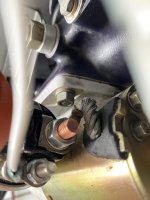
So, I may have fixed my starter problem. Before running over to Spruce to get a new starter, I decided to "bench" check mine before turning it in for core value. I ran a pair of jumper cables from my car's battery to the starter and voila' it worked normally and no smoke! Now I was perplexed. I was ready to buy I new starter and then I wasn't. During the process of attaching the jumper cables to the starter, I noticed I must have turned the braided wire's terminal when I replaced the solenoid in the first place. It was touching the rubber piece and nearly touching the starter's case. I loosened the nut on the stud and re-oriented the terminal. The starter now works flawlessly. I bumped the starter about 7 times before re-installing the cowl. I'll go test fly it it tomorrow. If it works for the next dozen times, I'll call it fixed. I must have been a little careless when I installed the new solenoid and didn't notice that the terminal had turned. Here's a pic with the terminal in the right orientation.
Thanks for your help everyone!
Jerry
Thanks for your help everyone!
Jerry
Tankerpilot75
Well Known Member
You probably should wrap the braided wire with uni-wrap tape to insulate it from inadvertent contact.So, I may have fixed my starter problem. Before running over to Spruce to get a new starter, I decided to "bench" check mine before turning it in for core value. I ran a pair of jumper cables from my car's battery to the starter and voila' it worked normally and no smoke! Now I was perplexed. I was ready to buy I new starter and then I wasn't. During the process of attaching the jumper cables to the starter, I noticed I must have turned the braided wire's terminal when I replaced the solenoid in the first place. It was touching the rubber piece and nearly touching the starter's case. I loosened the nut on the stud and re-oriented the terminal. The starter now works flawlessly. I bumped the starter about 7 times before re-installing the cowl. I'll go test fly it it tomorrow. If it works for the next dozen times, I'll call it fixed. I must have been a little careless when I installed the new solenoid and didn't notice that the terminal had turned. Here's a pic with the terminal in the right orientation.
Thanks for your help everyone!
Jerry
View attachment 75423
RV8Squaz
Well Known Member
Probably. Thanks.You probably should wrap the braided wire with uni-wrap tape to insulate it from inadvertent contact.
RV8Squaz
Well Known Member
Thank you Charlie!Jerry, Glad to hear that you found the problem. As usual, the devil is in the details!
I was getting good starts, but occasionally a clunk on the first attempt. I just removed and replaced my SkyTec LS 149 starter solenoid with the $45 O’Reilly Standard SS754 (2005 Crown Vic) and have faster, higher energy (?) starts.
Thank you Gentlemen.
I love this forum !
Thank you Gentlemen.
I love this forum !
