Van's Air Force

The definitive Van's Aircraft support community! Buying, building or flying an RV? Join our exclusive family of mentors and enthusiasts!

Panel Ready to Cut Metal, Laser Cutting, Mock Up, Design Choices, IFR Glass Cheap, Critique My Panel

jackking123

Well Known Member
Patron
I have asked plenty of questions and it's time to cut. Local metal laser shop is cutting it, about $150. Hold my hand, ha ha. I am pretty much locked in to final design give or take a few details. But last chance to "change my mind". Take a look, any gotchas you experienced. suggestions.

Q: Laser cut question. Cutting corner radius of rectangular shapes, I assume the shop software is set to some min, but I will confirm. Do I have to model in corner fillets?

I have a panel sized piece of plexi as a test, but the metal cutting laser shop can't do it. I could cut it out by hand, but...

I did use ridged foam board and mounted all the items. In an attempt to make the "center stack" dead center it made is CROWDED and NO METAL. I used ridged foam board. I used wood supports. With the foam board face up I dropped everything in. It looked bad and did not like the skinny strips of metal. I spread things out and happy giving up on symmetry.

LOGIC? (Goal cost effective ($13000) IFR glass panel. I did it combo of buying used, sales, and bought most items, before prices went through the roof.)


GRT HORZ 10.1 EFIS, Safefly GPS, Digital Magnetometer and dual servo auto pilot. Great value and got an airshow discount.

GRT EIS (engine monitor) mounted in panel is staying. You can hide the EIS 4000, but for FF reset you have to hunt for it I believe. (EDIT See bottom of Post #22, ** note, not quite correct but there are factors in remote mounting the EIS with a display to consider.) Ask GRT. Main reason is BACK UP if the EFIS goes bye bye. It's staying. I bought this long ago for my project that has taken a little longer than expected (little cough couch).

ICOM A220, bought used. I wanted a stand alone panel mounted radio. It's a me thing. Down side it is deep and goes through second Fwd bulkhead. Remote COM, controlled with GRT Horz 10.1 EFIS is a slick option, I could still do it. It takes no hole in panel. However lose EFIS you lose control of remote COM. It may still work last Freq. Panel mounted ICOM advantages outweighs the remote. The GRT EFIS does shoot Freq into ICOM standby which is nice.

My Trig TT22 transponder is remote and should keep working with no EFIS. GPS still provides position. However air-data and ADS-B out might be lost? Can't change squawk code or ident. Not an airliner with 2 transponders. Shopped around got about $300 savings

Garmin G5 is totally separate with onboard backup battery. I bought a used one with all the goodies used, it is the certified model. Saved $1000. No difference in Cert and Exp G5's but they did go through STC process to get it past FAA, what ever that is worth. With AHRS, magnetometer it's redundant to the GRT EFIS. The ARINC 429 module lets the GPS175 talk to the G5 for redundant RNAV LPV approach ability.

ADS-B is a Stratux I had and bought a while back. I repurposed. Nice thing about GRT, besides nice folks, is they work with a variety of 3rd party devices. It helps give you flexibility and saves some money. ELT? Last last thing to buy and waiting to the last last minute. Likely going ARTEX.

Cost total, about $13,000, with the caveat things bought awhile ago. I bought some used items (G5, ICOM). Some things like mil spec toggle switches and circuit breakers I have had for 20 yrs way before this project was started. I did not include those. If you bought new today, no used, with current prices it would be $16,500 to $18,000? This is an *IFR panel, 2x autopilot, dual AHRS, GPS175 IFR GPS, Full GRT ETIS and EIS, ADS-B IN & OUT and ENGINE MONITOR w/ FF. *IFR Light - no VOR/LOC/GS and one COM with standby Freq monitoring). * I did not include cost of iPad mini running a EFB (not Foreflight), which is a nice backup.

Last chance to change my mind? Twist my arm. Time to commit. but hold my hand. Ha ha. (I do want to avoid wasting a panel, a spare. Long story but bought a 2nd stock panel from guy who did not need it. )

Yes I know the CAD does not match eyeballed HangerTalk doodle, but bare with me, still playing with switchology, dimmer controls for 1 or 2.
[Note for those in planning stage, be aware the standard panel only has 10.9" height from top center of panel to start of bottom flange radius. Van's DXF file is the flat pattern that shows that extra inch for the flange. The center hole is offset about 0.35" to right. Last depending on slider or tip up structure is in the way. My RV-7 slider has stiffener in three places plus the side longerons that have to be considered.)

Thanks for INPUT!!

PS - thinking of a keyed Mag switch, with start. I have P-Mags. One Mag switch saves two toggles and one push buttons. Key would be theft prevention? Well barely. There are ways to disable the plane for thief protection, prop locks etc.
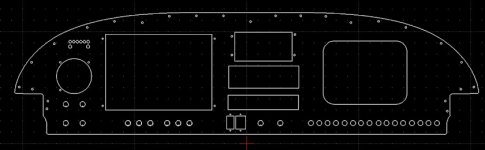
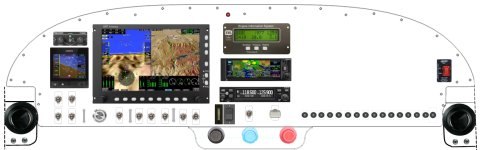
Panel Final RV-7 DXF screen shot SM.jpg

Panel Final RV-7 HangerTalk.jpg
 
Last edited:
Can you move the GPS-175 above the EIS? This will aid in reading the display.

Personally, I hate keyed ignition/start switches. A lockable toggle switch and a pull breaker for each pMag and a push to start button is my recommendation.

Carl
 
I have asked plenty of questions and it's time to cut. Local metal laser shop is cutting it, about $150. Hold my hand, ha ha. I am pretty much locked in to final design give or take a few details. But last chance to "change my mind". Take a look, any gotchas you experienced. suggestions.

Q: Laser cut question. Cutting corner radius of rectangular shapes, I assume the shop software is set to some min, but I will confirm. Do I have to model in corner fillets?

I have a panel sized piece of plexi as a test, but the metal cutting laser shop can't do it. I could cut it out by hand, but...

I did use ridged foam board and mounted all the items. In an attempt to make the "center stack" dead center it made is CROWDED and NO METAL. I used ridged foam board. I used wood supports. With the foam board face up I dropped everything in. It looked bad and did not like the skinny strips of metal. I spread things out and happy giving up on symmetry.

LOGIC? (Goal cost effective ($13000) IFR glass panel. I did it combo of buying used, sales, and bought most items, before prices went through the roof.)


GRT HORZ 10.1 EFIS, Safefly GPS, Digital Magnetometer and dual servo auto pilot. Great value and got an airshow discount.

GRT EIS (engine monitor) mounted in panel is staying. You can hide the EIS 4000, but for FF reset you have to hunt for it I believe. Ask GRT. Main reason is BACK UP if the EFIS goes bye bye. It's staying. I bought this long ago for my project that has taken a little longer than expected (little cough couch).

ICOM A220, bought used. I wanted a stand alone panel mounted radio. It's a me thing. Down side it is deep and goes through second Fwd bulkhead. Remote COM, controlled with GRT Horz 10.1 EFIS is a slick option, I could still do it. It takes no hole in panel. However lose EFIS you lose control of remote COM. It may still work last Freq. Panel mounted ICOM advantages outweighs the remote. The GRT EFIS does shoot Freq into ICOM standby which is nice.

My Trig TT22 transponder is remote and should keep working with no EFIS. GPS still provides position. However air-data and ADS-B out might be lost? Can't change squawk code or ident. Not an airliner with 2 transponders. Shopped around got about $300 savings

Garmin G5 is totally separate with onboard backup battery. I bought a used one with all the goodies used, it is the certified model. Saved $1000. No difference in Cert and Exp G5's but they did go through STC process to get it past FAA, what ever that is worth. With AHRS, magnetometer it's redundant to the GRT EFIS. The ARINC 429 module lets the GPS175 talk to the G5 for redundant RNAV LPV approach ability.

ADS-B is a Stratux I had and bought a while back. I repurposed. Nice thing about GRT, besides nice folks, is they work with a variety of 3rd party devices. It helps give you flexibility and saves some money. ELT? Last last thing to buy and waiting to the last last minute. Likely going ARTEX.

Cost total, about $13,000, with the caveat things bought awhile ago. I bought some used items (G5, ICOM). Some things like mil spec toggle switches and circuit breakers I have had for 20 yrs way before this project was started. I did not include those. If you bought new today, no used, with current prices it would be $16,500 to $18,000? This is an *IFR panel, 2x autopilot, dual AHRS, GPS175 IFR GPS, Full GRT ETIS and EIS, ADS-B IN & OUT and ENGINE MONITOR w/ FF. *IFR Light - no VOR/LOC/GS and one COM with standby Freq monitoring). * I did not include cost of iPad mini running a EFB (not Foreflight), which is a nice backup.

Last chance to change my mind? Twist my arm. Time to commit. but hold my hand. Ha ha. (I do want to avoid wasting a panel, a spare. Long story but bought a 2nd stock panel from guy who did not need it. )

Yes I know the CAD does not match eyeballed HangerTalk doodle, but bare with me, still playing with switchology, dimmer controls for 1 or 2.
[Note for those in planning stage, be aware the standard panel only has 10.9" height from top center of panel to start of bottom flange radius. Van's DXF file is the flat pattern that shows that extra inch for the flange. The center hole is offset about 0.35" to right. Last depending on slider or tip up structure is in the way. My RV-7 slider has stiffener in three places plus the side longerons that have to be considered.)

Thanks for INPUT!!

PS - thinking of a keyed Mag switch, with start. I have P-Mags. One Mag switch saves two toggles and one push buttons. Key would be theft prevention? Well barely. There are ways to disable the plane for thief protection, prop locks etc.


View attachment 74386

View attachment 74388
1731707213508.png


Symmetry *is* possible.

This is in a 6A that I am building. It took a lot of work, but it fits. The EIS is remotely mounted. I have had it that way in my 6 for years with no problem. I am hoping to use the open space in the rack in the future.
 
Okay, a couple of ideas.
The Safefly gps is no longer needed. The G175 can supply the needed gps data to both the efis and the TT-22 for adsb-out.
I find it convenient to run a wire directly from the TT22 to a stick mounted button for IDENT. Then it will still work following an efis failure, plus it’s convenient. My home tower seems to ask even vfr aircraft to ident a lot. Following an efis failure your TT22 will work, but as you said you cannot change the squawk code. Plus, it will revert to mode A as the altitude encoder is in the efis.
There are the usual caveats about ifr with just one means of navigation. Personally I’d get a $400 hand held com-vor/ILS receiver.
Edit. +1 on Carl. Move the gps up high, EIS low.
 
I have asked plenty of questions and it's time to cut. Local metal laser shop is cutting it, about $150. Hold my hand, ha ha. I am pretty much locked in to final design give or take a few details. But last chance to "change my mind". Take a look, any gotchas you experienced. suggestions.

Q: Laser cut question. Cutting corner radius of rectangular shapes, I assume the shop software is set to some min, but I will confirm. Do I have to model in corner fillets?

I have a panel sized piece of plexi as a test, but the metal cutting laser shop can't do it. I could cut it out by hand, but...

I did use ridged foam board and mounted all the items. In an attempt to make the "center stack" dead center it made is CROWDED and NO METAL. I used ridged foam board. I used wood supports. With the foam board face up I dropped everything in. It looked bad and did not like the skinny strips of metal. I spread things out and happy giving up on symmetry.

LOGIC? (Goal cost effective ($13000) IFR glass panel. I did it combo of buying used, sales, and bought most items, before prices went through the roof.)


GRT HORZ 10.1 EFIS, Safefly GPS, Digital Magnetometer and dual servo auto pilot. Great value and got an airshow discount.

GRT EIS (engine monitor) mounted in panel is staying. You can hide the EIS 4000, but for FF reset you have to hunt for it I believe. Ask GRT. Main reason is BACK UP if the EFIS goes bye bye. It's staying. I bought this long ago for my project that has taken a little longer than expected (little cough couch).

ICOM A220, bought used. I wanted a stand alone panel mounted radio. It's a me thing. Down side it is deep and goes through second Fwd bulkhead. Remote COM, controlled with GRT Horz 10.1 EFIS is a slick option, I could still do it. It takes no hole in panel. However lose EFIS you lose control of remote COM. It may still work last Freq. Panel mounted ICOM advantages outweighs the remote. The GRT EFIS does shoot Freq into ICOM standby which is nice.

My Trig TT22 transponder is remote and should keep working with no EFIS. GPS still provides position. However air-data and ADS-B out might be lost? Can't change squawk code or ident. Not an airliner with 2 transponders. Shopped around got about $300 savings

Garmin G5 is totally separate with onboard backup battery. I bought a used one with all the goodies used, it is the certified model. Saved $1000. No difference in Cert and Exp G5's but they did go through STC process to get it past FAA, what ever that is worth. With AHRS, magnetometer it's redundant to the GRT EFIS. The ARINC 429 module lets the GPS175 talk to the G5 for redundant RNAV LPV approach ability.

ADS-B is a Stratux I had and bought a while back. I repurposed. Nice thing about GRT, besides nice folks, is they work with a variety of 3rd party devices. It helps give you flexibility and saves some money. ELT? Last last thing to buy and waiting to the last last minute. Likely going ARTEX.

Cost total, about $13,000, with the caveat things bought awhile ago. I bought some used items (G5, ICOM). Some things like mil spec toggle switches and circuit breakers I have had for 20 yrs way before this project was started. I did not include those. If you bought new today, no used, with current prices it would be $16,500 to $18,000? This is an *IFR panel, 2x autopilot, dual AHRS, GPS175 IFR GPS, Full GRT ETIS and EIS, ADS-B IN & OUT and ENGINE MONITOR w/ FF. *IFR Light - no VOR/LOC/GS and one COM with standby Freq monitoring). * I did not include cost of iPad mini running a EFB (not Foreflight), which is a nice backup.

Last chance to change my mind? Twist my arm. Time to commit. but hold my hand. Ha ha. (I do want to avoid wasting a panel, a spare. Long story but bought a 2nd stock panel from guy who did not need it. )

Yes I know the CAD does not match eyeballed HangerTalk doodle, but bare with me, still playing with switchology, dimmer controls for 1 or 2.
[Note for those in planning stage, be aware the standard panel only has 10.9" height from top center of panel to start of bottom flange radius. Van's DXF file is the flat pattern that shows that extra inch for the flange. The center hole is offset about 0.35" to right. Last depending on slider or tip up structure is in the way. My RV-7 slider has stiffener in three places plus the side longerons that have to be considered.)

Thanks for INPUT!!

PS - thinking of a keyed Mag switch, with start. I have P-Mags. One Mag switch saves two toggles and one push buttons. Key would be theft prevention? Well barely. There are ways to disable the plane for thief protection, prop locks etc.


View attachment 74386

View attachment 74388
One minor item - consider moving the elt switch to the left side of the panel. It is small and you have room. My 2 cents.
 
I'm a fan of pitch trim on the stick - that gives you the opportunity to move the flap switch within finger reach without having to take your hand off the throttle. I like leaving my hand on the throttle when close to the ground (dumping flaps as the wheels touch, retracting flaps 1 on a short field T/O, etc). Beautiful panel!

My .02 and best,
dr
 
Can you move the GPS-175 above the EIS? This will aid in reading the display.

Personally, I hate keyed ignition/start switches. A lockable toggle switch and a pull breaker for each pMag and a push to start button is my recommendation.

Carl
I could. The problem That "center screw" that is joggled down (as you know) is attached to a stiffener that is tapered getting wider as it goes towards fire wall. I need the shortest box on top. The ICOM is so long it really has to go on bottom, except for these two options. I'd have to do two things fit GPS175 on top.

One is move the whole stack down, likely so far there will be no room for trim sw/indicator and flap switch.
Second choice move the "center stack" over further to the right to avoid the stiffener. Then I will have to reach another 3 inches with my Tyrannosaurus Rex arms. Ha ha.

I have Mil Spec locking toggles for both P-mags and Master. All CB's all can be reset. The P-mag manual calls for ground check (like regular mag) but also check the self powered feature is working you remove ships power. I am thinking of using the two CB's for P-mag's to do the self power check. Not really ideal but the Klixon can handle it manual trips (I think 10,000 cycles). Builders do really nice P-mag switchology. I have images off the "innerwebs". I may steal an idea or two.

(There is modification of the center stiffener that would work, but that is where the windscreen roll bar goes. Too lazy to redesign that. )
Okay, a couple of ideas.
The Safefly gps is no longer needed. The G175 can supply the needed gps data to both the efis and the TT-22 for adsb-out.
I find it convenient to run a wire directly from the TT22 to a stick mounted button for IDENT. Then it will still work following an efis failure, plus it’s convenient. My home tower seems to ask even vfr aircraft to ident a lot. Following an efis failure your TT22 will work, but as you said you cannot change the squawk code. Plus, it will revert to mode A as the altitude encoder is in the efis.
There are the usual caveats about ifr with just one means of navigation. Personally I’d get a $400 hand held com-vor/ILS receiver.
Edit. +1 on Carl. Move the gps up high, EIS low.

Bob you are 100% correct. Great info and advice and info.

I'm a fan of pitch trim on the stick - that gives you the opportunity to move the flap switch within finger reach without having to take your hand off the throttle. I like leaving my hand on the throttle when close to the ground (dumping flaps as the wheels touch, retracting flaps 1 on a short field T/O, etc). Beautiful panel!

My .02 and best,
dr

Thanks Doug. I had flaps and TRIM on my my RV-4 stick. It is nice. I am thinking, hope, I can push trim switch with hand still on throttle. The flap is next to the trim, but I will have to take my hand off throttle.

Doing a RV-12 checkout, trim on stick, the pilot inadvertently actuated trim trying to PTT. This stick grip had buttons all over it, including Freq swap. Yep he pushed Freq swap thinking it was PTT. Of course that did not work and was now on wrong Freq. Kind of amusing. He was learning. I see sticks that look like it's of a F-4 or F22 fighter. I have stick grip envy. Ha ha. I can wire both in parallels I think. Great advice.

Hey everyone thanks, all good stuff. Keep them coming.... Cheers

Great advice, everyone... keep it coming. Cheers.
 
Last edited:
If you've got room, throw in a couple of spare breaker holes for future upgrades. You can either add breakers now or just use button plugs to fill the holes and label them"spare"
 
JackKing,

As a side note, be aware you are locking yourself into a panel design that is hard to maintain, modify or update. I recently helped a builder do an RV-6A panel and did a modification targeting this common pitfall.

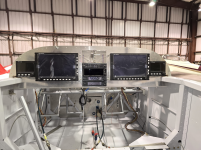
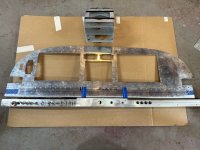
The first photo shows the bottom of the panel cut off to make an apron (just like is done in the RV-10). The apron and top panel are joined by a splice plate, riveted on the bottom and nutplates on the top. This apron always stays in the plane and is where non-avionic stuff gets mounted (breakers, switches and such).

Note - the extra strip you seen below the panel parts is a mockup of where switches and such go.

The top part of the panel is where the hard to get at stuff gets mounted (radio stack and the always a PITA audio panel). The top part however is fully removable from the plane in a few minutes to work on the bench. Once the top part is out the apron stuff, along with the remote avionic modules are fully accessible.

As I have preached in the past, the rule is “never on your back with your head under the panel”.
Carl53F9B707-F13C-4B38-A2E9-C9F47EE12C5A_1_201_a.jpegUnknown.jpeg
 
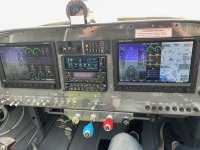
Your layout is so close to what I did. There is pros and cons to everything from type of switches, flap switch location, panel ht, breaker layout, …. I went through all the second guessing. What I did works great for me. I don’t see any glaring issues and suspect what you’re about to do will work great for you.

One word of caution. You may have a clearance issue behind the panel for your intercom. You run out of room up in that area.
 

Attachments

  • IMG_0695.jpeg
    IMG_0695.jpeg
    1.5 MB · Views: 64
Last edited:
JackKing,

As a side note, be aware you are locking yourself into a panel design that is hard to maintain, modify or update. I recently helped a builder do an RV-6A panel and did a modification targeting this common pitfall.

The first photo shows the bottom of the panel cut off to make an apron (just like is done in the RV-10). The apron and top panel are joined by a splice plate, riveted on the bottom and nutplates on the top. This apron always stays in the plane and is where non-avionic stuff gets mounted (breakers, switches and such).

Note - the extra strip you seen below the panel parts is a mockup of where switches and such go.

The top part of the panel is where the hard to get at stuff gets mounted (radio stack and the always a PITA audio panel). The top part however is fully removable from the plane in a few minutes to work on the bench. Once the top part is out the apron stuff, along with the remote avionic modules are fully accessible.

As I have preached in the past, the rule is “never on your back with your head under the panel”.
CarlView attachment 74573View attachment 74574
On the right side screen, move the MFD portion to the center of the airplane so that the left seater can use it more easily.
 
I know you want to keep the EIS out, BUT, with the "big red light" that you connect to the EIS to warn you of OIL Pressure if you lose it, you can set everything you need as a warning in the EFIS, and also set the fuel easily on the EFIS. I've been flying my 8 with the EIS down by my right knee and in 13 years and 3300 hours, I have never needed to put a finger on it. Just my .02 cents worth. It's ugly, useless and utterly not needed.
 
JackKing,

As a side note, be aware you are locking yourself into a panel design that is hard to maintain, modify or update. I recently helped a builder do an RV-6A panel and did a modification targeting this common pitfall.

The first photo shows the bottom of the panel cut off to make an apron (just like is done in the RV-10). The apron and top panel are joined by a splice plate, riveted on the bottom and nutplates on the top. This apron always stays in the plane and is where non-avionic stuff gets mounted (breakers, switches and such).

Note - the extra strip you seen below the panel parts is a mockup of where switches and such go.

The top part of the panel is where the hard to get at stuff gets mounted (radio stack and the always a PITA audio panel). The top part however is fully removable from the plane in a few minutes to work on the bench. Once the top part is out the apron stuff, along with the remote avionic modules are fully accessible.

As I have preached in the past, the rule is “never on your back with your head under the panel”.
Carl

Carl great advice. Nice work! I think (I hope) I am not going to have maintainability issue. I have standard depth panel with the sub panel for throttle, prop, mix, carb ht and alt air. I played with making removable sub panels like many do. Looks like a lot or work, time, weight. I came up with the following. Planes are hard to maintain, modify. Having built and flown an RV and maintained a few personal Certified planes, one a 1958 Piper twin Apache, I know the joy of no access.

>GRT EFIS is huge and comes out with 4 screws (to nut plates) and will open up that area. The GRT EFIS has enough service slack to get it out to disconnect two Sub-D 25's, GPS antenna, pitot-static lines. With EFIS out, seated in left seat I can reach: intercom connector, the Garmin G5 (connector, Pitot Static, gps antenna) and all the switches.

>Other side, right side, I will have a large cutout and screwed on cover. That will essentially be the same as removing the EFIS on the left. On right I will have similar access to EIS and Garmin GPS175, but access to the bus bar, and ARINC 429 external modules (two one GRT one Garmin), Transponder, Wig-Wag.

>Rack mounted items in "center" with either EFIS out or access panel out I can get at their brackets. The EIS and GPS175 I can access their Sub D connectors. However ICOM A220 is long and will pernitrate the second bulkhead and be in that no man land between 2nd bulkhead and firewall. No not cutting external holes in that area. Not a lot I can do about that. I will route GPS wires UNDER the fwd bulkhead. Getting to the rack connector will be not fun. Brackets and getting the rack out will accessible.

That is the plan and sticking to it. I have to get this done and not ponder . Standard must haves, is be standard, well labeled, no shotgun approach to switches and controls, group like items. I think this will be functional. I see panels with some of the most complex electrical switchology. I tried to keep it simple to make, wire and maintain. Try is key word.

Cut the panel first out of cheap plastic. Do the test fit with everything before paying the stupid tax
I JUST cut out a plexiglass sheet by hand last night. I was going to skip it and go straight to metal, but had a piece of panel sized plexi scrap I got free for this reason. I went to FedEx Office, printed out the panel on paper full scale ($11), used contact spray to put the drawing down (to the plastic protective sheet on top of the plexi) and cut it out. drill centers, corners, Dremel cutoff wheel (good one not the cheap deal they come with), and steady hand. It is ROUGH cut. Today is file it. I will be able to get a good check of clearances and locations. Make some small adjustments. No more changing mind. It will be great to make final and get it out of my head.​
 
Last edited:
I did my panel a couple weeks ago. Since I'm still working out the switch placement, I made my panel in 3 pieces (left, center, right). This way I can modify any of the sections and get another piece cut reasonably cheaply. I sent it to sendcutsend.com. Worked out great and ~$50/panel so cheap enough to modify.
 
I know you want to keep the EIS out, BUT, with the "big red light" that you connect to the EIS to warn you of OIL Pressure if you lose it, you can set everything you need as a warning in the EFIS, and also set the fuel easily on the EFIS. I've been flying my 8 with the EIS down by my right knee and in 13 years and 3300 hours, I have never needed to put a finger on it. Just my .02 cents worth. It's ugly, useless and utterly not needed.

Gosh darn it don't confuse me with facts. (ha ha). Yes I know, but (see below). I flew with an EIS without EFIS on my first RV and I like it as prime and only FAR required instrument for engine. I know people hate the looks? OK It is flat, not as wide rack item bezels. I get it.

I have the optional face plate that goes on top that makes it wider, stand taller, but not using it. I just 3D printed a spacer that VAF member helped with, 3D CAD to STL file. Thank you Jonathan. It will do two things. Place it out which will allow me to move it up, allowing GPS175 move up slightly. It will make it sit at the same 0.5 to 0.7 inch panel height as the rack item bezels. I am happy with it.

The other technical and non technical reasons to mount it:
- Bought it $$$$ darn it, want to see it (ha ha)​
- Can minimize clutter on EFIS and use the EIS for engine info.​
- Could mount it to right of panel but have big access cutout, trade offs.​
- Looks don't bother me, but people tell me my dog is ugly. I think she's cute. (ha ha)​
- Have room & EIS being shallow depth, can mount high against stiffener, higher w/ spacer just mentioned.​
- In case EFIS goes away, I have my FAR required instruments. (main reason and red light alone will not hack it)
 
Last edited:
If you've got room, throw in a couple of spare breaker holes for future upgrades. You can either add breakers now or just use button plugs to fill the holes and label them"spare"
Great advice, keeping this in mind. Roger I think I might have one or two extra CB's now. It is drawn with 16 now. Builders think one CB per circuit. Not a bad thought, but one CB can handle two or more circuits. Ever see Van's prototypes, with 6 CB's? That is what they are doing (unless they have hidden fuse box ala-car which I doubt). If you look at old van drawings and old RVators ganging several items on one CB or fuse was common. Seems like some people went to CB wars to see who has the most CB's. Some items, lights, flap motor, must have their own CB/Fuse.

Still finalizing the power side. I do have a 6 circuit ATC fuse block, I may put in behind panel (accessible from left side access panel). Fuse access is not be possible in flight but the logic is non essential low current 1 amp fuses. I want to avoid hiding things that may need to be maintained. Some folks go all fuses no CB's? Up to the builder. 30 yrs from now someone will see and know what's up. Aircraft standards, simple and easy to maintain. Up to builder.

The rule as everyone knows, but for those who might not, CB/Fuse protects to wire not the equip. Many electrical items are a fraction of an amp, and a 24/26 gauge wire would do, requiring a very small CB/fuse, 1/2 amp for example. Most builders over-kill on wire gauges with 20 or 22. These wires are more robust and often have way more current capacity than one load needs. That's OK. That allows higher CB/fuse rating, well above the load. Want the CB to trip or fuse to blow before wire smokes and glows orange. That is it. A few low current items, on larger than needed wires, can be on one CB/fuse, as long as total load does not exceed CB/Fuse rating and never exceeds any single wires "fuse" rating (aka smoke, glowing). Rule of thumb CB/Fuse rating is 125% of max load typically but not carved in stone. FAA AC 43.13-1B provides guidelines as well as manufactures advice for CB/fuse sizing. This is my opinion, loosely based in "Science"!!! Ha ha. Your own risk, nothing wrong with one circuit one CB/fuse.
 
Last edited:
JackKing,

Yep, those big holes when you pull the EFIS screens out to provide access, but not the access to make work on the center stack feasible. Having access to D connectors is not the same as being able to modify - as in something simple like adding a wire when you need a new serial output or another audio in to the audio panel. I think you will also find reaching through the EFIS holes to not be all that great for working remote modules (ARINC, Comm #2, XPDR, EMS, Voltage Regulators and such).

I offer my approach does not add weight or complexity. It does take some planing to identify what says in the plane and what comes out with the panel. The lower apron approach creates the path to do this.

Not wanting to beat a dead horse, but before the panel is built is the time to do this planning and it will pay dividends in the future.

Side note, the first RV-10 panel I made was modified (replaced) at 18 months. The second panel lasted two years. This plane is now on version #4 (the new owner wanted to add some stuff). My first build (RV-8A) is 20 years old and now on panel version #5. The point being that now matter how long you think about the panel layout once flying you will want to change something. Plan on it. For me a new panel is a replacement blank from Van’s (it was $26 but now I suspect it is double that), some time cutting holes and paint.

Carl
 
Your layout is so close to what I did. There is pros and cons to everything from type of switches, flap switch location, panel ht, breaker layout, …. I went through all the second guessing. What I did works great for me. I don’t see any glaring issues and suspect what you’re about to do will work great for you.
This is the picture that I was looking for. I was conflicted about having gap between GPS175 and ICOM radio. I figure I have room. It would give some space for knob twisting twiddling. It looks good. Some said no, one big rectangular hole and jam them together. That looks OK as well. I am going to go with the original plan to space them out slightly. These are details but the point of thread, helps me challenge my decisions. I was going for a panel that does not look like sausage stuffed into a casing. If I hid the EIS, went remote COM, got rid of intercom (use internal one in the ICOM) I could get a real sparce look. Then functionality or lack there of takes over.

You may have a clearance issue behind the panel for your intercom. You run out of room up in that area.
INTERCOM - Yes, thank you. I just hacked out a plexi test panel, will be hand filing and fitting the items for test, mounting the mock panel on the structure. I will check thanks. If the plexi panel looks good I may just skip metal and use it to fly. (I am kidding)

Quick eyeball check, DRE e244 intercom is 4.5" deep, but with sub-d and goodly amount of wires, adding 2.5" to 3" it will be close. Sub bulkhead is approx 8.5" away. That gives about 1-1.5" clearance. Want to avoid punching holes in that fwd. bulkhead like the plague. I do wish the ICOM which is 10" deep was as short. That is only item punching through fwd. bulkhead. I could have gone Trig remote COM using EFIS to control, but wanted a separate COM for "reasons".

Locating intercom was a pain. Did not want it far right edge of panel, although intercom's are a kind of set it and forget it thing typically, this one has a lot of functions. Some said get rid of it; use intercom built into the ICOM. Yep could do that, may be should? The ICOM COM has a basic 2 place VOX intercom, I'm sure works fine for pilot/co-pilot talking and listening to COM radio. The DRE e244 is a quality stereo intercom, pilot/co-pilot isolation, inputs & outputs, bells & whistles.

Stereo in a plane? An airplane is not a concert hall, I agree. Fidelity, no matter how good you are in a loud plane. Fly now listen to music later is my attitude, but bought the darn thing a long time ago to have for next project, airshow discount, came with full harness, jacks, ready to go. Time has come, have it, using it. The unit will cut out stereo for COM and fade in like many intercoms do. Again I own it, so using it.
 
Stereo in a plane? An airplane is not a concert hall, I agree. Fidelity, no matter how good you are in a loud plane. Fly now listen to music later is my attitude, but bought the darn thing a long time ago to have for next project, airshow discount, came with full harness, jacks, ready to go. Time has come, have it, using it. The unit will cut out stereo for COM and fade in like many intercoms do. Again I own it, so using it.
Yep - Bluetooth input and stereo in the headsets is, for me, a must for those 4+ hour cross country flights!

The only problem is ATC always tends to talk right at the best part of a Carly Simon song…
Carl
 
The only problem is ATC always tends to talk right at the best part of a Carly Simon song…
Carl
I tend to always keep a radio on something useful, e.g., ATC even if I’m not getting flight following. The ‘com priority’ meant the music was rarely on. I gave up and put the music to ‘never mute’ but keep the volume low enough to hear the com. Passengers have their own music volume control and can do whatever they want.
 
Everyone, Bob and Carl you all are champs all good points. Yes I have a ANR headset with aux stereo input. I hear you (pun intended see what I did). I am a bit of a purist and music listing while PIC is not cool. It is like riding a motorcycle (mostly touring). You really should not have sounds masking too much road and traffic noise, nor be in la-la-land. Long distance open road, nice to have. Same with flying. Still I am putting in the wiz bang intercom since a passenger can go to town and blast the tunes, be in or out of ATC Com. and less wires dangling all over. Again bought it, got it, using it, fits.

Back to way too much time on this panel mental metal gymnastics. I cut and drilled the plexi out by hand (a few hours of fun). As stated I full sized printed the panel, glued it down to plastic protective film on plexi. I learned a few things. Glad I did it.

My switch holes were too small (tolerance). Tony Bingelis and others I read long ago, leave room, especially for paint and powered coat. With CAD and laser cutting (which has tolerances) there is a tendency to get down to the 4th decimal place. Most avionics, rack and switches don't have high tolerances. Leave some room it's not structural. On the other hand you can always file and make larger. So word to wise.

  • The P-mag switch and Garmin G5 way to close.
  • Spacing of the Com and Garmin GPS175 uneven and too much gap, looked weird
  • As suggested the intercom is close to edge, but that is OK, still I had room to move it down.
  • Some minor moving around, switchology but it's close.
  • EIS is hitting stiffener, missed it by that much. Can notch and reinforce stiffener or move EIS down.
To EIS or not to EIS is the subject of many suggestions to hide it and take it out panel. For GRT drivers see EIS remote mounting notes below **.

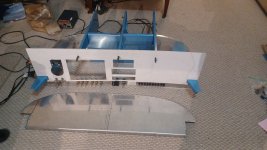
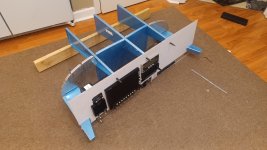
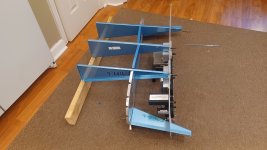
20241121_080358.jpg
20241121_073814.jpg

20241121_073805.jpg

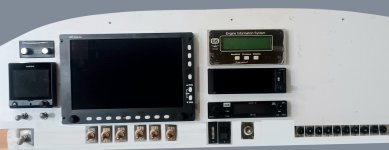
Actual photo edited a bit for clarity. You can cut and drill though the plastic cover, one side with paper template pasted down, but for holes it tears. To make a flat spot to mount switch or CB I removed the plastic/paper template. Also I did not cut the upper contour, so photo edited that in.

20241121_053409.jpg


** EIS remote mounting: For you GRT drivers (most already know), To go into a deep dive, talked to GRT and the caveat to remote location is you can not clear a warning light if you can't press it's buttons, so they recommend only having Oil Pressure on the EIS warning light for start. This is not an issue as only time it comes on is before start and should go out on it's own. If it comes on in flight you have a real issue. Note they suggest even remote mount you still need to get at someway to set configurations. These are suggestions not must do. All other warnings will be on EFIS you can clear or acknowledge.

The EIS and EFIS are separate with their own limit configuration and external warning light. EIS provides data to EFIS. EFIS can not control the EIS (unless you by the dedicated remote mount EIS with no display. The EIS with display and buttons has serial out only. I assume the EIS remote mount version has both TX and RX to take commands/configure from EFIS. So there is a dedicated REMOTE EIS and one with display and buttons. We are talking one with display and buttons like shown above.

Reason NOT to have all warnings on the EIS as mentioned, can't reset them if you can't access the EIS's buttons. However oil Pressure warning is for START. GRT suggests EFIS be off. EFIS takes 30 seconds to BOOT. EIS can be on during start and works at lower voltage. Even if EIS were to reboot, it boots almost immediately or very fast, a few seconds. So you have the EIS on during start. If your EFIS has standby power independent of starting battery, not an issue. I do have standby avionics power, but it is moot. I have EIS panel mounted as backup to EFIS dying. It's about back up. Also who ever has the most things in their panel wins. Ha ha. It's a personal choice. Want remote EIS with your EFIS buy the remote version with no display is best. I am happy with the standalone version.

If you have any remote mount EIS and all engine data is on EFIS it should be on during start (standby power or not), regardless of avionics brand I think. Not sure how Dynon and Garmin do it, but seems to me you have to have EFIS on and booted before start. The NICE thing about having the GRT EIS in panel is it boots fast. Start engine, check gauges, OP, lean, and turn on avionics. while your engine warms up, your EFIS and GPS boot.

I incorrectly stated above you can not reset FF totalizer if EIS is not handy? Well true but not critical. You can reset the EFIS FF totalizer. Remember the EFIS and EIS are independent. All the EIS does is pass data to the EFIS. The EFIS has all the limits and it's own remote warning light if you like. So does the EIS. There are 8 ways to Sunday. Stop thinking. Just do it they way you want it. However this thread has been really helpful to me and made some changes or challenged my decisions. Great input. Thank you!!
 
Last edited:
Everyone, Bob and Carl you all are champs all good points. Yes I have a ANR headset with aux stereo input. I hear you (pun intended see what I did). I am a bit of a purist and music listing while PIC is not cool. It is like riding a motorcycle (mostly touring). You really should not have sounds masking too much road and traffic noise, nor be in la-la-land. Long distance open road, nice to have. Same with flying. Still I am putting in the wiz bang intercom since a passenger can go to town and blast the tunes, be in or out of ATC Com. and less wires dangling all over. Again bought it, got it, using it, fits.

Back to way too much time on this panel mental metal gymnastics. I cut and drilled the plexi out by hand (a few hours of fun). As stated I full sized printed the panel, glued it down to plastic protective film on plexi. I learned a few things. Glad I did it.

My switch holes were too small (tolerance). Tony Bingelis and others I read long ago, leave room, especially for paint and powered coat. With CAD and laser cutting (which has tolerances) there is a tendency to get down to the 4th decimal place. Most avionics, rack and switches don't have high tolerances. Leave some room it's not structural. On the other hand you can always file and make larger. So word to wise.

  • The P-mag switch and Garmin G5 way to close.
  • Spacing of the Com and Garmin GPS175 uneven and too much gap, looked weird
  • As suggested the intercom is close to edge, but that is OK, still I had room to move it down.
  • Some minor moving around, switchology but it's close.
  • EIS is hitting stiffener, missed it by that much. Can notch and reinforce stiffener or move EIS down.
To EIS or not to EIS is the subject of many suggestions to hide it and take it out panel. For GRT drivers see EIS remote mounting notes below **.

View attachment 74843
View attachment 74844

View attachment 74846

Actual photo edited a bit for clarity. You can cut and drill though the plastic cover, one side with paper template pasted down, but for holes it tears. To make a flat spot to mount switch or CB I removed the plastic/paper template. Also I did not cut the upper contour, so photo edited that in.

View attachment 74845


** EIS remote mounting: For you GRT drivers (most already know), To go into a deep dive, talked to GRT and the caveat to remote location is you can not clear a warning light if you can't press it's buttons, so they recommend only having Oil Pressure on the EIS warning light for start. This is not an issue as only time it comes on is before start and should go out on it's own. If it comes on in flight you have a real issue. Note they suggest even remote mount you still need to get at someway to set configurations. These are suggestions not must do. All other warnings will be on EFIS you can clear or acknowledge.

The EIS and EFIS are separate with their own limit configuration and external warning light. EIS provides data to EFIS. EFIS can not control the EIS (unless you by the dedicated remote mount EIS with no display. The EIS with display and buttons has serial out only. I assume the EIS remote mount version has both TX and RX to take commands/configure from EFIS. So there is a dedicated REMOTE EIS and one with display and buttons. We are talking one with display and buttons like shown above.

Reason NOT to have all warnings on the EIS as mentioned, can't reset them if you can't access the EIS's buttons. However oil Pressure warning is for START. GRT suggests EFIS be off. EFIS takes 30 seconds to BOOT. EIS can be on during start and works at lower voltage. Even if EIS were to reboot, it boots almost immediately or very fast, a few seconds. So you have the EIS on during start. If your EFIS has standby power independent of starting battery, not an issue. I do have standby avionics power, but it is moot. I have EIS panel mounted as backup to EFIS dying. It's about back up. Also who ever has the most things in their panel wins. Ha ha. It's a personal choice. Want remote EIS with your EFIS buy the remote version with no display is best. I am happy with the standalone version.

If you have any remote mount EIS and all engine data is on EFIS it should be on during start (standby power or not), regardless of avionics brand I think. Not sure how Dynon and Garmin do it, but seems to me you have to have EFIS on and booted before start. The NICE thing about having the GRT EIS in panel is it boots fast. Start engine, check gauges, OP, lean, and turn on avionics. while your engine warms up, your EFIS and GPS boot.

I incorrectly stated above you can not reset FF totalizer if EIS is not handy? Well true but not critical. You can reset the EFIS FF totalizer. Remember the EFIS and EIS are independent. All the EIS does is pass data to the EFIS. The EFIS has all the limits and it's own remote warning light if you like. So does the EIS. There are 8 ways to Sunday. Stop thinking. Just do it they way you want it. However this thread has been really helpful to me and made some changes or challenged my decisions. Great input. Thank you!!
Like you, I have a panel mounted EIS and like it. I’ve already mentioned moving the gps and com higher, but that’s your choice. Like you, I like the near immediate warning if oil pressure is lacking after start. A few other things:
I set different warning levels on the efis and EIS, e.g, 420F and 430F, respectively, for CHT. Interpretation: red flashing on EFIS, I should think about doing something. Red light from EIS, fix it now. I also have programmed the eis timer for 30 minute intervals: interpretation, switch tanks. I update fuel levels after filling on the EIS, it transfers to efis so both are correct. (You know the two buttons at once shortcut?)
 
Back
Top