Van's Air Force

The definitive Van's Aircraft support community! Buying, building or flying an RV? Join our exclusive family of mentors and enthusiasts!

Bench Power Supply or spare 12V battery for panel testing

auburnaviator

Well Known Member
VAF brain trust. What is the general consensus on bench panel testing power supplies? Are folks just using spare 12v batteries that they keep topped off in between test sessions or did you purchase a bench power supply for ham radios etc. and are using those to power and test your panel?

If power supplies are the go to answer what your thoughts on this one?
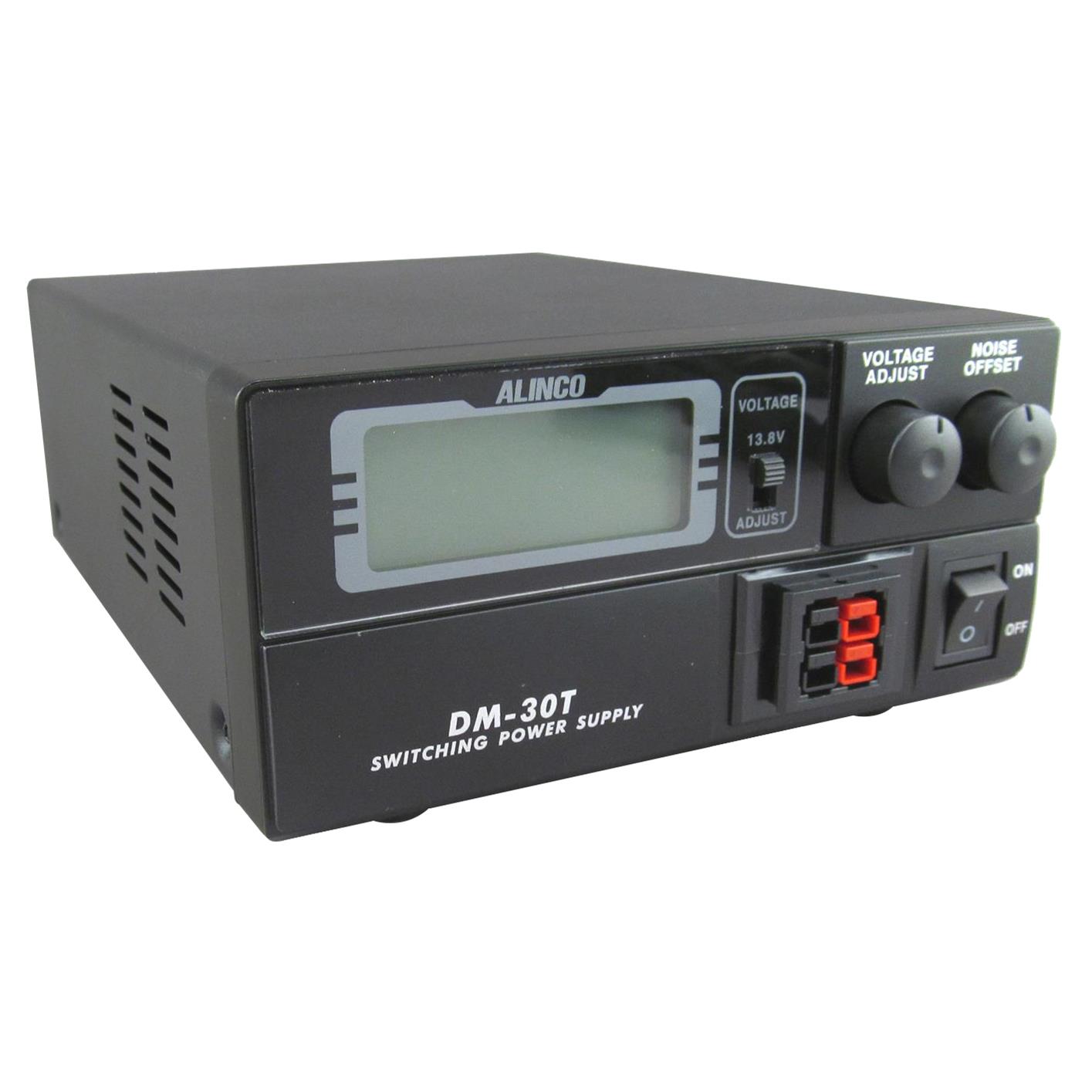
If that isn’t a good choice what do you suggest?

Thanks,
Zach
 
I have been using the Alinco DM-30T power supply for 3 years now. Works great. I feel better using a power supply for software updates that the ships power.
 
I personally find them highly useful. I have two that I bought on Amazon.com for less than $60 each, one with knobs and meters, the other without.

At first glance, the Alinco DM-30TR looks OK, but not ideal.

One thing to be aware of with any switching power supply like the DM-30TR (as contrasted with a linear power supply) is that it may generate objectionable electrical noise at radio frequencies. Another thing to remember is Ohm's Law regarding the voltage loss due to wiring resistance between the power supply and the instrument panel. 12-14 AWG, short wires should work.

Good features to have are:
  • Ample current for all of your loads: The DM-30TR can supply 20A continuous and 30A at a 50% duty cycle, which may be more than you need for the instrument panel, and less than you need for the instrument panel plus lighting equipment plus flap motor;
  • An accurate voltmeter;
  • An accurate current meter;
  • Adjustable output voltage, so you can determine the lowest voltage at which your boxes will reliably work, and how much current they draw at the minimum and maximum expected operating voltages, which are a function of your battery and charging system;
  • An adjustable current limiting function to limit the maximum current output of the supply for the first time you power something up and there could be a wiring problem, which the DM-30TR does not have;
  • Solid and convenient connection terminals.
Once you've invested in a power supply, you may wish to make provisions in your aircraft to be able to use it to power the instrument panel while doing things like entering flight plans, updating databases, or just familiarizing yourself with the glass cockpit stuff while enjoying your comfy seats and making airplane noises. Just make sure you don't accidentally feed power to places it doesn't need to go if/when you do that. You might want an External Power section in your checklist.
 
I have been using the White Lightning aircraft power supply for the past few years. The base unit supplies 14v/30amp. Also come in 28v and dual voltage. With the power plug installed the continuous power supply is great for equipment testing during install as well as on going software and NAV data updates.
Available through Vans, Aircraft Spruce, and others.
Web link: https://whitelightninggpu.com/
 
I have a 50 Amp Diamond bench power supply that has very stable output voltage and good circuit protection - bought it over twenty years ago from an electronics shop - no idea what a similar box would cost today. I use that wired in to teh ship’s electrical system, and sometimes flip it on and leave it that way (and the ship powered up) for hours when I am out working on things. It certainly rules out infant mortality on first flights because the avionics will probably have a hundred or more hours before I get there….and when you’re working on configuration and such, there is no rush at all - you take your time and learn the systems.
 
I personally find them highly useful. I have two that I bought on Amazon.com for less than $60 each, one with knobs and meters, the other without.

At first glance, the Alinco DM-30TR looks OK, but not ideal.

One thing to be aware of with any switching power supply like the DM-30TR (as contrasted with a linear power supply) is that it may generate objectionable electrical noise at radio frequencies. Another thing to remember is Ohm's Law regarding the voltage loss due to wiring resistance between the power supply and the instrument panel. 12-14 AWG, short wires should work.

Good features to have are:
  • Ample current for all of your loads: The DM-30TR can supply 20A continuous and 30A at a 50% duty cycle, which may be more than you need for the instrument panel, and less than you need for the instrument panel plus lighting equipment plus flap motor;
  • An accurate voltmeter;
  • An accurate current meter;
  • Adjustable output voltage, so you can determine the lowest voltage at which your boxes will reliably work, and how much current they draw at the minimum and maximum expected operating voltages, which are a function of your battery and charging system;
  • An adjustable current limiting function to limit the maximum current output of the supply for the first time you power something up and there could be a wiring problem, which the DM-30TR does not have;
  • Solid and convenient connection terminals.
Once you've invested in a power supply, you may wish to make provisions in your aircraft to be able to use it to power the instrument panel while doing things like entering flight plans, updating databases, or just familiarizing yourself with the glass cockpit stuff while enjoying your comfy seats and making airplane noises. Just make sure you don't accidentally feed power to places it doesn't need to go if/when you do that. You might want an External Power section in your checklist.
I have a Din-rail power supply and the 14 V outlet can be fine adjusted with a screwdriver. Set it and forget it.
It is mounted in a plastic enclosure that I have in the hangar with a 20 A fuse on the 14 V outlet.
The aircraft has an external power inlet that is connected direct to the battery and it can be used to charge the battery and power the avionics when
service and updates is done. It is easy to work with. Voltage and Amps can be read on the G3X.

Good luck
 
Myron Nelson has an article on ground power in Kitplanes. Someone hooked a 28V ground power supply up to his 14V airplane, with disastrous results. Mr. Nelson refers to an article by Bob Knuckolls on how to wire a ground power connection into your electrical system, with an overvoltage protection option.

Inspired by Mr. Nelson's catastrophe, I designed and prototyped a circuit board that will only energize the ground power relay when the ground power input voltage is in a range of about 8 VDC to 15 VDC. I haven't made it into a product, but it may go into my airplane.
 
I personally find them highly useful. I have two that I bought on Amazon.com for less than $60 each, one with knobs and meters, the other without.

At first glance, the Alinco DM-30TR looks OK, but not ideal.

One thing to be aware of with any switching power supply like the DM-30TR (as contrasted with a linear power supply) is that it may generate objectionable electrical noise at radio frequencies. Another thing to remember is Ohm's Law regarding the voltage loss due to wiring resistance between the power supply and the instrument panel. 12-14 AWG, short wires should work.

Good features to have are:
  • Ample current for all of your loads: The DM-30TR can supply 20A continuous and 30A at a 50% duty cycle, which may be more than you need for the instrument panel, and less than you need for the instrument panel plus lighting equipment plus flap motor;
  • An accurate voltmeter;
  • An accurate current meter;
  • Adjustable output voltage, so you can determine the lowest voltage at which your boxes will reliably work, and how much current they draw at the minimum and maximum expected operating voltages, which are a function of your battery and charging system;
  • An adjustable current limiting function to limit the maximum current output of the supply for the first time you power something up and there could be a wiring problem, which the DM-30TR does not have;
  • Solid and convenient connection terminals.
Once you've invested in a power supply, you may wish to make provisions in your aircraft to be able to use it to power the instrument panel while doing things like entering flight plans, updating databases, or just familiarizing yourself with the glass cockpit stuff while enjoying your comfy seats and making airplane noises. Just make sure you don't accidentally feed power to places it doesn't need to go if/when you do that. You might want an External Power section in your checklist.
Do you have a recommendation on a linear power supply with adjustable voltage output that meets your “desired features” list?
 
Do you have a recommendation on a linear power supply with adjustable voltage output that meets your “desired features” list?
MFJ made a linear 30 amp power supply that I used during the build, and continue to use today with a quick disconnect for when I’m either hangar flying or doing firmware/db updates. Looks like their catalogue has changed and only have switching power supplies now.
 
I have an MFJ. So far so good. I have a harness attached to the battery for charging or using the power supply. Same polarized connector so I can't get it backards.
 
Do you have a recommendation on a linear power supply with adjustable voltage output that meets your “desired features” list?
The Astron Power Supplies VS-35M-AP meets some of them. The voltage and current meters are analog. There is no adjustable current limiting feature, but you could use an inline fuse or your aircraft circuit breakers to limit current when you first power up a new item.

An alternative to a linear power supply if you're worried about radio noise is a switching power supply with low output noise, such as the Rigol DP813, which will put out up to 10A at up to 20V.

Another thing to keep in mind if you want to use the power supply to charge an EarthX ETX900 battery, which I plan to use, is that the standard charge voltage for that battery is 13.9-14.6 VDC, at a current of 5-20 Amps.

By the way, the DM-30TR has a function called "Noise Offset". I don't know what that does, but it sounds like it may allow you to adjust the frequency of the switching regulator to move radio noise to a different frequency. That may be enough to make it work with your radios, if for example you could tune it so you could listen to CTAF or Tower, Clearance Delivery, and ATIS without having to mess with the Noise Offset knob too much.
 
Electrical noise in the radio is certainly a potential problem to be aware of with the cheaper power supplies, but using 6 or 8ft connecting leads allows the power supply to be positioned rar enough away. Any 30A supply is better than a battery for avionics set up and trouble shooting.
 
Electrical noise in the radio is certainly a potential problem to be aware of with the cheaper power supplies, but using 6 or 8ft connecting leads allows the power supply to be positioned rar enough away. Any 30A supply is better than a battery for avionics set up and trouble shooting.
Why exactly is a cheap power supply better than a clean stable source from a battery?
 
I have the Alinco DM-330MVT and I’m very happy with it. I had a cheap switching power supply I bought on Amazon for less than $50. It seemed to work, but I wasn’t confident that it was stable and wouldn’t fry my avionics - so I “gifted” it to a friend who needed one with the warning not to trust it for long. Alinco is manufactured in Japan, which I trust. They have been manufacturing power supplies for the ham radio business for more than 30 years, plus I can buy it from DX Engineering inside the Summit Racing store right here in Ohio. The Alinco is about 4X the cost of the cheap Chinese one, but it’s worth it.
 
You can use an old power supply from a discarded PC. Cost will be minimal. One of the circuits is 12VDC.
 
Look for a power supply that offers adjustable current limiting. Setting a current limit rather than a voltage is the best way to charge batteries.
 
As an add-on to this discussion: What connector should I use to run external power/battery charging into my ship? I see charger extension cables on Amazon, are they reliable/safe? Is there anything better available?
 
Look for a power supply that offers adjustable current limiting. Setting a current limit rather than a voltage is the best way to charge batteries.
The problem with this is that cheap power supplies will limit current by reducing voltage, ok for battery charging (but the recommended battery charger usually does a better job at that) but not a good idea to with avionics to run below the recommended voltage (usually 11v).

A high-quality supply will actually limit current, but maintain the set voltage.
 
Why exactly is a cheap power supply better than a clean stable source from a battery?
I can think of a few things:
- Using an external battery forces some sort of disconnect of the ship battery or other such wiring add ons. If not, then the simple thing is to put the ship battery in parallel with the external battery. Now buss voltage will never be at the nominal alternator output of 14.2 or so and both batteries will be drawn down.
- An external battery will not charge the ship battery. Here some would be tempted to run their expensive avionics and electronic ignitions with an old school charger connected to the ship battery. These chargers can put out a lot of trash. EMag warns to never connect a pMag to any charger for this reason and running ~$40K of avionics on one is just asking for trouble.
- My simple MFJ 30 amp power supply comes with both a voltage and current meter. It has zero noise on the radios, is simple to hook up and control. I start it off with voltage ~13vdc or so and bring up voltage to 14.2 while watching current to make sure all is well as the batteries come up to voltage. My panel draws a total of 10 amps so plenty of capacity left to top off the batteries while I’m hangar flying. I rarely exceed 15 amps as I don’t let my two PC-625 batteries go flat.
- The MFJ power supply need never be charged and is no more expensive as most batteries. It is light enough to carry in the plane if needed.

Carl
 
I thought we were talking about bench testing, not in aircraft testing?
I recommend a high-quality GPU for running aircraft systems.
 
Why exactly is a cheap power supply better than a clean stable source from a battery?
It isn’t. I have a Lambda Power Supply.
The best reason is, a bench supply allows you to scratch your mad scientist itch. It just looks so much cooler and I have the coke bottle glasses and lab coat to complete the ensemble. A few creepy low chuckles from time to time add to the effect.
Batteries are just so blahhhh…..

Seriously though, I bought the Lambda off of CL for cheap, regularly $1k lab grade supply, and added it to my tools. No other reason. I used it a lot, and haven’t touched it in almost 20 years. Great investment ;)
 
The problem with this is that cheap power supplies will limit current by reducing voltage, ok for battery charging (but the recommended battery charger usually does a better job at that) but not a good idea to with avionics to run below the recommended voltage (usually 11v).
For the linear case V = I x R. The only way to reduce I is to reduce V. It doesn't matter how cheap or how expensive your power supply is. That is how the physics works. Here is how I use my current limiting lab power supply...

Battery Charging - For a 12 volt battery set the voltage to something around 13.5 to 14 volts. Then set the current limit to something that would charge the battery in about 4 or more hours. If it is a 10 amp-hour battery set the current limit to about 2.5 amps. If the battery is discharged the voltage will drop some but the charging current will be 2.5 amps. As the battery charges the voltage will come up until it reaches the power supply set voltage and the charging current will start to go down. At this point things will automatically revert to a trickle charge. Neat!

Avionics - Set the power supply voltage to 12 volts (or whatever the system voltage is). Set the current limit to some smallish but reasonable value. Use 1 to 2 amp current limit if you don't know any better. Or maybe look in the installation manual to see what a reasonable current value would be. Then turn on the power supply. If the voltage goes WAY down then something is wrong but you didn't burn anything up. If the voltage is a bit low and the power supply is current limiting then gingerly turn up the current limit until the power supply is in voltage limiting mode at your 12 volt set point. Everything is good!

A high-quality supply will actually limit current, but maintain the set voltage.
Huh? For the linear case V = I x R. The only way to reduce I is to reduce V when R is a fixed value. Physics is a stubborn thing.
 
I have the Alinco DM-330MVT and I’m very happy with it. I had a cheap switching power supply I bought on Amazon for less than $50. It seemed to work, but I wasn’t confident that it was stable and wouldn’t fry my avionics - so I “gifted” it to a friend who needed one with the warning not to trust it for long. Alinco is manufactured in Japan, which I trust. They have been manufacturing power supplies for the ham radio business for more than 30 years, plus I can buy it from DX Engineering inside the Summit Racing store right here in Ohio. The Alinco is about 4X the cost of the cheap Chinese one, but it’s worth it.
In the past, I have used an old ham radio power supply or a battery like Walt recommends to test aircraft electric and electronics.

Recently purchased one of the cheap Chinese power supplies that is 1/10 the price of the Alinco and rated at 30A. I also acquired a cheap volt / ammeter with current shunt at the same time. Have been running a ham radio on the supply for two weeks and I am impressed with how well the cheap power supply is working. The voltmeter compares well with my Fluke. Have not checked calibration of the current but it is in line with expected values. I have not connected an o-scope to check the ripple but picking up no noise on the radio.

IF you do not know what you are doing and how to TEST calibrate a cheap power supply, do like Walt and others have recommended, use a battery or quality power supply. After two weeks of use and testing, I would almost be ready to use this cheap power supply on my airplane equipment but I most likely would not use it to test your equipment.
 
As an add-on to this discussion: What connector should I use to run external power/battery charging into my ship? I see charger extension cables on Amazon, are they reliable/safe? Is there anything better available?
See post #9 in this thread.
 
For the linear case V = I x R. The only way to reduce I is to reduce V. It doesn't matter how cheap or how expensive your power supply is. That is how the physics works. Here is how I use my current limiting lab power supply...

Huh? For the linear case V = I x R. The only way to reduce I is to reduce V when R is a fixed value. Physics is a stubborn thing.
Sorry to disagree with your physics lesson but not true, high-quality supplies from folks like Agilent and others have adjustable current and voltage limiting.

This happens to be my bench supply, read the manual or stop by for a demonstration on defying physics!
https://www.keysight.com/us/en/support/U8002A/dc-power-supply-30v-5a.html
 
Battery Charging - For a 12 volt battery set the voltage to something around 13.5 to 14 volts. Then set the current limit to something that would charge the battery in about 4 or more hours. If it is a 10 amp-hour battery set the current limit to about 2.5 amps. If the battery is discharged the voltage will drop some but the charging current will be 2.5 amps. As the battery charges the voltage will come up until it reaches the power supply set voltage and the charging current will start to go down. At this point things will automatically revert to a trickle charge. Neat!

Avionics - Set the power supply voltage to 12 volts (or whatever the system voltage is). Set the current limit to some smallish but reasonable value. Use 1 to 2 amp current limit if you don't know any better. Or maybe look in the installation manual to see what a reasonable current value would be. Then turn on the power supply. If the voltage goes WAY down then something is wrong but you didn't burn anything up. If the voltage is a bit low and the power supply is current limiting then gingerly turn up the current limit until the power supply is in voltage limiting mode at your 12 volt set point. Everything is good!
The standard charging voltage for an EarthX ETX900 battery is 13.9-14.6 VDC. Here's the spec sheet. An Odyssey ODS-AGM16L PC680 battery wants to see 14.4-14.8 VDC. See this spec sheet.

B&C sets the voltage of their LR3D-14 primary regulator to 14.4 VDC at the factory. So when you're running off your aircraft electrical system, your avionics and battery will be seeing that sort of voltage less whatever voltage drop you have through cables and circuit breakers, which should be minimized. Aircraft Spruce sells a variety of Zeftronics regulators designed for use in Cessnas, Pipers, and Mooneys, which have a nominal voltage setting of 14.2 VDC. See this catalog page.
 
The standard charging voltage for an EarthX ETX900 battery is 13.9-14.6 VDC. Here's the spec sheet. An Odyssey ODS-AGM16L PC680 battery wants to see 14.4-14.8 VDC. See this spec sheet.

B&C sets the voltage of their LR3D-14 primary regulator to 14.4 VDC at the factory. So when you're running off your aircraft electrical system, your avionics and battery will be seeing that sort of voltage less whatever voltage drop you have through cables and circuit breakers, which should be minimized. Aircraft Spruce sells a variety of Zeftronics regulators designed for use in Cessnas, Pipers, and Mooneys, which have a nominal voltage setting of 14.2 VDC. See this catalog page.
You can charge a battery at a fixed voltage but I don't like to if I don't have to. With a fixed charging voltage in the beginning of the charge cycle the charging current is too high. I don't like batteries to get hot while charging. Towards the end of the charging cycle the charging current my be lower than what could be safely used, slowing down charge time. Charging at fixed current until a prescribed voltage is achieved (easy to set with a power supply that has adjustable voltage and adjustable current limiting) works very well in most non-esoteric cases.
 
You can charge a battery at a fixed voltage but I don't like to if I don't have to. With a fixed charging voltage in the beginning of the charge cycle the charging current is too high. I don't like batteries to get hot while charging. Towards the end of the charging cycle the charging current my be lower than what could be safely used, slowing down charge time. Charging at fixed current until a prescribed voltage is achieved (easy to set with a power supply that has adjustable voltage and adjustable current limiting) works very well in most non-esoteric cases.
I have dual EarthX batteries; I prefer to use the charger recommended for the lithium type batteries…
 
I have dual EarthX batteries; I prefer to use the charger recommended for the lithium type batteries…
Is there some special sauce in one of those chargers?
Seriously, does anybody know if they follow a unique sequence or react to feedback and change things?
I know most chargers have setting for “standard” and AMG, what is the difference in how they handle the charging? Curious.
 
Is there some special sauce in one of those chargers?
Seriously, does anybody know if they follow a unique sequence or react to feedback and change things?
I know most chargers have setting for “standard” and AMG, what is the difference in how they handle the charging? Curious.
The AGM charger for my Odyssey batteries initially charges at a fixed set current until the voltage reaches about 14.4 then holds that until the battery is fully charged. I do know that car charger can wreck an AGM battery and low current "float" chargers will also unless the battery is already fully charged. I've found that a float charger is unnecessary as a healthy AGM battery with no load will stay charged for months.

The current Odyssey in my 8A is 6 years old and has never seen a charger of any kind, just the 14.3 volts my alternator puts out and still cranks well.
 
I have dual EarthX batteries; I prefer to use the charger recommended for the lithium type batteries…

The preferred scheme to charge lithium batteries 1) an initial constant current charge, 2) a saturation topping charge at a constant voltage, and 3) a maintenance or float charge.

Using a lab supply setup for constant current then constant voltage as I described above satisfies 1 and 2 very well. It’s actually good practice for most all batteries.
 
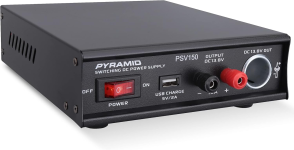
I keep my lab power supply on my bench for other things and instead I use a ham radio power supply combined like the one shown below. I put a cigarette plug jack in the panel which can handle 20A; it goes right to the battery bus. I use a cable with two cigarette plugs on each end to connect the power supply to the aircraft; that way, it's impossible to accidentally reverse the polarity and let some smoke out. You can find the power supplies on Amazon for about $60 or so.

It's like a poor man's ground power unit - it has enough to run everything in the panel and then some while still keeping the battery topped off.

1730497220878.png
 
Maybe it’s just me, but no way I’m plugging in a toy power supply to my 40k panel 😳
Most cigarette plugs are rated at 10a, but that’s pushing it.
 
Last edited:
Maybe it’s just me, but no way I’m plugging in a toy power supply to my 40k panel 😳
Most cigarette plugs are rated at 10a, but that’s pushing it.

Was going to say other stuff, but you do you. Thanks for the insightful, if not particularly well informed, comment.
 
Last edited:
These power supplies are probably as well as, if not better, regulated than the automotive-based alternators we fly on our airplanes.........
Do they have over voltage protection/limiting? Anything over 33v (normal limit for modern avionics) on your bus is gonna be costly.
Switching power supplies are more prone to failure than linear supplies, but less expensive to produce and higher voltage potential if they fail.
Even with the ships battery on line don’t expect it to save the day if your power supply goes crazy.
That’s why high quality GPU’s are costly, because if they over volt an aircraft, somebody is gonna have a big bill to pay.
My shop GPU cost over 2k, can’t afford to mess up a customers (or my own) airplane 😳
 
Last edited:
I appreciate all of the insightful discussions. My panel is not completely built/wired yet (slowly in progress) but I have started to acquire a few avionics as I find good prices. My G5 and its respective backup battery is an example of this. How would you guys go about topping off that battery every couple of months or so? It was down around 25% or so when I bought it and I don’t want it to sit and discharge and ruin the battery while I’m panel building/working on the rest of the build when I get tired of wiring work.
I have followed Garmin’s wiring diagram for the G5 so I have that part done. Is it as simple as connecting a fully charged properly in-line fused 12v battery? Will that charge the backup battery?
 
Maybe it’s just me, but no way I’m plugging in a toy power supply to my 40k panel 😳
It's not just you Walt. I don't know anything about electronics or power supplies but using a cheap power supply seems short-sighted when I'll have a panel that costs more than my first house. At this point I'm leaning towards the White Lightning M-1435-EXP. Purpose built for panel testing, database updating, etc. I have no idea if it's any good but Vans sells it so I doubt if it's terrible.
 
Myron Nelson has an article on ground power in Kitplanes. Someone hooked a 28V ground power supply up to his 14V airplane, with disastrous results. Mr. Nelson refers to an article by Bob Knuckolls on how to wire a ground power connection into your electrical system, with an overvoltage protection option.

Inspired by Mr. Nelson's catastrophe, I designed and prototyped a circuit board that will only energize the ground power relay when the ground power input voltage is in a range of about 8 VDC to 15 VDC. I haven't made it into a product, but it may go into my airplane.
CF,
Thanks for the referral. You didn't quite get the account recap correct...the incident I used for illustrative purposes involved a Mooney owned by a friend of mine that got erroneously hooked up to a start cart configured for a turboprop airliner. I haven't suffered a catastrophe yet, but I have had my bacon saved by a backcountry jump start.

At any rate, I am a strong advocate for installing ground power receptacles and find them extremely handy during the build process for testing electrical applications, for routine maintenance and as a safety backup for field use once flying.
Myron Nelson
 
VAF brain trust. What is the general consensus on bench panel testing power supplies? Are folks just using spare 12v batteries that they keep topped off in between test sessions or did you purchase a bench power supply for ham radios etc. and are using those to power and test your panel?

If power supplies are the go to answer what your thoughts on this one?

If that isn’t a good choice what do you suggest?

Thanks,
Zach

I like to start with a lab power supply with current limiting control. I set the expected current to a low level and then do the smoke test. With a low current limit, there is no smoke - the current limiting drives the voltage to zero. This lets me avoid killing a radio due to a normally catastrophic and expensive mess. Then I record the actual current and the expected for the next radio and test the wiring of the two. When all of the units are tested,

Lab variable power supplies up to 5-10 amps in the same $100 range (amazon). Once all of the power/grounds are verified for the system, I change over to a beefier non-current adjustable 20A unit such as you suggest to run everything on my RV8. New electronics are much more efficient. I can run my entire RV8 Panel with the 20A unit. (GRT EFIS, uAvionix PFD, TailbeaconX xponder, FlyLEDs, GPS175, Comm200, while running flaps)

You could skip the lab unit by putting an inline fuse holder on the the + output of a supply like you suggest. Start out with the smallest fuse as you install radios. Check wiring on each unit separately. Then go to a larger amperage fuse to run the whole system. That will give you protection on a budget.
 
CF,
Thanks for the referral. You didn't quite get the account recap correct...the incident I used for illustrative purposes involved a Mooney owned by a friend of mine that got erroneously hooked up to a start cart configured for a turboprop airliner. I haven't suffered a catastrophe yet, but I have had my bacon saved by a backcountry jump start.

At any rate, I am a strong advocate for installing ground power receptacles and find them extremely handy during the build process for testing electrical applications, for routine maintenance and as a safety backup for field use once flying.
Myron Nelson
Sorry, Myron, should have paid closer attention to the details of the incident you reported. I think my visualization of what happened based on your picturesque description ("[T]he prop on that little Mooney spun like a turbine. At least until the laws of physics got angry and erupted into a cacophony of arcing, which caused every component of that unfortunate airplane to begin the transformation process from solid to liquid, then through vapor to smoke and/or ash") must have wiped the content of the preceding paragraphs of the article out of my mind.
 
Last edited:
Sort of on topic. Help me understand please.

All this talk about power supplies, charging methods and various batteries makes me wonder.
How does the alternator know how a particular battery should be charged?

Also
My cheapo AGM appears to be bad. i bought it for panel testing. The ACM panel kicks an alarm after a few minutes and the electeonics start shutting down, but the voltage is still 13+. Why?
 
Sort of on topic. Help me understand please.

All this talk about power supplies, charging methods and various batteries makes me wonder.
How does the alternator know how a particular battery should be charged?

Also
My cheapo AGM appears to be bad. i bought it for panel testing. The ACM panel kicks an alarm after a few minutes and the electronics start shutting down, but the voltage is still 13+. Why?
The vehicle charging system comprising the alternator and voltage regulator don't know how a particular battery should be charged, so the optimal charging scenarios people talk about are mainly relevant in a ground charging situation where one has a charger that is designed to pamper the battery. The vehicle charging system will try to put out the voltage that the voltage regulator is set to, up to the maximum current the alternator can supply. In the case of a B&C LX60 alternator with a 2.7" diameter pulley driven by an engine like an IO-390-C3B6, where the drive ratio is 3.8:1, and the engine RPM is about 2632 RPM, resulting in an alternator RPM of 10,000 RPM, that will amount to a nominal current of 59.1 Amps. Now if the engine RPM is limited to 1200 RPM, say for a few minutes after engine start, the maximum current the alternator can put out will be around 46 Amps.
 
Back
Top