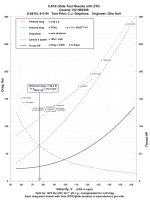
Dave, that's an interesting response. Yes, by power (engine RPM's) I mean thrust. I can measure RPM's but I can't directly measure thrust. In this discussion, power is the only way to get positive thrust. Negative thrust is, of course, the drag from the prop when the RPMs drop below some point of zero thrust (see Jack Norris' publications for a better explanation and much more detail). In an airplane with no prop (rocket, turbine, whatever) it might be possible to produce thrust without RPMs but you'd still need power.
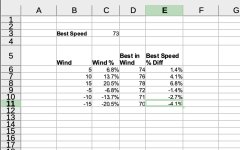
If anyone wants to know (a lot) more about zero-thrust gliding flight and its importance, per Norris, he or she is welcome to PM me. I had many long discussions with Jack Norris about that and worked out some spreadsheets, too. I'm happy to share but not in this thread.
Just for the sake of perfect clarity and ignoring prop design, prop pitch, when climbing, static or in level flight you can't have RPM without power. Also, you can have RPM without thrust but you can't have thrust without RPM. In descending flight you can have RPMs with thrust or even negative thrust but it's still using power. In that case, the power comes from using up stored kinetic energy (altitude).
I confess that I don't know what my typical RPMs are in a zero-throttle on final glide. I'm paying attention to airspeed at that point

But
your idle setup is worthy of a comment. I quickly found that I don't like the residual power/thrust on final and wanted to turn the idle down. More than 1 A&P advised me that the Rotax idle spec is important because if it goes lower there is some back and forth movement in the gearbox which is hard on it and could damage it. For that reason I stayed with the Rotax specification. At that specification there is some noticeable thrust in a zero-throttle, gliding condition. You appear to know about this because you refer to
"minimum idle". Your method seems reasonable
as long as you always use some additional throttle on the ground.
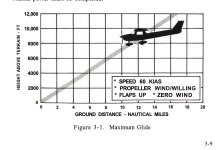
Yes, your final paragraph certainly does make sense. I've demonstrated - to myself - in several airplanes that a stopped prop (FP) glides better than a windmilling prop. That's fairly well known and most folks agree that if there is time and altitude enough then a quick nose-up maneuver to stop the prop is good to do.