Van's Air Force

The definitive Van's Aircraft support community! Buying, building or flying an RV? Join our exclusive family of mentors and enthusiasts!

Torque wrench needed for phillips head screws?

ymc9

Well Known Member
Patron
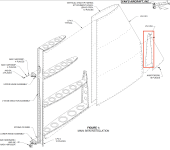
The forward skin is attached to the V stabilizer with AN5 philips head screws. Do you use a torque wrench to fasten them? I tried it a bit but felt it quite difficult to hold a screwdriver bit tightly with a wrench.

Also, if a torque wrench is to be used, what torque value should be used for screws? Is it the same as the same size bolts? AN5 bolt's torque is 100-140, which feels like a lot to me ...

Thanks in advance!
1724709992181.png
 
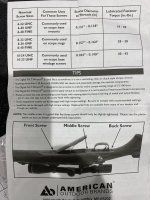
Those aren't AN5 bolts. They are AN507 screws. Those particular ones are -8 machine screws. if you torque those at all, they should only be torqued to about 8-10 inch lbs.
An AN5 bolt is 5/16" diameter.
 
I see; thanks for the education! That explains why they don't look any similar to AN5 bots at all 😂.

I guess instead of worrying about the torque, the main goal should be to screw them in so they sit flush into the dimples, right?
 
I see; thanks for the education! That explains why they don't look any similar to AN5 bots at all 😂.

I guess instead of worrying about the torque, the main goal should be to screw them in so they sit flush into the dimples, right?
I haven't built an RV12, but in the print you show it looks like they just go into a bunch of nutplates to hold the dorsal fairing on. If that's the case, they just need to be snug.
 
I haven't built an RV12, but in the print you show it looks like they just go into a bunch of nutplates to hold the dorsal fairing on. If that's the case, they just need to be snug.
Yes, exactly, on the back side are nutplates. Thank you!
 
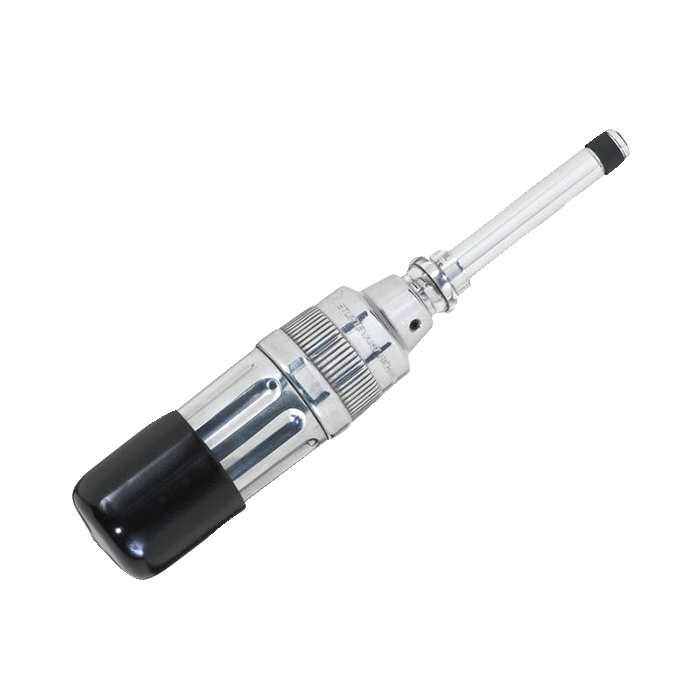
If you really want to go down the rabbit hole, buy a CDI torque screwdriver. It measures down to 5 in/lb. I use it to measure running torque on nylocks.
I saw it and it's gonna be another expensive toy in the toolbox. I'll probably wait until I have to own one 😄.
 
Buy yourself a good phillip head screw driver with a short big grip. Surprisingly Harbor Freight more expensive soft grip screw drivers are very good, almost as good as SnapOn.

For quick screwing jobs, I have a battery power ratchet wrench and a good phillip head socket. This tool makes quick work on the screws. The impact driver screws too fast. The battery power ratchet makes the ideal speed and it doesn't turn the screws too fast to heat them up.
 
You’ll want a torque screwdriver when installing the screws in the rear window. I got the FIRSTINFO H5178 on Amazon. They’re less than $80 now and it worked great for me and two other 12 builders that borrowed it.
 
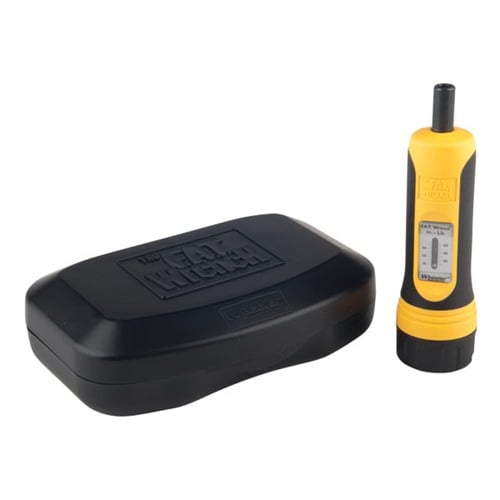
Yep - -FAT torque handle from Wheeler Engineering

More (and less) than you might think. Just a spring, ramp and snaps when reached. I have checked on the bench and matches my little beam OK. From some testing the screws can take way more torque than recommended so with this tool you won't snap any and still be able to remove them.

Search for it and a location/price acceptable, this is just one link.
 
Last edited:
For quick screwing jobs, I have a battery power ratchet wrench and a good phillip head socket. This tool makes quick work on the screws. The impact driver screws too fast. The battery power ratchet makes the ideal speed and it doesn't turn the screws too fast to heat them up.
Be very careful about using even a powered ratchet on screws or bolts. We had a problem for months, with screws and bolts galling up in nutplates during new aircraft builds. After several months of experiments, Process Control finally determined that anything but hand turning speed had the potential for heating the hardware up enough to start melting off or drying out the vendor applied lubrication. They even went down to under 50 rpm on the torque limited screw guns and still had the problem show up. Most of us at work are so used to using speed handles to run fasteners in and out, we have to remind ourselves to slow down the rate we turn them, or they get so hot in just a few turns that threaded area will burn your hand.
 
Whenever I close up a panel I put all my screws in a cup and spray them with either WD-40 or a corrosion compound so they'll come out easier next inspection. I use either a ratcheting screwdriver or a screw gun with adjustable torque settings.
 
I like to run in the screw with a low speed drill/driver to a few turns short of snug. Final tightening by hand. And I’ll second not much torque required for tight. These screws tend to be brittle and easy to snap the heads off you you use too much torque.
 
Very useful...... reasonable price .... amazon.com/DEWALT-DCF680N2-Gyroscopic-Screwdriver-Battery
 
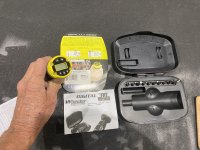
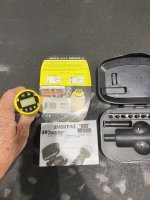
YA, Mine is the Fat Max -
 

Attachments

  • IMG_0861.jpeg
    IMG_0861.jpeg
    7.9 MB · Views: 46
  • IMG_0862.jpeg
    IMG_0862.jpeg
    6.5 MB · Views: 47
  • IMG_0860.jpeg
    IMG_0860.jpeg
    7.3 MB · Views: 45
Alternate method for torquing screws: 1/4"-drive torque wrench set to the proper torque setting. To that, attach a 1/4" socket and insert the appropriate screwdriver bit. Easy peasy lemon squeezy! ;)
 
According to the AN507 specification, page 4, the carbon steel screws, which these are, are heat-treated to at least 50 ksi. This is very low. Be careful not to over-torque them or strip their heads.

Dave
 
I recently bought a torque screwdriver / wrench off eBay which I am using to torque my RV-10 HS and VS bolts and it's great. Well, I am assuming it is accurate but having the digital display and two modes of operation I find it very useful.

<SNIP>

I figured for the cost of the RV-10, it's worth spending $100 on what appears to be a decent wrench. If bolts started coming apart, I'll let you know :)
I have my log, including loads of snapshots and video up on my web site: MyEABuild If I am actively working there is also live streaming.
 
Last edited by a moderator:
I've replaced basically all of my interior screws with comparable ones from McMaster-Carr that have a Torx Plus head, and purchased a couple of corresponding drivers and bits from Wiha. No more stripped screws, and you can be extremely confident now in setting your torque.
 
Please take this constructively, as it is the way my suggestion is intended... but your initial question suggests you didn't know the difference between an AN509 screw and an AN5 bolt, in terms of required torques. That's a pretty basic concept that all builders need to know in order to build safely. If that's any indication of the rest of your aircraft building knowledge, you probably should acquire basic aircraft construction education before you get too far into the build and make a similar mistake that could have serious consequences. I'd recommend looking into the basic EAA build classes that are available. They are relatively inexpensive in the grand scheme of things and will recoup their costs in all the mistakes you won't make because you availed yourself of that education.
Hope this helps and good luck with your build.
 
Please take this constructively, as it is the way my suggestion is intended... but your initial question suggests you didn't know the difference between an AN509 screw and an AN5 bolt, in terms of required torques. That's a pretty basic concept that all builders need to know in order to build safely. If that's any indication of the rest of your aircraft building knowledge, you probably should acquire basic aircraft construction education before you get too far into the build and make a similar mistake that could have serious consequences. I'd recommend looking into the basic EAA build classes that are available. They are relatively inexpensive in the grand scheme of things and will recoup their costs in all the mistakes you won't make because you availed yourself of that education.
Hope this helps and good luck with your build.
Thank you for your direct feedback @alpinelakespilot2000 ! I appreciate it and I'm absolutely taking it positively. Nothing's more important than a safe build.

When I started, I couldn't find an EAA class or other in-person workshops that were reasonably close, so I had to resort to the KAI general information, the EAA sheet metal building basics book, and many many youtube videos. You gave a great reminder that I should search for classes again, so that I can check/fix things I possibly overlooked. It's important resist the urge to build fast 😄.
 
Back
Top