

Van's Air Force
You are using an out of date browser. It may not display this or other websites correctly.
You should upgrade or use an alternative browser.
You should upgrade or use an alternative browser.
Pipe thread sealant for fuel fitting
- Thread starter Plummit
- Start date

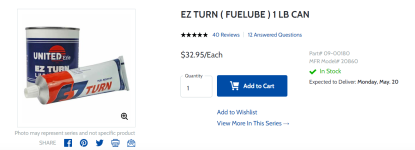
Thanks Walt. Would that be thisSounds like "Fuel Lube", hate that stuff.

From a highly recommended source(https://www.aircraftspecialty.com/), Nothing on flared hose connections, Loctite 567 on NPT adapter threads.
So, I still have a can of this from the 80s. An old timer at that time suggested I buy it and it will last me a life time.
So for all of these years has this been the wrong stuff? Does this even have a place in aviation anymore?
My cupboard is staring to look like the shelves of an automotive store and is becoming more confusing on what does what. 565, 567, 56521, with PTFE etc. Anymore Im not even sure if we are talking about the same stuff or if there is dyslexia going on with the changes in the numbers and Im back googling to see whats what.

Yep, devil spawn lube.
Actually, that quote is attributed to H. L. Menken.I believe it was PT Barnum that said, “No one ever went broke underestimating the intelligence of the American people.”

So, I still have a can of this from the 80s. An old timer at that time suggested I buy it and it will last me a life time.
So for all of these years has this been the wrong stuff? Does this even have a place in aviation anymore?
My cupboard is staring to look like the shelves of an automotive store and is becoming more confusing on what does what. 565, 567, 56521, with PTFE etc. Anymore Im not even sure if we are talking about the same stuff or if there is dyslexia going on with the changes in the numbers and Im back googling to see whats what.
I don't use EZ-Turn, aka Fuel Lube on the airplane. However, I had a persistent drip from the oil filter on my 4x4. No matter how tight, it would drip. I coated the seal with a light layer and bingo. The oil drip is gone. And the filter is easier to remove.
A plumber was replacing a pump on our heating system and couldn't get the gasket to stay in place. I put a light film on both sides of the gasket for him and bingo. Problem solved. And before someone says anything, it's not potable water, so not a problem.
Looks like I added the permatex thread sealant on my fuel lines female thread portion (not the nut), where is says no sealant in pic below. Seems this would be Ok to leave since its downstream from the flare connection but apparently not needed. Appreciate any comments if this is not correct and I need to remove the sealant all my connections
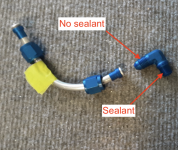
You are correct, that is not the right place for sealant. I'm not sure if the presence of sealant will prevent the B nuts from torquing correctly. If it were me, I'd remove the sealant.

What are you going to torque those B nuts to? Most of the time it is tightenuff.

I was curious if the 567 paste would affect the tightening torque on AN6 flare fitting threads. I took a clean fitting and a new flared tube and tightened it dry by increasing the torque applied with a torque wrench until the nut had turned 1-1/2 flats. I disassembled the fitting and applied a small amount of 567 to the flare threads and retightened the nut with the wrench. The same torque +/- 5 percent tightened the fitting to the same place.
Last edited:

sansoneservices
Well Known Member
Not RTV.. too many people go to rtv for everything. It has it's place but doesn't stand up to fuel or oilNOT RTV
It is unfortunately also easy to underthink it. I believe there was a case of an RV-10 (?) that was lost due to the NPT fuel fittings being sealed with RTV. RTV is generally not fuel-safe, which lead to a gob of it being liberated, lodging in the fuel flow transducer and stopping the engine.
Yeah, I try to get one flat out of them. Most of the time its a guess...What are you going to torque those B nuts to? Most of the time it is tightenuff.

Putting pipe sealer on the AN threads will change the 'torque value". But some of use use the 'flats method' anyway, or the German version of Goodntite.You are correct, that is not the right place for sealant. I'm not sure if the presence of sealant will prevent the B nuts from torquing correctly. If it were me, I'd remove the sealant.

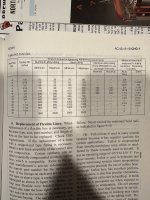
Per Van's website. Shows both torque in inch pounds and using flat method. https://www.vansaircraft.com/wp-content/uploads/2019/01/Torque_Spec_Aluminum_Fittings.pdf
BoydBirchler
Well Known Member
PTFE paste ( Teflon paste ). from any hardware store.
