Van's Air Force

The definitive Van's Aircraft support community! Buying, building or flying an RV? Join our exclusive family of mentors and enthusiasts!

Fuel flow indicator reliability problems

I have an RV-8 but this question is probably applicable to any RV with a carburetor. I have been through three floscan 201s in the last 9 months and the problem always happens the same way. When I bought the aircraft, the flowscan 201 worked fine for probably 6-8 months, then it quit working (read zero). I cleaned it out and it worked for a couple of more flights and then quit. I replaced it with an identical unit which worked for about 5 hours and then quit. I cleaned that one out and it worked for a couple of more flights and then quit. I sent that one back to flowscan and they found no problems with it, but sent me a new one anyway. I replaced all of the firewall forward flexible fuel lines in case it was an issue of degrading lines causing debris and I also replaced the fuel filter prior to installing this 3rd unit. This third unit worked great for 2 flights and now it has quit. I am starting to wonder if the design of my fuel system might somehow be jamming these devices up. From the firewall forward my fuel system goes as follows...flexible hose...fuel filter...flexible hose...mechanical fuel pump...flexible hose...flowscan...flexible hose...carburetor. The flowscan is oriented wires up as directed with no sharp bends just before or after the flowscan. My electronic fuel pump is on the cockpit side of the firewall. The flowscan is heat protected and secured in place. The only thing that is not new in this system (firewall forward) is the mechanical fuel pump, but I see no evidence that it is degrading and there is no debris in the carburetor screen. I have worked and reworked the electrical wiring so I am confident it is not a wiring issue plus the fact that every time it fails, when I remove the flowscan it is jammed up but no debris is found. Then I blow some air through it (gently by mouth) to free it up and I hear it turning, and then it works a for flight or two and jams up again. I'm wondering if I should relocate the flowscan to before the mechanical fuel pump, that somehow the pulsing of the mechanical fuel pump might be causing the flowscan to jam up. In essence I'm considering swapping the locations of the fuel filter and the flow scan. Perhaps the flow of the fuel prior to the mechanical fuel pump might be easier on the flowscan unit.
Where are other people putting their fuel flow sensors and fuel filters?
 
Have you considered trying a different brand of fuel flow sensor, like the "red cube?"

I have a red cube in about the same place as you do and it works fine (so far, about 250 hours).
 
As a datapoint I have been running the same FloScan in my carbed RV-6 since 1999 so they are certainly capable of long service. However, my 201B is located in the cabin between the fuel valve and boost pump so it isn't being stressed by the engine compartment environment. I don't know how to explain your unit being "jammed" after a short time in service. Perhaps relocating the FloScan would be a reasonable option to try.
 
I have had three different airplanes with IO-360's and all had Flo Scan fuel flow transducers. I never touched any of them and they all worked perfectly at all times. My impression from what I have read on the Vans Board was that the Red Cubes must be somewhat more fidgety. Not sure what is going on in your situation. Just thought I would back up Sam's good experience with the Flo Scan transducers. Good luck resolving your issue, frustrating I am sure.
 
Have you considered trying a different brand of fuel flow sensor, like the "red cube?"

I have a red cube in about the same place as you do and it works fine (so far, about 250 hours).

Now on my third red cube in under 120 hours TT. IDK what this all means, except that both types appear to lack robustness.

Kinda eye-opening that fuel flow transducer obsolescence adds about $5/hour to the aircraft operating costs so far.
 
Last edited:
My FloScan has worked very well for 12 years. Never a problem.
My question is why and what are you "cleaning out" of the FloScan? Mine is located downstream from my electric fuel pump and filter. Is it possible you have deteriorating rubber hoses downstream from your fuel filter? Rubber hoses have a limited lifespan.
 
To answer a couple of questions posed:

Although I have not seen any debris, I did consider the possibility deteriorating hoses and since I had no idea how old they were, I replaced all of them. The only item downstream of the fuel filter that has not been replaced is the mechanical fuel pump. I suppose another possible culprit could be a deteriorating diaphragm in the mechanical fuel pump but there is no indication of this and there is no debris in the carburetor screen.

When I mentioned "cleaning the flow scan out" or "unjamming it", here is what I mean. I have done it so many times that I can do it with my eyes closed.
I remove it very gently and try to keep it level, because I want see if it is jammed up. Also, if there is any debris I want it to stay there until I have it on the bench. Once on the bench, I blow through it gently by mouth to determine if it is jammed up. If it will spin you can hear the "whirring" sound. But in it the 8-10 times I have done this...with three different Flowscans...it has always not spun until I do some combination of blowing through it backwards or spraying a little WD-40 in it or blowing harder through it to break it loose. I do this over a paper towel to catch any potential debris that might be in it (none found). When the rotating part breaks free, it is obvious. You can hear the spinner whirring and even feel the vibration of the rotating part inside. Then I reinstall and it works great for another few hours and then does the same thing again.
 
Last edited:
With this same problem with three flowscans, I do not think that the flowscan is at fault. I am reduced to guessing and trying things at this point. The next step I am considering is to relocate the flowscan to prior to the mechanical fuel pump. Perhaps (again guessing) that maybe the pulsing of the mechanical fuel pump is beating up the flowscan. It would still be downstream of the electric fuel pump, but this is used much less. This is a pretty easy change to try because I can simply swap out the fuel filter and the flowscan which are about the same size and have the same connections and the wiring will actually be closer to the firewall penetration point. This would also place the fuel filter further downstream than it was, and just prior to the carburetor. Theoretically the flowscan would suffer less pulsing and the fuel filter would be positioned as far downstream as possible to do a better job of catching any debris just prior to the carburetor.

Questions for the masses:

Is there any known issue with putting the fuel filter as the last thing in line prior to the carburetor (other than the last flexible fuel hose segment)?

Where do certified aircraft put the transducer fuel filter?
 
There have been many off-field landings and worse because of seemingly trivial changes in fuel system design, so you might struggle to get anyone to tell you the change you are proposing will not cause trouble without getting their eyes on your installation.

Another question that I don't think came up is how well do you trust your fuel supplier? Could there be something in the fuel that is not being caught by your filter? Or perhaps something in your tanks?
 
Yeah I get it.

I have no reason to think that it is fuel contamination but I will ask others at the airport.

Perhaps a better way to phrase the question. Is anyone putting their fuel filter as the last component in line prior to the carburetor?
 
I'm not advocating this system as the best option but hundreds (thousands?) of RVs have been plumbed this way since, well, a long time ago.

fuel tanks (either of Vans two types of pickups, I have the coarse screens)
fuel valve
Floscan
Facet boost pump
gascolator (filter screen)
engine-driven pump
carb
 
My Red Cube is right before going into the engine fuel pump. But I am having to replace it after about 120 hours. It is mounted on the firewall and maybe too close to the exhaust. I will put a shield over the new one when I install it.


To answer a couple of questions posed:

Although I have not seen any debris, I did consider the possibility deteriorating hoses and since I had no idea how old they were, I replaced all of them. The only item downstream of the fuel filter that has not been replaced is the mechanical fuel pump. I suppose another possible culprit could be a deteriorating diaphragm in the mechanical fuel pump but there is no indication of this and there is no debris in the carburetor screen.

When I mentioned "cleaning the flow scan out" or "unjamming it", here is what I mean. I have done it so many times that I can do it with my eyes closed.
I remove it very gently and try to keep it level, because I want see if it is jammed up. Also, if there is any debris I want it to stay there until I have it on the bench. Once on the bench, I blow through it gently by mouth to determine if it is jammed up. If it will spin you can hear the "whirring" sound. But in it the 8-10 times I have done this...with three different Flowscans...it has always not spun until I do some combination of blowing through it backwards or spraying a little WD-40 in it or blowing harder through it to break it loose. I do this over a paper towel to catch any potential debris that might be in it (none found). When the rotating part breaks free, it is obvious. You can hear the spinner whirring and even feel the vibration of the rotating part inside. Then I reinstall and it works great for another few hours and then does the same thing again.

Yeah I get it.

I have no reason to think that it is fuel contamination but I will ask others at the airport.

Perhaps a better way to phrase the question. Is anyone putting their fuel filter as the last component in line prior to the carburetor?
 
I'm not advocating this system as the best option but hundreds (thousands?) of RVs have been plumbed this way since, well, a long time ago.

fuel tanks (either of Vans two types of pickups, I have the coarse screens)
fuel valve
Floscan
Facet boost pump
gascolator (filter screen)
engine-driven pump
carb

My fuel setup is identical to Sam's. The only issues with the transducer in this location in my experience are that (1) fuel flow reads a couple gph high whenever the boost pump is on and, (2) that the fuel flow indication bounces around a bit+/- 0.1 gph in cruise. Generally very accurate overall, however, when filling up after a long cross country. I've thought about moving it to just before the carb--which supposedly would address the above issues--but haven't felt the need to at least yet.
 
Last edited:
I'm not advocating this system as the best option but hundreds (thousands?) of RVs have been plumbed this way since, well, a long time ago.

fuel tanks (either of Vans two types of pickups, I have the coarse screens)
fuel valve
Floscan
Facet boost pump
gascolator (filter screen)
engine-driven pump
carb

This is exactly the kind of information that I am looking for. Can you tell me why the arrangement I'm considering is less than optimal in your opinion? Thank in advance.
 
This is exactly the kind of information that I am looking for. Can you tell me why the arrangement I'm considering is less than optimal in your opinion? Thank in advance.

It's hard to determine "optimal" because every option has pros and cons, we are dealing with single-points-of-failure in every system. Some will say there needs to be a fine filter before the Facet pump to prevent something from clogging the small orifice in the pump. But the pump has a larger orifice than the screen in a fine filter so the filter might create a stoppage that the pump could accommodate.

Many, many RVs, especially of older vintage have flown reliably with the gascolator being the only filter in the system. But some builders are convinced the gascolator is useless and a needless single point of failure.

At one point I put a filter in each wing root and eliminated the gascolator which may be the most logical system. But I chickened out after a couple of years and went back to the time-proven gascolator so there would be some sort of water trap in the system along with a filter that is very resistant to clogging.

So after considering all the options I decided to stay with the traditional system (see post above) that has faithfully served RVers for several decades. If someone thinks they have a superior system so be it, I'm fine with them doing whatever they wish on their RV......just think it through very carefully and run it past an experienced RVer.

But I think I have very good reasons for my old-school approach in my
RV-6's 24th year of flight. :)

P.S. You haven't told us what kind of fuel filter you are using. Best practice is to not use a filter with a paper element because those can often swell when exposed to water and block fuel flow.
 
Last edited:
Short

I had same problem with mine and found where one of its wires was frayed were it went through floor.
 
My fuel setup is identical to Sam's. The only issues with the transducer in this location in my experience are that (1) fuel flow reads a couple gph high whenever the boost pump is on and, (2) that the fuel flow indication bounces around a bit+/- 0.1 gph in cruise. Generally very accurate overall, however, when filling up after a long cross country. I've thought about moving it to just before the carb--which supposedly would address the above issues--but haven't felt the need to at least yet.

This kind of error/variability defeats the utility of a fuel flow sender/totalizer: my boost pump is on for significant portions of the flight regime, and also off for a time in nearly every flight. If I can't rely on the cube to show me flow at a particular mixture setting, or mpg, or fuel till empty, or fuel used - then it's not worth having in the circuit. In fact. at that point it becomes pure liability.
 
This kind of error/variability defeats the utility of a fuel flow sender/totalizer: my boost pump is on for significant portions of the flight regime, and also off for a time in nearly every flight. If I can't rely on the cube to show me flow at a particular mixture setting, or mpg, or fuel till empty, or fuel used - then it's not worth having in the circuit. In fact. at that point it becomes pure liability.

Hi Bill. I would agree with you:
(1) IF my boost pump was on for a significant period of time. However it's generally on only briefly for take off and landing. I turn it off as soon as I reach 1000AGL and then on as soon as I get back into the pattern . Unless I'm doing a lot of pattern work it doesn't have much affect on the average across the 36-gallon capacity of my tanks.
(2) IF the fuel flow bouncing around a bit +/- 0.1gph impacted my ability to lean to a desired fuel flow. It does not. In economy cruise I set my fuel flow for 7.0gph. At times it reads 6.9, at others 7.1. So long as it averages 7.0 I'm happy with where my red knob is.

My floscan as installed in combination with float senders that read very accurately for me in flight have proven a good setup with the minor caveats noted previously.
 
Last edited:
It's hard to determine "optimal" because every option has pros and cons, we are dealing with single-points-of-failure in every system. Some will say there needs to be a fine filter before the Facet pump to prevent something from clogging the small orifice in the pump. But the pump has a larger orifice than the screen in a fine filter so the filter might create a stoppage that the pump could accommodate.

Many, many RVs, especially of older vintage have flown reliably with the gascolator being the only filter in the system. But some builders are convinced the gascolator is useless and a needless single point of failure.

At one point I put a filter in each wing root and eliminated the gascolator which may be the most logical system. But I chickened out after a couple of years and went back to the time-proven gascolator so there would be some sort of water trap in the system along with a filter that is very resistant to clogging.

So after considering all the options I decided to stay with the traditional system (see post above) that has faithfully served RVers for several decades. If someone thinks they have a superior system so be it, I'm fine with them doing whatever they wish on their RV......just think it through very carefully and run it past an experienced RVer.

But I think I have very good reasons for my old-school approach in my
RV-6's 24th year of flight. :)

P.S. You haven't told us what kind of fuel filter you are using. Best practice is to not use a filter with a paper element because those can often swell when exposed to water and block fuel flow.

I'm using an Earl's in line fuel filter 230206 ERL from Summit Racing. The specs are available on the summit racing website. That's what came on the airplane when I bought it and it is an annual replacement item. It's an 85 micron stainless steel mesh design. I'm open to comments/criticism on this filter choice and/or recommendations on a better, safter type.

Also, there is no gascolator on my aircraft
 
There will never be a consensus on this topic, there are many opinions about how to design a fuel system, some based on good engineering and some downright scary. Fuel starvation is the leading cause of engine stoppage in experimental aircraft. That is why many of us who have served as EAA Technical Counselors are concerned when we see unconventional fuel systems.

The race car filters can be high quality but what happens to your filter if water is introduced? Does the water pass through the filter or impede fuel flow? I don't think the specs on those filters really address that issue since they aren't used as a water trap in automotive applications.

If you want to go "traditional" use a gascolator with no additional filtration since the gascolator has a fine screen. Many, many years of field history has proven this way of doing things in both certificated and experimental aircraft. The rational for the gascolator is that it can trap water which a filter cannot accomplish. But....this will not be a consensus opinion among RVers in spite of field history. Religiously sumping tanks is always good practice and a primary method to prevent water ingestion in carbed and fuel injected engines.
 
Last edited:
There will never be a consensus on this topic, there are many opinions about how to design a fuel system, some based on good engineering and some downright scary. Fuel starvation is the leading cause of engine stoppage in experimental aircraft. That is why many of us who have served as EAA Technical Counselors are concerned when we see unconventional fuel systems.

The race car filters can be high quality but what happens to your filter if water is introduced? Does the water pass through the filter or impede fuel flow? I don't think the specs on those filters really address that issue since they aren't used as a water trap in automotive applications.

If you want to go "traditional" use a gascolator with no additional filtration since the gascolator has a fine screen. Many, many years of field history has proven this way of doing things in both certificated and experimental aircraft. The rational for the gascolator is that it can trap water which a filter cannot accomplish. But....this will not be a consensus opinion among RVers in spite of field history. Religiously sumping tanks is always good practice and a primary method to prevent water ingestion in carbed and fuel injected engines.

I'm with you and I appreciate the straight talk. I didn't build the airplane, so unless I do a complete rebuild on the fuel system, I am stuck with what I have or minor modifications to it. I did check into the design of the automotive fuel filter...it is a screen type and will therefore not clog up if water comes through. But with no gascolator, I have no way to trap water. In three years I have never had more than one drop of water in the sump. And that was one time.
 
To wrap up my red cube issue, I replaced it and the new one works fine. I asked the manufacture if it could be repaired and he said no. He did make a nice offer to replace it as half price and I may do that to have a spare.

Interestingly, when I lightly blew into the entry of the bad unit the fan spun with no restriction so I have no idea why it stopped working. I may take it apart just to see what is inside.
 
To wrap up my red cube issue, I replaced it and the new one works fine. I asked the manufacture if it could be repaired and he said no. He did make a nice offer to replace it as half price and I may do that to have a spare.

Interestingly, when I lightly blew into the entry of the bad unit the fan spun with no restriction so I have no idea why it stopped working. I may take it apart just to see what is inside.
What has been your experience with the new unit?

Did you ever take the faulted one apart?

Thanks,
Mike
 
What has been your experience with the new unit?

Did you ever take the faulted one apart?

Thanks,
Mike
My new unit has worked great. I did not take the old one apart but may give it a try. I am amazed at how accurate the red box is. I am never more than tenth or two off and that could be in how full I fill the tanks.
 
My new unit has worked great. I did not take the old one apart but may give it a try. I am amazed at how accurate the red box is. I am never more than tenth or two off and that could be in how full I fill the tanks.
Our friend Dan Horton did and autopsy on one several years ago. Pretty simple except the wires are TINY and the circuit board, well who knows. Reminds me of the old Mallory Unilite ignition photo cell triggers from the late 70s. Pretty bullet proof.
 
I don't see any bullet holes in mine, Tom, but getting ready to install red cube #4 in under 140 hours.
 
I don't see any bullet holes in mine, Tom, but getting ready to install red cube #4 in under 140 hours.
What do they say about those who keep repeating the same thing expecting a different result? :cool:

Now seriously, have you tried another brand?
 
I don't see any bullet holes in mine, Tom, but getting ready to install red cube #4 in under 140 hours.
I think 1000+ hrs is pretty normal, it would seem you have some inherent installation issue causing your problems.
Have you looked at one of the EI install manuals and followed their advice?
 
I think 1000+ hrs is pretty normal, it would seem you have some inherent installation issue causing your problems.
Have you looked at one of the EI install manuals and followed their advice?
Hi Bill---this has always been a perplexing thing. Some planes experience reading anomalies while others with the same install, dont. We had one that would have repeated crazy reading drop offs at 4000 feet. Anything higher or lower, readings were on the money. Changed units, changed locations, changed plumbing, changed wiring, made no difference. Really weird. My advise to him was to not fly at 4000 ft. That seemed to work. Most of the failures we have heard about were electrical, either the connections to the plane harness, or the wires breaking at the cube body. The shutter wheel/photo cell section hasnt had any failure that I know of, although I probably wouldnt know unless someone was doing a re-location of the transducer. The only one I do know about with a shutter wheel problem wasnt actually a failure of the unit, but a restriction in the fuel flow on the supply inlet, so the shutter wheel wasnt turning. UH, either was the prop. Pretty well documented.
I really dont have an answer and in past discussions with EI, it seems to come back too installs. Now whether these same anomalies happen on certified planes is something I dont know. Might be fun to find out, and IF their life is much longer, we should investigate the differences. IF 100 hours is the life expectancy, then id say a re-design is in order. Comments WELCOME.
Tom
 
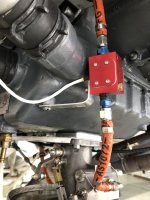
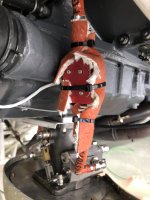
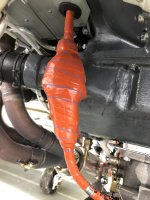
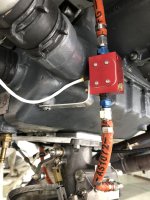
I've posted these before, I think. The bracket securing the cube body to the oil sump bolt was removed after a failure or two, to reduce vibration. The unit now dangles suspended on the fuel hoses between the servo and spider. Average life span is working out to 40 hours per unit. If this continues I'll have to consider a top mount from Tom with the spider bracket kit he offers. This current mounting seems to comport with all info I've seen from E. I.
IMG_3570.JPGIMG_3571.JPGIMG_3574.JPG
 

Attachments

  • IMG_3570.JPG
    IMG_3570.JPG
    1.6 MB · Views: 76
Looks like a lot of thread sealant, any chance some is getting into the unit?
I’ve installed lots of these, failures are rare.
 
Thanks for the suggestion, Walt. Good eye. However, I am meticulous about keeping the Permatex at least one thread back from the end of the nipple when slathering it on, never applying it to the female threads in the cube, and never to back out the gooped-up fitting during fit-up. So if that's an issue (never apparent when I removed the fittings from the defunct cubes) I can't really see how it might happen.
 
Thanks for the suggestion, Walt. Good eye. However, I am meticulous about keeping the Permatex at least one thread back from the end of the nipple when slathering it on, never applying it to the female threads in the cube, and never to back out the gooped-up fitting during fit-up. So if that's an issue (never apparent when I removed the fittings from the defunct cubes) I can't really see how it might happen.
Maybe next time a dab of 567 instead of permatex goop.
 
I've posted these before, I think. The bracket securing the cube body to the oil sump bolt was removed after a failure or two, to reduce vibration. The unit now dangles suspended on the fuel hoses between the servo and spider. Average life span is working out to 40 hours per unit. If this continues I'll have to consider a top mount from Tom with the spider bracket kit he offers. This current mounting seems to comport with all info I've seen from E. I.
View attachment 77944View attachment 77945View attachment 77946
It looks like the wires really should be strain relieved to the unit (with a small service loop). I suspect vibration is damaging the wires where they exit the red cube.

Skylor
 
It looks like the wires really should be strain relieved to the unit (with a small service loop). I suspect vibration is damaging the wires where they exit the red cube.

Skylor
Could be. I wonder if there is a known procedure for a multimeter continuity check on the wiring integrity. The wires seem well-supported with a shrink tube where they exit the cube, and I anchor them to the alternator B-lead cable with a cushioned zip tie about 6" from there with plenty of slack. It seems to me if I strain-relief-anchor the wires to the unit itself that just creates a new stress point where this anchoring takes place, but maybe I could do a better job with my stress relief than the factory does with theirs. (?)

There's no conceivable way the cube manufacturers are not aware of hundreds of premature failures in the field. One wonders why a remedy has not been engineered into the (re-)design... unless one assumes a shady motive of planned obsolescence is in play. As simple a design as this is (one moving part, electronics sipping electrons from carefully engineered avionics packages with well-regulated Vcc supplies) the only excusable failure mode in my opinion is trash being entrained in the rotor from dirty fuel or people using PTFE tape or dope where they should never be used. The non-moving parts can be (and based on DanH's autopsy showing potting would appear to have been) ruggedized to survive their intended operating environment.
 
Last edited:
Maybe next time a dab of 567 instead of permatex goop.
The Floscan 201 instructions state absolutely no sealant of any type on the threads. I know it isn’t EI, but it’s the same technology, tiny spinning wheel.
Steel fittings into the aluminum body and they don’t leak without sealant.
I would ask EI.
Sealant can migrate and it wouldn’t take much to foul the unit.
 
The Floscan 201 instructions state absolutely no sealant of any type on the threads. I know it isn’t EI, but it’s the same technology, tiny spinning wheel.
Steel fittings into the aluminum body and they don’t leak without sealant.
I would ask EI.
Sealant can migrate and it wouldn’t take much to foul the unit.
From the EI install instructions, rev F 07/13, "'WARNING: The Inlet and Outlet ports are NPT threads. NPT threads are NOT self-sealing, thread sealant must
be used. If thread sealant is not used, NPT threads WILL leak." The FloScan ports are 1/4 NPT, but the body around them is not substancial, like the FT60. You CAN crack the port just when you think its tight enough, 15 ft/lbs. Ask me how I know.
Again, I'd like to know what the failure rate is on Certified aircraft with the FT60 installed.

Tom
 
From the EI install instructions, rev F 07/13, "'WARNING: The Inlet and Outlet ports are NPT threads. NPT threads are NOT self-sealing, thread sealant must
be used. If thread sealant is not used, NPT threads WILL leak." The FloScan ports are 1/4 NPT, but the body around them is not substancial, like the FT60. You CAN crack the port just when you think its tight enough, 15 ft/lbs. Ask me how I know.
Again, I'd like to know what the failure rate is on Certified aircraft with the FT60 installed.

Tom
Try calling EI and talk to Dave, he’s a straight up guy and has been there forever. He does post on the forum occasionally.
 
From the EI install instructions, rev F 07/13, "'WARNING: The Inlet and Outlet ports are NPT threads. NPT threads are NOT self-sealing, thread sealant must
be used. If thread sealant is not used, NPT threads WILL leak." The FloScan ports are 1/4 NPT, but the body around them is not substancial, like the FT60. You CAN crack the port just when you think its tight enough, 15 ft/lbs. Ask me how I know.
Again, I'd like to know what the failure rate is on Certified aircraft with the FT60 installed.

Tom
Thx Tom -
I just went online and read the instructions for th FS201. No mentioned of using sealant or not. Weird.
I didn’t make it up!
 
Thx Tom -
I just went online and read the instructions for th FS201. No mentioned of using sealant or not. Weird.
I didn’t make it up!
Certainly you didnt make that up! As far back as I can remember, its been established proceedure to seal an NPT thread. I think I'd like to see the FT60 with ORB ports. Surely would make indexing fittings easier. Since its been shown that angled fittings really dont affect things, having an ORB fitting would solve the indexing, and torque issues. Now orings 'might' become an issue like was shown with the new fuels. Thats easily fixed.
 
Certainly you didnt make that up! As far back as I can remember, its been established proceedure to seal an NPT thread. I think I'd like to see the FT60 with ORB ports. Surely would make indexing fittings easier. Since its been shown that angled fittings really dont affect things, having an ORB fitting would solve the indexing, and torque issues. Now orings 'might' become an issue like was shown with the new fuels. Thats easily fixed.
For what it is worth, mine have never leaked without sealant. From the original install through the Teflon hose change out you helped me with. Not sure why, perhaps there is something different about the threads in the body of the floscan or steel fittings in aluminum, or…luck.
I’m sure you see a lot more of them than I do.
 
I want to try some additional troubleshooting on my current unit before replacing for the 4th time. Is it ok to blow into these things to simulate fuel flow through the cube? Not talking compressed air, just lung pressure. Where mine is plumbed in, it's not seeing much fuel flow when there's no air movement through the injector servo.
 
I want to try some additional troubleshooting on my current unit before replacing for the 4th time. Is it ok to blow into these things to simulate fuel flow through the cube? Not talking compressed air, just lung pressure. Where mine is plumbed in, it's not seeing much fuel flow when there's no air movement through the injector servo.
Typical fuel flow with mixture/throttle full forward is approximately 4gal/hr. Just disconnect the line from the divider and stick in a bucket and run the electric pump. But you could also blow into it without harming it.
 
Back
Top