Van's Air Force

The definitive Van's Aircraft support community! Buying, building or flying an RV? Join our exclusive family of mentors and enthusiasts!

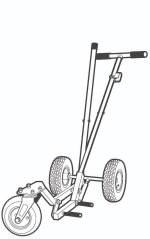
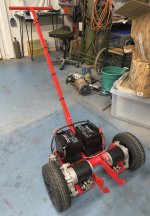
With Wx what it is , we may as well discuss DIY Tugs !

DennisRhodes

Well Known Member
Friend
Patron
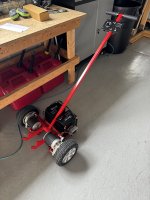
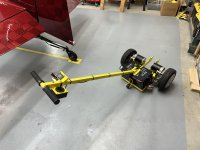
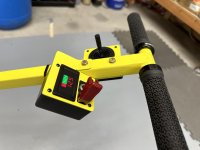
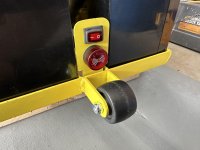
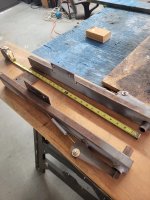
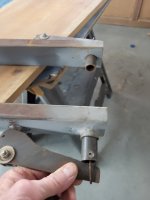
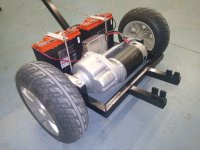
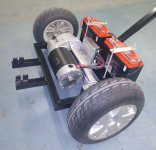
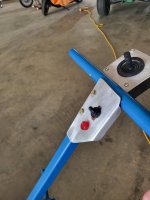
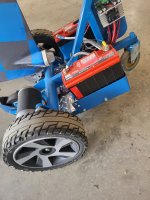
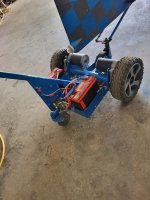
Got the plans and some lazer cut plate from DanH along with some knowledge and built the RV two motor Jazzy 24 volt TUG. Overall design was well thought thru as one would expect and programming and other instructions were all very detailed and straight forward. Came together in about 2 months and added several custom items. I had to shift the T handle to the rear to clear my RV9 tail strobe. Added a lower position handle to aid in removing the tug from the tail wheel. Relocated the controller to a plate under handle bar and modified the tugs "Tailwheel" .. I did use DanH s 14 inch main frame spacing to accommodate the 14s wider tailwheel. Used two prior service 680 batteries and well satisfied with towing abilities on hard surface but struggles some for traction on soft surfaces. Nice little Tug Thanks DanH for the design. 20260115_160234.jpg20260115_155539.jpg
 

Attachments

  • 20260115_155505.jpg
    20260115_155505.jpg
    1.6 MB · Views: 260
  • 20260115_155526.jpg
    20260115_155526.jpg
    1.5 MB · Views: 306
Love mine too. It was a fun project and works great.
 

Attachments

  • Tug 001.jpg
    Tug 001.jpg
    888.6 KB · Views: 177
  • Tug 002.jpg
    Tug 002.jpg
    696 KB · Views: 171
  • Tug 003.jpg
    Tug 003.jpg
    1 MB · Views: 173
Recently did a re-power of an older Dragger brand nosewheel tug. The original had a solid axle (i.e. no differential), so it's hard to turn, plus it's single speed...jerky start when loaded and very slow when empty. It could not be dragged around the hangar comfortably when power off. The transaxle has a differential...no problem for a hard surface, but it may spin one side on grass or ice. Flip side, it's easy to steer, and I use a contactor in the motor lead so it doesn't try to be a generator when you drag it around.

The nosewheel capture is interesting. There is no attempt to lift the tire, although you can bear down on the handle to increase traction. The tire simply rides between side and fore/aft rollers.

I installed a somewhat larger motor (800W) than the one used on the simple tug design published by Reinhardt Metz here and in Kitplanes. An experiment really, as I wanted to explore what was necessary to move some of the heavier airplanes (Bonanza, Seneca, etc) based here at 08A.

What I learned is that the cheap speed controllers on Amazon don't seem to handle the initial amperage inrush of the big motor when starting a heavy airplane from rest (the test subject was an A36, slightly uphill in an out of a hangar). It's possible I simply got a badly assembled controller, but I think they're just lying about short term 100 amp capacity. And I could be entirely wrong in my opinion. There is some good discussion in this thread.

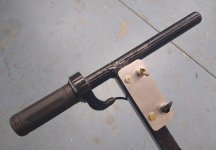
Anyway, I sidestepped the issue by installing a Dimension Engineering SyRen 50. Good quality, programmable, with regen, and built in 100 amp overcurrent protection. The only downside is it won't accept input from a common Hall effect throttle, like the scooter thumb throttle in the photo below. It requires a resistive pot, and the only suitable one I could locate was a Magura 317 twist grip. Works great however; smooth from zero speed to a fast trot.

If you don't mind the additional expense of the SyRen controller and Magura twist grip, it's a good upgrade. Note I use a different Dimension controller for the dual motor tug, and I've zero failure reports.

The dual motor tug remains my personal favorite. I may yet try to integrate a dual system into a nosewheel tug.
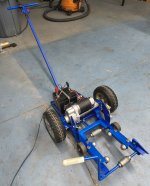
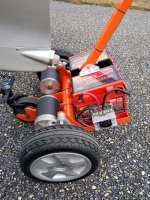
IMG_20250930_093039000_HDR 800w.jpg

Towbot II.jpg
 
Last edited:
So how does one get the details of one such tow?
I am interested in knowing more about this and if feasible build one for my RV-10.
 
So how does one get the details of one such tow?
I am interested in knowing more about this and if feasible build one for my RV-10.
Someone put together a Kitplanes article. I may have it saved.
A few of us modified electric mobility chairs. If you go that route, look for a Jazzy Elite HD. It's the highest load rated chair. It's a tank.
 
The dual motor tug remains my personal favorite. I may yet try to integrate a dual system into a nosewheel tug.



DanH, I have a nose drag DIY assembly I made for a 172 without a front wheel pant. Used the nubs on the strut like a hand tug.... I think the two motor Jazzy tug would pull that on hard surface without problem although a heavier load. The two motor diff would allow L/R steering for the nose wheel. My first thought would be to weld or bolt this to the 1 1/2 pipe. You may have this assembly if you want to spent any time with a nose wheel style. Although most 10s have wheel pants.....not sure the axel nut is accessable.
 

Attachments

  • 20260126_143308.jpg
    20260126_143308.jpg
    2 MB · Views: 67
  • 20260126_143422.jpg
    20260126_143422.jpg
    1.6 MB · Views: 68
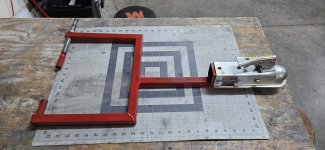
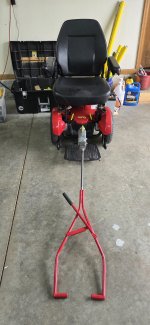
For what it's worth, this is my latest nose wheel tug design.
This one (top photo) has a more positive attachment, albeit a bit more effort to install.
The first one (bottom photo) was too long and utilized the Bogi bar attachment.
The chair attachment is just a 1-7/8 ball on a square post bolted to the existing chair foot rest attachment.

Note: if you do this, remove the chair assembly and foot-rest. Excess weight. Drive it standing behind.

Note: Programming is done at the joystick with a special box. Don't bother asking medical suppliers. They either know nothing, want to charge a fortune, or are totally ignorant. The box allows some fine tuning of settings and helps a little. It's still a work in progress. Every joystick requires a different programmer. Ask me first.

20251212_124706.jpg20250913_152552.jpg
 
For what it's worth, this is my latest nose wheel tug design.
This one (top photo) has a more positive attachment, albeit a bit more effort to install.
The first one (bottom photo) was too long and utilized the Bogi bar attachment.
The chair attachment is just a 1-7/8 ball on a square post bolted to the existing chair foot rest attachment.

Note: if you do this, remove the chair assembly and foot-rest. Excess weight. Drive it standing behind.

Note: Programming is done at the joystick with a special box. Don't bother asking medical suppliers. They either know nothing, want to charge a fortune, or are totally ignorant. The box allows some fine tuning of settings and helps a little. It's still a work in progress. Every joystick requires a different programmer. Ask me first.

View attachment 108238View attachment 108239
Yea, that's the advise I got on the re program of the Jazzy controller. Looks like you pretty much used the "whole" Jazzy!! Nothing wasted there!!
 
Yea, that's the advise I got on the re program of the Jazzy controller. Looks like you pretty much used the "whole" Jazzy!! Nothing wasted there!!
I plan to remove the seat and foot rest to shed weight. The seatbis really heavy. I do get some strange looks moving my airplane.
 
Note: Programming is done at the joystick with a special box. Don't bother asking medical suppliers. They either know nothing, want to charge a fortune, or are totally ignorant.

It's a lot like trying to use an OEM engine controller vs just chucking it and installing an SDS system.
Lots of motor controllers out there for the robot market, etc. Not much virtue in trying to fiddle the Jazzy software.
 
It's a lot like trying to use an OEM engine controller vs just chucking it and installing an SDS system.
Lots of motor controllers out there for the robot market, etc. Not much virtue in trying to fiddle the Jazzy software.
It was cheap. $200 for the chair with four brand new batteries. Tough project to pass up.
 
It was cheap. $200 for the chair with four brand new batteries. Tough project to pass up.

Oh yeah, no doubt. I was just commenting about the futility of reprogramming the original Jazzy controller. Can't blame them for being protective about the software, given that surely someone would think it was funny to hack Grandma's wheelchair...
 
So how does one get the details of one such tow?
I am interested in knowing more about this and if feasible build one for my RV-10.
Ditto the question above. Would like to build one as well. Much appreciated if someone can drum up the plans or kitplanes article.
 
It was cheap. $200 for the chair with four brand new batteries. Tough project to pass up.
Think i paid $150 on ebay for the two motors, wheels and gear box. But seems to be a lot of those parts available. I think maybe with good insurance, lot of those chairs are replaced maybe for just depleted batteries or maybe electronics.
 
Oh yeah, no doubt. I was just commenting about the futility of reprogramming the original Jazzy controller. Can't blame them for being protective about the software, given that surely someone would think it was funny to hack Grandma's wheelchair...
"Futility" is kind. I called the company. Gotta call the sales company. OK. Called them. It can't be done. Bull crap. That's when I got hot. I did finally find one willing to do it if I brought it in. Every time. For a fee! That led me down the programmer rabbit hole on the Internet and finally found the correct box. Bought one on Ebay. Thinking about startling a business for grandma's and grandpa's that want performance. Maybe start a Street Racing League!
 
Ditto the question above. Would like to build one as well. Much appreciated if someone can drum up the plans or kitplanes article.

Start with nosewheel or tailwheel.

Mr. Metz, the author of the Kitplanes article, is a member here. His design was for a nosewheel. You'll need to contact him, or hack it from the Kitplanes website.

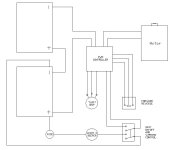
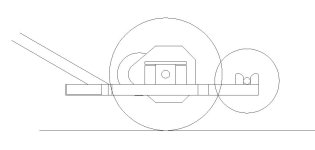
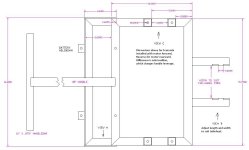
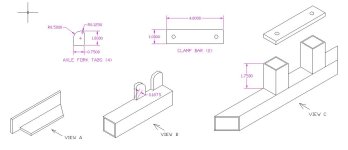
I've been distributing drawings for a DIY tailwheel tug intended to be simple as dirt. Modest transaxle, Chinese controller, Hall effect scooter throttle, and two batteries. I'll attach the drawings here. Feel free to modify as desired.

As noted previously, I think the dual motor tug (orange, post #5) is superior, but it is more complex. I can do another run of laser cut parts if you want to build one.
 

Attachments

  • Wire Diagram.jpg
    Wire Diagram.jpg
    26.7 KB · Views: 159
  • Simple Tug Side Planform1.jpg
    Simple Tug Side Planform1.jpg
    27 KB · Views: 152
  • Simple Tug Plan1.jpg
    Simple Tug Plan1.jpg
    52.6 KB · Views: 131
  • Simple Tug Detail1.jpg
    Simple Tug Detail1.jpg
    50 KB · Views: 154
  • Right.jpg
    Right.jpg
    114.1 KB · Views: 159
  • Left.jpg
    Left.jpg
    131.7 KB · Views: 154
  • Control.jpg
    Control.jpg
    76.1 KB · Views: 167
Start with nosewheel or tailwheel.

Mr. Metz, the author of the Kitplanes article, is a member here. His design was for a nosewheel. You'll need to contact him, or hack it from the Kitplanes website.

I've been distributing drawings for a DIY tailwheel tug intended to be simple as dirt. Modest transaxle, Chinese controller, Hall effect scooter throttle, and two batteries. I'll attach the drawings here. Feel free to modify as desired.

As noted previously, I think the dual motor tug (orange, post #5) is superior, but it is more complex. I can do another run of laser cut parts if you want to build one.
Dan
Which parts do you laser cut? I am just starting to build mine and so far my welding sucks.:mad: I also wondered if a simple U bolt could be used to mount the transaxle to the frame versus the vertical weldments you have on the drawings?
Figs
 
Start with nosewheel or tailwheel.

Mr. Metz, the author of the Kitplanes article, is a member here. His design was for a nosewheel. You'll need to contact him, or hack it from the Kitplanes website.

I've been distributing drawings for a DIY tailwheel tug intended to be simple as dirt. Modest transaxle, Chinese controller, Hall effect scooter throttle, and two batteries. I'll attach the drawings here. Feel free to modify as desired.

As noted previously, I think the dual motor tug (orange, post #5) is superior, but it is more complex. I can do another run of laser cut parts if you want to build one.
Thank you Dan. I may take you up on the laser parts and I'd pay $$ to make it worth your time and effort. I just did a search on tugs and there are a lot of great ideas.
 
Dan
Which parts do you laser cut? I am just starting to build mine and so far my welding sucks.:mad: I also wondered if a simple U bolt could be used to mount the transaxle to the frame versus the vertical weldments you have on the drawings?
Figs

No laser parts for the simple transaxle tug. The whole idea was a simple frame anyone could build with a hacksaw. Lots of possibilities for design mods; I seem to recall Tractor Supply having square u-bolts. And yep, learning to weld takes time, and it's a perishable skill.

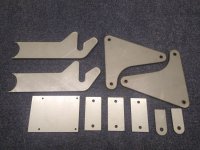
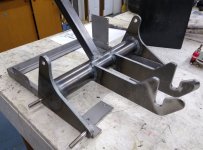
The laser parts are for the dual motor tug, as some of them would be no great fun to make with a file. Builders add 1" angle, 1" square tube, a length of Schedule 40 pipe, and a foot of 7/8" tube....common local stuff.

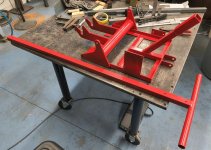
Laser Cut Tug Parts.jpg

Welding.jpg

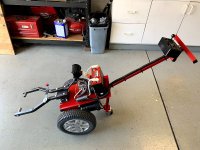
I think one of the best nosewheel tugs may be this one from Jason, posted some time ago. It uses the motors, gearboxes and wheels from the Jazzy tug model Larry purchased, as seen above. The fork is simple, and the controller appears to be a DE Sabertooth 60. There are good ideas here even if you don't copy the exact design.

Jason R.jpg
 
No laser parts for the simple transaxle tug. The whole idea was a simple frame anyone could build with a hacksaw. Lots of possibilities for design mods; I seem to recall Tractor Supply having square u-bolts. And yep, learning to weld takes time, and it's a perishable skill.

The laser parts are for the dual motor tug, as some of them would be no great fun to make with a file. Builders add 1" angle, 1" square tube, a length of Schedule 40 pipe, and a foot of 7/8" tube....common local stuff.

View attachment 108308

View attachment 108309

I think one of the best nosewheel tugs may be this one from Jason, posted some time ago. It uses the motors, gearboxes and wheels from the Jazzy tug model Larry purchased, as seen above. The fork is simple, and the controller appears to be a DE Sabertooth 60. There are good ideas here even if you don't copy the exact design.

So, with it welded up, do you just transfer the Jazzy HD motors, controller, and joystick from your donor chair, hook up the batteries and go?
 
So, with it welded up, do you just transfer the Jazzy HD motors, controller, and joystick from your donor chair, hook up the batteries and go?
Well, motors wheels and batteries maybe a yes, but not aware of anyone using the Jazzy controller and joy stick. One might find the Jazzy controller a bit to fast for Left and Right and maybe for Reverse. I'm using the Dimension Engineering controller as per DanH recommendation and I have slowed the L/R down twice and believe its now at 30%. The Dimesion Eng Sabertooth 60 controller allows easy adjustment for swapping L/R Fwd/Rev and allows joy Stick position and % power to be custom set. but a resistive analog pot style JS must be used for the Dimension Eng controller.....
Sooo answer to your question is yes on some things. But remember it is a DIY project.
 
Last edited:
As noted previously, I think the dual motor tug (orange, post #5) is superior, but it is more complex. I can do another run of laser cut parts if you want to build one.
If you're going to do a run, please count me in!
 
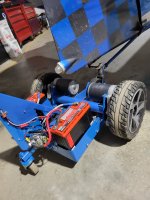
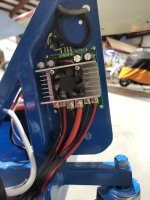
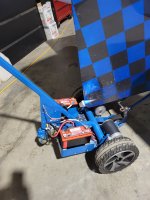
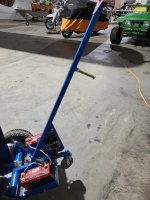
Here s a Jazzy 2 motor DanH parts DIY I put together in Jan. Most all tug ops are on concrete and it performs well. You will still need some steel material that can be purchased locally but the laser parts make it a much easier DIY. Plus you will need some knowledge frm DanH along the way.20260331_150945.jpg20260331_150953.jpg20260331_150924.jpg
 
Here s a Jazzy 2 motor DanH parts DIY I put together in Jan. Most all tug ops are on concrete and it performs well. You will still need some steel material that can be purchased locally but the laser parts make it a much easier DIY. Plus you will need some knowledge frm DanH along the way.View attachment 113828View attachment 113829View attachment 113830
Nice work Dennis! Hey I've got the 9 dragger too with a Bell Fork. What did you have to modify, if anything, for the 9?
 
Has anyone got a good design for a nose tug? I've tried several designs all utilizing the nose wheel studs. They all have the same problem. Steering is a pain. I see Jason's Tug posted above by Dan. I built one variant similar using a fork. It's a pain to steer. I can push the airplane in the hangar easier.
What (I think) is needed is a dolly so the tug doesn't have to steer and push. Problem is how to get the nose on a ddolly.
I can weld. Not like a pro, but good enough for a tug. I also have a plasma cutter.
Any ideas welcome.
 
Has anyone got a good design for a nose tug? I've tried several designs all utilizing the nose wheel studs. They all have the same problem. Steering is a pain. I see Jason's Tug posted above by Dan. I built one variant similar using a fork. It's a pain to steer. I can push the airplane in the hangar easier.
What (I think) is needed is a dolly so the tug doesn't have to steer and push. Problem is how to get the nose on a ddolly.
I can weld. Not like a pro, but good enough for a tug. I also have a plasma cutter.
Any ideas welcome.
What Best Tugs does on their conventional two-wheel tugs (Alpha 2 and 3) is provide for the arms to pivot in front of the wheels. It's a little tricky to master at first but is very effective for pushing and pulling a tricycle gear airplane. Depending on your engineering skills, you could duplicate that in a two-wheel tug that you build. It eliminates the need to lift the whole tug to swivel it in order to get it to pivot an airplane with a free-castering nose wheel. Here's a video of how that works. The steering intro starts at 3:15. It vastly simplifies steering the airplane while pulling and especially pushing. I like the two-wheel tug concept with arms in front of the wheels because it allows you to push down on the handle to gain extra traction...important for moving the airplane over ice and snow in front of the hangar.

 
Interesting. Pushing that castoring nose wheel is definately the problem. I can pull the airplane anywhere. Funny. I can back an 18 wheeler and parallel parked a 40' bus every evening in pitch black night, but I can't push my airplane with a tug!
 
One other design idea to consider since.you probably get some winter where you live. Solid rubber tires. That affords you the ability to drive some screws into the tires to act as studs and afford extra traction. Those screws plus the ability to put weight on the wheels lets me move my airplane easily even on the glare ice that forms in front of my hangar as the snow melts off the roof.
 
Nice work Dennis! Hey I've got the 9 dragger too with a Bell Fork. What did you have to modify, if anything, for the 9?
Don t know about others but my 9 Seem to NOT have enough safe space between the rudder (ie strobe light ) and the tug handle. It appeared to me to be a damaged ruder in the making. I exercised my DIY rights and moved the tug handle attach point to the rear about 6 to 8 inches. That did require additional welding by extending a horizontal rectangular tube to the main frame round " axle" to get that extension. If I built again I would just weld on a 1x1 sq tube to the axle and horizontally extend it all way out to and install the tail wheel on that. The 1x1 truss support would probably still be needed as shown .

Also , I am curious as to why no one has spotted the " what appears to be" an exposed wire going into the controller. Looks like its on the black or ground wire. I just saw that re-looking at the picture #2. Looks like it may have got hot from maybe welding on the modified tail wheel assy. . I will take a look at this this afternoon!
 
Last edited:
Don t know about others but my 9 Seem to NOT have enough safe space between the rudder (ie strobe light ) and the tug handle. It appeared to me to be a damaged ruder in the making. I exercised my DIY rights and moved the tug handle attach point to the rear about 6 to 8 inches.

Dennis is entirely correct. Note the frame design is intended to be flexible. For example, I have a few 14's and at least one AirCam with 8" tailwheels, so the forks are rotated on the main spine tube so the hooks are 1" higher. A wide tailwheel fork requires wider hook spacing, which may require more spine tube length. Aircraft with large rudders may need the handle located further rearward. The battery tray may be resized.

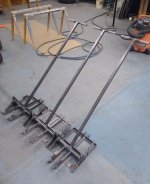
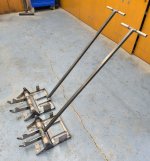
Point is, the base design will accommodate almost anything just by shifting things around as needed. Here are just four possible variations:

Frames.jpg

IMG_20250301_113742940_HDR 600w.jpg
 
Interesting. Pushing that castoring nose wheel is definately the problem. I can pull the airplane anywhere. Funny. I can back an 18 wheeler and parallel parked a 40' bus every evening in pitch black night, but I can't push my airplane with a tug!
Try turning around so your brain thinks your backing it in. :ROFLMAO:

Could you rig up a fork that straddles the tire and lifts it just off the ground? I've seen some designs that do that with the tailwheel. Or maybe a pan that shoves under the tire & lifts it like the AC Air tugs do?

1775067439249.png 1775067498408.png
 
Try turning around so your brain thinks your backing it in. :ROFLMAO:

Could you rig up a fork that straddles the tire and lifts it just off the ground? I've seen some designs that do that with the tailwheel. Or maybe a pan that shoves under the tire & lifts it like the AC Air tugs do?
My brain has enough trouble going forward these days!

That's the plan for Ver 3.0. I'm trying to figure out how to move the fork or pan from on the ground to clear of ground. Nose weight is 300lbs.
 
Just finished this one for James Clark. Lengthened spine tube (for wider fork width), handle relocated further rearward (for clearance on big rudder models), and removable handle (for easier transport).

It's easily customized. Variations are now hauling RVs, a C-180, even an AirCam.

The MightyMax batteries are a PC-925 size, Amazon, $60 each, a good deal.

Finished.jpg
Relocated handle with socket.jpg
 
Just finished this one for James Clark. Lengthened spine tube (for wider fork width), handle relocated further rearward (for clearance on big rudder models), and removable handle (for easier transport).

It's easily customized. Variations are now hauling RVs, a C-180, even an AirCam.

The MightyMax batteries are a PC-925 size, Amazon, $60 each, a good deal.

View attachment 115695
View attachment 115697
@DanH, I'm finally getting the point of starting this project. I just need to order the batteries and get some angle stock for the battery tray. With that in mind, two questions:
  1. What Mighty Max battery did you order?
  2. What size fuse do you recommend for the circuit between the battery contactor and the battery?
Thanks for offering this to the VAF community. Looking forward to making this work.
 
Back
Top