
Hi - I am cogitating on how best to solve the "hot tunnel" issue on my new RV-10. I saw in several "hot tunnel" threads discussion regarding replacing the stock Van's RV-10 aluminum heat box with Aircraft Spruce stainless steel units. What is the advantage of replacing the stock units with Spruce's product?

Van's Air Force
You are using an out of date browser. It may not display this or other websites correctly.
You should upgrade or use an alternative browser.
You should upgrade or use an alternative browser.
Why Replace Stock RV-10 Heat Box with Stainless Steel
- Thread starter tklammer
- Start date

If you have a serious engine fire, aluminum melts. If the Al box melts, you now have a (or 2) serious holes in the firewall. This is all independent of the hot tunnel issues, which seem to have been fixed with slightly longer exhaust pipes, and/or insulation between the heat box and firewall, …

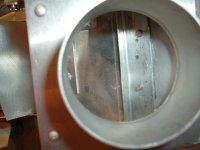

People replace the aluminum box for SS as a fire mitigation, not for hot tunnel.
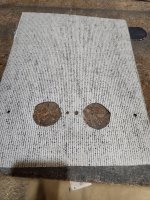
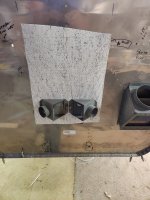
Many threads on right and wrong way to isolate from the firewall. I’m in the Dan Horton camp of 1/8” FiberFrax topped with 0.010” SS foil (the foil it added to mechanically protect the fragile FiberFrax).
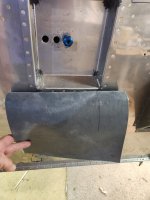
I do add a cabin heat deflector to both insulate the heat boxes from the firewall, and to deflect the dumped heat when the boxes are shut down to the cowl exit instead of bouncing back to the engine fuel pump. I use KoolMat for this.
I suspect most issues with a hot tunnel are caused by the heat conducted to the surrounding firewall (and tunnel) from the heat boxes.
Note, photos taken during fabrication and before the Firewall FiberFrax treatment.
Carl
Many threads on right and wrong way to isolate from the firewall. I’m in the Dan Horton camp of 1/8” FiberFrax topped with 0.010” SS foil (the foil it added to mechanically protect the fragile FiberFrax).
I do add a cabin heat deflector to both insulate the heat boxes from the firewall, and to deflect the dumped heat when the boxes are shut down to the cowl exit instead of bouncing back to the engine fuel pump. I use KoolMat for this.
I suspect most issues with a hot tunnel are caused by the heat conducted to the surrounding firewall (and tunnel) from the heat boxes.
Note, photos taken during fabrication and before the Firewall FiberFrax treatment.
Carl
Attachments
Spruce has changed the stainless steel product recently, so I can only speak for the one they sold a few years ago. One of the advantages is that it has a lip that prevents air from blowing the damper slightly open. If the cable or servo isn't pressing the door shut well enough, hot air can get in the stock valve.
+1Spruce has changed the stainless steel product recently, so I can only speak for the one they sold a few years ago. One of the advantages is that it has a lip that prevents air from blowing the damper slightly open. If the cable or servo isn't pressing the door shut well enough, hot air can get in the stock valve.
i did std on my 6 and the SS on my 10. The SS design seals much better in my opinion. I had to do a lot of tweaking on the vans box to get it to fully seal.

It is interesting to note that some people have never had an issue with hot tunnel and others fight with it continuously.People replace the aluminum box for SS as a fire mitigation, not for hot tunnel.
Many threads on right and wrong way to isolate from the firewall. I’m in the Dan Horton camp of 1/8” FiberFrax topped with 0.010” SS foil (the foil it added to mechanically protect the fragile FiberFrax).
I do add a cabin heat deflector to both insulate the heat boxes from the firewall, and to deflect the dumped heat when the boxes are shut down to the cowl exit instead of bouncing back to the engine fuel pump. I use KoolMat for this.
I suspect most issues with a hot tunnel are caused by the heat conducted to the surrounding firewall (and tunnel) from the heat boxes.
Note, photos taken during fabrication and before the Firewall FiberFrax treatment.
Carl
It would be interesting to know the common factor. I am curious if it could have to do with the exhaust that was used. I have the Custom Aircraft option. It is basically headers with a collector on each side. The heat muffs are small and are located on the #1 and #2 exhaust pipe sections. It produces sufficient heat. I have never had a problem with tunnel heat. The Vetterman system uses a larger muffler and heat muff. I am guessing it produces quite a bit more heat and it is closer to the firewall.
Obviously, there are many more factor to consider but I'm curious if this could be a large contributor to hot tunnel.
