Van's Air Force

The definitive Van's Aircraft support community! Buying, building or flying an RV? Join our exclusive family of mentors and enthusiasts!

Where do you pickup MP?

Foghorn

Well Known Member
Patron
I have SDSEFI but this is a manifold pickup question for all engine setups.

Where are you getting your MP pressure from? Do you have more than one pickup point?

Example: intake manifold and 1 cylinder primer port tied together or intake manifold only or cylinder only.

Curious what others are doing with this.

Thanks
 
The best source of MAP is in the plenum area near the carb / throttle body. Your SDS has a port there and is what you should use. Adding in another source is not a good idea. The intake chamber of one cylinder is a compromise, not a recommended location.

On my 6, I drilled/tapped the servo base for a port. On my 10, I pulled off the #5 inj / primer port.
 
Last edited:
The best source of MAP is in the plenum area near the carb / throttle body. Your SDS has a port there and is what you should use. Adding in another source is not a good idea. The intake chamber of one cylinder is a compromise, not a recommended location.

On my 6, I drilled/tapped the servo base for a port. On my 10, I pulled off the #5 inj / primer port.
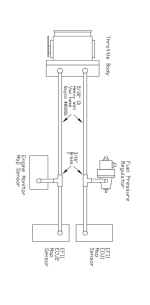
Jeff---2 different types of MAPs on an SDS system. MAP sensors for the computers, and MAP for the Avionics. For the avionics, typically using cylinder #3 is pretty standard. For the computer MAPs, Ross likes the the signal to come from the 2 fittings on the throttle body. He supplies the hose for it.
 
Jeff---2 different types of MAPs on an SDS system. MAP sensors for the computers, and MAP for the Avionics. For the avionics, typically using cylinder #3 is pretty standard. For the computer MAPs, Ross likes the the signal to come from the 2 fittings on the throttle body. He supplies the hose for it.
Also installing SDS: I was planning to tee off one of the MAP hoses to the fuel regulator. Then tee off the other hose to the Garmin sensor for the avionics? Is this not a good method?
 
Jeff---2 different types of MAPs on an SDS system. MAP sensors for the computers, and MAP for the Avionics. For the avionics, typically using cylinder #3 is pretty standard. For the computer MAPs, Ross likes the the signal to come from the 2 fittings on the throttle body. He supplies the hose for it.
That's how I set mine up.
 
Jeff---2 different types of MAPs on an SDS system. MAP sensors for the computers, and MAP for the Avionics. For the avionics, typically using cylinder #3 is pretty standard. For the computer MAPs, Ross likes the the signal to come from the 2 fittings on the throttle body. He supplies the hose for it.
And these are T'ed (brass) one goes to the Avionics MP transducer and the other to the fuel pressure regulator?

Screenshot 2025-11-15 174501.png
 
Last edited:
And these are T'ed one goes to the Avionics MP transducer and the other to the fuel pressure regulator?
WE have also done it this way---1 port on the throttle body provides the MAP signal to 1 sensor for 1 computer and the fuel pressure regulator, the other to the 2nd MAP sensor for the other computer and to the MAP sendor for the avionics. We even did one that had redundant individual sources for each. (Lots of hoses)
 
Also installing SDS: I was planning to tee off one of the MAP hoses to the fuel regulator. Then tee off the other hose to the Garmin sensor for the avionics? Is this not a good method?
Yes, that is the way I would do it. The plenum based map source is more stable than the intake chamber at the cylinder. Better for everything including the instruments. The cyl source is so close to the valve that there is no damping and will see larger spikes from the pressure oscillations due to the stopping and starting of the airflow at the valve.
 
that is a bad idea and goes against sds recommendations for their EFII systems. EFII systems rely on stable MAP indications.
Sorry, I wasn’t clear. The OP asked about various setups. I have the SDS Ignition only. The dual pickup from the cylinder ports, teed together, then into the gold box aft of the FW is per SDS instructions. Both lines have restrictors.
 
Sorry, I wasn’t clear. The OP asked about various setups. I have the SDS Ignition only. The dual pickup from the cylinder ports, teed together, then into the gold box aft of the FW is per SDS instructions. Both lines have restrictors.
Didn’t mean to imply your installation was wrong only that it is incorrect in the case of full EFII
 
All great comments, thanks!

My system, up until yesterday was completely overkill. I had two cylinder connections (with restrictors), plus the intake port all tied together. Then one line split to fuel pressure regulator, each SDS MAP sensor and the GRT EFIS.

Yesterday I capped the two cylinders and ran the engine with one line from the intake manifold vacuum to fuel pressure regulator, SDS MAP sensors and GRT EFIS. My SDS intake only has one vacuum port (older style maybe?). The engine ran great but the MP indication on the EM-6 display still jumps up/down about .5 MP, I thought that was caused by the cylinder pulses but apparently not. Is that small jumping normal? The GRT EFIS is rock solid and both read the same MP, except for the EM-6 jumping slightly.

Secondary SDSEFI question: What happens if you lose the vacuum source in flight?

Thanks,
 
All great comments, thanks!

My system, up until yesterday was completely overkill. I had two cylinder connections (with restrictors), plus the intake port all tied together. Then one line split to fuel pressure regulator, each SDS MAP sensor and the GRT EFIS.

Yesterday I capped the two cylinders and ran the engine with one line from the intake manifold vacuum to fuel pressure regulator, SDS MAP sensors and GRT EFIS. My SDS intake only has one vacuum port (older style maybe?). The engine ran great but the MP indication on the EM-6 display still jumps up/down about .5 MP, I thought that was caused by the cylinder pulses but apparently not. Is that small jumping normal? The GRT EFIS is rock solid and both read the same MP, except for the EM-6 jumping slightly.

Secondary SDSEFI question: What happens if you lose the vacuum source in flight?

Thanks,
Yes, that is normal. There is a whole bunch of pressure variation / reversing going on in the intake system. It is a bit more stable in the combined plenum area and therefore a better source. Most of your instruments use software smoothing on the result, so you don't see the pulsing. I don't believe SDS does that, so you see the jitter. The variation is small enough that it has no meaningfull effect on performance. All EFII systems not using MAF have this and deal with it in their designs

The SDS uses primarly MAP and RPM to set Fuel flow and spark timing. Throttle position is used for acceleration enrichment. Unsure on exactly how the SW deals with it, but believe they move from MAP to TP in the event of map sensor failure. On the case of a MAP hose failing, I assume they cannot detect it (ask SDS) and therefore both your spark and fuel tables will move to whatever portion of the table matches the ambient pressure. This will basically be WOT, therefore max fuel flow for your altitude and minimum or low advance. This is defensive in nature and you should be able to lean it out via the mixture knob.

This was a big issue in cars in the 90's. Vacuum leak would cause rich mixtures and in turn burn out the cats.
 
Last edited:
My MAP pickup is from the induction plenum just behind the SDS throttle body. It feeds a manifold behind the firewall that then feeds every MAP sensor on the airplane.

It’s my understanding that new manufacture SDS TB’s feature ports for MAP and IT.
 
.

Secondary SDSEFI question: What happens if you lose the vacuum source in flight?

If by “flight” you mean up and away cruise, not much. There is essentially zero “vacuum” with the throttle blade open to the outside world. There may be a slight loss or gain due to forward speed and the design of your induction scoop, but not much. In the pattern, different story. The MAP will incorrectly indicate a large throttle opening (assuming the MAP line is reading ambient), so your mixture will be fat. You will need to rectify that false condition with the mixture knob. BTDT, NBD.
 
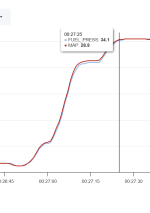
Just a reminder of those that have a FPR tied to manifold pressure. Check to make sure your FPR responds to MP. I always check this every flight to make sure the FPR seat has not become worn. (It happened years ago when I sucked a slight amount of air into my fuel rail and the seat chattered causing seal misalignment)

Screenshot 2025-12-30 193833.png
 
Back
Top