Van's Air Force

The definitive Van's Aircraft support community! Buying, building or flying an RV? Join our exclusive family of mentors and enthusiasts!

Valve ream size question

torquen

Active Member
I’m starting to gather all the tools needed to do the exhaust valve guide reaming. Question since I have not pulled the rocker covers off. Are all Lycoming 350 parallel valve stems the same size? I’m going to purchase the McFarland reamer and I see they have 4 different sizes based on the valve stem size.
I would like to gather all the tools needed before I pull the plane down for service.
Thanks for the info.
 

i went with the ball hone. i had a sticky valve and it cured it nicely.
 

Search “ball hone” on VAF and you will get several hits - an example is above.
I used a ball hone on my O-360 exhaust valve guides several years ago and was happy with the results.
 
the search tool on the "new" VAF works fantastic, kudos to all involved 👍
A 10" search using the criteria exhaust valve guide reamer returned to many links to paste in a short reply, but please try it @torquen

As to ball vs standard reamer, I definitely would not use a ball type, as the only thing you wanna do is remove the crud (carbon deposit mainly, maybe some lead too) which accumulates on the combustion side of the valve guide only. Using a ball type will wear down the guide on its whole length...
I'm using an adjustable one, which I found works super on IO-390s as well as on O360s.
 
Don't know if the stems are the same size, but I can tell you that I used the McFarlane reamer on my IO-390 over the weekend and had excellent results. It would be very difficult to make an error with this tool.

On a side note, I had the good fortune to speak with Dave McFarlane himself before using the tool. Based on opinions on this board I had some questions about using the tool. Dave explained that after 40 years of using standard reamers and ball hones to clean the guides, he developed his reamer to eliminate the possibility of entering the guide at an angle. The reason he likes a reamer over a ball hone is that the carbon and the valve guide have a different hardness and the properly sized reamer cuts the carbon without putting a mark guide and leaves it clean.

Like many on this site, he also recommended chasing the reamer with a ball hone to give the valve guide a better cross-hatch. Along with using a ball hone, he suggested pulling the valve though the spark plug hole and cleaning the stem.

Although the process took some time for a beginner, it wasn't difficult. The toughest part was getting the valve back into the guide on the angle valve engine.

Good luck,

Fred
 
Last edited:
The reason he likes a reamer over a ball hone is that the carbon and the valve guide have a different hardness and the properly sized reamer cuts the carbon without putting a mark guide and leaves it clean.
I got a chuckle out of this one. This makes zero sense. Carbon is very soft and easily cleaned up with a ball hone. I have never seen any remaining carbon after taking a few short passes with a ball hone but I have with a reamer. Because...dimensions. Sounds like someone is pulling reasons out of their hiney to sell you an expensive reamer.

Bottom line: ball hones work perfectly.
 
Lycoming O-360 & IO-360 (parallel valve) exhaust guide finished ID = .4985 - 4995 (Use McFarlane VGR-LC3 reamer)

Lycoming O-360 & IO-360 (angle valve) exhaust guide finished ID = .4995 - 5005 (Use McFarlane VGR-LC4 reamer)

Lycoming All (parallel valve) & Lycoming (angle valve) Intake guide finished ID = .4040-.4050 (Use McFarlane VGR-LC1 reamer)
 
I got a chuckle out of this one. This makes zero sense. Carbon is very soft and easily cleaned up with a ball hone. I have never seen any remaining carbon after taking a few short passes with a ball hone but I have with a reamer. Because...dimensions. Sounds like someone is pulling reasons out of their hiney to sell you an expensive reamer.

Bottom line: ball hones work perfectly.
Bob,

Thanks for your input. Your comments are valued. Fortunately, yours is not the only opinion with value.

Fred
 
Lycoming O-360 & IO-360 (parallel valve) exhaust guide finished ID = .4985 - 4995 (Use McFarlane VGR-LC3 reamer)

Lycoming O-360 & IO-360 (angle valve) exhaust guide finished ID = .4995 - 5005 (Use McFarlane VGR-LC4 reamer)

Lycoming All (parallel valve) & Lycoming (angle valve) Intake guide finished ID = .4040-.4050 (Use McFarlane VGR-LC1 reamer)
Thank you AZ for this info.

I will also look at some ball Hones.
 
Let me add this.. don't buy a cheap reamer from Amazon. They can be bent or slightly mis-sized. This is one example of cheap can be very expensive
 
McMaster Carr has a US made 0.50 inch reamer for $50 very reasonable. MacFarlane has a better one with a pilot which makes it idiot proof but the price is inhibitive for a one time use. You don't need the pilot if you are careful. The deposits are near the valve seat so going in from the rocker box end centers the reamer without the pilot
 
Last edited:
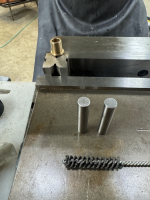
Did an experiment to prove a point i already knew...a 320 grit ball hone will not make a practical amount of dimensional change to a guide bore.

Brand new SL61681A intake valve guide:
1764721287344.png

0.395" and 0.396" gage pins. 0 .395" pin fits perfectly with a small amount of drag.
1764721424271.png

0.396 no-go;
1764721528128.png

Here comes the wedding-crasher ball hone:
1764721606327.png

Make five passes with ball hone with a squirt of penetrating oil.
Normally three passes will clean the guide out nicely.
Bore cleared with shop air shortly after this pic.
1764721697718.png

Oh look! 0.395 gage pin still won't drop thru. 0.396 gage pin still no-go.
1764721755998.png

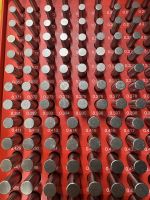
Gage pin collection:
1764721885436.png
 
Last edited:
Yeah I didn’t receive a message.
Attached is what I get - I'm able to DM others.... maybe in your setup ? Not real important comments
 

Attachments

  • Screenshot 2025-12-02 at 17-34-08 Send direct message Van's Air Force.png
    Screenshot 2025-12-02 at 17-34-08 Send direct message Van's Air Force.png
    14.7 KB · Views: 13
Ball hone….hmm. How much material did you remove? If there is more material on one side than the other, does the ball hone remove in accordance?/
What is your hole size after the ball hone??/
Did you taper the hole slightly with your ball hone.????

The reamer is piloted, which guides the cutting flutes quite precisely.

Yep…the reamer is expensive, I guess…but so is my engine.

There is in my opinion not a more consistent tool than the reamer.

I have about every measuring tool known to man…and have only found one that consistently allows you to measure the work you’ve done.

I’d be interested to hear how Bob measures, after using his ball hone?


You could not pay me to use a ball hone on my engine. It is not designed to be utilized to solve the issue we have.

IF you want to…good on ya.
 
I’d be interested to hear how Bob measures, after using his ball hone?


You could not pay me to use a ball hone on my engine. It is not designed to be utilized to solve the issue we have.

IF you want to…good on ya.

I just showed you. Measured with gage pins. 0.001" is an acceptable tolerance here. Don't need to measure to tenths. No point.

Right about the time a valve starts sticking there is several thousandths of wear on opposite sides of the guide. Often you can see ovality visually on the end of the guide. A reamer will not clean up the ends on a well-worn guide. Been there done that.

I've cleaned out hundreds of valve guides using a ball hone and never had to re-clean one. Or have any problems afterward.
 
I just showed you. Measured with gage pins. 0.001" is an acceptable tolerance here. Don't need to measure to tenths. No point.

Right about the time a valve starts sticking there is several thousandths of wear on opposite sides of the guide. Often you can see ovality visually on the end of the guide. A reamer will not clean up the ends on a well-worn guide. Been there done that.

I've cleaned out hundreds of valve guides using a ball hone and never had to re-clean one. Or have any problems afterward.
Are you using a .5” ball hone for a o360 parallel valve or one that is smaller? The thread posted above has two different sizes.
 
Pin gauges don’t show you roundness…taper…really they don’t show you anything. if you’re good with that, I am too…for your engine.

I’ll stick with my reamer and bore gauge.
 
I believe it's a .45 caliber barrel cleaning brush that fits in a 0.5" guide. Brush is made of either brass or copper and does a good job of cleaning out carbon build up. Advice from a mechanic that was working on airplanes before I was born.....which was a while ago......... 😊
 
I’ll stick with my reamer
and so will I 🤣

Seriously now, why would anybody use honing balls to remove the usual 1/8-5/32" stretch of carbonised oil deposited on the combustion side of the guide? I just wanna remove the unwanted stuff, not to hone nor wear down the entire guide... an adjustable reamer will give the precision needed.

And once more, here's the one I use all over these years, on different Lycomings (360, 390), with great success:

Reamer.JPG
 
and so will I 🤣

Seriously now, why would anybody use honing balls to remove the usual 1/8-5/32" stretch of carbonised oil deposited on the combustion side of the guide? I just wanna remove the unwanted stuff, not to hone nor wear down the entire guide... an adjustable reamer will give the precision needed.

I clearly demonstrated with a new guide the use of a ball hone doesn't cause any significant dimensional bore change. It takes a LOT of strokes to remove any meaningful amount of guide material.

Seems obvious to me you've never looked inside a worn guide. They are not round, straight or concentric. Never have seen one that has deposits at the end as you describe. Most of the time the heaviest deposits are in the middle due to the increased clearances there. Valve stems stretch in service and get smaller in diameter at the middle. The center area is where the deposits will be the worst an cause the valve to stick. I have had to deal with valves stuck so hard because of this that sometimes it takes a brass rod and rivet gun to drive the stem thru in order to get the valve out of the guide.
 
Last edited:
Seems obvious to me you've never looked inside a worn guide. They are not round, straight or concentric. Never have seen one that has deposits at the end as you describe.
Thanks, but rest assured I know of, and more or less seen the stuff you talking about, but we're not talking about the same...
I've had to use a heavy mallet to force valves into cylinders more than once. But never on guides that were that were worn in the middle... I've seen lead deposits on the valve stems more than once, but don't buy your theory of valve stem stretch. The lead gets onto the stem when the valve opens following the burning process, and kinda gets welded to it. Clearly visible when pulling the stem out of the lower sparkplug hole for instance.
Either way, using honing balls or a reamer would not fix a worn out guide as you describe, replacing it would be the only right thing to do.
 
Not a theory. They will grow 0.005" to 0.012" in length. 0.002" undersize permissible in the stem center on exhaust valves.

View attachment 103810
Yeah, there are not many forces banging on a valve......in an engine going 2400 RPM in the hottest place in the engine to be. :oops: For 2-3000 hours. Naaaaaaa.

It's a wonder they last as long as they do!🤔
 
I will simply maintain that anyone wishing to use anything other than a reamer is welcome to it. Flex balls, follow the hole that is there. If not round, they will worsen the condition.

Cost was presented by Bob as to “they” trying to suck you in to an expensive solution. The cost of replacing a guide you screw up, far outweighs the cost of a reamer. period.

No ones trying to suck you in to an expensive solution. One reamer will last ten lifetimes…probably you can borrow or rent one.

it is the right tool for the job, regardless of how others choose to treat their engines.

Measuring with a gage pin, isn’t measuring anything. You are just seeing what size round peg you can shove into some size hole…be it round, oblong, triangular etc.

Bore gauge is the correct measuring tool. I like knowing the shape of a hole, before I attempt to repair it….concentricity is important, again, a reamer is designed for this task.

Nothing more needs said on the issue. Please yourselves as to path you choose. experimental aviation at its finest!

Ps…while valves grow in the LT direction due to heat…the ST is virtually not affected. As for carbon and lead essentially vapor depositing onto the valve stem…yeah…that happens. Which is also why guides wear in the middle and need to be replaced.
 
I recently completed the combined exhaust guide reaming and valve honing/grinding job on my I/O390 angle valve (sticking # 2 at 700 Hrs.). Used the McFarlane VGR-LC4 reamer which as others have said works perfectly - the undersized leader is the cats meow! And nothing comes out except for a bunch of carbon.

But it amuses me to hear the complaints about the reamer cost - so, you go out for a couple of flights and time comes to buy fuel - Hmmm, what was that, about $150+ every time? Hmmm....
 
Measuring with a gage pin, isn’t measuring anything. You are just seeing what size round peg you can shove into some size hole…be it round, oblong, triangular etc.

Bore gauge is the correct measuring tool. I like knowing the shape of a hole, before I attempt to repair it….concentricity is important, again, a reamer is designed for this task.

Whatever. Here they're also telling you a reamer may not work. Which I found to be the case long ago.

1764806901940.png
 
But it amuses me to hear the complaints about the reamer cost - so, you go out for a couple of flights and time comes to buy fuel - Hmmm, what was that, about $150+ every time? Hmmm....

Its not the cost. I have a full set of reamers. Its the fact they don't always work except in lightly worn guides. Ball hone is easier, cheaper, works, and difficult to screw up with.
 
and so will I 🤣
? I just wanna remove the unwanted stuff, not to hone nor wear down the entire guide... an adjustable reamer will give the precision needed.
The guide is typicaly worn in certain areas, sometimes many thou and no longer round. You now fill all that area with very hard coke and it is back to round, but it is not round metal! Your fancy pilotted reamer is going to follow the coked up hole, that is round. But the layers of coke making it round are not consistent. Therefore the reamer indiscriminately cuts away material from that initial round hole. Maybe you are lucky and all it takes off is coke, but just as likely to take some metal away, leaving a round hole that is part metal and part coke. The bristle hone is flexible and therefore will take off the softer coke without taking any metal, leaving the original out of round guide. It is absolutely the right tool for this type of job. Similar example is when a mechanic runs a tap instead of a thread chaser in a messed up hole and ruins the threads.

Best to get you input from a machinist on this topic and not an airplane mechanic. They understand these level issues and nuances.
 
Last edited:
it. Flex balls, follow the hole that is there. If not round, they will worsen the condition.
I suspect you have never worked with them. A 320 grit brush hone does NOT remove metal and therefore cannot affect roundness. It is a glaze breaking hone, NOT a boring hone like a sunnen. You would have to crazy agressive to take off even .0003. It is however strong enough to fully remove the coke without removing metal. Thats why it is the right tool for the job. It doesn’t take it to a round shape made up of some metal and some coke. It removes all coke and takes it back to its natural out of round shape.
 
I suspect you have never worked with them. A 320 grit brush hone does NOT remove metal and therefore cannot affect roundness. It is a glaze breaking hone, NOT a boring hone like a sunnen. You would have to crazy agressive to take off even .0003. It is however strong enough to fully remove the coke without removing metal. Thats why it is the right tool for the job. It doesn’t take it to a round shape made up of some metal and some coke. It removes all coke and takes it back to its natural out of round shape.
Larry, I own a pretty large aerospace machine shop for a living…so yes, I have used flex hones many times. As well as Sunnens, and many many more methods of extremely close tolerance bores that would have no place in our old engines.

‘I disagree that a flex hone corrects the coking issue efficiently or safely, and I have never seen a flex hone accomplish returning a non-round hole to round.
Flex hones are used to attain a specific cross hatch, or occasional a specified surface finish.

A reamer with a pilot also has a small radius on the corner of the flutes. A reamer will cut round to the delta of the bushing diameter and the reamer, divided in half…meaning a bushing with .001 delta, will cut to a .0005 tolerance due to the chip load balance on the cutting flutes.

Again…no dog in the fight. If guys want to follow advice other than the manufacturers on an experimental engine…no sweat.

I don’t believe an approved repair facility would do so.

You are making this only sound like carbon buildup though and I don’t think is correct. In the presence of high heat, various bromides and carbon…essentially a heat treat carburization occurs to some degree. As the valve picks up various deposits, some help, such as lead bromides and others hurt, tightening the clearance over time, till we get the morning sickness.

The fix is to restore the proper clearance.

Advice posted on a forum finds various levels of technical skill sets…I will continue to maintain that following the manufacturers advice for the service bulletin is the best path.

That’s all.

 
I cant believe that someone who can't get the correct reamer is capable to do this important job. there a lot to go wrong.
find a robinson helo mechanic to do the job. they do these on a regular basis because it is a SB to be done every 300 hours on the robimson helo's. they will measure it and ream it if needed. you will learn a lot. may be then you will have the knowledge to do it your self.
 
Larry, I own a pretty large aerospace machine shop for a living…so yes, I have used flex hones many times. As well as Sunnens, and many many more methods of extremely close tolerance bores that would have no place in our old engines.

‘I disagree that a flex hone corrects the coking issue efficiently or safely, and I have never seen a flex hone accomplish returning a non-round hole to round.
Flex hones are used to attain a specific cross hatch, or occasional a specified surface finish.

A reamer with a pilot also has a small radius on the corner of the flutes. A reamer will cut round to the delta of the bushing diameter and the reamer, divided in half…meaning a bushing with .001 delta, will cut to a .0005 tolerance due to the chip load balance on the cutting flutes.

Again…no dog in the fight. If guys want to follow advice other than the manufacturers on an experimental engine…no sweat.

I don’t believe an approved repair facility would do so.

You are making this only sound like carbon buildup though and I don’t think is correct. In the presence of high heat, various bromides and carbon…essentially a heat treat carburization occurs to some degree. As the valve picks up various deposits, some help, such as lead bromides and others hurt, tightening the clearance over time, till we get the morning sickness.

The fix is to restore the proper clearance.

Advice posted on a forum finds various levels of technical skill sets…I will continue to maintain that following the manufacturers advice for the service bulletin is the best path.

That’s all.

Fair points and I respect your skills and experience. They are advanced from mine.
 
‘I disagree that a flex hone corrects the coking issue efficiently or safely, and I have never seen a flex hone accomplish returning a non-round hole to round.
Flex hones are used to attain a specific cross hatch, or occasional a specified surface finish.

We are not trying to correct the geometry of the guide hole by "returning a non-round hole to round"!! I don't understand why you keep saying that. We are removing deposits, that's it, end of story. I've cleaned the carbon out of guides with a ball hone, hundreds of times, and there is no problem.

320 grit ball hone will not appreciably or practically change any guide dimensions unless one went at it excessively.
 
Last edited:
We are not trying to correct the geometry of the guide hole by "returning a non-round hole to round"!! I don't understand why you keep saying that. We are removing deposits, that's it, end of story. I've cleaned the carbon out of guides with a ball hone, hundreds of times, and there is no problem.

320 grit ball hone will not appreciably or practically change any guide dimensions unless one went at it excessively.
bob, I mention concentricity, because I dont use a pin gage, but a digital bore gauge. I can see clearly that buildup does not evenly deposit onto the surface. seldom if ever, have I seen a concentric bushing after 300 hours…the reamer also reports these findings with chips removed not in strings, so the reamer is not cutting all the way around the ID of the bore, producing strings of cuttings, just packed chips…what I also know is that after reaming, when I re check with digital bore gauge, you can easily see the roundness, post reaming.

That is the reason to stay to the SB suggestion of reaming, in my opinion…but I am not knocking your method. For you…just don’t see offering it as advice for everyone who may not completely understand. the reamer is a very safe procedure and requires less skill probably than your method, and less judgment.
 
they do these on a regular basis because it is a SB to be done every 300 hours on the robimson helo's. they will measure it and ream it if needed. you will learn a lot. may be then you will have the knowledge to do it your self.
and so do, or are supposed to, all other affected Lycos with the old guide material, as stated in the famous mandatory SB 388-C...
Which has now been supplemented by the SI-1485A, recommending a wobble check at 1K hours for engines with the "improved exhaust valve guides"... still wondering about the so called improvement when having to ream engines with barely 80 hour total time...
 
Sometimes guide deposits affect valve rotation and may not exhibit sticking valve symptoms. I had a IO-470 on a Bonanza come up with low compressions across the board, 40-50's, with valve distress showing on videoscope. Dropped every valve, cleaned every guide with a (gasp, choke) ball hone. Cleaned the stems thru the spark plug hole which is a real challenge on the #6 (front, left) cylinder. Replaced the rotators and lapped every valve. Twelve guides right there receiving the dreaded ball hone treatment. That engine is now above TBO and operating with compressions in the high 70's. Owner says it "runs like a pickle seeder".
 
Back
Top