


Van's Air Force

The definitive Van's Aircraft support community! Buying, building or flying an RV? Join our exclusive family of mentors and enthusiasts!

Transition training on East Coast

CJT

Well Known Member
I have been trained and been flying high wing Cessna, all the while, hence the need for transition training in RV10, was imperative and also needed requirement for insurance

Being located in Maryland, I started searching for transition training on east coast and chanced upon Van’s east coast representative Zack Czachorowski at New Garden airport N57. Needing five hours of training required two days.

Zack is an amazing personality, warm, knowledgeable, highly experienced pilot, builder, instructor, having military and airline experience. In few minutes he put me at ease with his warm mannerism.

The first part of morning was devoted to understanding the differences between training aircrafts and high performance, sleek beauty RV 10. Followed by planning of flight training steps.

On climbing into the aircraft you notice the beauty of huge windscreen and windows giving you excellent field of vision. Flying with stick appeared more intuitive and natural compared to yoke, with added advantage of lack of obstruction of instrument panel, so common with yoke.

Taxiing initially is challenging because of free castering nose wheel, and one tends to ride the brakes, but with conscious effort, one can easily overcome it.

With amazing climb performance, very light control inputs, superb turning ability and short landing distance, this aircraft is like a sleek sports car

Right from the word go, Zack handed me the controls and with his excellent comminution skills and art of making student comfortable, inspired confidence.

The best part of learning was short field landing at an airport with trees at the end of runway and his technique of handling engine failure, which no one had taught me so well till now

He broke it down to;

MAC ( maintain aircraft control, essentially trim to best glide speed of 85KT)
AS ( Analyze systems, by transferring fuel tank, rich mixture, alternate air, battery, alternator and cranking the engine)
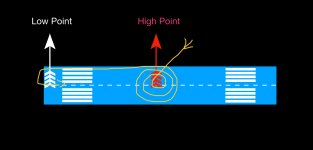
TPA ( Take proper action, by announcing emergency, squawking code, planning smooth and safe landing), if you happen to be over an airfield, to circle around the high point on the center of the field to transition from cruise altitude to above the pattern altitude, fly the downwind leg to low point at the runway threshold aiming to reach it at the pattern altitude and plan smooth transition to descent and land

I feel every RV builder must take transition training to understand the handling characteristics, and if you happen to be on east coast, go to Zack.
 

Attachments

  • 933274D2-E84E-4248-A311-BF17AE9EE7E9.jpeg
    933274D2-E84E-4248-A311-BF17AE9EE7E9.jpeg
    199.3 KB · Views: 74
  • 4189DFF5-9E30-4275-9003-F7A3228C2871.jpeg
    4189DFF5-9E30-4275-9003-F7A3228C2871.jpeg
    2.1 MB · Views: 76
I have been trained and been flying high wing Cessna, all the while, hence the need for transition training in RV10, was imperative and also needed requirement for insurance

Being located in Maryland, I started searching for transition training on east coast and chanced upon Van’s east coast representative Zack Czachorowski at New Garden airport N57. Needing five hours of training required two days.

Zack is an amazing personality, warm, knowledgeable, highly experienced pilot, builder, instructor, having military and airline experience. In few minutes he put me at ease with his warm mannerism.

The first part of morning was devoted to understanding the differences between training aircrafts and high performance, sleek beauty RV 10. Followed by planning of flight training steps.

On climbing into the aircraft you notice the beauty of huge windscreen and windows giving you excellent field of vision. Flying with stick appeared more intuitive and natural compared to yoke, with added advantage of lack of obstruction of instrument panel, so common with yoke.

Taxiing initially is challenging because of free castering nose wheel, and one tends to ride the brakes, but with conscious effort, one can easily overcome it.

With amazing climb performance, very light control inputs, superb turning ability and short landing distance, this aircraft is like a sleek sports car

Right from the word go, Zack handed me the controls and with his excellent comminution skills and art of making student comfortable, inspired confidence.

The best part of learning was short field landing at an airport with trees at the end of runway and his technique of handling engine failure, which no one had taught me so well till now

He broke it down to;

MAC ( maintain aircraft control, essentially trim to best glide speed of 85KT)
AS ( Analyze systems, by transferring fuel tank, rich mixture, alternate air, battery, alternator and cranking the engine)
TPA ( Take proper action, by announcing emergency, squawking code, planning smooth and safe landing), if you happen to be over an airfield, to circle around the high point on the center of the field to transition from cruise altitude to above the pattern altitude, fly the downwind leg to low point at the runway threshold aiming to reach it at the pattern altitude and plan smooth transition to descent and land

I feel every RV builder must take transition training to understand the handling characteristics, and if you happen to be on east coast, go to Zack.
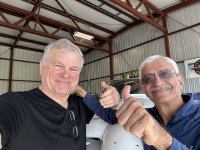
I should do this now for fun and motivation, and then later a refresher as I near completion since N57 is in my backyard.
 
  • Like
Reactions: CJT
There's no way to overstate how good this transition training is. Do it. Zach is a really good instructor.
 
Does anyone have contact information for Zach? It's time for the transition training and my email to him bounced back. Is he still doing the training?
 
Does anyone have contact information for Zach? It's time for the transition training and my email to him bounced back. Is he still doing the training?
Unfortunately, last time I heard, he was not working with Vans anymore. I was one of the last students doing RV-14 transition training with him. Big loss for east coast RVers...
 
I am very quickly approaching the need to do transition training, I’m in northern Va. Does anyone know if there are any options in the mid Atlantic region? There are 3 others in my same situation in my area. All with RV7-A’s.
 
Back in 2018 me and the wifey flew up to the mother ship and I did transition training with Mike Seager, the flights were cheap and it was a great time.
 
I am very quickly approaching the need to do transition training, I’m in northern Va. Does anyone know if there are any options in the mid Atlantic region? There are 3 others in my same situation in my area. All with RV7-A’s.
I’ve written about this before, but, in a nut shell:
1. This is an issue for new builders. Phase 1 is not supposed to be the time for dual instruction.
2. Buyers of phase 2 aircraft have little trouble finding cfi’s who will give dual instruction in their (new owner’s) airplane, and the insurance companies encourage and often require it.
3. Buyers/owners of phase 1 aircraft are left looking for cfi’s who own, and are willing to rent out (use for hire)
an RV, for transition training. This has two difficulties:
A. It is illegal to rent, or otherwise use, your RV for compensation or hire. However, the FAA will give the owner, free for the asking, a waiver (LODA), allowing this for the purpose of ‘transition training only’.
B. Insurance. Here’s the real issue. Most insurance companies do NOT cover ‘instruction to others for hire’ in their policies which the cfi’s have on their planes. And adding this insurance, in my case, would have doubled my premiums, so most cfi’s opt out of using their RV’s for instruction-given.
My proposed solution: sooner or later some insurance company will realize that the risk in insuring the cfi’s plane is no more than the risk in insuring any other phase 2 plane. They could have their brokers tell perspective clients that if they choose to insure with them, they will automatically be covered for transition training with cfi’s Smith and Jones (who just happen to be insured by the same company). Or, more likely, it will work in reverse: when new owners contact cfi’s Smith or Jones, they’ll be told ‘transition training in my airplane is $100/hr if you insure your new airplane with company X; otherwise it’s $500/hr.’ I think there’s a real capitalist opportunity here for the first insurance company that catches on to the idea.
 
I’ve written about this before, but, in a nut shell:
1. This is an issue for new builders. Phase 1 is not supposed to be the time for dual instruction.
2. Buyers of phase 2 aircraft have little trouble finding cfi’s who will give dual instruction in their (new owner’s) airplane, and the insurance companies encourage and often require it.
3. Buyers/owners of phase 1 aircraft are left looking for cfi’s who own, and are willing to rent out (use for hire)
an RV, for transition training. This has two difficulties:
A. It is illegal to rent, or otherwise use, your RV for compensation or hire. However, the FAA will give the owner, free for the asking, a waiver (LODA), allowing this for the purpose of ‘transition training only’.
B. Insurance. Here’s the real issue. Most insurance companies do NOT cover ‘instruction to others for hire’ in their policies which the cfi’s have on their planes. And adding this insurance, in my case, would have doubled my premiums, so most cfi’s opt out of using their RV’s for instruction-given.
My proposed solution: sooner or later some insurance company will realize that the risk in insuring the cfi’s plane is no more than the risk in insuring any other phase 2 plane. They could have their brokers tell perspective clients that if they choose to insure with them, they will automatically be covered for transition training with cfi’s Smith and Jones (who just happen to be insured by the same company). Or, more likely, it will work in reverse: when new owners contact cfi’s Smith or Jones, they’ll be told ‘transition training in my airplane is $100/hr if you insure your new airplane with company X; otherwise it’s $500/hr.’ I think there’s a real capitalist opportunity here for the first insurance company that catches on to the idea.
Insurance regulations are really odd. More than likely either of the scenarios would run afoul of unlicensed agent rules or rules around quid pro quo but I'm not an expert in the field.
 
Back
Top
