Van's Air Force

The definitive Van's Aircraft support community! Buying, building or flying an RV? Join our exclusive family of mentors and enthusiasts!

Tire Pressure Monitoring System (TPMS) experience updates?

Brett H

Well Known Member
Patron
A year and a half ago I tried the Tymate M13 system and had ongoing issues with the reader only finding some of sensors. So, I ended returning it.

At that time, the FOBO unit seemed to be the unit of choice.

A year and a half is long time in the world of electronics.

So, what are people having good experience now?

Thanks.

Brett H
Columbus, IN N4BH
 
So, what are people having good experience now?
I have the Beringer Sensair system. I'm not flying yet but the app finds the sensors and reports the pressure and temperature every time. But, it does take a couple minutes to find all the sensors (3 in my case).
 
Can you get a reading on preflight, or do the wheels have to be turning to get the sensors to wake up?
 
My purchased RV-14A has Beringer Sensair TPMS which I also find to take a couple minutes to report to the app.

I don’t doubt the Mark One Eyeball is a good solution and a home-made ground-level caliper could work well. Will TPMS work while airborne, I should try it.

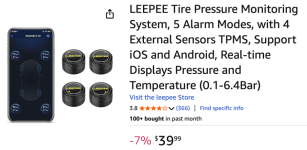
An RV-9A owner at W75 Hummel reports good luck with LEEPEE.

“Here is the TPMS I have. Runs on an app on my iPhone.

Had to sand down the one for the nose gear a bit so it fits as the edge of the rim will interfere with it at least on my RV.

I use a socket wrench with extension to remove them and put them back in though the hole in the wheel pants and use an extension valve stem to put air.”

LEEPEE Tire Pressure Monitoring System, 5 Alarm Modes, with 4 External Sensors TPMS, Support iOS and Android, Real-time Displays Pressure and Temperature (0.1-6.4Bar)
 
I also have been using the FOBO system for a couple of years on the mains of the 9a--works well. Just make sure you lubricant the o-ring to guard against leaks.
Cheers
db
 
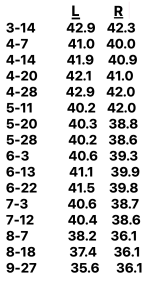
I installed TPMs with cell phone ap from Amazon on main wheels about five years ago. I log pressures every few weeks. Table shows leak rate since condition inspection in March…
-
1760456834716.png 1760456870557.png
 
That’s much higher pressure than the suggested 25psi. Since the tires are designed to be part of the shock absorber how does the added tire pressure impact the main gear mounting structure?
 
My purchased RV-14A has Beringer Sensair TPMS which I also find to take a couple minutes to report to the app.

I don’t doubt the Mark One Eyeball is a good solution and a home-made ground-level caliper could work well. Will TPMS work while airborne, I should try it.
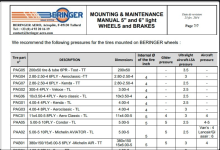
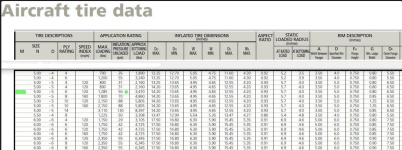
Sensair will work in flight from the cockpit but does take a few mins. I use 60 psi for mine, never a shimmy. Chart on right Dan H kindly posted.

Screenshot 2025-10-14 171052.pngScreenshot 2025-10-14 171240.png
 
That’s much higher pressure than the suggested 25psi. Since the tires are designed to be part of the shock absorber how does the added tire pressure impact the main gear mounting structure?
I'm not running stock tires... I have Retread Elite Premium 2-Groove 6-ply. Aero Classic run at low air pressure isn't the fix for weak design on gear leg carry-thru. Structure needs to be beefed-up regardless of tire used...

 
Suggest some research. At 25 psi, you are dangerously close to the range where flats from pinched tubes become commonplace. I tell people to never go below 30 to be safe.
The RV12 has different recommended tyre pressures to an RV6A. The RV12 POH recommends 22 psi (23 psi max) for the nose wheel and 25 psi (28 psi max) for the mains.
 
I got these (different name, but same app and devices it seems). Did you have a problem putting one of these on your nosewheel? It was hitting the fork by....maybe 1/8".
Correct.... not installed on nose wheel because interference with fork.
 
FOBO markets various models depending on type of vehicle like car, motorcycle, etc.

Does one style work better with RV's, e.g. better wheel pant clearance & pressure ranges?
 
FOBO markets various models depending on type of vehicle like car, motorcycle, etc.

Does one style work better with RV's, e.g. better wheel pant clearance & pressure ranges?
I will investigate. Getting a set of the car ones for my 2015 Aviation Obsession Support Vehicle (aka Sienna) which has nonspecific TPMS with dead batteries. Going to test run them there before trying them on the RV. Pressure range looks like it should work, I run 45 on all tires of my 9A.
 
The FOBO ones are fine on the nosewheel of my 8A.
I would appreciate if you would share which FOBO sensor you are using.

Also, if you could share what the diameter of the sensor is and how far it sticks out from the end of the valve stem.

Thanks.

Brett H
Columbus, IN N4BH
 
Thanks for your response.

Based on the dimensions of the FOBO Bike 2 TPMS sensor I took some measurements to determine how it would fit on the nose wheel of the RV-12

The FOBO Bike 2 TPMS sensor is 13.8 mm (0.543”) tall and has a 20.2 mm (0.795”) diameter.

To understand the clearance to the inside of the RV-12 nose wheel fork one needs to account for distance that it threads onto the valve stem. From the picture of the sensor, it appears that it threads onto the valve stem four threads. At 32 threads per inch, this reduces the distance that the sensor will extend beyond the end of the valve stem by 0.125”. So, the sensor will extend beyond the valve stem 0.418”. As a reference, valve stem cap extends 0.263” from the end of the valve stem.

On my RV-12 the clearance between the end of the valve stem (i.e., Aero Classic tube with a TR-67 valve stem) and the inside of the nose wheel fork is 0.625”.

So, the clearance between the FOBO sensor and the nose wheel fork would be 0.207”. For reference the minimum clearance between the Tow Bar bolt head and the tire is 0.063”. So, this clearance seems to be minimal, but acceptable.

One way to increase the sensor clearance to the nose fork would be to switch an inner tube with the shorter valve stem (i.e., the TR-87 valve stem is ~1.142” shorter than the TR 67 valve stem). The stock inner tube (i.e., TR 67 valve stem) valve stem extends from the Matco nose wheel on my RV-12 0.600 inches. This would result in the FOBO Bike 2 sensor being 0.125” inboard of the outboard face of the nose wheel. Also, the hole in the nose wheel that is aligned with the valve stem has a 0.945” diameter. So, there would be limited clearance to the 0.795” diameter of the sensor. So, the sensor would be well protected. But it would be difficult to remove the sensor to add air.

In summary, using the FOBO Bike 2 TPMS sensor on the RV-12 nose wheel with the stock Aero Classic inner tube seems to be doable.

Brett H
 
A continuous problem on every car I’ve owned, why would I want it on my airplane?
IMO quit being so lazy and just check the freaking pressure!l
FYI, on the RV-12 Van's specifies the inflation pressure of the nose wheel as 22 - 23 psi. A very limited range.

So, unfortunately checking the air pressure with a traditional gage before every flight is a significant portion of the "leakage".

My hope is by having a measurement that doesn't involve the loss of air will reduce how often air needs to be added.

Brett H
 
A continuous problem on every car I’ve owned, why would I want it on my airplane?
IMO quit being so lazy and just check the freaking pressure!
That's interesting. I've never had a TPMS failure on any vehicle I've owned.

Why would I want it on my airplane? Well, I can either crawl around on my hands and knees to check the pressure manually or I can glance at my phone while sipping my morning mocha. Easy decision for me.
 
Thanks for your response.

Based on the dimensions of the FOBO Bike 2 TPMS sensor I took some measurements to determine how it would fit on the nose wheel of the RV-12

The FOBO Bike 2 TPMS sensor is 13.8 mm (0.543”) tall and has a 20.2 mm (0.795”) diameter.

To understand the clearance to the inside of the RV-12 nose wheel fork one needs to account for distance that it threads onto the valve stem. From the picture of the sensor, it appears that it threads onto the valve stem four threads. At 32 threads per inch, this reduces the distance that the sensor will extend beyond the end of the valve stem by 0.125”. So, the sensor will extend beyond the valve stem 0.418”. As a reference, valve stem cap extends 0.263” from the end of the valve stem.

On my RV-12 the clearance between the end of the valve stem (i.e., Aero Classic tube with a TR-67 valve stem) and the inside of the nose wheel fork is 0.625”.

So, the clearance between the FOBO sensor and the nose wheel fork would be 0.207”. For reference the minimum clearance between the Tow Bar bolt head and the tire is 0.063”. So, this clearance seems to be minimal, but acceptable.

One way to increase the sensor clearance to the nose fork would be to switch an inner tube with the shorter valve stem (i.e., the TR-87 valve stem is ~1.142” shorter than the TR 67 valve stem). The stock inner tube (i.e., TR 67 valve stem) valve stem extends from the Matco nose wheel on my RV-12 0.600 inches. This would result in the FOBO Bike 2 sensor being 0.125” inboard of the outboard face of the nose wheel. Also, the hole in the nose wheel that is aligned with the valve stem has a 0.945” diameter. So, there would be limited clearance to the 0.795” diameter of the sensor. So, the sensor would be well protected. But it would be difficult to remove the sensor to add air.

In summary, using the FOBO Bike 2 TPMS sensor on the RV-12 nose wheel with the stock Aero Classic inner tube seems to be doable.

Brett H
If you buy FOBO I suggest getting the Tire Lite for Automotive. It comes with 4 sensors so you will have an extra. If you drill a 1" hole you can get a 19 mm socket through it and that will fit the sensor to remove it to add air. I bought nice aluminum plugs that fit my 1" holes. If you want the exact dimensions you can go to their website and fid it there.
 
If you buy FOBO I suggest getting the Tire Lite for Automotive. It comes with 4 sensors so you will have an extra. If you drill a 1" hole you can get a 19 mm socket through it and that will fit the sensor to remove it to add air. I bought nice aluminum plugs that fit my 1" holes. If you want the exact dimensions you can go to their website and fid it there.

Thanks for your response.

I reading the FOBO Tire Lite information I noticed three things:

1.) The sensors are 16.20 mm tall and NOT the 13.80 mm tall that was my understanding. This reduces my calculated clearance by 0.096” to only 0.111”.
2.) The picture of the sensor isn’t clear as how many threads are engaged when it is installed. This is important to calculating the clearance.
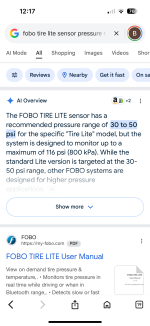
3.) The sensor has a recommend pressure range of 30 - 30 psi. The pressure of the RV-12 nose wheel is only 22 - 23 psi.

So, this leads to two questions:
1.) How many turns does it take to install the sensor on the valve stem?
2.) What the lowest pressure that you have had experience using this sensor?

Many thanks for your help.

Brett H
Columbus, IN

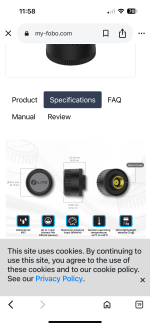
IMG_3689.pngIMG_3690.png
 
I
Thanks for your response.

I reading the FOBO Tire Lite information I noticed three things:

1.) The sensors are 16.20 mm tall and NOT the 13.80 mm tall that was my understanding. This reduces my calculated clearance by 0.096” to only 0.111”.
2.) The picture of the sensor isn’t clear as how many threads are engaged when it is installed. This is important to calculating the clearance.
3.) The sensor has a recommend pressure range of 30 - 30 psi. The pressure of the RV-12 nose wheel is only 22 - 23 psi.

So, this leads to two questions:
1.) How many turns does it take to install the sensor on the valve stem?
2.) What the lowest pressure that you have had experience using this sensor?

Many thanks for your help.

Brett H
Columbus, IN

View attachment 99791View attachment 99792
I'm going to guess that the 13.80 mm is what you should add to your existing valve stem for the sensor. I would think it screws onto the stem 2.4 mm. Mine check fine with low and high inflation. That inflation range of 30-50 is an AI answer that is probably incorrect. The website just says 116 PSI max.
 
A note on installing TPMs…. to prevent air leakage, use a thick silicone grease on the top of the valve stem and inside of the TPM threads. I use dielectric silicone grease. Also, apply silicone grease to the rubber elastomer that seals against the face of the valve stem. An over-abundance of grease will not affect TPM operation / accuracy.
 
I

I'm going to guess that the 13.80 mm is what you should add to your existing valve stem for the sensor. I would think it screws onto the stem 2.4 mm. Mine check fine with low and high inflation. That inflation range of 30-50 is an AI answer that is probably incorrect. The website just says 116 PSI max.
Thanks for your response.

With the FOBO TPMS sensor extending 13.80 mm beyond the end of the valve stem, that would make the calculated clearance to the inside of the nose fork on my RV-12 0.085”. That seems a little bit too tight.

Switching to the inner tube with the shorter TR-87 valve stem for the nose wheel only should result in the outer portion of the FOBO TPMS sensor being flush with the wheel. Well protected in the opening for the valve stem. But, limited access to the sensor for removal and installation. As a side note, Matco is fine with using the TR -87 valve stem inner tube being used on their RV-12 nose wheel.

I need to think some more as which way I would prefer to proceed.

Brett H
 
Update: very happy with the FOBO Tire Lite for my Aviation Obsession Support Vehicle (a 2015 Sienna). System works well, measures perfectly against my gauge, and updates the app very quickly.

This was a fairly useful and cost-effective upgrade for me since: (1) the original TPMS sensor system's batteries are all long dead, (2) replacing those units is something of a pain, and (3) the previous system didn't indicate which tire was low. Also I can now see the tire pressures on my Apple Watch and that is just cool.

Now I just need a piece of black tape to cover up the old flashing TPMS dash light. 🤣

The valve caps themselves are somewhat large, will have to check to see if they fit under my wheelpants on the -9A.
 
The valve caps themselves are somewhat large, will have to check to see if they fit under my wheelpants...
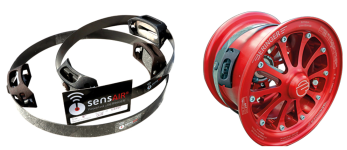
One of the nice things about the Beringer SensAir system is there are no special valve caps. The sensor is mounted to the inside of the wheel. Of course, you have to have Beringer wheels (or something with a similar diameter) to use the SensAir system...

Screenshot 2025-10-22 at 9.36.44 AM.png
 
Last edited:
I've had my FOBO's for over 5 years, they work great. Battery sensor indicated it was low....picked up new batteries at Walmart ......swapped out the batteries after 3 years. Very easy....remove the cap change the battery and add air to the tire to desired pressure.

I wonder if the "Beringer wheels SensAir system" is that simple or do you have to remove the tire to change a battery?
 
I wonder if the "Beringer wheels SensAir system" is that simple or do you have to remove the tire to change a battery?
No, it's not simple! And yes, you have to remove the wheel. Plus, you can't just swap out the battery. You actually have to replace the sensor which includes the battery. I didn't look closely when I installed mine but I think the battery is sealed in the sensor. I can't think of any other reason you'd have to replace the sensor when the battery dies.
 
No, it's not simple! And yes, you have to remove the wheel. Plus, you can't just swap out the battery. You actually have to replace the sensor which includes the battery. I didn't look closely when I installed mine but I think the battery is sealed in the sensor. I can't think of any other reason you'd have to replace the sensor when the battery dies.
This is how the TPMS sensors in my Toyota Sienna were set up. When they died, it was much easier to replace with FOBOs, which also identify WHICH tire is low.
 
I physically check my tire pressures every 90 days and have to add 1-2 psi. In between I do a visual check every preflight. My test and fill is done through a 1” hole in the wheel pant. This is typically a 5 minute job to test and fill all 3. As I am looking at these TPMS it looks like the sensor has to be removed to add air. I will have to take the pant off to access that. Am I seeing that correctly or missing something?
 
I physically check my tire pressures every 90 days and have to add 1-2 psi. In between I do a visual check every preflight. My test and fill is done through a 1” hole in the wheel pant. This is typically a 5 minute job to test and fill all 3. As I am looking at these TPMS it looks like the sensor has to be removed to add air. I will have to take the pant off to access that. Am I seeing that correctly or missing something?
Sounds about right..... TPMS is a sensor built into cap that threads onto valve stem. You need to remove it to add air...
 
TPMS is a sensor built into cap that threads onto valve stem. You need to remove it to add air...
Minor clarification - The Beringer SensAir TPMS system is not a "cap based" system. Nothing is attached to the valve stem.
 
Last edited:
Thanks for your response.

With the FOBO TPMS sensor extending 13.80 mm beyond the end of the valve stem, that would make the calculated clearance to the inside of the nose fork on my RV-12 0.085”. That seems a little bit too tight.

Switching to the inner tube with the shorter TR-87 valve stem for the nose wheel only should result in the outer portion of the FOBO TPMS sensor being flush with the wheel. Well protected in the opening for the valve stem. But, limited access to the sensor for removal and installation. As a side note, Matco is fine with using the TR -87 valve stem inner tube being used on their RV-12 nose wheel.

I need to think some more as which way I would prefer to proceed.

Brett H

I have purchased and installed the FOBO TIRE LITE TPMS sensors.

Oddly, purchasing the setup intended for a car with 4 sensors was less costly than purchasing the trike setup with 3 sensors.

The setup was straightforward and accepted that I only installed three of the four sensors.

The two concerns that I have are:
1.) The measured clearance between the TPMS sensor and the inside of the nose wheel is only an eighth of an inch. Further, the valve stem can be pushed such that the TPMS sensor will contact the inside of the nose wheel fork. I will give further consideration to switching to the inner tube with the shorter valve stem.
2.) The lowest low pressure limit that can be set is 25 psi. This conflicts with the specified nose wheel pressure being 22 - 23 psi. I will contact FOBO to find out if there is any way to lower this pressure limit and thus, minimize the warnings being issued.

Brett H

IMG_3702.pngIMG_3701.jpegIMG_3700.jpeg
 
That’s much higher pressure than the suggested 25psi. Since the tires are designed to be part of the shock absorber how does the added tire pressure impact the main gear mounting structure?
Just saw your post. When you say suggested 25psi, who suggested, for what RV and what tire (nose or main)? I've always asked owners of different RV's what they use for pressure and get many different answers. Obviously, if you run loaded vs partial load, tire wear will vary. I've found that keeping pressure between 35-40 gives the best tire wear.

The sample that was listed didn't include temps. I assume cold, as it should be when adjusted but cold can change significantly just with ambient. I'd like to know why the list has some pressure increases?
 
Just saw your post. When you say suggested 25psi, who suggested, for what RV and what tire (nose or main)? I've always asked owners of different RV's what they use for pressure and get many different answers. Obviously, if you run loaded vs partial load, tire wear will vary. I've found that keeping pressure between 35-40 gives the best tire wear.
Scott is probably the most knowledgeable person for the -12, he helped design it. This is what he said when the tire pressure topic came up a while back. The numbers are in the POH also. I use those numbers and have had no problems with tubes or abnormal tire wear. I typically get 450-500 hours on Desser retread elite premium 2-groove 6-ply. Double that time on the nose wheel.

Scott’s response;

“Regarding RV-12 recommended tire pressures….

A lot of people do not know that the tire and its internal pressure is part of the energy absorbing design of a landing gear system .

In an ideal world, the landing gear system would be capable of absorbing all of the energy from a worst case vertical drop, while reducing the vertical descent rate to zero.

Doing so keeps the load induced into the landing gear attachment structure to a minimum.

If the tire pressure is too high, more of the total energy gets transferred to the landing gear leg ( for an example think of a solid steel tire. It would have virtually zero compressibility so all of the vertical load would have to be absorbed by the landing gear leg.).

If the tire pressure is too low, it can be much more easily compressed. If during a particular load event it becomes fully compressed, it from that point acts like a solid steel wheel as in the previous example and transfers all remaining load to the landing gear leg.

This is why using the proper tire pressure on the RV 12 is important.

The lower specified pressures are not an issue for the RV 12 because the gross weight is about the same as the empty weight of all of the other two seat RV models, so the amount of tire compression and resultant tube movement is about the same as for other models“.
 
You mean just a visual inspection or is there some type of system?
Just visual is enough for me to determine if tire deflection is significant enough for the tire to require air. I do use a gauge though when filling.
 
“seagull’ and I both run Desser Retread Elite Premium 2-groove 6-ply. This tire has a rather flat thread with lots of “meat” on the edges where gear leg camber angle causes tire to scuff when landing. What is unique about retreads is the tread compound can be different (harder) than the main carcass. Thread on original molded tire needs to be same soft rubber as sidewall.

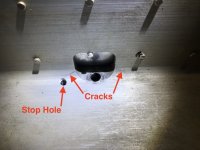
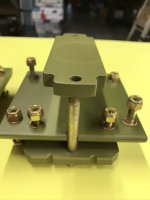
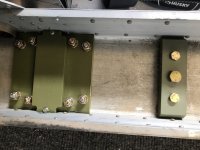
A word of caution…. the Desser Retread Elite Premium 2-groove 6-ply is a heavier tire than Van’s supplies for the RV-12. The gear carry-thru channel on the RV-12 is a weak design. Check for cracks in the aluminum gear channel where the rear bolt fastens the main U-clamp. See photos attached... I’m not overly-thrilled with Vans SB SB-00040 RV-12 Landing Gear Beam Reinforcement. I made large plates for the aluminum channel web (top and bottom) to spread the force that was concentrated at the bolt holes.
 

Attachments

  • EEB2304B-958C-4EF5-A9B2-5D844DD805EA_1_105_c.jpeg
    EEB2304B-958C-4EF5-A9B2-5D844DD805EA_1_105_c.jpeg
    173.4 KB · Views: 63
  • 4CA729FD-E300-45E6-898D-D0929C2E0CC8_1_105_c.jpeg
    4CA729FD-E300-45E6-898D-D0929C2E0CC8_1_105_c.jpeg
    242.7 KB · Views: 59
  • 60781183-13A0-463E-BFD4-A8DE6EBAA399_1_105_c.jpeg
    60781183-13A0-463E-BFD4-A8DE6EBAA399_1_105_c.jpeg
    117.8 KB · Views: 53
  • F953A201-1C6B-48FE-BF1A-A7662B2D0D81_1_105_c.jpeg
    F953A201-1C6B-48FE-BF1A-A7662B2D0D81_1_105_c.jpeg
    220.3 KB · Views: 57
Scott is probably the most knowledgeable person for the -12, he helped design it. This is what he said when the tire pressure topic came up a while back. The numbers are in the POH also. I use those numbers and have had no problems with tubes or abnormal tire wear. I typically get 450-500 hours on Desser retread elite premium 2-groove 6-ply. Double that time on the nose wheel.

Scott’s response;

“Regarding RV-12 recommended tire pressures….

A lot of people do not know that the tire and its internal pressure is part of the energy absorbing design of a landing gear system .

In an ideal world, the landing gear system would be capable of absorbing all of the energy from a worst case vertical drop, while reducing the vertical descent rate to zero.

Doing so keeps the load induced into the landing gear attachment structure to a minimum.

If the tire pressure is too high, more of the total energy gets transferred to the landing gear leg ( for an example think of a solid steel tire. It would have virtually zero compressibility so all of the vertical load would have to be absorbed by the landing gear leg.).

If the tire pressure is too low, it can be much more easily compressed. If during a particular load event it becomes fully compressed, it from that point acts like a solid steel wheel as in the previous example and transfers all remaining load to the landing gear leg.

This is why using the proper tire pressure on the RV 12 is important.

The lower specified pressures are not an issue for the RV 12 because the gross weight is about the same as the empty weight of all of the other two seat RV models, so the amount of tire compression and resultant tube movement is about the same as for other models“.IMG_3703.jpegIMG_3703.jpeg

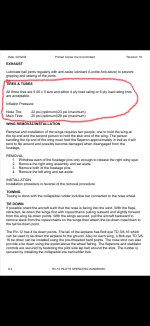
As a reference, I have attached a screenshot of the RV-12 POH that calls the specified tire pressure for the nose and main wheel.

Brett H
 
I just received my FOBO Bike 2 tpms sensors. When I tried to pair them, the app said they had already been paired by another customer and I could not complete the setup. :cautious:
 
Last edited:
I have purchased and installed the FOBO TIRE LITE TPMS sensors.

Oddly, purchasing the setup intended for a car with 4 sensors was less costly than purchasing the trike setup with 3 sensors.

The setup was straightforward and accepted that I only installed three of the four sensors.

The two concerns that I have are:
1.) The measured clearance between the TPMS sensor and the inside of the nose wheel is only an eighth of an inch. Further, the valve stem can be pushed such that the TPMS sensor will contact the inside of the nose wheel fork. I will give further consideration to switching to the inner tube with the shorter valve stem.
2.) The lowest low pressure limit that can be set is 25 psi. This conflicts with the specified nose wheel pressure being 22 - 23 psi. I will contact FOBO to find out if there is any way to lower this pressure limit and thus, minimize the warnings being issued.

Brett H

View attachment 100312View attachment 100313View attachment 100314

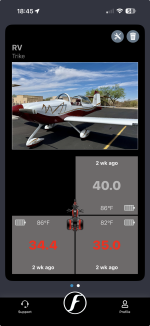
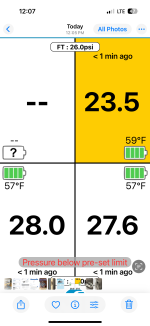
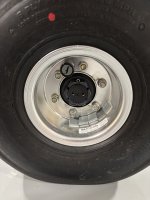
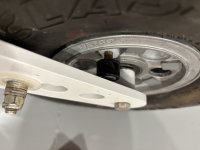
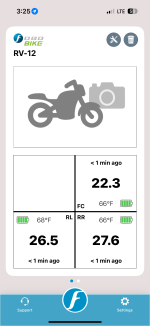
Since my last update I have returned the automotive FOBO TIRE LITE sensors and purchased the FOBO Bike 2 Trike sensors because I was unable to set the pressure limits in the FOBO TIRE LITE software to be within the range specified for the RV-12 tires. After doing this, I learned that by selecting the “Off-Road Mode” that the pressure limits can be set down to as low as 5 psi.

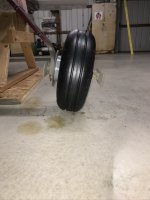
The FOBO Bike 2 Trike sensors are installed on all three wheels and working.

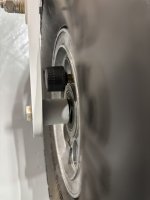
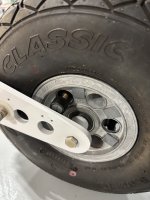
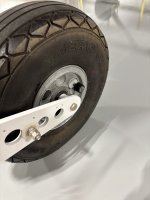
The clearance between the outside of the sensor and the inside of the nose wheel fork is 1/8 inch. But, if one gently moves the end of the tire tube valve stem it is possible to get the sensor to touch the inside of the nose wheel fork. To fix this I have threaded a nylon spacer onto the valve stem that is positioned to be aligned with the hole in the nose wheel. The spacer is slightly smaller than the hole in the nose wheel and thus, limits how far the valve stem can move preventing the sensor from touching the nose wheel fork.

I think that I now have a workable solution for putting a TPMS on all three wheels.

Brett H
Columbus, IN
RV-12 N4BH

IMG_3715.jpegIMG_3714.jpegIMG_3713.jpegIMG_3712.png
 
Back
Top