


Van's Air Force

The definitive Van's Aircraft support community! Buying, building or flying an RV? Join our exclusive family of mentors and enthusiasts!

Tip: Fine tuning tailwheel chain tightness

mburch

Well Known Member
Patron
This may be one of those things that's so obvious that everybody but me already knows it, but I'll post it here anyway in case somebody else didn't get the memo...

If you're using the stock tailwheel chains - or similar sash chain from the hardware store - adjusting the chain tension can be frustrating, if you find that one length of chain is too tight but adding a single extra link makes it too loose.

To fix this, all you have to do is grab your pliers and gently squash the round part of each chain link to be a little flatter. This makes each link slightly longer, which adds up if you do it to the entire chain. By doing this I was able to "grow" my tailwheel chains by about 1/4", which is about half-a-link!
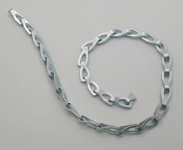
1757808266277.png
 
This may be one of those things that's so obvious that everybody but me already knows it, but I'll post it here anyway in case somebody else didn't get the memo...

If you're using the stock tailwheel chains - or similar sash chain from the hardware store - adjusting the chain tension can be frustrating, if you find that one length of chain is too tight but adding a single extra link makes it too loose.

To fix this, all you have to do is grab your pliers and gently squash the round part of each chain link to be a little flatter. This makes each link slightly longer, which adds up if you do it to the entire chain. By doing this I was able to "grow" my tailwheel chains by about 1/4", which is about half-a-link!

View attachment 97310
Matt,

Great info, I've been fighting this for roughly 100 hours. My chains are about 1/2 link too long. Going to replace and cut a link out and then give this a try.
 
Going to replace and cut a link out and then give this a try.
No need to cut any links! Just find the "square end" of the chain, pry the tabs of the last link apart, and pull it off. Then put it in your onboard spare-parts bag in case you run into difficulties later...
 
Here's another technique -- Place each chain end together, and double over in the middle of the loop. While grasping the chain, move your arm in a sweeping, pendulum-like movement. Release the chain from your grip at about 30% past the bottom locus of travel. Observe the chain arc end-over-end and into the nearest trash can.

Go to https://www.jdair.com/tailwheel-steering-link-for-vans-rv-aircraft-link-only/

:)
 
Excellent tip. Thank you. I’ve been known to fight this problem!

As to the other comment, this is why I hate the internet. You would never say that comment that way to his face. It’s ok to have an opinion about chains. But say it like you would in person.
 
It is a good tip.
For those of us that learned in antique tailwheel aircraft, if the chains were too tight, you added a link. There was no such thing as chains being too loose unless they were dragging on the ground.
However, folks like a certain feel in ground handling. There is no practical benefit. It’s jist what folks “like” and that’s good enough for me. This is why so many like the solid links, and why I do not.
Just a different perspective offered for thought not argument…. We’re all right! Link systems, tight chains, loose chains, no chains,. This is a good tip for those trying to achieve a more positive feel during taxi if they have chains.
 
A couple of cautions:

Flattening the bend in the link too much will locally work-harden the metal and may make it eventually crack and break. I'm guessing they are not made with the best quality steel.

Be sure to check the chain tension with the wheel off the ground. Some slack in the chain is needed with the wheel on the ground because the tailwheel spring straightens with the wheel unloaded, and that pulls tighter on the chains. If the chains become tight, this puts considerable load into the bottom rudder hinge. depending on how stiff the coil springs are, this could promote local cracking in the rudder spar where the lower hinge attaches.
 
Be sure to check the chain tension with the wheel off the ground. Some slack in the chain is needed with the wheel on the ground because the tailwheel spring straightens with the wheel unloaded, and that pulls tighter on the chains. If the chains become tight, this puts considerable load into the bottom rudder hinge.

Good reminder, Steve - Yes, when messing with tailwheel chains we should be checking the tension (or rather, slackness) with the wheel unloaded, not just when it's on the ground.
 
Last edited:
This may be one of those things that's so obvious that everybody but me already knows it, but I'll post it here anyway in case somebody else didn't get the memo...

If you're using the stock tailwheel chains - or similar sash chain from the hardware store - adjusting the chain tension can be frustrating, if you find that one length of chain is too tight but adding a single extra link makes it too loose.

To fix this, all you have to do is grab your pliers and gently squash the round part of each chain link to be a little flatter. This makes each link slightly longer, which adds up if you do it to the entire chain. By doing this I was able to "grow" my tailwheel chains by about 1/4", which is about half-a-link!

View attachment 97310
I STRONGLY do not recommend a chain with spring tension on it; if thee is a breakage, when the tail comes down, the aircraft will be headed toward the ditch! Just a bit of slack would prevent this excursion. Another (and better) solution is a steering link, been using one for over 25 years, love it!

Gary Brown aka DAR Gary
 
Here's another technique -- Place each chain end together, and double over in the middle of the loop. While grasping the chain, move your arm in a sweeping, pendulum-like movement. Release the chain from your grip at about 30% past the bottom locus of travel. Observe the chain arc end-over-end and into the nearest trash can.

Go to https://www.jdair.com/tailwheel-steering-link-for-vans-rv-aircraft-link-only/

:)
Unfortunately, I've managed to break two of them over the years. Went back to chains. Well, an old set of Tail Lynx.

Matt, your idea is a good one. Back in the day, I used multiple loops of safety wire between a couple of links to take up the slack. Your idea is more elegant.
 
Back
Top
