Van's Air Force

The definitive Van's Aircraft support community! Buying, building or flying an RV? Join our exclusive family of mentors and enthusiasts!

Throttle Cable Very Close To Exhaust

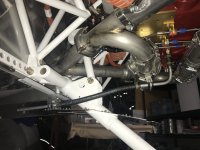
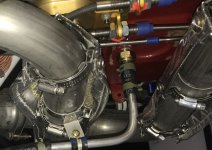
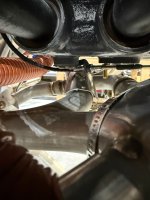
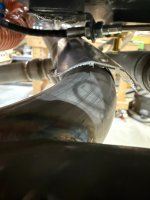
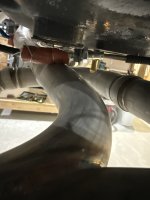
I am installing the Vetterman exhaust on my 14A and noticed that the throttle cable is very close to the exhaust cross-over. I added some firesleeve to the cable and plan on installing a heat shield. I also purchased the higher temp rated throttle cable from California push-pull.

Has anyone else ran into this issue?
IMG_2794.JPG
 
What brand of servo are you using ? I assume they did not provide a mounting bracket like you see in Marty’s picture. The bracket bolts to the bottom of the engine and then the mixture and throttle cables secure neatly to that.
 
Tell us more Marty...what is the material and source? Looks interesting.

ScreenHunter_3202 Apr. 22 08.32.jpg
 
Some control cables that pass through the firewall have the outer sheath made of a steel coil like a tightly wound spring. Mouse milk is thin enough to penetrate the outer sheath and lube the cable core. This combo is pretty much heat proof.. otherwise a heat shield will do as previously mentioned
 
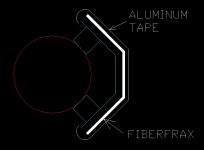
A typical SS or aluminum heat shield attached to an exhaust pipe absorbs radiant energy on the hot side, conducts it through the material, and re-radiates quite a lot of it on the "cool" side. Adding a layer of 970 under aluminum tape inserts an insulator into the conduction path.

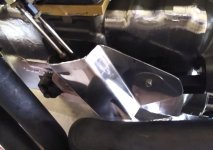
Cable Heat Shield Jan 2022 (1).jpg

Heat Shield w Insulator.jpg
 
Summarizing others’ and my own observations on protecting control cables:

I’ve been looking at this pretty closely lately while working on a triple cable replacement (two heat-damaged and one that was simply old and needed proactive replacement). What is most critical is the standoff shield. The first benefit is the reduction of radiant heat transfer to the cable. The air gap between the pipe and the shield is also very important for reducing heat transfer.

I believe the shield design Dan is showing is a very good approach. The insulation on one side of the shield is a bonus, as it slows the rate of conduction through the shield assembly. Both sides also need to be exposed to airflow to carry away heat.

The last item to consider is minimizing any wrap over the cables to only the zone close to the heat source. If longer lengths are wrapped, there is less opportunity for the cable to dissipate the heat that enters near the exhaust pipe.
 
I installed a heat shield and removed the firesleeve because there was not enough clearance. There is as small gap between the bracket and the heat shield but not a lot. I don't think I am going to get it any better than this. I did put heat reflective tape on the inside of the heat shield as suggested.

I will have to keep a close eye on this cable.
 

Attachments

  • IMG_2811.JPG
    IMG_2811.JPG
    1 MB · Views: 42
  • IMG_2812.JPG
    IMG_2812.JPG
    781.2 KB · Views: 41
Back
Top