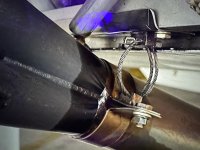
Hi all Vans Lovers,
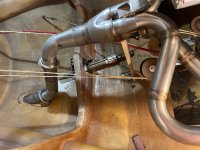
I am coming to you in order to get some examples and ideas about a proper 4 in 1 tuned exhaust tailpipe support for my plane, which is not a vans. Engine is a Lycoming LIO360, and I have a complete header system tuned, collector done, and I now put together the tailpipe. I used the CAFE400 report, to set the tailpipe diameter to 2.25 inch, and 20 to 30 inches long. Question is now : What is the best practice to avoid cracks, and maximize exhaust longevity.
I already saw that many exhausts include individual formed ball joints on the header tubes ( no springs, but formed female ball over a male ball coming from the cylinder). That is said to help for vibrations.
The collector has a fitting bolted on the engine.
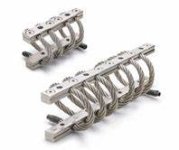
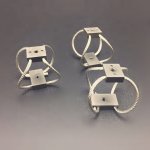
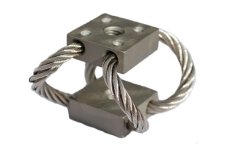
I also have a spring loaded ball joint after the collector, and the question is , how to support the end of the tailpipe.... rubber supports, spring supports? It is not fully easy, as on one side some support is needed while on the other side it still needs to be soft to allow the engine to dance on its mount, while the end of the tailpipe is "softly" connected to the airframe.
I am coming to you in order to get some examples and ideas about a proper 4 in 1 tuned exhaust tailpipe support for my plane, which is not a vans. Engine is a Lycoming LIO360, and I have a complete header system tuned, collector done, and I now put together the tailpipe. I used the CAFE400 report, to set the tailpipe diameter to 2.25 inch, and 20 to 30 inches long. Question is now : What is the best practice to avoid cracks, and maximize exhaust longevity.
I already saw that many exhausts include individual formed ball joints on the header tubes ( no springs, but formed female ball over a male ball coming from the cylinder). That is said to help for vibrations.
The collector has a fitting bolted on the engine.
I also have a spring loaded ball joint after the collector, and the question is , how to support the end of the tailpipe.... rubber supports, spring supports? It is not fully easy, as on one side some support is needed while on the other side it still needs to be soft to allow the engine to dance on its mount, while the end of the tailpipe is "softly" connected to the airframe.