

Van's Air Force
You are using an out of date browser. It may not display this or other websites correctly.
You should upgrade or use an alternative browser.
You should upgrade or use an alternative browser.
Simple and effective rudder gust lock for the -10??
- Thread starter AndyT
- Start date


Wish I had a photo...but I and others use our trusty Bogart tow bar wedged between the lower seat front (pushed to full rear position) and the lower portion of the rudder pedal. To make it really secure you will need to add some sort of pin or ear to the bottom (cup end) of the tow bar to engage with the rudder pedal. I supply have a couple of 1/8" steel pins hose clamped to the tow bar and extending maybe 3/4" beyond the cups. One of these days I will get around to welding them on.Anyone using a simply designed rudder gust lock for the 10 besides the one from anti splat? That didn’t work for my configuration. Thx!

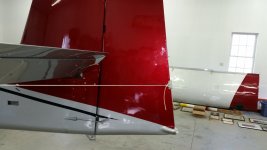

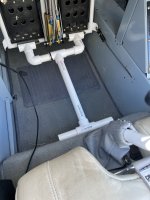
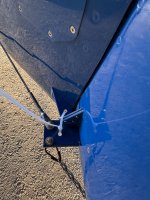
What did you attach the other end of the string to? Couldn’t tell from the picture. Thanks.Keep it simple, and use the rudder length to your advantage. I think anything that relies on the rudder horn is vulnerable as the rudder lever arm is huge.
The angle is padded to protect the rudder tailing edge.
Carl

The riveted trailing edge failed on many rudders during Osh a few years back so not sure that's a great place either structurally?Keep it simple, and use the rudder length to your advantage. I think anything that relies on the rudder horn is vulnerable as the rudder lever arm is huge.
The angle is padded to protect the rudder tailing edge.
Carl
The challenge is to minimize torsion on the rudder, which is what shears the TE. Most of our gust locks apply restraint at the rudder horns, which means the upper part of the rudder is unsupported and torques/applies a bunch of torsion to the rudder. The closer to the center you "grab" the rudder, the less torsion load there will be. So Carl's gust lock is superior to the Anti-splat in that regard and is also superior to the U shaped pin arrangement. In the big Oshkosh storm, I had the antisplat, which secures the rudder with tension on the rudder cables and one of the clamp style gust locks which was clamped on the counterbalance. That approach also reduces torsion. I had no problems. The -7 next to me suffered a destroyed rudder/split the trailing edge. He only had a lock towards the bottom of the rudder.The riveted trailing edge failed on many rudders during Osh a few years back so not sure that's a great place either structurally?
Don’t know how similar the RV-10 rudder pedals are to the the 14, but these work nicely for my 14A. I haven’t installed the included plates yet, but even over the carpet the locks work well. Adjustable, installs in a few seconds and stores easily. I'm very happy with these.
https://www.terrestrialimaging.com/products/dromight-rudder-lock
https://www.terrestrialimaging.com/products/dromight-rudder-lock
Attachments
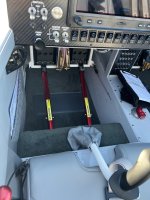
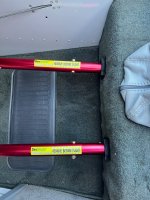
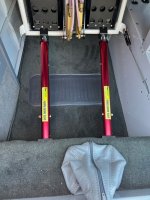

My worked perfect at the Osh big blow where several A's in my row had damaged rudders.

 www.rvplasticparts.com
Rudder Gust Lock | rvplasticparts
A proven device to secure the rudder. Material is ASA plastic that is weather resistant and sun resistant. Recommend to use a good stiff rope such as 1/4 inch Dyneema Flight Line rope or similar to secure the rudder gust lock. You will need 30ft of rope total and you will have some left over...
www.rvplasticparts.com
Here's mine, not on a 10, it's on a 6, but you get the idea.Anyone using a simply designed rudder gust lock for the 10 besides the one from anti splat? That didn’t work for my configuration. Thx!
Dale
Attachments
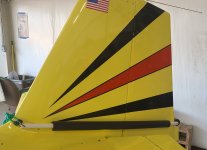
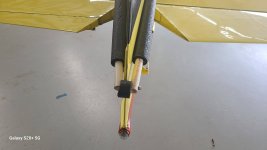
Anyone using a simply designed rudder gust lock for the 10 besides the one from anti splat? That didn’t work for my configuration. Thx!

The challenge is to minimize torsion on the rudder, which is what shears the TE.
..
.
I had the antisplat, which secures the rudder with tension on the rudder cables and one of the clamp style gust locks which was clamped on the counterbalance. That approach also reduces torsion.
Same like I use. AntiSplat hold bottom, home made clamp style holds the top.

I made something very similar to what Carl has. Bungee cords on the side cords that absorb any strong gusts and keep them tight. On my Tailwind the cords go to the outside edge of the elevator and loop around the elevator balance "arm". Very light, very compact and easy to install. Cost me about 10 bucks at the hardware store for two bungees, some cord and a short piece of angle aluminum. I stuck some packaging foam inside the angle to protect the trailing edge of the rudder. Held things tight last year during the big storm that rolled through the Sun N Fun area last year (we were tied down at Leesburg). I happened to be tied down with the tail into the wind so was really concerned but it held tight.Keep it simple, and use the rudder length to your advantage. I think anything that relies on the rudder horn is vulnerable as the rudder lever arm is huge.
The angle is padded to protect the rudder tailing edge.
Carl
Keith
Simple and effective can be an oxymoron in this case. I have made my version of this which is nearly identical and it has been very effective but it is not simple.Keep it simple, and use the rudder length to your advantage. I think anything that relies on the rudder horn is vulnerable as the rudder lever arm is huge.
The angle is padded to protect the rudder tailing edge.
Carl

I have not flown yet, but someone posted an idea I thought about trying someday
Buy a roll of packing plastic. The 5" wide stuff like saran wrap. It's cheap and light.
Pull the rudder all the way to one side. Maybe one side is better than the other. Prevailing winds and such. Secure the plastic and start wrapping the VS & Rudder. Afterwards, cut it off and dispose or find a plastic recycle bin. One roll is good for quite a few locks.
Buy a roll of packing plastic. The 5" wide stuff like saran wrap. It's cheap and light.
Pull the rudder all the way to one side. Maybe one side is better than the other. Prevailing winds and such. Secure the plastic and start wrapping the VS & Rudder. Afterwards, cut it off and dispose or find a plastic recycle bin. One roll is good for quite a few locks.




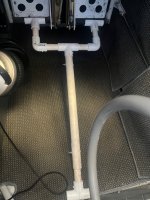
About 4-5 years ago I made something like the one that was posted by Marcalex on Monday. The difference is that I included a compression spring inside so that I could drop it more easily into place. My original idea was that it would be my testing model that I would improve on. It has worked so well that I never did anything more to it.
Attachments

Wish I had the details but I went off of what Greg Hale did. It’s essentially a bracket on the tail, then you drill a hole in the rudder horn. Then you fabricate a bracket with pins to lock your rudder. I use my seat belt to lock the aileron. Almost 6 years flying and I’ve had zero issues.
The other end of the line goes to the elevator journal bearing. Use a bowline knot so it is easy to untie. Using the seatbelt to secure the elevators in the up position the line does not touch the elevators.What did you attach the other end of the string to? Couldn’t tell from the picture. Thanks.
Carl
Attachments
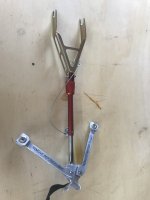
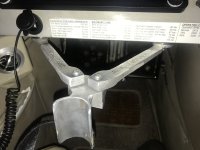
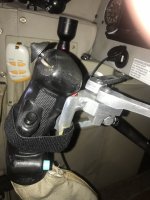
I assume you made that piece yourself? Do the arms attach to something on the bottom side of the panel?My solution...modified anti-splat. Locks the rudder pedals as well as the stick. Sorry for the large pictures.
View attachment 78442
View attachment 78440View attachment 78441
Yes here is my simple version, now been in use eight years and 1100hours trouble free with no mods or replacement parts required. I wanted something that was simple, could restrain the rudder before I left the seat (handy for refuelling) and didn’t need any seperate loose parts. System uses marine grade polyester 16 plait cord attached to the back of the right pedal left side and back of left pedal right side, running to Harkin 22mm single block pulleys attached to the front of the tunnel both sides, then out to Harkin Micro Camatic Cleats attached to both sides of the tunnel at an appropriate height and position. All it takes is to reach down both sides of the tunnel and a quick pull on both cords to lock and safely secure the rudder. No chance of leaving the lock on because as soon as you touch the pedals with your feet you know the rudder is locked, easily disengaged by a quick pull of the cord on each side. (of course this system must include enough slack to allow full rudder when not engaged, which is easy to achieve). The Harkin pulleys, cleats and the cord used are well known good quality boating accessories.Anyone using a simply designed rudder gust lock for the 10 besides the one from anti splat? That didn’t work for my configuration. Thx!
Attachments
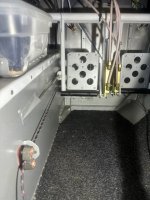
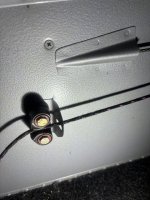
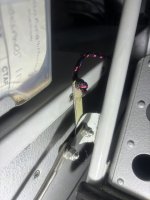
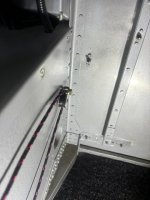

For the control stick and aileron…<SNIP>
For rudder, I made my own with a $15 paint stick from Amazon. Here's two links to show instructions and pics.
https://vansairforce.net/threads/gust-lock-for-rudder.169153/post-1458287
https://vansairforce.net/threads/gust-lock-for-rudder.169153/post-1458294
Been flying 4 years and 540 hours. Results have been super simple and effective.
For rudder, I made my own with a $15 paint stick from Amazon. Here's two links to show instructions and pics.
https://vansairforce.net/threads/gust-lock-for-rudder.169153/post-1458287
https://vansairforce.net/threads/gust-lock-for-rudder.169153/post-1458294
Been flying 4 years and 540 hours. Results have been super simple and effective.
Last edited by a moderator:

The piece at the stick grip was made by a friend. The arms came from another site and were modified to fit. The arms attach to quick disconnects attached on the bottom of the paned. They are similar to the gust locks used on an Turbo Ag Cat.I assume you made that piece yourself? Do the arms attach to something on the bottom side of the panel?

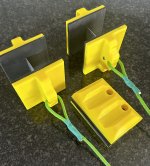
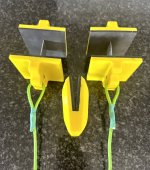
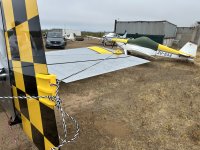
I here is mine. It is actually an Elevator and Rudder gust lock combined. Very simple and very easy to use. The two Elevator locks just slide on and the V part sits on the rudder. One can use more than one way to tighten or attach the ropes at the Rudder V part. Pictures shown are on my RV7A as well as on a friends RV10.
Attachments
-
 IMG_1338.jpeg2.4 MB · Views: 153
 -
 IMG_1337.jpeg1.9 MB · Views: 159
 -
 IMG_0531.jpeg3.3 MB · Views: 159
 -
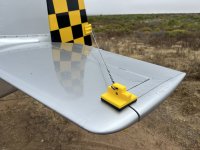 IMG_0530.jpeg2.1 MB · Views: 163
 -
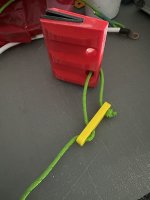 IMG_1995.jpeg1.1 MB · Views: 168
 -
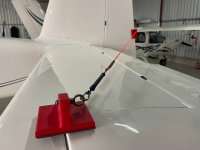 529cfcaa-1a09-4e7c-942f-ba5e7903c197.jpeg92.9 KB · Views: 143
 -
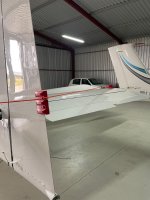 1a582ec1-fd0b-420f-b654-a1929819fce6.jpeg164.8 KB · Views: 141
 -
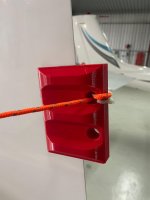 9485f8be-2c9b-4f81-bc7a-1cf952d80df4.jpeg83.5 KB · Views: 175
Last edited:
Hi Andy, I have sent you a direct message. In short I am making and selling it. I have been advertising on VAF for many years, but somehow cannot get DR to confirm and make me an advertiser again. I do most of my marketing on RV Facebook groups nowadays. You can find it hereGreat! Love it. Did you make it or buy it somewhere?

Jokes aside, this is kind of genius. a small piece of frog tape on the surfaces should work just fine


Just a word of caution. This goes for you as well as others reading this... There are several reports of both accomplished and new aviators that have forgotten to remove gust locks prior to flight which ended to their demise. I cringe when I see zip ties or something that is hard to see and remember to remove.
There are many ways shown here from using PVC to buying an already made solution. But find one that you can't forget... Meaning, it's in your way and there is no way to forget it. Murphy's law - If you can forget it one day, you will. For God's sakes, don't use a zip tie!
There are many ways shown here from using PVC to buying an already made solution. But find one that you can't forget... Meaning, it's in your way and there is no way to forget it. Murphy's law - If you can forget it one day, you will. For God's sakes, don't use a zip tie!

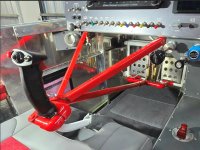

You gotta ask yourself, " whats going to be the best way to keep the rudder from whipsawing back and forth and banging into the elevators, restrain the rudder pedals, or restrain the rudder?" The best rudder "gust lock" is something that restrains the rudder. I'd do something like this. Only, I'd not have the bare bungee hooks digging into the vertical stab leading edge (gotta be an easy way to pad those).
As a structural engineer evaluating several rudders that were damaged last year at Oshkosh, the damage that appears at first glance to be from rudders impacting elevators, was more likely buckled skins from the torsional twisting of the rudders. It just presents itself as dented or wrinkled skins at the level of the elevator since that is the widest u supported point. Many people with damage had the rudders secured at the bottom by pedal locks or gust locks mounted low on the rudder, but the top of the rudder was unrestrained. This allowed the big rudders, particularly on -10s to still twist quite a bit in the high quartering tailwinds. Enough to buckle the skins. It was heartbreaking to see.
I like the pedal locks, but believe they need to be paired with an additional rudder mounted lock that grabs the trailing edge of the rudder above the horizontal stab as some have shown. Tying that with a horizontal stab lock seems to make sense.
I like the pedal locks, but believe they need to be paired with an additional rudder mounted lock that grabs the trailing edge of the rudder above the horizontal stab as some have shown. Tying that with a horizontal stab lock seems to make sense.

Ivan Kristensen did this on his RV-14A after damage at Oshkosh 2022 thunderstorm. I suppose higher up on the rudder TE would be better. Carl Froehlich RV-10 Posts #3 & #20 is somewhat higher and Jan Hanekom RV-7A and RV-10 Post #27 look even higher.… rudder mounted lock that grabs the trailing edge of the rudder above the horizontal stab as some have shown. Tying that with a horizontal stab lock seems to make sense.

Airplane Kristensen Ivan · May 19, 2023 – Mar 26, 2026 📸
Shared album · Tap to view!
 photos.app.goo.gl
Last edited:
I hear what you’re saying, but not sure I understand. If a pilot flying 100 knots needs to slip, doesn’t he input a large force to the bottom of the rudder, and the top of the rudder needs to follow along with minimal twisting and no permanent damage? How is fixing the bottom and having the wind blow on the top any different?As a structural engineer evaluating several rudders that were damaged last year at Oshkosh, the damage that appears at first glance to be from rudders impacting elevators, was more likely buckled skins from the torsional twisting of the rudders. It just presents itself as dented or wrinkled skins at the level of the elevator since that is the widest u supported point. Many people with damage had the rudders secured at the bottom by pedal locks or gust locks mounted low on the rudder, but the top of the rudder was unrestrained. This allowed the big rudders, particularly on -10s to still twist quite a bit in the high quartering tailwinds. Enough to buckle the skins. It was heartbreaking to see.
I like the pedal locks, but believe they need to be paired with an additional rudder mounted lock that grabs the trailing edge of the rudder above the horizontal stab as some have shown. Tying that with a horizontal stab lock seems to make sense.

I hear what you’re saying, but not sure I understand. If a pilot flying 100 knots needs to slip, doesn’t he input a large force to the bottom of the rudder, and the top of the rudder needs to follow along with minimal twisting and no permanent damage? How is fixing the bottom and having the wind blow on the top any different?
At max deflection of 35 degrees the resultant force on the rudder is only about half of the airspeed (even less actually because the slip angle reduces the apparent wind angle further)
144mph IAS Va is roughly equivalent to 80mph perpendicular to the rudder so I can see it not being designed to be any stronger than that. (Not implying that a 10s Va is rudder limited)
Last edited:
Post #7 in the thread...I like the pedal locks, but believe they need to be paired with an additional rudder mounted lock that grabs the trailing edge of the rudder above the horizontal stab as some have shown. Tying that with a horizontal stab lock seems to make sense.
sorry - didn't mean to restate something you had already said. Agree 100%.Post #7 in the thread...
sorry - didn't mean to restate something you had already said. Agree 100%.
No worries. It needs to be repeated so it sticks!
Is there general consensus that securing the rudder trailing edge uses that lever arm to advantage, as compared to securing the rudder at the horn with pins or rudder pedal stops that instead uses the lever arm to focus stress on the horn?
If so, then the corollary to this is to not use bungee cords to secure the rudder trailing edge. The bungee cord will allow some movement - perhaps enough to release the trailing edge or slack the cord so it comes off. Don’t use hooks either as they tend to not be friendly to your elevator skins. Practice your Boy Scout Bowline knots.
I have not seen any rudder lock idea that is more secure than the $2 approach I posted (#3 and #20).
Carl
If so, then the corollary to this is to not use bungee cords to secure the rudder trailing edge. The bungee cord will allow some movement - perhaps enough to release the trailing edge or slack the cord so it comes off. Don’t use hooks either as they tend to not be friendly to your elevator skins. Practice your Boy Scout Bowline knots.
I have not seen any rudder lock idea that is more secure than the $2 approach I posted (#3 and #20).
Carl
chrisskymaster
Member
Been following this thread for a bit and wanted to chime in as the manufacturer or the DroMight Rudder Lock. The zip tie idea is very dangerous. I would steer clear of anything like that as it could end badly if the pilot forgot to remove it. The fellow who pieced together PVC tubing and tied it do the instrument panel base and the stick is awesome. The only issue I point out is that the PVC has been known to break and then you have no control locks at all. Our solution for the $100 hamburger, pulling the plane out of the hangar, a fuel pit stop and even a few days outside on the ramp is incredibly simply and extremely reliable. We wanted a solution that was installed while in the aircraft so that it was impossible to forget to remove it. Have a look. I think you will agree that it is the perfect solution. Currently only available for the RV-14 but we are introducing a version for the RV-10 this summer.

 www.terrestrialimaging.com
Safe flying...
DroMight™ Rudder Lock for Vans RV-14 and RV-14A
The DroMight Rudder Lock is the best rudder lock for the Vans RV-14 and RV-14A aircrafts. This tension bearing dual rudder lock system allows for the rudder to have flexibility in heavy winds while also keeping it safe and secured. The DroMight Rudder Lock is quick to install and easy to remove...
www.terrestrialimaging.com
Safe flying...


Weefle
Well Known Member
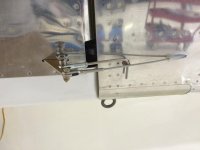
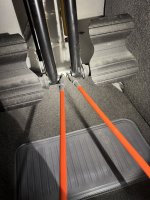
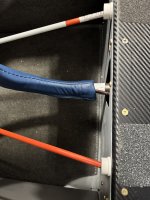
Here is my rudder gust lock for the budget conscious aka cheap like me.
This fits my RV 10 with the controlled approach pedals.
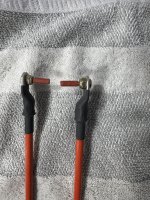
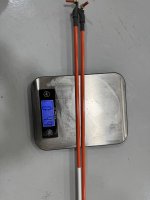
Material list is: 1 - 4’ fiberglass driveway marker, 2-#4 AWG lugs, 2- 1/2” pvc end caps and 2- 10/32 screws with nylok nuts.
Easy 30 second install and removal and it stores easily. The rods flex enough to get them in the pvc holders that I machined down. You could 3D print them for a smaller diameter which I may still do but they are easily available at HD.
Cheers
Keith
This fits my RV 10 with the controlled approach pedals.
Material list is: 1 - 4’ fiberglass driveway marker, 2-#4 AWG lugs, 2- 1/2” pvc end caps and 2- 10/32 screws with nylok nuts.
Easy 30 second install and removal and it stores easily. The rods flex enough to get them in the pvc holders that I machined down. You could 3D print them for a smaller diameter which I may still do but they are easily available at HD.
Cheers
Keith
Attachments
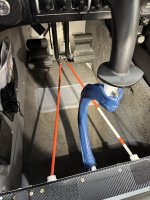

I made mine from some square section tube and some angle I had laying around. Design criteria were;
1. Impossible to forget to remove before flight
2. Easy to install and stow from the pilot's seat so there's no temptation to get lazy and not use it
3. Is still effective enough to protect the control surfaces
The fork part connects to the rudder pedals and the other end has a short length of round tube that engages with an aluminum "nub" that bolts through on of the existing screw holes in the seat pan frame under the seat. There's enough elasticity in the rudder cables to push on both rudder pedals to get the tube over the nub easily. Then, the stick gets tied to the little cradle with a few wraps of velcro and you're done. Installation and removal take seconds and I lay it on the copilot floor when not in use.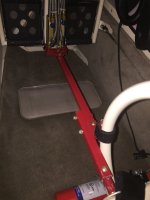
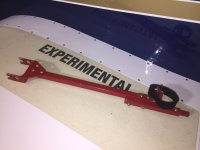 This thing has served me well for over 800hrs and survived the big blow at OSH in 2019 when the plane next to me pulled up it's tiedowns!
1. Impossible to forget to remove before flight
2. Easy to install and stow from the pilot's seat so there's no temptation to get lazy and not use it
3. Is still effective enough to protect the control surfaces
The fork part connects to the rudder pedals and the other end has a short length of round tube that engages with an aluminum "nub" that bolts through on of the existing screw holes in the seat pan frame under the seat. There's enough elasticity in the rudder cables to push on both rudder pedals to get the tube over the nub easily. Then, the stick gets tied to the little cradle with a few wraps of velcro and you're done. Installation and removal take seconds and I lay it on the copilot floor when not in use.
This thing has served me well for over 800hrs and survived the big blow at OSH in 2019 when the plane next to me pulled up it's tiedowns!There is consensus that in a real windstorm, any gust lock that relies on the control horn (either a u bolt on the horn, or a bracket on the rudder pedals) will not protect the rudder. Wind forces will bend the structure while the lock holds the horn in place. A control lock that supports the rudder out to the trailing edge is the only really robust solution. A travel lock that uses the horn for short outdoor stays makes perfect sense for those who keep the plane inside the vast majority of the time.
Last edited:
