Van's Air Force

The definitive Van's Aircraft support community! Buying, building or flying an RV? Join our exclusive family of mentors and enthusiasts!

Servos for Carb Heat and or Alternate Air

jackking123

Well Known Member
Patron
Sorry if this been asked before. I looked. If anyone has done this could you share the wealth (of knowledge).
When I say servos I mean something other than a plastic RC model servo but something made of metal, high torque (robotic) but still light and small.
MAC elevator servos might do but want to roll my own.

Why? Keep from running a Teleflex push pull cable control from engine compartment, through firewall and into panel.
Just to review or for those who don't know:
  • Carb heat on traditional Vans FAB, rotates 90 degrees to block outside air and draw air from inside cowling.
  • Alternate air per Van's is on bottom, plate rotates out of the way to provide alternative air if a bird fly's into your scoop.
Don't want the servo to be energized all the time or try to force the door past stop. Limit switches or microcontroller will be needed.

I know they make microcontrollers. You have to program them (I think from laptop via USB). Some I think are connected to microprocessor like Arduino. Except for a Raspberry Pi , I have no experience. I have to learn how to do this (part of the fun). The controller gets input moves servo X degrees. It gets another input it reverses X degrees. Pretty sure off the shelf stuff can do this easily. If you have more than one servo you can control them from same microprocessor I assume.

Just thought experiment at his point. However being able to hit OPEN or CLOSE toggle to get Carb Heat would be cool. Anyone do this?
 
Sorry if this been asked before. I looked. If anyone has done this could you share the wealth (of knowledge).
When I say servos I mean something other than a plastic RC model servo but something made of metal, high torque (robotic) but still light and small.
MAC elevator servos might do but want to roll my own.

Why? Keep from running a Teleflex push pull cable control from engine compartment, through firewall and into panel.
Just to review or for those who don't know:
  • Carb heat on traditional Vans FAB, rotates 90 degrees to block outside air and draw air from inside cowling.
  • Alternate air per Van's is on bottom, plate rotates out of the way to provide alternative air if a bird fly's into your scoop.
Don't want the servo to be energized all the time or try to force the door past stop. Limit switches or microcontroller will be needed.

I know they make microcontrollers. You have to program them (I think from laptop via USB). Some I think are connected to microprocessor like Arduino. Except for a Raspberry Pi , I have no experience. I have to learn how to do this (part of the fun). The controller gets input moves servo X degrees. It gets another input it reverses X degrees. Pretty sure off the shelf stuff can do this easily. If you have more than one servo you can control them from same microprocessor I assume.

Just thought experiment at his point. However being able to hit OPEN or CLOSE toggle to get Carb Heat would be cool. Anyone do this?
Haven’t done it but I have used Actuonix linear actuators and their LAC board. I initially went the RC route but found that the PWM board as well as the 6 volt actuators caused more issues. Ended up with 12 v actuators and the LAC board. Works great…and the LAC board allows for about any input you could want.
 
Besides the opinion that your solution is more complex than just installing the stock Bowden cables, I will say that since the parts you're moving are to be either fully open or fully closed, you really want linear actuators, not servos. (An actuator only needs 12V and a DPDT switch to operate. A servo needs electronics to make work). I've had two of those Actuonix units on my -6 for about 7 years. One is an actuator which operates the ASA cowl flap. The other is a servo which operates a NACA scoop floor diverter ramp for my A/C system. It variably regulates airflow to the condenser based on head pressure as the input.

Unfortunately, the Actuonix units are not robust enough for under-cowl usage. They're good for two years max and then need replacing. I've looked for something better, but haven't found anything (yet). At least they're cheap.

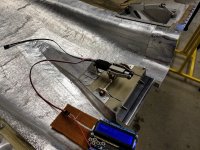
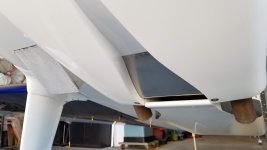
1734299748933.jpeg1734299951893.jpeg
 
Last edited:
Besides the opinion that your solution is more complex than just installing the stock Bowden cables, I will say that since the parts you're moving are to be either fully open or fully closed, you really want linear actuators, not servos. (An actuator only needs 12V and a DPDT switch to operate. A servo needs electronics to make work). I've had two of those Actuonix units on my -6 for about 7 years. One is an actuator which operates the ASA cowl flap. The other is a servo which operates a NACA scoop floor diverter ramp for my A/C system. It variably regulates airflow to the condenser based on head pressure as the input.

Unfortunately, the Actuonix units are not robust enough for under-cowl usage. They're good for two years max and then need replacing. I've looked for something better, but haven't found anything (yet). At least they're cheap.

View attachment 76362View attachment 76363
Hmmm. I guess the 500+ hours and 4 1/2 years on my three Actuonix actuators don’t count then?

I have them on both heat valves and oil cooler valve. No issues, whatsoever.
 
Hmmm. I guess the 500+ hours and 4 1/2 years on my three Actuonix actuators don’t count then?

I have them on both heat valves and oil cooler valve. No issues, whatsoever.
No one ever said your experience doesn't count. But I'd guess your good experience is due to your actuators being not as exposed to heat as mine are. Your heat valves are on the firewall and away from radiant exhaust heat, as is your oil cooler duct. So, strategic location obviously helps longevity.

Thanks to blocking a big part of my cowl exit, the air coming out is pretty hot, and the cowl flap actuator is surrounded by that hot airflow. My diverter ramp servo is between both exhaust main pipes in the center of the lower cowl and sees lots of radiant heat. They both have aluminum tape on the plastic motor housings, but that apparently doesn't do much. Just replaced the ramp servo last month and this time I added a foil-backed fiber blanket around it. We'll see how that fares. There's not much I can do to insulate the cowl flap actuator without also blocking airflow.

OP wants to put these actuators on the FAB, which is also pretty close to exhaust tubing, plus in that location they are likely to see oil drips as well.
 
You don’t have to do too much digging here to see that they have a bad service record in a hot environment as they weren’t designed for that. Just because some have survived doesn’t make it an appropriate use case.
I have one left out of three.

I’m all for people experimenting and I’ve seen some good alternatives like putting the actuator in the cabin then have it running a cable. Each to their own.

The important thing is to not make your safety of flight dependent on one of these not s#%@ing itself. So for me that would exclude things like oil cooler/alt air/carb heat. It would be truly ironic (and quite possible) if you had carb ice and the actuator had melted….
 
Because a suitable heat resistant actuator will be much cheaper than a bowden cable & knob? https://www.aircraftspruce.com/catalog/appages/buttondashctrl.php?clickkey=115849 $22.00
Or are you looking to automate this, hence wanting to be electric dependent?
I can't recall seeing anyone ever do this in my 8 years or so on the forum.
Thanks I hear you, You like a teleflex cable (bowden). No offense cost is not the prime or only criteria here. The question is how?

I would not use that cheap $28 cable with a wire end you gave as an example for carb heat. That thin wire, will fail overtime vibrating out on the FAB. Not my first rodeo. The cable I'd use is about $126, solid shaft and threaded end: https://www.aircraftspruce.com/catalog/appages/a770.php

Cable with sold shaft/threaded end is better than than a plain wire end, with a cheap screw clamp pivot. Between vibration and the wire flexing every time you pull and push it back in, every flight several times, it will break it. Paper clip bent back and forth? Fatigue. I would not expect more than 500hrs from my experience. You will know. The knob will come all the way out in your hand. Doha!

Per suggestion above a linear actuator from my 2 min research is $70 and control board $40, plus a switch. (Although I found some $20 ones from China with built in limit switches that might work with a DPDT 3 position switch). Reliability, as stated above, cowl flap 2 years. Then another 500 hrs and almost 5 years still going strong. I'd expect (could be wrong) a linear actuator on the small lightly loaded Carb heat door (or CABIN HEAT door) would last longer? Heat and vibration are factors. Those are the two applications I'm looking at.

Teleflex (Bowden) is "tried and true" and per Van's plans. Check. Linear actuator will work as I intend to use them and hate to say it, kind of trick, cool. Really comes down to my decision. Yes, cost, ease of installation, weight, reliability, maintainability are all factors. They both have merit.
 
Last edited:
OP wants to put these actuators on the FAB, which is also pretty close to exhaust tubing, plus in that location they are likely to see oil drips as well.
Good points:
Installation option for a linear actuator is shield it from heat and oil.
My 4 into 1 my pipes collect in back. Area under front of engine has no exhaust pipes in close proximity to Carb Heat Door.​
For oil getting on actuator, cover or shield.​
Vibration is an issue as well as overall heat as you point out.​
They don't call it experimental for nothing. TBD.​

Linear actuator on firewall cabin heat airbox is a good choice for an actuator, backside of firewall. On the other hand a plain wire cable will work with little vibration and low usage to fatigue and break wire.

For Carb heat at this moment leaning towards $130 cable. Cabin heat box, I think a linear actuator might be cool (or hot).
 
Last edited:
I would not use that cheap $28 cable with a wire end you gave as an example for carb heat. That thin wire, will fail overtime vibrating out on the FAB. Not my first rodeo. The cable I'd use is about $126, solid shaft and threaded end: https://www.aircraftspruce.com/catalog/appages/a770.php

Cable with sold shaft/threaded end is better than than a plain wire end, with a cheap screw clamp pivot. Between vibration and the wire flexing every time you pull and push it back in, every flight several times, it will break it. Paper clip bent back and forth? Fatigue. I would not expect more than 500hrs from my experience. You will know. The knob will come all the way out in your hand. Doha!

I don't have an opinion on the actuator question but wish to offer a datapoint for the benefit of fellow "carbed" builders and flyers. Yes, the legacy wire carb heat cable does appear sorta cheap but it has served hundreds of RVers well for the past few decades. I recently rebuilt the carb heat flapper on the airbox due to the hinge showing wear but the wire cable (and bugnut) still looks fine after 25 years in service. One factor may be due to the low frequency of use of carb heat.....once per flight during runup to check its function. The rest of the time it just goes along for the ride. I feel an essential key to longevity of the cable is installing the bugnut so it rotates in the flapper arm so the cable is not flexed during actuation.

I've had two instances of needing carb heat in the RV-6, both on the ground after a long taxi in very humid conditions. Using a higher grade cable is certainly an acceptable option if it brings confidence to the builder but the wire cable can deliver good service.
 
I don't have an opinion on the actuator question but wish to offer a datapoint for the benefit of fellow "carbed" builders and flyers. Yes, the legacy wire carb heat cable does appear sorta cheap but it has served hundreds of RVers well for the past few decades. I recently rebuilt the carb heat flapper on the airbox due to the hinge showing wear but the wire cable (and bugnut) still looks fine after 25 years in service. One factor may be due to the low frequency of use of carb heat.....once per flight during runup to check its function. The rest of the time it just goes along for the ride. I feel an essential key to longevity of the cable is installing the bugnut so it rotates in the flapper arm so the cable is not flexed during actuation.

I've had two instances of needing carb heat in the RV-6, both on the ground after a long taxi in very humid conditions. Using a higher grade cable is certainly an acceptable option if it brings confidence to the builder but the wire cable can deliver good service.
Great points. My first RV build was 1994 and flew that RV-4 1000 + hours. Yep the carb heat hinges wear. Show me a FAB airbox I will show you one that is cracked or about to crack, The door hinge wears. I replace mine with extruded type not the formed one. If not mistaken van or some one went to a soft fabric hinge? Service bulletin I recall? Anyway the hinges wears out and extruded hinge is far better. It is normal maintenance to check, repair and rebuild the airbox from time to time. Part of the issue is TOO tight connection between airbox and cowl. That puts in high loads into the airbox and mount to engine.

So to your point this is harsh area. Also looking at the specs of the (cheap) $20 china made actuators they are rated and happy up to 120F. I suspect the $70 ones are more robust. Still that is not boding well for engine compartment use. As far as the wire cable, I hate them. The sold threaded end is aircraft quality. The wire ones kind of lawnmower. No doubt people get better luck than me. I broke one after a few hundred hours, and replaced it with sold ended cable, went 900 hours with no issues, before selling the plane. It's my personal pet peeve. I just don't like applying Carb Heat and having the control in my hand.... ha ha. Makes the passengers eyes get big.
 
No one ever said your experience doesn't count. But I'd guess your good experience is due to your actuators being not as exposed to heat as mine are. Your heat valves are on the firewall and away from radiant exhaust heat, as is your oil cooler duct. So, strategic location obviously helps longevity.

I think the other big factor is static load. The guts are plastic. Based on the one Firgelli model (now sold as Actuonix) I tried as a cowl exit door actuator years ago, I suspect the gear material creeps when hot and under load. No static load, and lifespan goes up big time. The black cylinder on the wire below is a temperature sensor, back when I was trying to get an handle on freeplay developing in the system.

2012-11-10_16-44-54_99.jpg

FWW, I've been running a common trim servo 10 years or more the the same application. The guts may or may not be more heat resistant, but are probably larger.

RAC Servo 600P.jpg
 
I would not use that cheap $28 cable with a wire end you gave as an example for carb heat. That thin wire, will fail overtime vibrating out on the FAB. Not my first rodeo. The cable I'd use is about $126, solid shaft and threaded end: https://www.aircraftspruce.com/catalog/appages/a770.php

.
if the control cable connection methodology that is detailed in the latest design fab build manual is used, longevity of the control cable is not an issue.
The previously common failure mode was using the adapter on the wire that allowed for installation of a rod end.
The high mass of that rod end was the issue. That coupled with engine vibration and it would fatigue, the wire in a short time.
The new method is simple, functional, and long lasting.
 
if the control cable connection methodology that is detailed in the latest design fab build manual is used, longevity of the control cable is not an issue.
The previously common failure mode was using the adapter on the wire that allowed for installation of a rod end.
The high mass of that rod end was the issue. That coupled with engine vibration and it would fatigue, the wire in a short time.
The new method is simple, functional, and long lasting.
I agree with Scott, if it aint broke, dont fix it...guess im old and set in my ways...:rolleyes:
 
if the control cable connection methodology that is detailed in the latest design fab build manual is used, longevity of the control cable is not an issue.
The previously common failure mode was using the adapter on the wire that allowed for installation of a rod end.
The high mass of that rod end was the issue. That coupled with engine vibration and it would fatigue, the wire in a short time.
The new method is simple, functional, and long lasting.
Although this is an appeal to authority, I have been building and flying RV's +30 years. Does not make me right but I have an opinion based on experience, good, bad or indifferent. The solid thread rod end cables (verses plain wire) is totally supported by the housing. There is NO flex of the wire inside the outer flex Teleflex cable housing. There are several issues specifically with the Vans FAB carb heat (flapper door) and how it is actuated. I argue it is not ideal, not bad, just not ideal.

1) Per Van's plans, status quo, outer shield is typically held down with an Adel clamp to top of FAB, so the cable already has a curve, coming out and bending up to the door arm, and more flex through range of curved motion. This causes flex. Repeated bending, the worse kind reversing, back and forth. This is fatigue. Recommend cable anchor be made as straight or as in-line as possible with door lever, by making a bracket, vs bolting to top of FAB. Van get's away with it by making that unsupported part of the cable as long as practical reducing the acute angles (bending of cable during open/close operations. This of course this part of cable from anchor to door lever is vibrating. A lot.

2) The pivot fitting that goes onto the door lever is cantilevered and not a tight fit. As you pull and push on the cable, the pivot flexes the wire, as the hole clearance is not tight (and gets bigger with time and flex increases). Make sure that pivot is solid with min slop, but enough to allow free rotation.

3) Last not least is the aforementioned "coupled with engine vibration" fails the wire. You claim "high mass of that rod end was the issue" is backwards. From my experience, not just me but the +20 RV's at the field I flew at in the 90's and 2000's this Carb Ht cable wire failure is common, and the solid end cable fixed it. It is very reliable and eliminates fatigue. Do you have any data or proof of these sold end cables failing? I don't think so. Also it allows a REAL hemispherical rod end that allows you to clamp it down to door lever tightly, improves and lowers friction, verses a screw that clamps the wire and creates a stress concentration. It is far more solid to have a solid cable end and hemispherical rod end. I am talking small rod ends, not ones you have on flight controls.

4) I am all for doing it per plans. Not saying it can't work or won't last, but try it. When it breaks get a real cable with rod end or clevis. If it does not break good for you, but don't make clams my suggestion is bad without proof. I have seen many plain wire cables on the Carb heat application fail, mine and others. When I replaced it the solid rod end cable went a decade and still going strong when I sold that RV. Never seen a solid cable break, throttle, mixture, prop Gov or Carb heat.... Anecdotal albeit, but that is my story and sticking to it. Ha ha.

What do you use for your Throttle, Prop Gov and Mixture? Almost 100% sure it is solid rod end cables, not plain wire. Down side I see is cost and slightly more weight. But again when you pull the carb heat on and the knob comes out in your hand your passengers eyes get big. Ha ha.
cables.jpg
 
Last edited:
Although this is an appeal to authority, I have been building and flying RV's +30 years. Does not make me right but I have an opinion based on experience, good, bad or indifferent. The solid thread rod end cables (verses plain wire) is totally supported by the housing. There is NO flex of the wire inside the outer flex Teleflex cable housing. There are several issues specifically with the Vans FAB carb heat (flapper door) and how it is actuated. I argue it is not ideal, not bad, just not ideal.

1) Per Van's plans, status quo, outer shield is typically held down with an Adel clamp to top of FAB, so the cable already has a curve, coming out and bending up to the door arm, and more flex through range of curved motion. This causes flex. Repeated bending, the worse kind reversing, back and forth. This is fatigue. Recommend cable anchor be made as straight or as in-line as possible with door lever, by making a bracket, vs bolting to top of FAB. Van get's away with it by making that unsupported part of the cable as long as practical reducing the acute angles (bending of cable during open/close operations. This of course this part of cable from anchor to door lever is vibrating. A lot.

2) The pivot fitting that goes onto the door lever is cantilevered and not a tight fit. As you pull and push on the cable, the pivot flexes the wire, as the hole clearance is not tight (and gets bigger with time and flex increases). Make sure that pivot is solid with min slop, but enough to allow free rotation.

3) Last not least is the aforementioned "coupled with engine vibration" fails the wire. You claim "high mass of that rod end was the issue" is backwards. From my experience, not just me but the +20 RV's at the field I flew at in the 90's and 2000's this Carb Ht cable wire failure is common, and the solid end cable fixed it. It is very reliable and eliminates fatigue. Do you have any data or proof of these sold end cables failing? I don't think so. Also it allows a REAL hemispherical rod end that allows you to clamp it down to door lever tightly, improves and lowers friction, verses a screw that clamps the wire and creates a stress concentration. It is far more solid to have a solid cable end and hemispherical rod end. I am talking small rod ends, not ones you have on flight controls.

4) I am all for doing it per plans. Not saying it can't work or won't last, but try it. When it breaks get a real cable with rod end or clevis. If it does not break good for you, but don't make clams my suggestion is bad without proof. I have seen many plain wire cables on the Carb heat application fail, mine and others. When I replaced it the solid rod end cable went a decade and still going strong when I sold that RV. Never seen a solid cable break, throttle, mixture, prop Gov or Carb heat.... Anecdotal albeit, but that is my story and sticking to it. Ha ha.

What do you use for your Throttle, Prop Gov and Mixture? Almost 100% sure it is solid rod end cables, not plain wire. Down side I see is cost and slightly more weight. But again when you pull the carb heat on and the knob comes out in your hand your passengers eyes get big. Ha ha.
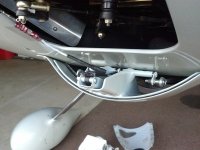
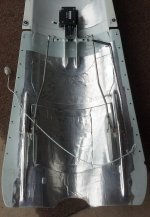
View attachment 76740
After reading your comments, I am thinking that you have not done a FAB build, using the newest design and instructions, so debating that the per plans method is no good, is not valid.
A lot of the incorporated changes had already been tested for an extended period before they were incorporated into the FAB kit.
If flexing of the wire was a detriment to its longevity, we would need to do an installation where the wire was a direct straight run between the control knob and the heat door. That would be impractical, and the whole purpose of using this type of control is to allow for changes in direction between the two points.
As I mentioned previously, if the new design for connecting the cable to the door is used, it has proven to alleviate the operational and vibration induced flexing of the wire that previously caused fatigue failures.
 
Last edited:
After reading your comments, I am thinking that you have not done a FAB build, using the newest design and instructions, so debating that the per plans method is no good, is not valid.
A lot of the incorporated changes had already been tested for an extended period before they were incorporated into the FAB kit.
If flexing of the wire was a detriment to its longevity, we would need to do an installation where the wire was a direct straight run between the control knob and the heat door. That would be impractical, and the whole purpose of using this type of control is to allow for changes in direction between the two points.
As I mentioned previously, if the new design for connecting the cable to the door is used, it has proven to alleviate the operational and vibration induced flexing of the wire that previously caused fatigue failures.
Your thinking is wrong. I have build 3 FAB airboxes and fixed or helped fix a half dozen other FAB's over the last 30 yrs. What did I say that makes you think I'm ignorant? Ha ha. I have built two RV's and 1000's of hours in them. I think you need to read what I wrote. I know you have strong feelings on how the world and FAB alt/carb heat door works. We can agree to disagree without you thinking things about me personally. Address with facts, data, experience. Words "A lot", "incorporated", "tested" sounds good. What are you talking about? Who, what. where? Yeah I am one of them has incorporated and tested changes and have personal experience. Why is my input wrong and your "a lot" with no details right? Can we both be right?

Did you watch Van's video?

I post using a sold end control cable verses the wire end and the simple sloppy pivot and I get people triggered. The cable failed, mine and some of the other 15 RV's at the airfield had issues over many years. You say I am wrong? OK. I saw several wire end control cables fail and none with the solid threaded end cable fail after +1000 hrs. I'll go with my experience and my engineering degree. :) You do you. Have a nice day.
 
Last edited:
Did you watch Van's video?
Was this a question directed at me? I’m one of the two people in the video….
And in case it wasn’t obvious, the purpose of the video was to describe the design changes that have been made. One of them being some failures of the control cable, which because of the changes, is no longer an issue.

The reason I asked my original question is because many of your comments made it appear you weren’t aware of design changes that had been made……..
Those design changes resolved the cable reliability problem that you are providing a solution for, and it was done with a much less expensive solution.
 
Last edited:
Just thought experiment at his point. However being able to hit OPEN or CLOSE toggle to get Carb Heat would be cool. Anyone do this?

Can you define the mission statement for the group? If it’s “cool”, then that’s why you are getting pushback here because that’s like discussing paint schemes - all opinion. If it’s “increased reliability”, that’s also why you are getting pushback. Put your engineering hat on and define the problem you are trying to overcome. I suspect you will cut through a lot of the chaff if you do that.
 
Can you define the mission statement for the group? If it’s “cool”, then that’s why you are getting pushback here because that’s like discussing paint schemes - all opinion. If it’s “increased reliability”, that’s also why you are getting pushback. Put your engineering hat on and define the problem you are trying to overcome. I suspect you will cut through a lot of the chaff if you do that.
I get that COOL is not always an engineering choice. As far as push back I got great info and opinions. I'm sure I will do what I did with my other RV's with updraft indication using the Van's FAB. I will control the "carb heat" or alternate air doors with cable. I will use the solid ended cable as I always do. The cabin heat door will be electric. Mission? Lower weight & cost, reliability, ease of operation & less maintenance. Nothing is perfect. Personal priorities come in. Is cool good? Yes if you don't compromise too much in other areas. Again I have my decision, but.....

What kind of cable I am using has seemed to raised a controversy? The more solid substantial sold rod threaded end type is stronger. That is obvious. One statement is it's heavier and will cause worse vibration issues? No. That is the opposite or true in this case. I took vibration analysis in undergrad decades ago. The Prof worked on the external fuel tank for the Space Shuttle. That is not how vibration works. Mathematically it is orders more complicated and complex. More mass reduces vibration in general, depending on the forcing function, amplitude or frequency.. Guitar string? Install a rod on guitar as the string. Little vibration that dampens quickly.

The snout of the FAB is buzzing. The simple wire control cable provides ZERO support for the door arm and door which is floating on the hinge. That vibration wears the hinge. You can not eliminate engine / prop vibration but you can balance your prop well. Anyone fly an RV with a balanced all wood prop? Smooth.

I find the solid threaded ended control cable for the FAB door works better in my experience. I am willing to spend more and accept added weight here. Heavier may not always be the answer, but in this case the sold rod end cable dampens the vibration in several ways. The solid threaded rod end cable reduces the carb heat/alt air door hinge wear. The extended solid end is secure, ridged, and solid, so it keeps the door from vibrating and wearing the hinge. The wire cable is just not stiff enough. Per my link above Van's now recommends and assume provides a reinforced fabric baffle material for hinge. This will work and is cheaper than a $120 cable vs a $25 one.

I am sticking with piano hinge BTW, BUT as I have done before and will again, replace the soft formed hinges with a much stronger and harder extruded hinge. They will last indefinitely if your engine and prop are balanced and you have some play in the duct between FAB and cowl, so FAB can move without inducing load from the cowl restricting it's movement. Add in the solid supportive rod end control cable, rod end bearing bolted securely to door, it's "aerospace" quality. Is it overkill? May be. I know people get good service out of the per plans setup. Up to you.
 
Last edited:
Back
Top