Van's Air Force

The definitive Van's Aircraft support community! Buying, building or flying an RV? Join our exclusive family of mentors and enthusiasts!

SDS Throttle Body adapt to forward Induction Snorkel - how?

TASEsq

Well Known Member
Patron
Building a forward induction angle valve io-360 with the VA-132 snorkle.


Using SDS with the short throttle body.

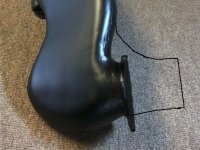
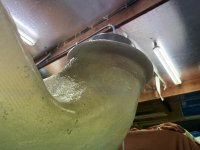
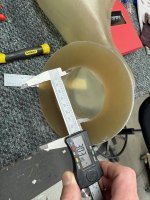
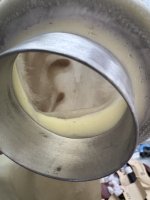
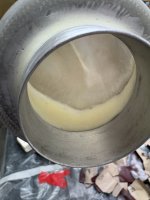
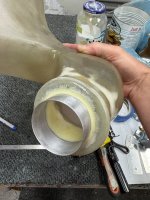
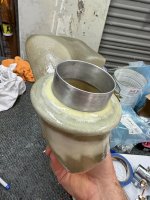
Was wondering if anyone had any photos of how you modified your snorkle to adapt to the throttle body?

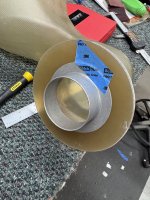
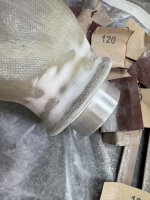
I have a 2.5” aluminium flange. I was thinking of just epoxying it on, then glassing around the flange. Work out the fore aft position by trimming the silicone hose.

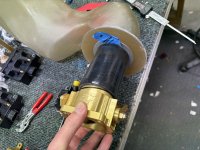
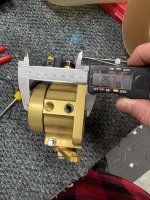
Best I can work out is the RSA-5 the standard snorkle is designed to mate with is 5.5” long. The SDS throttle body is only 2.6” long. So I have some good room to play with fore/aft.

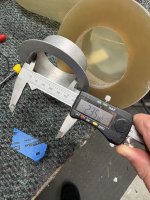
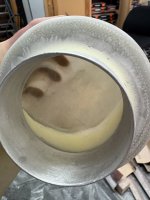
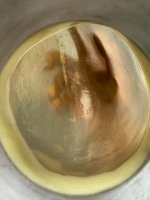
The only issue I see is the internal diameter of the snorkle is 3”, whereas the internal of the aluminium adapter is 2.35. So I guess I should build a ramp on the inside with micro or something to smooth it out. Not sure a 90 degree flange is a smart idea? Probably needs to be smoothed out.

Some photos attached for reference.
 

Attachments

  • IMG_9371.jpeg
    IMG_9371.jpeg
    1.7 MB · Views: 77
  • IMG_9372.jpeg
    IMG_9372.jpeg
    2.1 MB · Views: 77
  • IMG_9374.jpeg
    IMG_9374.jpeg
    1.9 MB · Views: 78
  • IMG_9375.jpeg
    IMG_9375.jpeg
    4.2 MB · Views: 73
  • IMG_9376.jpeg
    IMG_9376.jpeg
    2.1 MB · Views: 80
The only issue I see is the internal diameter of the snorkle is 3”, whereas the internal of the aluminium adapter is 2.35. So I guess I should build a ramp on the inside with micro or something to smooth it out. Not sure a 90 degree flange is a smart idea? Probably needs to be smoothed out.
Yes, you want a smooth taper from 3 -> 2.35. A sharp step from lrg to sml will create a lot of turbulence. Will be a challenge to make that taper inside the snorkel. Best to make a new part that will bolt on to flange and gently reduce the ID to the small flange for attachment to sds flange. Or cut the flange off that sds part and integrate the tube into the end of the taper piece. Easy to do with a foam mold. Carefull prep on aluminum required for adhesion.
 
Last edited:
Yes, you want a smooth taper from 3 -> 2.35. A sharp step from lrg to sml will create a lot of turbulence. Will be a challenge to make that taper inside the snorkel. Best to make a new part that will bolt on to flange and gently reduce the ID to the small flange for attachment to sds flange. Or cut the flange off that sds part and integrate the tube into the end of the taper piece. Easy to do with a foam mold. Carefull prep on aluminum required for adhesion.
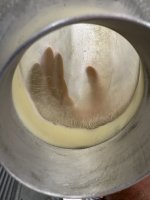
I have the 2” hole in the aluminium flange for access. Was thinking I could smoosh some micro in there and should be able to taper it over a couple of inches back all the way around?

Could refine with sandpaper easily. Then probably a flow coat over the top? (Don’t think I would even need any glass). Can make it structural on the outside. Was thinking a heap of holes drilled in the flange and adhere with epoxy and flox, then glass over the top of this all around the flange. Probably let this cure then deal with the inside.
 
Simple. I cut the big round flange off the factory snorkel and extended the fiberglass ducting back to the throttle body.
For the TB end, I covered the TB inlet lip with shipping tape, than layed up the ducting fiberglass over it to create the ducting/TB slip on sleeve joint. After all this cured & separated, I put a short cut in the fiberglass duct so a hose clamp could squeeze the fiberglass duct over the throttle body lip for a solid connection.

Sorry, I’m away so can’t supply pictures.
Be imaginative & keep it simple.
 
Trent, what you have here is an opportunity for improvement.

Looks like you have the early version of the snorkel. The improvement with the second version (for the -119 with an FM-200) was an increased radius at the turn into the throttle. The shorter SDS throttle body means you can increase the radius further.

It's just fiberglass. Be brave ;)

(Photo borrowed from RV14a.com)

ScreenHunter_3026 Nov. 15 05.36.jpg
 
Do you have your exhaust on (temporarily or not)? Be sure you accommodate anything that might be an obstacle before defining your routing, or you will end up with cutting & splicing to fit. Leave gaps wide enough for exh heat shields & such.
Also bear in mind that whole assembly will only have to flow about 400cfm of air max.
 
…It's just fiberglass. Be brave ;)

Agreed.

50% of my cowl on the Rocket is made from recycled foam board wall calendars I took from work, and my inlet ducts and oil cooler plenum is made from Manila folders sourced from same. My induction inlet duct for my SDS TB to the cowl inlet is made by glassing over a Smart water bottle and then pulling the plastic out post cure…. Non structural fiberglass is nothing more than expensive paper mache. We all learned that in first grade. Go for it!
 
Last edited:
Trent, what you have here is an opportunity for improvement.

Looks like you have the early version of the snorkel. The improvement with the second version (for the -119 with an FM-200) was an increased radius at the turn into the throttle. The shorter SDS throttle body means you can increase the radius further.

It's just fiberglass. Be brave ;)

(Photo borrowed from RV14a.com)

View attachment 102175
Interesting.

I chose this snorkel because the -119 one was for the larger diameter throttle body. Maybe I chose wrong!
Agreed.

50% of my cowl on the Rocket is made from recycled foam board wall calendars I took from work, and my inlet ducts and oil cooler plenum is made from Manila folders sourced from same. My induction inlet duct for my SDS TB to the cowl inlet is made by glassing over a Smart water bottle and then pulling the plastic out post cure…. Non structural fiberglass is nothing more than expensive paper mache. We all learned that in first grade. Go for it!
I’ll get the kids onto it!!

I thought that the silicone tube was a good idea - would allow some movement / mis alignment etc?

Modifying the snorkle and glassing to the TB would need to wait until the engine was built etc - it’s still currently in bits.
 
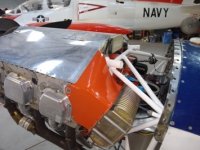
This is my first snorkel similar to what you are considering. My second is closer to what DanH described, it was a perfect fit around the starter and up to the throttle body. Well… right up until I attempted to install the cowling. 😊
If you only reshape the portion DanH described you will have a better product than mine.
 

Attachments

  • IMG_0675.jpeg
    IMG_0675.jpeg
    1.4 MB · Views: 72
  • IMG_0674.jpeg
    IMG_0674.jpeg
    1 MB · Views: 72
This is my first snorkel similar to what you are considering. My second is closer to what DanH described, it was a perfect fit around the starter and up to the throttle body. Well… right up until I attempted to install the cowling. 😊
If you only reshape the portion DanH described you will have a better product than mine.
That’s exactly how I was thinking of doing it. Did you fillet on the inside in the lead up to the aluminium flange?

I’m keen on this idea because I can get this done before we build the engine. Also getting the baffles done. Then hopefully it’s not that much work to mate it to the filter frame etc once the engine is built.

Can you recall approx how long your silicone hose was? (Or any photos installed would be very helpful).

Also - you think the second reshaped method danH mentioned gains more performance? Or negligible / unknown.
 
That’s exactly how I was thinking of doing it. Did you fillet on the inside in the lead up to the aluminium flange?

I’m keen on this idea because I can get this done before we build the engine. Also getting the baffles done. Then hopefully it’s not that much work to mate it to the filter frame etc once the engine is built.

Can you recall approx how long your silicone hose was? (Or any photos installed would be very helpful).

Also - you think the second reshaped method danH mentioned gains more performance? Or negligible / unknown.
I did fillet the interior thinking smooth flow is king. I will find some pictures of the full installation and send a DM. I believe the modification as drawn by DanH would smooth the turning flow because there is a longer transition and would likely add performance. How much added performance? I don’t know, but if I were at your stage of the build I would do the modification.
 
I did fillet the interior thinking smooth flow is king. I will find some pictures of the full installation and send a DM. I believe the modification as drawn by DanH would smooth the turning flow because there is a longer transition and would likely add performance. How much added performance? I don’t know, but if I were at your stage of the build I would do the modification.
I guess I can take a guess at the length needed - aka the delta between the RSA-5 length and the SDS length - then make the ‘tube’ at least this long. Then trim later once we have the engine built.

That’s how the snorkle for the -119 is done. It’s just too wide a diameter (for the FM-200 servo).

 
It's just fiberglass. Be brave
I actually made my own snorkel 😵

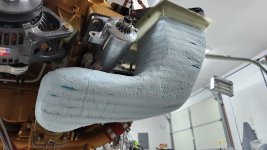
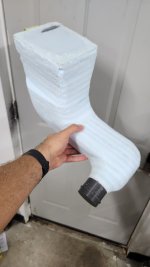
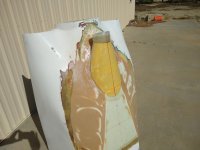
The Van's snorkel package was out of stock at the time I needed it, so I modified the filter mount from a -14 and carved my own mold. No good pics of the final product but here's an in-progress one...

I even coated it with tape to try and reduce the mess before laying it up and dissolving the foam. It's probably three times heavier than one Dan would do (I really suck at fiberglass) but it's working so far.

The gray thing at the end was a printed support; the final product attaches to the throttle body by silicone hose.
 

Attachments

  • 20230918_130458.jpg
    20230918_130458.jpg
    1.1 MB · Views: 67
  • 20230918_130416.jpg
    20230918_130416.jpg
    900.4 KB · Views: 67
...you think the second reshaped method danH mentioned gains more performance? Or negligible / unknown.

Not a lot. The problem with the original snorkel was flow separation at the tight inside radius. It got worse with the slightly longer FM200, enough to upset metering. The new one settled metering, and I assume Don Rivera wasn't unhappy with pressure loss.

There is no metering in your SDS; it's just a throttle. So this is all about flow. I don't know if a nice radius will net more; there may be some other choke point in the induction tract. In the end a better radius may be nothing more than best practice. But hey, fast airplanes are the sum of a little here and there.
 
Not a lot. The problem with the original snorkel was flow separation at the tight inside radius. It got worse with the slightly longer FM200, enough to upset metering. The new one settled metering, and I assume Don Rivera wasn't unhappy with pressure loss.

There is no metering in your SDS; it's just a throttle. So this is all about flow. I don't know if a nice radius will net more; there may be some other choke point in the induction tract. In the end a better radius may be nothing more than best practice. But hey, fast airplanes are the sum of a little here and there.
In that case, I think the simplest solution could be to just bond the aluminium ring on, smooth an internal fillet and move on!
 
This is my first snorkel similar to what you are considering. My second is closer to what DanH described, it was a perfect fit around the starter and up to the throttle body. Well… right up until I attempted to install the cowling. 😊
If you only reshape the portion DanH described you will have a better product than mine.
By the way - what are the anodised mounts for?
 
By the way - what are the anodised mounts for?
They are Air Inlet Temperature sensors for each computer, I have a full set of sensors on both computers (except TPS and fuel rheostat) The second set of sensors is not required nor recommended. I was in a learning mode during my build. I did hundreds of hours of testing to better understand SDS. What I learned was the system works best as designed and the angle valve engine responds best with very modest ignition advance as compared to the parallel valve engine.
 
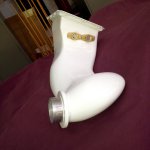
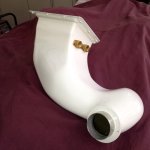
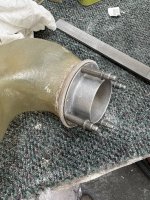
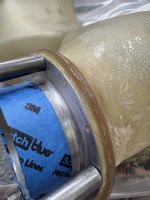
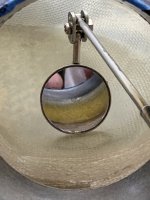
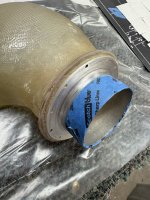
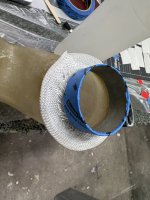
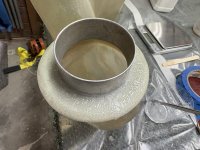
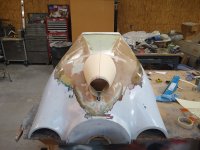
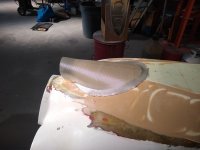
So I ended up trimming the flange on the snorkel about 1/4” larger than the aluminium flange and rounded it over. I match drilled it in 4 places and drilled a few holes to improve strength. I bonded it on with epoxy and flox. I added a little structural fillet on the inside. I’ll smooth this transition later with some micro.
IMG_9809.jpegIMG_9816.jpegIMG_9817.jpegIMG_9819.jpegIMG_9821.jpeg
IMG_9835.jpeg
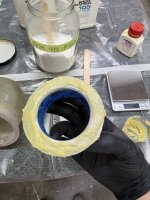
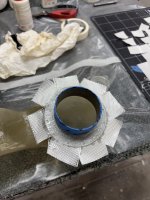
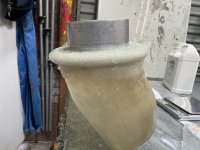
I then used 4 layers of 9oz cloth around the perimeter of the flange. Bolts and braces - probably didn’t even need this. Initially I wasn’t thinking and tried using cloth cut square to the weave - this didn’t work at all. Just wouldn’t lay down over the compound curves. Ended up wiping it all off, letting it cure, sanding and starting again.
IMG_9836.jpeg
Second go, cut long stips on the bias and these laid down great.
IMG_9837.jpegIMG_9847.jpeg

It’s curing now. Will sand and maybe a flow coat later.
IMG_9853.jpegIMG_9854.jpegIMG_9855.jpeg
 
Last edited:
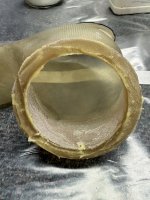
Got some micro on the outside to fill the weave and refine the shape, and on the inside to make a smooth transition. Did a flow coat after. Will leave this for now, as we need to build an engine before we can fit the baffles and finalise the snorkle.

Hopefully this fits ok! 👌
 

Attachments

  • IMG_0012.jpeg
    IMG_0012.jpeg
    1.8 MB · Views: 24
  • IMG_0015.jpeg
    IMG_0015.jpeg
    1.3 MB · Views: 24
  • IMG_0016.jpeg
    IMG_0016.jpeg
    1.2 MB · Views: 23
  • IMG_0020.jpeg
    IMG_0020.jpeg
    1.2 MB · Views: 20
  • IMG_0019.jpeg
    IMG_0019.jpeg
    1.3 MB · Views: 20
  • IMG_0062.jpeg
    IMG_0062.jpeg
    1.7 MB · Views: 21
  • IMG_0063.jpeg
    IMG_0063.jpeg
    1.5 MB · Views: 21
  • IMG_0064.jpeg
    IMG_0064.jpeg
    1.3 MB · Views: 26
Looks like you have done a lot of good work and I’m sure the end result will be fine. That said, it looks like this was a LOT more work than it had to be, has some unusual transitions and packaging issues (namely the retention of that flange), and it’s heavier than it needs to be.

Now that you are essentially done, let me offer an alternative method that I used on my induction journey. Keep in mind that I tried the snorkel and abandoned it for the pitot, but the fabrication method I’ll share is identical.

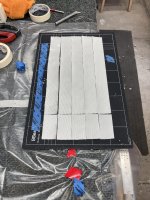
Step 1 is to build a section of fiberglass tube that will interface with the SDS TB. I used a thin walled water bottle covered in packing tape as a mandrel, laid up a section of glass over the top about 3 inches long about 4 plies of 6 oz and let it cure. When cured, I cut the whole mess to 2 inches in a chop saw, and peeled out the remaining water bottle and packing tape. If done correctly you now have a 2 inch long stub of fiberglass tube that fits snuggly on the TB snout. Back on the bench, Drill a .250 inch hole .750 inch from one of the ends and then using a hacksaw or cutoff wheel, cut a relief slot from that edge to the drilled hole. Reinstall the stub on the TB with the relief slot facing the engine and secure with a hose clamp.
Step 2: locate the approximate apex of the snorkel where it makes its natural final turn towards the engine and using an appropriately violent tool, cut off the tortured aerodynamic structure that Van created and throw that in the trash. Bolt the remains to the engine and visualize the beautiful transition opportunity that exists in the clear space between the amputated snorkel and the newly installed stub duct. Grab a beer, if that helps the creative process.
Step 3: locate the following supplies: several Manila folders or heavy card stock, a Sharpie marker, scissors, a roll of masking tape, and super glue. And another beer. Using the available artistic sensibilities, cut and form the Manila/card stock to fill the gap. Don’t try form the whole transition in one piece, but the less overlaps you have, the better. 2 pieces (upper and lower) is a good target, but as many as required is fine. With the Manila/card stock cut, formed and held in place with masking tape and/or super glue, sit back and admire your work with another beer. Note: Do not worry about less than perfect transitions to the snorkel at this point - do the best you can, but the opportunity to fix those details is down the road.
Step 4. Glass over the Manila/cardstock. That’s it. Be as neat as possible, but understand the goal here is to create a structure you can work with and refine on the bench. 2 plies of 6 oz is good for now - remember that there is still plenty of sanding and a ply on the inside to go. Let this cure.
Step 5: Remove the snorkel assembly and tune the insides and transitions as required. Don’t be afraid to cut out whole sections of ugly sharp transitions and reshape with Manila…. It’s “just” glass - infinite rework possibilities. Once you have it tuned up, add a final ply to the outside and finish as desired. All in this should be 2-3 days of shop time to have a flyable part.

I have some pictures that show this process on my cowl. In my case I had a “stub duct” located out in space ahead of the cowl (which is the analog for the snorkel in this example), and the Manila/cardstock filled the free air between.

IMG_0022.jpeg

IMG_0023.jpeg

IMG_0024.jpeg

Final picture shows my oil cooler duct manufactured with the same method: In this case I built a “L flange” frame bolted to the oil cooler, located the cooler and flange in space behind the baffles and filled in the space with Manila envelopes. Glassed and finished as shown:

IMG_0025.jpeg
 
Last edited:
Looks like you have done a lot of good work and I’m sure the end result will be fine. That said, it looks like this was a LOT more work than it had to be, has some unusual transitions and packaging issues (namely the retention of that flange), and it’s heavier than it needs to be.

Now that you are essentially done, let me offer an alternative method that I used on my induction journey. Keep in mind that I tried the snorkel and abandoned it for the pitot, but the fabrication method I’ll share is identical.

Step 1 is to build a section of fiberglass tube that will interface with the SDS TB. I used a thin walled water bottle covered in packing tape as a mandrel, laid up a section of glass over the top about 3 inches long about 4 plies of 6 oz and let it cure. When cured, I cut the whole mess to 2 inches in a chop saw, and peeled out the remaining water bottle and packing tape. If done correctly you now have a 2 inch long stub of fiberglass tube that fits snuggly on the TB snout. Back on the bench, Drill a .250 inch hole .750 inch from one of the ends and then using a hacksaw or cutoff wheel, cut a relief slot from that edge to the drilled hole. Reinstall the stub on the TB with the relief slot facing the engine and secure with a hose clamp.
Step 2: locate the approximate apex of the snorkel where it makes its natural final turn towards the engine and using an appropriately violent tool, cut off the tortured aerodynamic structure that Van created and throw that in the trash. Bolt the remains to the engine and visualize the beautiful transition opportunity that exists in the clear space between the amputated snorkel and the newly installed stub duct. Grab a beer, if that helps the creative process.
Step 3: locate the following supplies: several Manila folders or heavy card stock, a Sharpie marker, scissors, a roll of masking tape, and super glue. And another beer. Using the available artistic sensibilities, cut and form the Manila/card stock to fill the gap. Don’t try form the whole transition in one piece, but the less overlaps you have, the better. 2 pieces (upper and lower) is a good target, but as many as required is fine. With the Manila/card stock cut, formed and held in place with masking tape and/or super glue, sit back and admire your work with another beer. Note: Do not worry about less than perfect transitions to the snorkel at this point - do the best you can, but the opportunity to fix those details is down the road.
Step 4. Glass over the Manila/cardstock. That’s it. Be as neat as possible, but understand the goal here is to create a structure you can work with and refine on the bench. 2 plies of 6 oz is good for now - remember that there is still plenty of sanding and a ply on the inside to go. Let this cure.
Step 5: Remove the snorkel assembly and tune the insides and transitions as required. Don’t be afraid to cut out whole sections of ugly sharp transitions and reshape with Manila…. It’s “just” glass - infinite rework possibilities. Once you have it tuned up, add a final ply to the outside and finish as desired. All in this should be 2-3 days of shop time to have a flyable part.

I have some pictures that show this process on my cowl. In my case I had a “stub duct” located out in space ahead of the cowl (which is the analog for the snorkel in this example), and the Manila/cardstock filled the free air between.

View attachment 104612

View attachment 104613

View attachment 104614

Final picture shows my oil cooler duct manufactured with the same method: In this case I built a “L flange” frame bolted to the oil cooler, located the cooler and flange in space behind the baffles and filled in the space with Manila envelopes. Glassed and finished as shown:

View attachment 104615
So you don’t remove the card stock? It just becomes part of the part?
 
So you don’t remove the card stock? It just becomes part of the part?

Yes. Glass right over cardstock, masking tape, super glue and Bondo if you like. Consider it an incredibly thin “core”. Remember that you can (and should) sand the inside to as close to the OML (outer mold line) as you can, so most of this filler ends up on the shop floor as dust.
 
Last edited:
Interesting. I assume the card stock absorbs some epoxy? Otherwise it seems a weak point for delamination.

I’ll keep that in mind for the future.

As for weight, the SDS throttle body is 408 grams. The precision air motive RSA-5 unit I have which came with my engine if 2.3kgs! So the additional weight of the aluminium ring was considered acceptable and simplified everything.
 
Yes, the cardstock soaks up resin and makes a fairly stable bond. I would not make wing spar plates out of it, but for this application is quite adequate.
 
Yes, the cardstock soaks up resin and makes a fairly stable bond. I would not make wing spar plates out of it, but for this application is quite adequate.
Thanks. I’ll save the idea for next time. Or for when I try to fit my srorkle to the engine and find it hits the starter and the cowl 🤣
 
You can also make the cardboard form to shape, seal the total thing with shipping tape, apply release agent and lay your 4 or 5 layers of fiberglass over it. After it cures, just pick loose the cardboard mold & pull it out.
Not DanH finish quality, but reasonably strong & functional.
 
I actually made my own snorkel 😵

The Van's snorkel package was out of stock at the time I needed it, so I modified the filter mount from a -14 and carved my own mold. No good pics of the final product but here's an in-progress one...

I even coated it with tape to try and reduce the mess before laying it up and dissolving the foam. It's probably three times heavier than one Dan would do (I really suck at fiberglass) but it's working so far.

The gray thing at the end was a printed support; the final product attaches to the throttle body by silicone hose.
One of the added benefits of making your own custom snorkel like this is that you can keep the cross section as large as you have space available, through the whole flow-path of the snorkel. This provides two benefits. First, obviously the large flow cross section means low velocity, so less losses. And with low velocity, if the flow does separate around a corner, there is very little loss because there wasn't much dynamic pressure to give away - its all already in the static pressure.

The other benefit is providing some additional plenum volume. At part throttle this won't help, but at WOT, all that extra volume will help with the 'breathing', increasing volumetric efficiency. Most intake plenums are a little on the small side when it comes to volume, and the intake tube has to draw air from either the other intake tubes or through the throttle. I would not diffuse a ram-air intake on purpose just to add volume, but it is a nice side benefit.
 
Back
Top