Van's Air Force

The definitive Van's Aircraft support community! Buying, building or flying an RV? Join our exclusive family of mentors and enthusiasts!

SB-00116 Regarding Autopilot Servo Attach Brackets Published

Van's Aircraft

Active Member
Sponsor
Advertiser
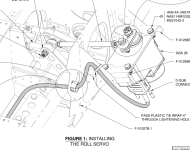
Van’s Aircraft has published Service Bulletin SB-00116, RV-12 Roll Servo Bracket Rivets that applies to all RV-12 and RV-12iS aircraft with either Dynon or Garmin autopilots installed.

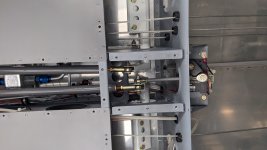
A report from a RV-12 aircraft equipped with a Dynon autopilot indicated that rivets had failed that attach the F-1286B-L & -R Servo Angles to the F-1286A-L & -R Servo Brackets. The current attach rivets should be updated to solid rivets.

The SB advises pilots and owners to inspect this area before further flight. If failed rivets are found replace rivets immediately. For aircraft with Dynon autopilots, if the rivets are intact replace the rivets per this service document within 25 hours.

For aircraft with a Garmin autopilot, inspect at the next condition inspection or 100 hours whichever comes first. Replace the rivets per this service document or continue to inspect at annual inspection or 100 hours, whichever comes first, until the rivet replacement is complete.
 
Great, my tail cone is still off. Will be a 15 min exercise. :cool: Dynon servos must have more torque to sheer the LP4s than the Garmin.
 
Van’s Aircraft has published Service Bulletin SB-00116, RV-12 Roll Servo Bracket Rivets that applies to all RV-12 and RV-12iS aircraft with either Dynon or Garmin autopilots installed.

A report from a RV-12 aircraft equipped with a Dynon autopilot indicated that rivets had failed that attach the F-1286B-L & -R Servo Angles to the F-1286A-L & -R Servo Brackets. The current attach rivets should be updated to solid rivets.

The SB advises pilots and owners to inspect this area before further flight. If failed rivets are found replace rivets immediately. For aircraft with Dynon autopilots, if the rivets are intact replace the rivets per this service document within 25 hours.

For aircraft with a Garmin autopilot, inspect at the next condition inspection or 100 hours whichever comes first. Replace the rivets per this service document or continue to inspect at annual inspection or 100 hours, whichever comes first, until the rivet replacement is complete.
The fix sounds so easy. But it strikes me as nightmare for completed RVs, requiring tiny children with great dexterity and small tools to perform the work.
 
sounds like a project on completed planes. what about appropiate grade #5 machine screws? i know they are stronger than solid rivits .
 
Have to remove servo, then brackets are relatively easy to access. Right angle drill required. Pulled rivets easier to drill out than solid. Should be able to get to brackets without entering tail cone. This shooooould be easier than changing either fuel filter for sure? Pretzeling. into baggage compartment is the worst part IMHO.
 
Should be able to get to brackets without entering tail cone.
I agree. The somewhat recent SB for changing out of the servos (Garmin) was rather easy to perform and the experience tells me that this will not be a major task. I will wait until next condition inspection when I have everything opened up anyway.
 
This shooooould be easier than changing either fuel filter for sure? Pretzeling. into baggage compartment is the worst part IMHO.
Note that you can pull the coarse filter from underneath the aircraft, if you remove the inspection plate. The fine filter not so much.
I'm wondering if I can see the rivets from there with a flexible bore scope?
 
Van’s response:

Gary Keyser (Van's Aircraft)
Nov 4, 2025, 1:24 PM PST

Hello John
The only rivets specified are the AN470's. Any other rivet will not satisfy the Service Bulletin. The Cherry Option has not been tested by Vans engineers.
Regards
Gary Keyser

Builder Support
Van's Aircraft, Inc.
 
Van’s response:

Gary Keyser (Van's Aircraft)
Nov 4, 2025, 1:24 PM PST

Hello John

The only rivets specified are the AN470's. Any other rivet will not satisfy the Service Bulletin. The Cherry Option has not been tested by Vans engineers.

Regards
Gary Keyser

Builder Support
Van's Aircraft, Inc.
Perhaps Van's engineering could consider testing it ? I know a builder working on this SB today and he doesn't have the tailcone on and he said it's not easy to get a squeezer in there without taking further parts off. SB easy to write hard to implement ;-)
 
Perhaps Van's engineering could consider testing it ? I know a builder working on this SB today and he doesn't have the tailcone on and he said it's not easy to get a squeezer in there without taking further parts off. SB easy to write hard to implement ;-)

I guess we're supposed to take their word for it that they even "tested" with AN470s, but I have my doubts.

We already know not to expect them to share any engineering test data, but it would be nice to know a little more about the failure mode here and why they think it's an engineering problem and not a build quality issue. It seems like an odd place for the LP4-3 to not be sufficient without doubting the use in a lot of other places.
 
Just finished the work. My tailcone is stilloff. Absolutely takes a right angle drill adapter to drill out the pulled rivets. I was able to use my main squeeze from Cleaveland to squeeze the AN470s. The right side much easier than left. The fuel plumbing on left wants to get in the way but there is enough give in the bracket to make it work. I did not get my pneumatic squeezer out which I would highly suggest using if attacking from the baggage compartment. It would fit fine. Manufactured head outboard with short cup then long flat on inside to reach around the bracket. Total time about 20 minutes with 2 trips to basement from garage to get tools.
 
I performed the SB on my flying RV-12 today. Yes, I still need to reinstall the baggage cover and interior.

The tailcone being installed meant that I made multiple trips to the baggage compartment to get access.

To drill out the forward most rivets that are closest to the bulkhead I needed to use a 90 degree angle adapter. Also, rivets on the right side were difficult for me than those on the left side. This may be due to fuel tank and fuel tank vent lines being on the right side.

Squeezing the solid rivets was challenging for multiple reasons. The shop head was hidden under the brackets. The forward most rivets had limited access and particularly on the right side. My Avery squeezer didn’t fit and pneumatic squeezer was very tight. Unfortunately I no longer have my younger close up vision.

Doable. But, not easy.

Brett H
Columbus IN N4BH
 
Van’s response:

Gary Keyser (Van's Aircraft)
Nov 4, 2025, 1:24 PM PST

Hello John
The only rivets specified are the AN470's. Any other rivet will not satisfy the Service Bulletin. The Cherry Option has not been tested by Vans engineers.
Regards
Gary Keyser

Builder Support
Van's Aircraft, Inc.
I understand their response. It's the "easy" answer to give, but given that Van's published that the CherryMax was a direct substitute for the AN470, it seems we should be able to use it. It is rated as strong or stronger. Does anyone have a direct avenue to Van's that might have sucess in getting them to re-look at this? I would call, but I fear I will get the same response and have no relationships to call on.

Thanks in advance,
Harry
 
it seems to me that the pat answer that it hasn't been tested is moot as vans has already stated the cherry max is a replacement.
i bet vans has not tested cherry max in a ton of solid rivit applications on the 12. so what?
 
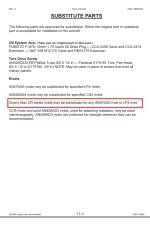
After seeing Section 7 of Van's maintenance manual, would any DAR refuse to certify a 12 if the builder had substituted the appropriate Cherry Max rivets for others in the aircraft? I don't think so, but any of the DARs on this forum can chime in.
 
I have a question, is this a safety of flight issue?
In the worst case if the servo fell off would it cause any issue other than the autopilot roll to quit functioning? I suppose if it came completely loose, (not likely without obvious sloppy autopilot control before hand). I suppose it is possible it could cause the aileron control to hang up, that seems like thinking way outside the box though.
Why is it an immediate SB?
What am I missing?
Anything that has to do with a primary fight control, or touches one, should be considered safety of flight.
 
But we’re not talking about failure of the servo. We’re talking about the failure of the servo to remain attached to the airframe.
So I’m thinking having a servo attached to the flight controls, and moving freely around them would be a very serious flight safety issue. How can you guarantee that the servo would not become detached in such a way that it wouldn’t jam the flight controls?
 
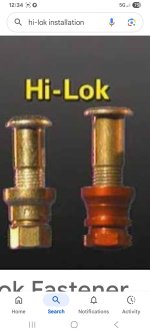
A 4-2 Hi-lok would also work well in this situation.
 

Attachments

  • Screenshot_20251105_123403_Google.jpg
    Screenshot_20251105_123403_Google.jpg
    142.1 KB · Views: 52
My point being this servo is parallel to the primary control. It can fail and you will not lose control. It has a shear screw that is intended to shear if the servo gets into an over run situation or ?? When the shear screw breaks the servo becomes useless it would be similar to the bracket completely failing. I have had a shear screw break in flight. The only effect was no autopilot assist. Dynon has upgraded the screw because it can fail, but it isn’t a mandatory replacement item. Based on your statement we should all be upgrading the Dynon servo shear screws.
A shear screw failure is way different than a component attached to the control system coming loose. You willing to gamble with your life that if the bracket fails in your aircraft that it won't cause a control problem? Willing to gamble with a passenger's life? Got a couple of million bucks liability insurance to protect your family if it fails and you become a smoking hole in the ground?

SoF items are things that will kill you, given a chance.
 
seagull said:
I have a question, is this a safety of flight issue?
In the worst case if the servo fell off would it cause any issue other than the autopilot roll to quit functioning? I suppose if it came completely loose, (not likely without obvious sloppy autopilot control before hand). I suppose it is possible it could cause the aileron control to hang up, that seems like thinking way outside the box though.
Why is it an immediate SB?
What am I missing?“

seagull said:
My point being this servo is parallel to the primary control. It can fail and you will not lose control. It has a shear screw that is intended to shear if the servo gets into an over run situation or ?? When the shear screw breaks the servo becomes useless it would be similar to the bracket completely failing. I have had a shear screw break in flight. The only effect was no autopilot assist. Dynon has upgraded the screw because it can fail, but it isn’t a mandatory replacement item. Based on your statement we should all be upgrading the Dynon servo shear screws”


Respectfully...so you can't envision that this is a safety of flight issue if this servo becomes disconnected due to the mounting flanges failing to secure it?
That could very easily jam the flaperon controls if it ends up in the wrong places.

Whoever this happened to, they should go buy a lottery ticket because they got lucky.

UPDATE: Ignore my previous statements at the end of this post. Several others are reporting heads popped off when inspected. Its a real thing. Be safe and comply with the SB!

1762374709672.png
 
Last edited:
That’s exactly the issue. Which is why I said it’s a very serious safety of flight issue.
I worked on the SB today on my flying legacy RV-12. With 250 hours, the rivets looked just fine but they needed replaced according to the SB as my plane is Dynon equipped. I found that using a 12 inch bit gave me a little more control than the right angle drill but it still wasn’t easy considering the yoga required with the fuel tank always in the way. Squeezing the new rivets with my Avery squeezer was a real issue. The first two rivets had a bad set and were bent due to my inability to see them and the contortions I was undergoing. I borrowed a friend’s Cleaveland Main Squeeze and was amazed at how much better it was than my trusty Avery. The compound leverage made it much easier to get a good set than when I was straining with the Avery. I did a fine job on the remaining 4 rivets and then needed to drill out the first two bad sets and replace them. I am frustrated to say that while drilling them out, I enlarged the holes in the bracket to the point where I need to replace all four brackets. They have already been ordered from Van’s but my plane is grounded until I get the new brackets and install them.

I am sharing my misery to suggest an alternate way to comply with the SB. If I could go back in time and do it again, I would drill out all six of the original pulled rivets and remove the brackets that hold the servo. Next, I would drill out the 10 pulled rivets that hold the other brackets to the bulkhead. They are much easier to drill out than the 6 servo bracket rivets. Then, on the bench, I would squeeze the rivets called for in the SB that hold the two brackets together and then finally, reinstall the brackets to the bulkhead using pulled rivets.

I hope all of this makes sense and am wishing you the best of luck.
 
Last edited:
I worked on the SB today on my flying legacy RV-12. With 250 hours, the rivets looked just fine but they needed replaced according to the SB as my plane is Dynon equipped. I found that using a 12 inch bit gave me a little more control than the right angle drill but it still wasn’t easy considering the yoga required with the fuel tank always in the way. Squeezing the new rivets with my Avery squeezer was a real issue. The first two rivets had a bad set and were bent due to my inability to see them and the contortions I was undergoing. I borrowed a friend’s Cleaveland Main Squeeze and was amazed at how much better it was than my trusty Avery. The compound leverage made it much easier to get a good set than when I was straining with the Avery. I did a fine job on the remaining 4 rivets and then needed to drill out the first two bad sets and replace them. I am frustrated to say that while drilling them out, I enlarged the holes in the bracket to the point where I need to replace all four brackets. They have already been ordered from Van’s but my plane is grounded until I get the new brackets and install them.

I am sharing my misery to suggest an alternate way to comply with the SB. If I could go back in time and do it again, I would drill out all six of the original pulled rivets and remove the brackets that hold the servo. Next, I would drill out the 10 pulled rivets that hold the other brackets to the bulkhead. They are much easier to drill out than the 6 servo bracket rivets. Then, on the bench, I would squeeze the rivets called for in the SB that hold the two brackets together and then finally, reinstall the brackets to the bulkhead using pulled rivets.

I hope all of this makes sense and am wishing you all the best of luck.
Mark, this is the type of info I have been looking for, I believe if I could easily see these rivets I would think mine would look great also, I have even thought about getting my hands on one of those cameras that plug in to my iPhone and trying to get a look, then I could fly and fix in next 25 hours with no rush to get done, it is a real pain just to gain access to area, your suggestion has merit , anyone else got ideas??. We are a resourceful bunch here. I do not want to turn a PIA job into even worse.
Thanks, Stan
 
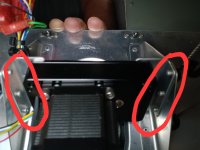
I have the ULS. My original rivets look new. I think the risk of damaging the brackets outweighs the reward of complying with the SB. You can see in my picture there are no smoking rivets or signs of wear. A very clean tight installation. My airplane is 14 years old and I have 450 hours. I may just choose to monitor and purposely inspect each CI. We'll see....
 

Attachments

  • 20251105_183504.jpg
    20251105_183504.jpg
    755.2 KB · Views: 231
Last edited:
Seems a bit excessive to replace perfectly good rivets on the Dynon installation. Should just be a 25 hour inspection like the exhaust pipe SB.
 
For people still in the building process, do you receive email from Vans for service bulletins?
 
It appears that there is a torque applied to the whole bracket as the AP arm moves, some cm above the axis of the mounting bracket. Additionally, the servo is mounted in an extended line beyond the last rivet fastening point, further amplifying the torque. Still hard to imagine these rivets getting worked and fatigued over time. But, so be it.

If the risk of failure is in shear, to my mind, cherry max is the superior choice.
 
Yes - they put you on the list to receive SBs, SLs, and any other relevant communications as soon as your serial # is assigned.
Thanks. I’ve never received one. Which email does it come from? I need to let Vans know …
 
I worked on the SB today on my flying legacy RV-12. With 250 hours, the rivets looked just fine but they needed replaced according to the SB as my plane is Dynon equipped. I found that using a 12 inch bit gave me a little more control than the right angle drill but it still wasn’t easy considering the yoga required with the fuel tank always in the way. Squeezing the new rivets with my Avery squeezer was a real issue. The first two rivets had a bad set and were bent due to my inability to see them and the contortions I was undergoing. I borrowed a friend’s Cleaveland Main Squeeze and was amazed at how much better it was than my trusty Avery. The compound leverage made it much easier to get a good set than when I was straining with the Avery. I did a fine job on the remaining 4 rivets and then needed to drill out the first two bad sets and replace them. I am frustrated to say that while drilling them out, I enlarged the holes in the bracket to the point where I need to replace all four brackets. They have already been ordered from Van’s but my plane is grounded until I get the new brackets and install them.

I am sharing my misery to suggest an alternate way to comply with the SB. If I could go back in time and do it again, I would drill out all six of the original pulled rivets and remove the brackets that hold the servo. Next, I would drill out the 10 pulled rivets that hold the other brackets to the bulkhead. They are much easier to drill out than the 6 servo bracket rivets. Then, on the bench, I would squeeze the rivets called for in the SB that hold the two brackets together and then finally, reinstall the brackets to the bulkhead using pulled rivets.

I hope all of this makes sense and am wishing you the best of luck.

This line: "Next, I would drill out the 10 pulled rivets that hold the other brackets to the bulkhead. " I got a text last night from a friend who was performing this modification and he stated that drilling out these 10 rivets (I think you can do that with the brackets still installed (?)) was 10x faster than trying to drill out the 6 rivets mentioned in the mod. If I end up needing to replace rivets this is the approach I'm going to try.
 
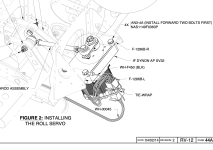
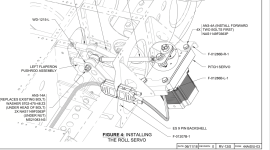
The earlier builds (prior to the iS?) have servo brackets and angles, and part numbers, that are substantially DIFFERENT then the later design.
Early:
PXL_20220524_203021337.jpegScreen Shot 2025-11-05 at 1.09.34 PM.pngScreen Shot 2025-11-04 at 4.31.20 PM.png

Later:
Screen Shot 2025-11-06 at 7.07.08 AM.pngScreen Shot 2025-11-06 at 7.16.09 AM.png

The early brackets and angles are no longer listed as available, so if you bugger up any of these parts on an early build you will be replacing with the later parts. The servo pushrod will have to be over an inch longer.

And, in agreement with flghtdoc101, the stresses on the rivets will be more due to the increased moment arm.
 
Last edited:
As a long-time Van's aficionado (dating back to the mid-1970's "chicken-coop" days) I am disappointed that Van's engineers can't come up with a technically acceptable yet more user-friendly approach to addressing this issue. Why not an Alternative Means of Compliance like using CherryMax rivets in lieu of solid AN rivets? Or perhaps by adding two additional suitable rivets between the existing LP-4 rivets? The main issue for me and others is access -- it's hard to do a satisfactory job if you can't reasonably access and squeeze the repair AN rivets. All of these "One airplane was found with..." SBs are a plague on the use and enjoyment of a terrific airplane .... and yes I know, SAFETY first.
 
As a long-time Van's aficionado (dating back to the mid-1970's "chicken-coop" days) I am disappointed that Van's engineers can't come up with a technically acceptable yet more user-friendly approach to addressing this issue. Why not an Alternative Means of Compliance like using CherryMax rivets in lieu of solid AN rivets? Or perhaps by adding two additional suitable rivets between the existing LP-4 rivets? The main issue for me and others is access -- it's hard to do a satisfactory job if you can't reasonably access and squeeze the repair AN rivets. All of these "One airplane was found with..." SBs are a plague on the use and enjoyment of a terrific airplane .... and yes I know, SAFETY first.
I concur. It would be nice to have a bit more background on the thought process. As noted above there are 2 versions of this bracket. Which one failed? Is it a bracket design issue that needs changed? Are we inducing more risk because fasteners/rivets are difficult to get to and change with varying degrees of success? Was this a plane in the training fleet with subsequent hours and wear and tear? Clearly someone thinks the Dynon is more likely to fail than the Garmin given instructions. Why? If it is a Dynon issue why include Garmin installations? Why is factory support contradicting their previous stated application of CR Cherrymax rivets? Lots of questions that could be answered without admitting design fault.

All are fair questions I think. Maybe Marc C can address for us. IMHO this SB smacks of lawyerism and risk avoidance. That's ok, but maybe a bit more communication as to "how come and what for" would go a long way to generate compliance. I expect there will be a number of folks who give it a peek and a wobble and say good enough, which does not further safety, just gets Van's off the hook.

And yes I complied, yes my squeezed rivets look good, and tail cone is not attached, so easy enough to get to and perform.
 
I concur. It would be nice to have a bit more background on the thought process. As noted above there are 2 versions of this bracket. Which one failed? Is it a bracket design issue that needs changed? Are we inducing more risk because fasteners/rivets are difficult to get to and change with varying degrees of success? Was this a plane in the training fleet with subsequent hours and wear and tear? Clearly someone thinks the Dynon is more likely to fail than the Garmin given instructions. Why? If it is a Dynon issue why include Garmin installations? Why is factory support contradicting their previous stated application of CR Cherrymax rivets? Lots of questions that could be answered without admitting design fault.

I haven't really done enough mental gymnastics to have a solid thesis, but among this speculation I would include that this is a factory built SLSA. Is there a flawed assembly practice that applied to a portion of the SLSA fleet that they would prefer to avoid talking about and just put everyone on alert to "fix it" instead?
 
The earlier builds (prior to the iS?) have servo brackets and angles, and part numbers, that are substantially DIFFERENT then the later design.
Early:
View attachment 101383View attachment 101382View attachment 101381

Later:
View attachment 101385View attachment 101384

The early brackets and angles are no longer listed as available, so if you bugger up any of these parts on an early build you will be replacing with the later parts. The servo pushrod will have to be over an inch longer.

And, in agreement with flghtdoc101, the stresses on the rivets will be more due to the increased moment arm.
Thanks for the catch!
 
The earlier builds (prior to the iS?) have servo brackets and angles, and part numbers, that are substantially DIFFERENT then the later design.
Early:
View attachment 101383View attachment 101382View attachment 101381

Later:
View attachment 101385View attachment 101384

The early brackets and angles are no longer listed as available, so if you bugger up any of these parts on an early build you will be replacing with the later parts. The servo pushrod will have to be over an inch longer.

And, in agreement with flghtdoc101, the stresses on the rivets will be more due to the increased moment arm.
Very good observations Tony. Thank you.👍
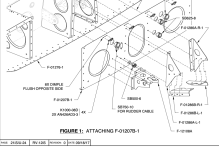
SB0116 Figure 2 incorrectly shows the installation layout and parts numbers for a RV-12 iS instead of a RV-12 .
 
I reluctantly Today decided to perform the inspection of the servo brackets, I said recently that if I opened mine up the rivets would all be fine, I was wrong! . I am not the original builder but have extensive time working on this before it ever took its first flight. I am a boat guy , spent my whole life in boats and many service procedures are very tight also. I found this inspection and forthcoming repair to be a PITA job but not a 10, I am commenting on a RV-12 Legacy 912 ULS , the current version may be different, I spent about an hour to get to the servo, including time to remove seats and finished interior. I found it easiest to work from the front seat area , working over the cross bar into the rear compartment, I am 71 years old 195 lbs. 5’8” for your comparison. This is not a fun job but it’s doable with the right tools and techniques, I can post pictures of the tools that I think made it easier for me if anyone is interested. I removed the servo and moved it out of way and covered it, then layer a work cloth ( thin hospital blanket) in the belly of the plane. When I removed servo I noticed 2 of the 10 rivets holding the mount brackets missing (center one each side), the other 6 rivets holding servo brackets looked fine. I grabbed my cordless drill and drilled rivet heads on LH side , my technique is not to drill out rivet but to weaken head of rivet then I use side cutters made for electrical work to sort of snip/ tear the head off, did all 3 in 2 minutes , worked my Swiss Army knife between the 2 brackets and off popped the servo mount on one side. I then moved to the other side using same drill was ready to go again BUT! , when I looked there were only 2 factory heads not 3, the rivet was there but the head was missing, SO I WONDERED WTF?? , when I looked at the rivet the head had snapped off, SO , I drilled the remaining 2 with no issue and removed the other bracket , looking at the 2 drilled and one that snapped you could easily tell the difference . I have no idea what snapped that head off and the head was not found, but that happened prior to me opening up the plane. My plane was never rented, schooled, and only I have flown it, no rough stuff.
I have installed the 2 missing rivets and have Cleveland Squeezer and do not contemplate any issues during installation of brackets tomorrow , we will see. I will try and attach a few pictures and have many more if anybody ( including Van’s) is interested.
To close, I never thought I would have a broken rivet and it wasn’t easily visible with just a casual look, the servo seemed rock solid when I tried to move it during the initial inspection. Sorry for the long post hope this helps someone.
Stan
 

Attachments

  • IMG_9225.jpeg
    IMG_9225.jpeg
    3.9 MB · Views: 293
  • IMG_9226.jpeg
    IMG_9226.jpeg
    2 MB · Views: 297
  • IMG_9251.jpeg
    IMG_9251.jpeg
    1.1 MB · Views: 296
  • IMG_9230.jpeg
    IMG_9230.jpeg
    2.1 MB · Views: 282
  • IMG_9268.jpeg
    IMG_9268.jpeg
    2 MB · Views: 275
  • IMG_9314.jpeg
    IMG_9314.jpeg
    2.9 MB · Views: 258
  • IMG_9330.jpeg
    IMG_9330.jpeg
    1.8 MB · Views: 299
Looks to me like the original builder riveted the angles on the brackets that attach to the bulkhead before riveting the brackets to the bulkhead and skipped those two rivets. They could have put them in from the other side but it appears they either forgot about them or decided to leave them out.

Those are not even the rivets that this SB addresses. The SB is for the angle to bracket rivets.

Did you find the heads or the tails of those two rivets in the tailcone or in front of the bulkhead?
I realize the 2 missing rivets are not what the SB addresses, I agree original builder didn’t follow directions, the broken rivet IS what the bulletin addresses.
Stan
 
I realize the 2 missing rivets are not what the SB addresses, I agree original builder didn’t follow directions, the broken rivet IS what the bulletin addresses.
Stan
Sorry, I missed that in the details. I was going more off the pics you posted that do not show the popped off head, not the commentary.

Glad you found it! How many hours on your plane?

Your post will help convince others that they need to take this seriously.
 
Last edited:
Sorry, I missed that in the details. I was going more off the pics you posted that do not show the popped off head, not the commentary.

Glad you found it! How many hours on your plane?

Your post will help convince others that they need to take this seriously.
Let me look for a better picture, under 300 hrsTT
Stan
 
Back
Top