Van's Air Force

The definitive Van's Aircraft support community! Buying, building or flying an RV? Join our exclusive family of mentors and enthusiasts!

RV7ForMe

Thank you!

Boyd,
I was moved by your story and photo.
Your photo is worthy of the Van's Calendar.
I urge you to submit it.

Without political input, I think we all need an uplifting story like yours.

Way to go.
Daddyman

Hey, thanks for the comment. Glad you liked it. Photo submission is a good idea but too late for this year I believe the deadline was first of October.
 
Been away for a while...

It's a shame but I keep helping my buddy with his -14A instead of building my own plane. But I did the entire wiring and panel layout. Great fun Really. Makes me wish I was that far already. Love the systems and wiring part of the build.

This is the panel all lit up. I am sure I have learned a lot for mine... well I hope I haven't forgotten all about it by that time.

Panel
download


Sub Panel
download


Also the RV14 comes with a manual cowl flap for the new IO-390 EXP119... Well I kind of wanted an electric version so I came up with this setup. Works great. Kind of funny because it used to be such a debate if RVs need a cowl Flap and now that Vans has done it... Well My RV7 will have one for sure. I do not see the downside of having the option for extra air.

Linear actuator with some self made spacers and a Deutsch TM plug (love these)
download


Open Position
download


Closed Position
download


The RV-14 is already all painted and we are moving to the airport this week. She is really 99% done now.
 
I love that sub-panel. Where do I get a knob that allows me turn down the volume of traffic? It would be great to get some of the traffic out of the way on returning home on a Saturday afternoon.
 
Simple potentiometer

I love that sub-panel. Where do I get a knob that allows me turn down the volume of traffic? It would be great to get some of the traffic out of the way on returning home on a Saturday afternoon.

Hi, glad you like it. It depends where the audio source comes from. In this case this is a single COM ship so there was no need for an Audio Panel. The Traffic input is connected to a simple potentiometer on the way to the radio AUX input. If you have a systems where this is possible I will be happy to help you with the wiring or at least show you how I did it. Feel Free to PM me.

If anyone else cares for the LED Dimmer I used the same potentiometer with a buck converter to prevent the LED from Flickering.
 
I used to smile when I read the phrase "life gets in the way"... Guess now the same thing happened to me. I have helped bring 2 airplanes to the skies RV7a and RV14a and somewhere in between I had to eventually finish school and get a real job. Somehow time goes by quicker and the RV project slow build turns into lifetime build. I am a bit ashamed to be honest because I should have just build my own instead of doing the work for others.

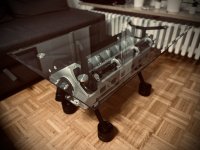
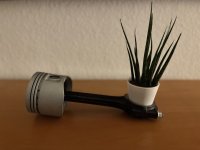
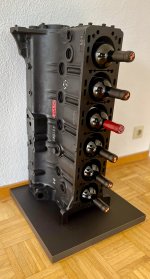
Somewhere in between my mom sold my childhood house and there was "caution topic drift" a 1986 Jaguar XJ in it and she said either you pick it up or I will give it to the guys buying the house / just leave it there. It aint worth much and hadn't been moved in 20 years. So I initially said sorry no money and no time for another project I wont finish but nostalgy kicked in. the car has been in my family since before I was born. They took me to kindergarden with it...Its always kind of been in the garage. It was great to play hide and seek with my friends... anyway so I moved it to my place and got a tiny singe garage and started working on it. Little did I know what I was in for. I though fluids and rubber and I was going to be ok....It's a jaguar. They say you need 2 just to keep the one running. Turns out that was true. Engine somehow leaked coolant into the engine and did some work there over the years. I pulled the plugs and turned her over. Rusty crunchy stuff got slingshot onto the ceiling. That would be the fatal news of this car. I ended up buying a junker with dead mice, mold and holes in the floors. I had that engine making noises on break cleaner and the compressions were shit but even across all 6... Fast forward. I had to do EVERYTHING! Engine out Engine in. Rear axle. bearings, break calipers.... you get the picture. Well its been 2 years and I have been driving it for 7000km as my daily driver. Granted I don't drive much. Apart from the usual Jaguar rust protection program / AKA leaks. The car has never left me stranded and has been a solid performer. Left over parts from the parts car where made into apartment art.

Why post this? Well I would have never in a million years been able to pull this off without the RV build mindset and background. I build airplanes > how hard can a Jaguar be... Actually very hard! a lot of things make no sense unless you are a British car company....

17 Tüv - 4 of 12.JPG

IMG_9773.jpg

IMG_3973.jpg

04 Schrotti - 31 of 37.jpg


Anyway I decided that this year I want to get back to building Airplanes. So I have started on the left wing and I got to say It's been humbling how big of a project this is and I have been away from it all for so long that I have made a few mistakes. Mostly countersinking things on the wrong side or something silly but safe to say the RV14 plans are just worlds better than the RV7 plans. Also my kit is a SB. The other planes were QB. Worth every penny in my opinion. Guess I'll have to eat that elephant...one bite at the time.
 
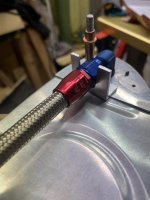
I have been slowly working on the Tanks. Well mostly the left tank only. I opted for the flip flow tube on this side. The plans on DWG 16A aren't exactly specific. I saw this on a few build logs and it made sense to copy this anti rotating nut system.

IMG_3226.JPG

I have concern and questions.

1. What is the purpose of the access plate? Is anyone changing these tubes in regular intervals?
I ask because I have the access cover that has the hole for the tank float sender. I have to use that access cover in the second bay.
means I would have to order the cover plate without the hole in it from vans and ship it half way around the world or fab my own.

2. The plan call for the hinge door to keep the fuel from runnin outboard. but the middle rib hole is wide open. Wouldn't it make sense to close that too?

3. The tube seems pretty rigid. But It is dry. I dont know how flexible it gets when it is soaked in fuel. Is this scenario possible? if it were to curl all the way to the leading edge and then be pushed under the "hangup brace" it would probably be stuck there forever.
IMG_3229.JPG

4. If I close the hole in the rib flush and do not create an access and leave it closed forever I do not need any anti hang up parts. There would be nothing for the tube to hit...

Am I overthinking this?
 
I have been slowly working on the Tanks. Well mostly the left tank only. I opted for the flip flow tube on this side. The plans on DWG 16A aren't exactly specific. I saw this on a few build logs and it made sense to copy this anti rotating nut system.

View attachment 82530

I have concern and questions.

1. What is the purpose of the access plate? Is anyone changing these tubes in regular intervals?
I ask because I have the access cover that has the hole for the tank float sender. I have to use that access cover in the second bay.
means I would have to order the cover plate without the hole in it from vans and ship it half way around the world or fab my own.

2. The plan call for the hinge door to keep the fuel from runnin outboard. but the middle rib hole is wide open. Wouldn't it make sense to close that too?

3. The tube seems pretty rigid. But It is dry. I dont know how flexible it gets when it is soaked in fuel. Is this scenario possible? if it were to curl all the way to the leading edge and then be pushed under the "hangup brace" it would probably be stuck there forever.
View attachment 82531

4. If I close the hole in the rib flush and do not create an access and leave it closed forever I do not need any anti hang up parts. There would be nothing for the tube to hit...

Am I overthinking this?
Another data point for you - the flop tubes are rubber-lined (more flexible than Teflon) and hav e a ten year life. Think about what it will take to change that out….I just changed the 20+ year old flop tube in our Rocket’s QB tanks - it had never seen fuel, but I certainly didn’t want to have to open the tank shortly after finishing the plane. I personally wouldn’t bother with a flop tube in a new build, but don’t feel like changing this tank over - and figure that at my age, in ten year it won’t be my problem…. If I were at your stage, I’d probably just go with regular pickups in both tanks.
 
I have changed several flop tubes while doing tank re-seals for folks, and found some so stiff they never touch bottom in any orientation. I believe there is a false sense of their effectivity in service, and may even compromise full tank quantity usage. The last one I replaced probably reduced his usable fuel by 3-4 gallons even in upright flight. There are other "floppers" that have a solid pick-up on a pivot, but can leak at the pivot. I haven't seen one other than in pictures. By all means, the one like in your picture needs replaced at an interval to be sure of flex capability. Tom at TS may know those details. I did not install flops in my RV-4 when I built it, but then I never intended to do inverted acro.
 
Thanks for the input. Looks like all of you pretty much agree that the flip flop is a bad idea... T0o bad I already drilled and purchased it. Not sure what to make of it. I def want this thing to do acro.

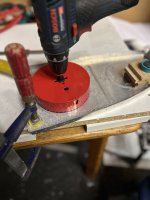
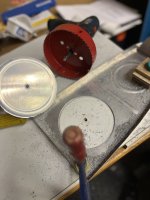
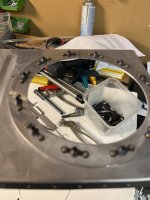
I know most do this with a fly cutter since they are adjustable and serve more than one purpose. Unfortunately I could not find one in on amazon here in Europe. The only one was well over 100$ and wasn't big enough. Not sure why. Looks like HF and everyone carries them in the USA.

So I went with this 135mm round cutter. Worked very well. It is ever so slightly smaller than the stiffener ring. I think 137 would have been perfect. But it really doesnt make a difference IMHOP.
IMG_3266.jpg

IMG_3267.jpg

IMG_3270.JPG

Getting close to dimpling parts and getting ready for some first ProSeal rivets. I have been watching the VANS tank build video. I wish they had more of these... So nice to see it done right.

What are your thoughts on fuel return. Any good links/ information that?
 
I removed my flop tube as well ans installed a standard pickup. It sounds like you want to keep it, so consider making it as easy as possible to remove. Whatever that means.
One would be sealed nut plates. No fighting with leaky screws.
Definately install the anti-rotation bracket you already started. Last thing you want is a fitting rotating.
Plumb in a return and cap it if not using it.
The door is intended to hold a little gas. You still need flow when filling. Make sure the pin can't fall out of the hinge.
 
I removed my flop tube as well ans installed a standard pickup. It sounds like you want to keep it, so consider making it as easy as possible to remove. Whatever that means.
One would be sealed nut plates. No fighting with leaky screws.
Definately install the anti-rotation bracket you already started. Last thing you want is a fitting rotating.
Plumb in a return and cap it if not using it.
The door is intended to hold a little gas. You still need flow when filling. Make sure the pin can't fall out of the hinge.
Thanks. Man too bad I just realized this now. The flop tube was really expensive for what it is. I just had seen some many pictures of it on the intenet I was set un "needing" it... Did you just plug the hole in the nose when you decided against it?

Where did you drill the return line?
 
Thanks. Man too bad I just realized this now. The flop tube was really expensive for what it is. I just had seen some many pictures of it on the intenet I was set un "needing" it... Did you just plug the hole in the nose when you decided against it?

Where did you drill the return line?
I bought a new fuel pickup and plate. Removed the flop tube inside. Installed the new pickup.
I installed a plug on the fitting. If I ever need a purge fitting, it's perfect.
 
This is costing so much time... I came up with this design as it insures that the flop tube always comes "slides" down to the lowest point where the normal pick up would be.... It also prevents the tube to catch on the tooling hole. The drawback is for an extended steep turn the tube will "have to" rise in hight. So extended steep turns line multiple steep turns in the same direktion may cause an issue if done on an low fuel tank. I feel like that is probably not the norm.

What do you guys think?

IMG_3371.jpg
 
Back
Top