Van's Air Force
You are using an out of date browser. It may not display this or other websites correctly.
You should upgrade or use an alternative browser.
You should upgrade or use an alternative browser.
RV15 Engine selection
- Thread starter Jeff B
- Start date



That should also be a little more flexible as far as fuel options. Rian has explained that they intend to develop and support a 180hp configuration, more appropriate for flight schools for economy, performance, and deck angle reasons.Just curious as to how many RV15 builders are considering using an engine other than the IO-390?
I was considering installing the O-360-A1A 180hp and keeping the build as light as possible...
Thoughts?
My build will go slow since I can't really fund it so I look forward to eventually seeing what comes of other power choices.

Here is what I am looking at:
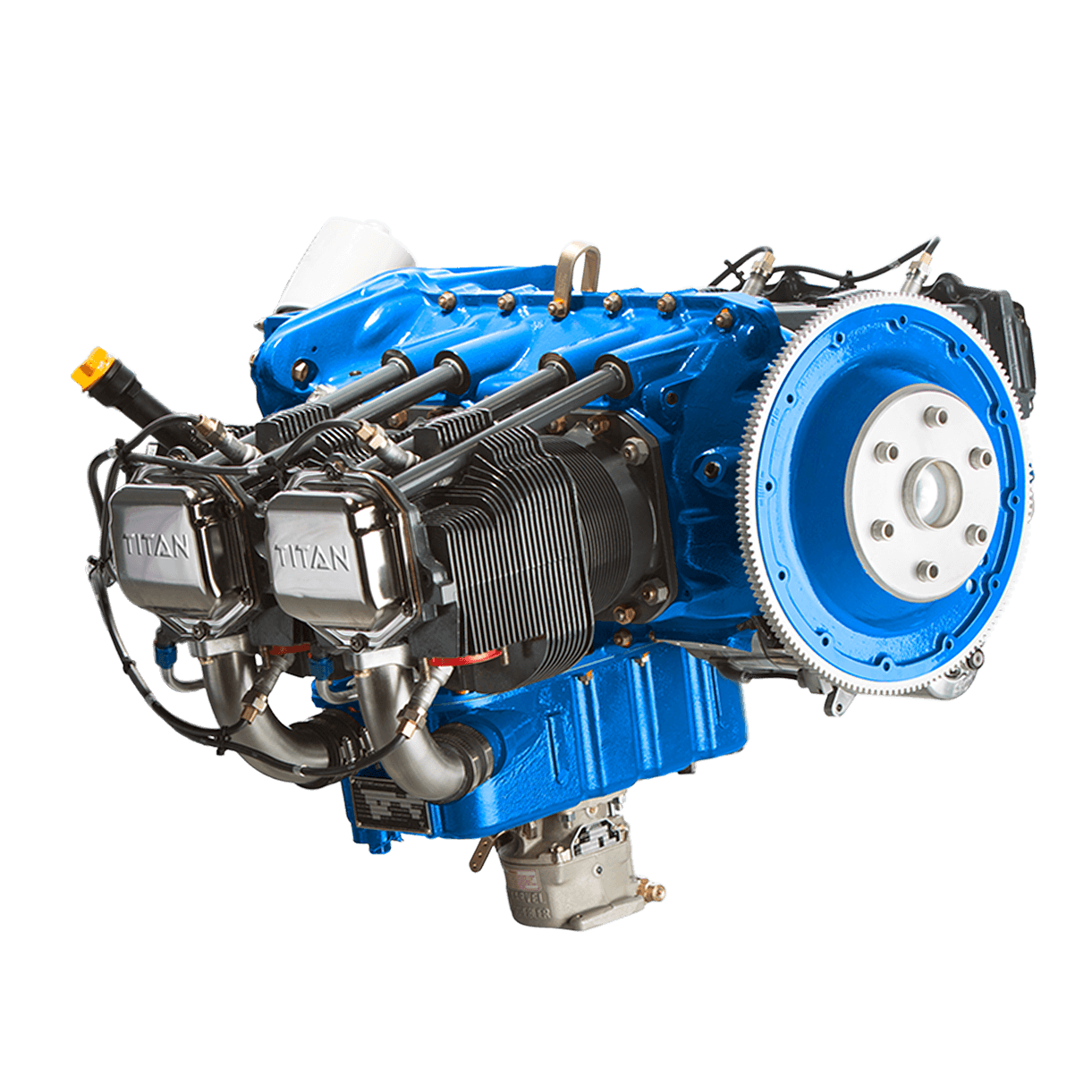
 continental.aero
Titan X-370 Experimental Engine | Continental Aerospace Technologies™
Discover the Titan X-370—an experimental aircraft engine engineered for power, reliability, and flexibility in custom aviation builds.
continental.aero

It may require a longer engine mount depending upon how tigh the cg envelope is.C-170s do quite well with 180hp and CS props. Maules also have 180 with CS. And those are 4 place birds. It will be fine with 180 up front.


Phyrcooler
Well Known Member
I’m interested in this version, and am curious to see performance. My mission is not about sandbars and wilderness exploration, but rather like a high wing RV-9. Good cross country performance, but take the wheel pants off and feel comfortable on rougher non-paved landing strips. My ideal would be minimum 140kts cruise with fairings and pants on 180hp. I think this is feasible as Van’s is striving for 140 with fat tires and 215hp. Maybe fantasy… but I’m dreaming here!That should also be a little more flexible as far as fuel options. Rian has explained that they intend to develop and support a 180hp configuration, more appropriate for flight schools for economy, performance, and deck angle reasons.
I like some elements of the Sling HW, especially the cantilever wing, but it has a high stall speed that doesn’t meet the new Sport Plane requirement! I’m curious of the location of the strut relative to the seats when they modify the RV-15 fuselage and relocate the wing position.
My only other meh with the RV-15 is the inverted V bracing above the panel. I recently flew a long cross country in a Stinson Voyager. It was frustrating how confining the cockpit felt, but acknowledge it is smaller than the 15. However, between wing struts, the forward pillars, and the dang V brace, I found it less than pleasant. I am curious if Van’s engineering would allow the removal of the V brace for RV-15’s that will not be used as a float plane? After flying around in Van’s tip-ups, the view from everything else kind of sucks!


I don’t recall seeing a V brace at Oshkosh or in any of the videos. Take a look at the most recent AOPA video, you won’t see anything there.My only other meh with the RV-15 is the inverted V bracing above the panel. I recently flew a long cross country in a Stinson Voyager. It was frustrating how confining the cockpit felt, but acknowledge it is smaller than the 15. However, between wing struts, the forward pillars, and the dang V brace, I found it less than pleasant. I am curious if Van’s engineering would allow the removal of the V brace for RV-15’s that will not be used as a float plane? After flying around in Van’s tip-ups, the view from everything else kind of sucks!
Phyrcooler
Well Known Member
I’d have sworn I saw pictures with a v-brace, but I must have confused it with a different plane. Glad to be corrected on this. Thanks!I don’t recall seeing a V brace at Oshkosh or in any of the videos. Take a look at the most recent AOPA video, you won’t see anything there.
Canadian_JOY
Well Known Member
I fly a Glasair Sportsman which features the style of V-brace to which you refer.My only other meh with the RV-15 is the inverted V bracing above the panel. I recently flew a long cross country in a Stinson Voyager. It was frustrating how confining the cockpit felt, but acknowledge it is smaller than the 15. However, between wing struts, the forward pillars, and the dang V brace, I found it less than pleasant. I am curious if Van’s engineering would allow the removal of the V brace for RV-15’s that will not be used as a float plane? After flying around in Van’s tip-ups, the view from everything else kind of sucks!
From a few years of flying experience I would comment that I don't notice the brace at all in normal flight. The only time I really "see" it is when there is a crosswind which requires a crab angle that puts the brace between my eyeball and the runway touchdown zone. For the rest of the time spent flying the dead bugs on the windshield are a far larger distraction.
I have a RANS S21 (great airplane), which has a V bar. I have to say that I still see it and it bugs me. But only notice it on landing though.I fly a Glasair Sportsman which features the style of V-brace to which you refer.
From a few years of flying experience I would comment that I don't notice the brace at all in normal flight. The only time I really "see" it is when there is a crosswind which requires a crab angle that puts the brace between my eyeball and the runway touchdown zone. For the rest of the time spent flying the dead bugs on the windshield are a far larger distraction.

We’re building the 15 w/the 235hp DeltaHawk engine. Been very happy w/the 180 hp DH in the 14 we’re flying now (and we’re putting the 200 hp DH in another 14 under construction) and I think the mating of the dhk235 w/the 15 will be an even better match. Especially w/the 15’s additional carrying capacity.Just curious as to how many RV15 builders are considering using an engine other than the IO-390?
I was considering installing the O-360-A1A 180hp and keeping the build as light as possible...
Thoughts?

While I would agree, $135,000 plus at least another $20,000 for a prop puts the two seat -15 into a rarified market.We’re building the 15 w/the 235hp DeltaHawk engine. Been very happy w/the 180 hp DH in the 14 we’re flying now (and we’re putting the 200 hp DH in another 14 under construction) and I think the mating of the dhk235 w/the 15 will be an even better match. Especially w/the 15’s additional carrying capacity.

I'm building a Bearhawk Companion in addition to the RV-14, and I paid about $43K for the QB kit in 2021, $30K for an overhauled IO-360 engine, about $16.5K for the Trailblazer prop, and probably another $40K for miscellaneous and avionics...I can carry 250 pounds in the back and get about the same speeds as the -15...it is more work than the -15 will be for sure, but it's not that hard to learn fabric covering (it's very relaxing and quiet actually)...at some point, you have to look at how much money you are willing to spend for convenience. I can say that you assemble the -14, but you have to build a Bearhawk...it will be even easier to assemble a -15, but you are going to part with a lot of money in the process. YMMVWhile I would agree, $135,000 plus at least another $20,000 for a prop puts the two seat -15 into a rarified market.
I’m interested in this version, and am curious to see performance. My mission is not about sandbars and wilderness exploration, but rather like a high wing RV-9. Good cross country performance, but take the wheel pants off and feel comfortable on rougher non-paved landing strips. My ideal would be minimum 140kts cruise with fairings and pants on 180hp. I think this is feasible as Van’s is striving for 140 with fat tires and 215hp. Maybe fantasy… but I’m dreaming here!
I like some elements of the Sling HW, especially the cantilever wing, but it has a high stall speed that doesn’t meet the new Sport Plane requirement! I’m curious of the location of the strut relative to the seats when they modify the RV-15 fuselage and relocate the wing position.
My only other meh with the RV-15 is the inverted V bracing above the panel. I recently flew a long cross country in a Stinson Voyager. It was frustrating how confining the cockpit felt, but acknowledge it is smaller than the 15. However, between wing struts, the forward pillars, and the dang V brace, I found it less than pleasant. I am curious if Van’s engineering would allow the removal of the V brace for RV-15’s that will not be used as a float plane? After flying around in Van’s tip-ups, the view from everything else kind of sucks!
You might consider a taildragger RV-9 if you don’t need the load carrying capacity of the 15 but want speed and backcountry performance. We’ve been pleasantly surprised with the pack out of the 9 for 2, but aren’t trying to carry a moose out of a backcountry strip.
I lean towards keeping a "Bush" plane as simple and reliable as possible. If you are stuck in the bush with a dead battery good luck hand propping a fuel injected engine without an electric fuel pump. Additionally electronic ignition may not be available. My choice would be an O-360 with standard magnetos and a ground adjustable propeller. Cost saving is significant allowing for more goodies elswhere.
I'm building a Bearhawk Companion in addition to the RV-14, and I paid about $43K for the QB kit in 2021, $30K for an overhauled IO-360 engine, about $16.5K for the Trailblazer prop, and probably another $40K for miscellaneous and avionics...I can carry 250 pounds in the back and get about the same speeds as the -15...it is more work than the -15 will be for sure, but it's not that hard to learn fabric covering (it's very relaxing and quiet actually)...at some point, you have to look at how much money you are willing to spend for convenience. I can say that you assemble the -14, but you have to build a Bearhawk...it will be even easier to assemble a -15, but you are going to part with a lot of money in the process. YMMV
As of today, a Bearhawk Companion kit is $82K so there isn't much of a price difference now. It's more about your mission and whether you prefer a fabric/tube design to an all aluminum airplane. I have a Companion and a typical cruise speed is 115 kts. If the -15 actually manages 140kts with a similar fuel burn it will be significantly faster.
My point wasn't that the Companion was a better performer, it was that there were other alternatives if you wanted a back country plane at a lower price than the -15....and who knows what the -15 will end up costing with a new Lycoming IO-390 up front. No question it's up there with the Carbon Cubs...As of today, a Bearhawk Companion kit is $82K so there isn't much of a price difference now. It's more about your mission and whether you prefer a fabric/tube design to an all aluminum airplane. I have a Companion and a typical cruise speed is 115 kts. If the -15 actually manages 140kts with a similar fuel burn it will be significantly faster.


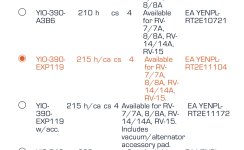
Good write up on those choices here: https://vansairforce.net/threads/yio-390-exp119.212645/
I think you want the YIO-390-EXP119 w/acc. This is the vans tuned intake and lightened IO-390 with the accessory pad for mounting a standby alternator (or vacuum pump).
I think you want the YIO-390-EXP119 w/acc. This is the vans tuned intake and lightened IO-390 with the accessory pad for mounting a standby alternator (or vacuum pump).

I'm building a Bearhawk Companion in addition to the RV-14, and I paid about $43K for the QB kit in 2021, $30K for an overhauled IO-360 engine, about $16.5K for the Trailblazer prop, and probably another $40K for miscellaneous and avionics...I can carry 250 pounds in the back and get about the same speeds as the -15...it is more work than the -15 will be for sure, but it's not that hard to learn fabric covering (it's very relaxing and quiet actually)...at some point, you have to look at how much money you are willing to spend for convenience. I can say that you assemble the -14, but you have to build a Bearhawk...it will be even easier to assemble a -15, but you are going to part with a lot of money in the process. YMMV
Mark,My point wasn't that the Companion was a better performer, it was that there were other alternatives if you wanted a back country plane at a lower price than the -15....and who knows what the -15 will end up costing with a new Lycoming IO-390 up front. No question it's up there with the Carbon Cubs...
The Companion is a nice Bush Plane for sure. I agree the price point wouldn't be much different if you put the IO-360 in the RV15 (assuming they have a 360 option at some point). I'll be building the RV15 (kit 64) and see how it stacks up to my Carbon Cub EX3. I really likes the fabric process on the Cub but to me a metal airframe has it's advantages. I'm also looking forward to rigid tubes vs the cables and pulleys driving the control surfaces. I'm helping a neighbor build one of the first Carbon Cub Experimental XCub's which also has push tubes vs cables and pulley's. That kit is just north of $300K not including avionics and paint.

I have the 210 HP variant in a 14A. I've known users of the 215 HP variant and seems keeping oil temps under control an issue. Initially they went with 4 in oil cooler ducting and issues with oil temps. Then went to 5 in per Vans recommendation (Which is a little tight to install) and still had issues. Added cowl louvers (Per Vans recommendation) and better but saw a 3 to 4 knot speed decrease then went with cowl flaps to get back the higher cruise speeds. I've had zero oil cooler temp issues (with 4 in oil cooler ducting) and even have an oil cooler door which I close on take-off if in Ohio in the winter but quickly need to open after a few minutes of climb. The 210 hp version is also ~ $ 4,000 cheaper than the 215 hp version. I'm sure either would be great in a 15. The one with an accessory case pad mount is no more expensive than the one without and even if you are not going with a pad mount alternator the next owner might want and only adds a pound or two. Good luck and I'm sure you will love the 15-build experience.So…if a guy was going to go with an IO-390 which of these three do I want?! Please explain to me like I’m 11
Also, which mags would you go with and why?
View attachment 105593
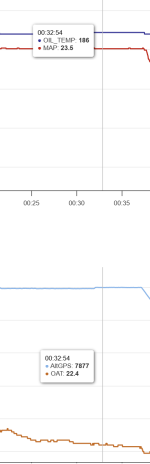
Users of the 215 hp version welcome to add data.
This is typical in cruise OT with OAT's in the mid 70's. (Florida summer)
Last edited:
"Also, which mags would you go with and why?"
I have about 100 hrs now using P-Mags on a angle valve O-360 and I have been very happy with them. Easy to install, easy to time, smoother idle and maybe a little fuel savings. They self-power down to about 850 RPM so you can easily manage an electrical failure. Plus you can't beat $3 spark plugs! The only issue I have found is that the spark plug/adapter combination doesn't maintain its torque well so you need to check them routinely.
I have about 100 hrs now using P-Mags on a angle valve O-360 and I have been very happy with them. Easy to install, easy to time, smoother idle and maybe a little fuel savings. They self-power down to about 850 RPM so you can easily manage an electrical failure. Plus you can't beat $3 spark plugs! The only issue I have found is that the spark plug/adapter combination doesn't maintain its torque well so you need to check them routinely.
glider_rider
Well Known Member
RV14 EXP119 engine,Users of the 215 hp version welcome to add data.
100% as per plans firewall front installation
zero issues with oil temp

bwagner
Active Member
RV14A EXP119 w/acc. engine, dual P-Mags
100% per plans firewall forward installation. That 5" oil cooler duct does just fit.
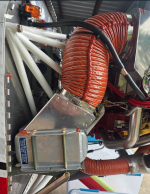
I agree today's pricing is hard to swallow (versus the $46K I paid for it thru Van's in 2021), but at 200hrs TT I'm still amazed with its performance and economy.
For example: My typical, slightly-leaned cross country settings of 23.5" MAP/2350 RPM results in 163 KTAS at 8.7GPH and 204degF oil temp on a 66degF OAT day.
Paired with the Hartzell G2YR/N7605W-2X composite prop; cool day/solo weight climb rates approach 3K FPM.
100% per plans firewall forward installation. That 5" oil cooler duct does just fit.
I agree today's pricing is hard to swallow (versus the $46K I paid for it thru Van's in 2021), but at 200hrs TT I'm still amazed with its performance and economy.
For example: My typical, slightly-leaned cross country settings of 23.5" MAP/2350 RPM results in 163 KTAS at 8.7GPH and 204degF oil temp on a 66degF OAT day.
Paired with the Hartzell G2YR/N7605W-2X composite prop; cool day/solo weight climb rates approach 3K FPM.

Yes, it has a cover plate from the factory.Thanks guys. So if you get the ACC version and don’t use the pad mount for anything that’s ok? Might be a nice to have someday kind of thing.

Updating this thread with some info that was in April's Sport Aviation article on the RV-15. Basically they stated Van's is moving the fuselage a bit forward, with the longer nose allowing for a lighter engine choice. They specifically mention the O-360. Interesting.
they mentioned a while back making it compatible with smaller engines with the flight school market in mind.Updating this thread with some info that was in April's Sport Aviation article on the RV-15. Basically they stated Van's is moving the fuselage a bit forward, with the longer nose allowing for a lighter engine choice. They specifically mention the O-360. Interesting.

ScottSchmidt
Well Known Member
I am planning on the IO-390 for now. But I am hoping Rotax has a 180 HP version in the next few years. I think that will be a Lycoming killer.Just curious as to how many RV15 builders are considering using an engine other than the IO-390?
I was considering installing the O-360-A1A 180hp and keeping the build as light as possible...
Thoughts?
Running some quick numbers, at 5,400 ft density altitude, a turbo charged 180 HP Rotax would match an IO-390. For me here in Utah that is practically every flight and definitely in most summer Idaho strips.
I like the Rotax, the auto fuel and the idea of turbo charging.
But for now, the IO-390 will be great.
Heck, I want a 210 HP Rotax! If for fun you trend out the current engines (HP vs weight) it should weigh about 240 lbs, which would be amazing. Add turbo on top of that.I am planning on the IO-390 for now. But I am hoping Rotax has a 180 HP version in the next few years. I think that will be a Lycoming killer.
Running some quick numbers, at 5,400 ft density altitude, a turbo charged 180 HP Rotax would match an IO-390. For me here in Utah that is practically every flight and definitely in most summer Idaho strips.
I like the Rotax, the auto fuel and the idea of turbo charging.
But for now, the IO-390 will be great.
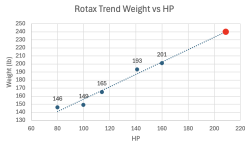
For comparison, the IO-390 is ~ 341 lb and the Deltahawk is ~ 357 lb. Who knows if a Rotax 210 HP will ever be available, but nice to dream about it.
Last edited:

and then add 100lbs of lead on firewall to correct the CGHeck, I want a 210 HP Rotax! If for fun you trend out the current engines (HP vs weight) it should weigh about 240 lbs, which would be amazing. Add turbo on top of that.
View attachment 115920
For comparison, the IO-390 is ~ 341 lb and the Deltahawk is ~ 357 lb. Who knows if a Rotax 210 HP will ever be available, but nice to dream about it.
ScottSchmidt
Well Known Member
Absolutely! A 200+ HP Rotax Turbo would be crazy fun in most RV’s.Heck, I want a 210 HP Rotax! If for fun you trend out the current engines (HP vs weight) it should weigh about 240 lbs, which would be amazing. Add turbo on top of that.
View attachment 115920
For comparison, the IO-390 is ~ 341 lb and the Deltahawk is ~ 357 lb. Who knows if a Rotax 210 HP will ever be available, but nice to dream about it.
I'm of the same mindset Scott. The IO390 is supposed to be delivered mid December (not holding my breath). If Rotax make a big announcment at OSH I really hope Vans jumps on it for the 15.I am planning on the IO-390 for now. But I am hoping Rotax has a 180 HP version in the next few years. I think that will be a Lycoming killer.
Running some quick numbers, at 5,400 ft density altitude, a turbo charged 180 HP Rotax would match an IO-390. For me here in Utah that is practically every flight and definitely in most summer Idaho strips.
I like the Rotax, the auto fuel and the idea of turbo charging.
But for now, the IO-390 will be great.
AeroEngineer
Well Known Member
Edge Performance's souped-up Rotax engines already can do up to 185hp, and some of them apparently can exceed 200.
I have heard bad things about their reliability, but that was many years ago. I would be curious to know whether that has improved.
I have heard bad things about their reliability, but that was many years ago. I would be curious to know whether that has improved.
I'm of the same mindset Scott. The IO390 is supposed to be delivered mid December (not holding my breath). If Rotax make a big announcment at OSH I really hope Vans jumps on it for the 15.
I know you aren't actually expecting this, but don't expect this.
The 'worst kept secret' in the Rotax world right now is that iterations to 180+(ish) HP are well planned and developed. We'll see the first step in that iteration soon. Soon could mean this year at Oshkosh. When it does start to roll out it's going to be an engine with updated architecture that is normally aspirated and closer to 120hp. That engine will eventually be turbocharged for higher HP version, similar to the evolution of the 912->916is.

Utah-Jay
Well Known Member
Rotax 921iS for the winSounds great, I can order my 210 hp rotax, and my Garmin G4X at OSH. Gonna be a good show
I know you aren't actually expecting this, but don't expect this.
The 'worst kept secret' in the Rotax world right now is that iterations to 180+(ish) HP are well planned and developed. We'll see the first step in that iteration soon. Soon could mean this year at Oshkosh. When it does start to roll out it's going to be an engine with updated architecture that is normally aspirated and closer to 120hp. That engine will eventually be turbocharged for higher HP version, similar to the evolution of the 912->916is.
I am going to suggest that there is no market for a normally aspirated 120hp Rotax.
However, there would be a lot of development cost and who would pay ?
There were a lot of changes to the 916 and Rotax got a few things wrong including higher than expected operating temperatures.
This is why they came out with a Rotax brand full synthetic oil which took many versions to get right.
Expect a 917 with a few changes to control heat and a small (20hp?) power increase in say 5 years time.
We have seen the 916 operating for 3 years now and baring any major problems I would happily use this.
All Rotaxes operate like modern engines because they are not 80 year old designs.
I am going to suggest that there is no market for a normally aspirated 120hp Rotax.
...
All Rotaxes operate like modern engines because they are not 80 year old designs.
No disagreement with any of that. I wasn't giving my wish list, just what I have heard and in the aviation rumor mill. The point of my comment was not to expect a 180hp to synch with RV-15 development.

One thing to remember about the 915 and 916 (both engines that I love to fly in appropriate airframes BTW) is that they are not rated for their maximum horsepower continuously - they have something like a five minute limit at maximum - then you have to throttle back to a significantly lower power level. So if you’re comparing to a Lycoming in cruise, make sure to compare to the max continuous HP - not the one that the Rotax marketing department likes to quote….
And I too am anxiously awaiting a Rotax rated at 200 HP continuous up to 18,000’!
And I too am anxiously awaiting a Rotax rated at 200 HP continuous up to 18,000’!
EP918Ti (Turbo,FADECA turbocharged 180 hp Rotax would make about the same hp as a naturally aspirated 210 hp at the altitudes many of us fly in the western US, with lower fuel burn and less weight. Gimme.
Power output: 185HP (133Kw)
Torque: 266Nm (113ft/lb) @ 5300rpm
PTO Torque: 675Nm (436ft/lb)@ 5800rpm
Multi Fuel 98 RON Ethanol safe or 100LL
Its a stoked 916. Somewhere in the 50K to 60K price with tariffs. See 918 on STOL . I expect it will take a 3rd party to do a FWF kit for the RV-15 as Van's is pretty well wedded to Lycoming right now. Stol Creek or Lockwood maybe?
Specs;
915
- Max takeoff power (5800 rpm) 141 hp
- Max continous power (5500 rpm) 135 hp
1500 hour, 12 year TBO
916
- Max takeoff power (5800 rpm) 160 hp
- Max continous power (5500 rpm) 137 hp
2000 hour, 15 year TBO
Typically owners cruise at 5200 rpm for fuel efficiency
Using Sling HW fuel consumption figures of 28 litres (7.4 US gallons)/hour at 5200 rpm
In spite of Rotax recently floating recommended use of 98 RON (93 AKI) fuel many 915/916 owners are still using 95 RON (91 AKI) octane fuel without much issue.
Not minimizing the potential for vapour lock just commenting on owner usage.
I am in a country where fuel suppliers are required by law to state the ethanol used in fuels. Ethanol is not added to 95 or 98 at any time of year.
While I see Rotax stretching the 916 series to 180 hp and maybe 200 I believe going beyond this will require a brand new engine design.
I do not see this being released for 5 maybe 10 years.
915
- Max takeoff power (5800 rpm) 141 hp
- Max continous power (5500 rpm) 135 hp
1500 hour, 12 year TBO
916
- Max takeoff power (5800 rpm) 160 hp
- Max continous power (5500 rpm) 137 hp
2000 hour, 15 year TBO
Typically owners cruise at 5200 rpm for fuel efficiency
Using Sling HW fuel consumption figures of 28 litres (7.4 US gallons)/hour at 5200 rpm
In spite of Rotax recently floating recommended use of 98 RON (93 AKI) fuel many 915/916 owners are still using 95 RON (91 AKI) octane fuel without much issue.
Not minimizing the potential for vapour lock just commenting on owner usage.
I am in a country where fuel suppliers are required by law to state the ethanol used in fuels. Ethanol is not added to 95 or 98 at any time of year.
While I see Rotax stretching the 916 series to 180 hp and maybe 200 I believe going beyond this will require a brand new engine design.
I do not see this being released for 5 maybe 10 years.
Last edited:
Utah-Jay
Well Known Member
Agreed, I seriously doubt we will see a 180or higher HP Rotax any time soon. I the Rotax world the -15 is a small market even though a 200HP Rotax would be a slam dunk and virtually everyone would opt for Rotax if Vans and Rotax made it easy.
Heck, if Rotax came out with a 200hp engine it would seriously hurt legacy engines but bring a higher horsepower engine with modern technology.
But hey we can dream
Heck, if Rotax came out with a 200hp engine it would seriously hurt legacy engines but bring a higher horsepower engine with modern technology.
But hey we can dream
The max continuous power rating of the 916 is 85% of the maximum power rating.One thing to remember about the 915 and 916 (both engines that I love to fly in appropriate airframes BTW) is that they are not rated for their maximum horsepower continuously - they have something like a five minute limit at maximum - then you have to throttle back to a significantly lower power level. So if you’re comparing to a Lycoming in cruise, make sure to compare to the max continuous HP - not the one that the Rotax marketing department likes to quote….
And I too am anxiously awaiting a Rotax rated at 200 HP continuous up to 18,000’!
The 915 is 96% of the maximum power rating.
Sure, a fixed pitch prop won't help at all, since they're RPM limits and throttle is closed slightly to reduce RPM.
My point being, they are relatively small power reductions, that are typically done on Lycomings too.
I sound like a broken record, but 180 hp Rotax already exists. Real engine dynamometer table. Ep918Ti . Its real, its not a Rotax in name only, (sort of Rotax gives a wink and a nod to Edge Performance), in essence Rotax says go build 180 hp engines, just don't call it Rotax even though it's a Rotax carcass with new heads, same bore and stroke as 916. 185 hp at 5200 rpm at max 5800 rpm 200 hp. Couple it with a 4 blade eProp fixed pitch or a 3 blade eProp constant speed. The question remains, will a turbo 180 hp engine be enough for the RV-15? I am not sure and a bit pessimistic. I think it really wants that 200 to 210 hp range but we haven't seen final configuration yet either.
Attachments