


Van's Air Force

The definitive Van's Aircraft support community! Buying, building or flying an RV? Join our exclusive family of mentors and enthusiasts!

RV12iS inspection tips

DanH

Legacy Member
Benefactor
Advertiser
Mentor
I have a 12iS here for what amounts to a glorified prebuy. I've been interested in working with one, and with no particular deadline this is a good educational opportunity.
I know the common build and wear issues of the conventional models. Anything in particular I should be examining on a 12iS? You know, the "Wish I had a nickel for every time I've seen that" stuff.
 
I have a 12iS here for what amounts to a glorified prebuy. I've been interested in working with one, and with no particular deadline this is a good educational opportunity.
I know the common build and wear issues of the conventional models. Anything in particular I should be examining on a 12iS? You know, the "Wish I had a nickel for every time I've seen that" stuff.
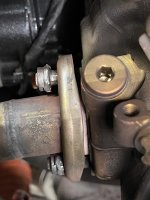
Check the lock nuts on the exhaust flanges. Just learned that one myself the hard way. Even if they appear correct and feel tight to the finger still put a wrench on them with just a little pressure to be certain.

CylinderThree01.jpg
 
Last edited:
I have a 12iS here for what amounts to a glorified prebuy. I've been interested in working with one, and with no particular deadline this is a good educational opportunity.
I know the common build and wear issues of the conventional models. Anything in particular I should be examining on a 12iS? You know, the "Wish I had a nickel for every time I've seen that" stuff.
Check the fuel line just above the forward right platenut of the fuel quick valve inspection panel for clearance/chafing. Same with the fuel line in the bay just forward of the fuel tank.
 
Check for overheating on the wires going into the connector between the engine and the B regulator. This is actually something an owner can check often since it is visible through the oil door - at least the wires from the engine side.
 
You may have already seen Rotax plugs on a ULS but if not note that the torque is less than the NGK plugs. ( 142 versus 177 in - lbs. )
 
I had a lot of problems with ignition coil wire chaffing due to vibration. This is potentially an expensive repair. There is a description and photos at the link below...

 
It goes without saying for any aircraft purchase, ask for a list of service bulletins that have NOT been complied with. It is easy to list the ones that have been done, making it a treasure hunt to find the ones that have not. Make the seller list the ones that have not been done or make them lie to you. They should know. For example, for my RV-12 I have not complied with SB 16-05-26, the one that requires me to scratch "USA" onto the data plate. That one is stupid and they can write me up for it if they like. But I at least know and acknowledge I haven't complied with it.
 
Check the lock nuts on the exhaust flanges. Just learned that one myself the hard way. Even if they appear correct and feel tight to the finger still put a wrench on them with just a little pressure to be certain.

View attachment 78422
Good tip. Being a bit more precise they should be torqued to 159 in-lbs. (Ref. Rotax 912iS MMH June 2024 Pg 489)
 
It goes without saying for any aircraft purchase, ask for a list of service bulletins that have NOT been complied with. It is easy to list the ones that have been done, making it a treasure hunt to find the ones that have not. Make the seller list the ones that have not been done or make them lie to you. They should know. For example, for my RV-12 I have not complied with SB 16-05-26, the one that requires me to scratch "USA" onto the data plate. That one is stupid and they can write me up for it if they like. But I at least know and acknowledge I haven't complied with it.
PSA: you can download a spreadsheet (CSV) from Van's with all of the service bulletins/letters for a given model. I make my A&P very happy when I show up for an annual with my list of all the SBs and a note for each one as to their compliance state.
 
Check the lock nuts on the exhaust flanges. Just learned that one myself the hard way. Even if they appear correct and feel tight to the finger still put a wrench on them with just a little pressure to be certain.

View attachment 78422

Good tip. Being a bit more precise they should be torqued to 159 in-lbs. (Ref. Rotax 912iS MMH June 2024 Pg 489)
I maintain two RV12iS and have had multiple incidents of exhaust nuts loosening and downright departing the aircraft. I tried palnuts with varying degrees of success. Now I am using nordlock washers. So far so good. Oh, and the ROTAX and VANS had zero to say about this. Honestly, I was somewhat relieved to see that my two are not the only ones, yet, disturbed to see it happening.
 
Back
Top
