Van's Air Force

The definitive Van's Aircraft support community! Buying, building or flying an RV? Join our exclusive family of mentors and enthusiasts!

RV-6A Very Slow Build, Western Australia

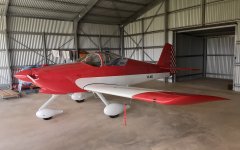
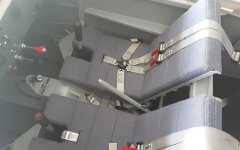
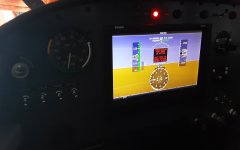
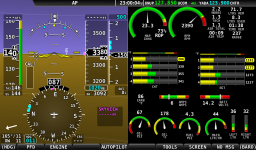
This post was going to be about the seat cushions but that update will be another day because today was a bit more interesting. There was a break in the weather (been raining all week) so it was fine enough to go outside and put some fire in the holes. The last time this engine ran was 32 years ago at overhaul and since then it has been stored indoors and preserved with LPS3 in the jugs. I washed out the cylinders with kerosene to clean out the waxy residue and checked the fuel system for flow rate and leaks (I picked up a drum of avgas at the airport yesterday). The carburetor has been overhauled as well as the 2 Bendix magnetos and along with the new fuel and oil lines, ignition harness, throttle ahd mixture cable etc. it was a bit surprising that the dang thing started and ran OK!

View attachment 92856

My wife was standing by with the fire extinguisher and video and there was just a bit of smoke out of the exhaust at the start and otherwise no leaks or any obvious problems. Some of the EMS gauge ranges will need to be adjusted.

View attachment 92857

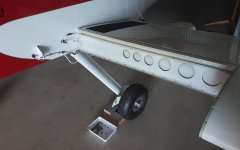
I taxied around to check steering and brakes and there is a bit of "judder" from the brake pads, probably because they are not yet broken in.

View attachment 92858
Paul, super excited for you on that milestone. Well done.
 
Just leave the canopy off and fly it old style with an open cockpit!

Beautiful, good to hear the engine came to life just like it's supposed to. As long as you have spark, fuel and air all at the same time, it'll run!
 
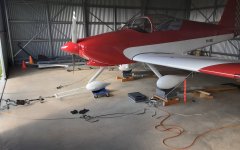
Time to weigh ... installed the canopy, engine cowl, wheel pants and airframe fairings, seat cushions, minimum fuel etc.


20250815_125730.jpg

20250815_125907.jpg


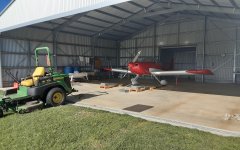
The old JD mower (it maintains the airstrip) is anchoring the winch to pull the fuselage up onto the ramps so that it is level for weighing. The main gear needed to be lifted 5" to achieve level at the longerons.

20250815_095544.jpg

20250815_111758.jpg

After two successive weighings that agree the empty weight is 479 Kg = 1054 lb

The sample W&B from the Van's construction manual is 995 lb and I have no idea how they achieved this! I have diligently cut all possible lightening holes and tapered the spar caps... any weight that could be saved was saved. The seat cushions and priming/paint probably added some, but not 50+ pounds I would imagine?

Anyway it is nearly done now and there is just a bit of paperwork left before it can fly.
 
After two successive weighings that agree the empty weight is 479 Kg = 1054 lb

The sample W&B from the Van's construction manual is 995 lb and I have no idea how they achieved this! I have diligently cut all possible lightening holes and tapered the spar caps... any weight that could be saved was saved. The seat cushions and priming/paint probably added some, but not 50+ pounds I would imagine?

Anyway it is nearly done now and there is just a bit of paperwork left before it can fly.
My -6 started out at 994 lbs, but that was before paint and wheel fairings and with a wood prop.
 
I'd say thats pretty darn good, especially for an A model. My taildragger with paint, all fairings, bare bones interior, simple VFR panel, and wood prop is 1036lbs. And my inspector said thats one of the lighter ones he'd seen. Nice work!
 
I'd say thats pretty darn good, especially for an A model. My taildragger with paint, all fairings, bare bones interior, simple VFR panel, and wood prop is 1036lbs. And my inspector said thats one of the lighter ones he'd seen. Nice work!
Yep I agree. Almost everything I inspect now days pushes 1100 lbs and over. Biggest overweight I see comes from a heavy leather interior.
 
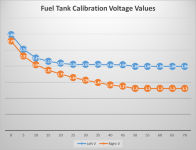
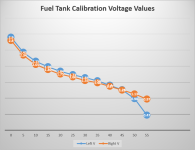
The instrument panel has a Dynon Classic EFIS and the fuel gauges are calibrated by adding 5 litre increments of fuel to the tanks to record the corresponding voltage value from the sender.

The fuel tank senders are the original resistive type from Van's that were included with the Isspro analogue gauges. The left tank calibration progressed OK up to the 20 litre level and the sender voltage changed incrementally, but above this level the readings did not really change. The right tank was a little better, but overall the results are not great and I've ordered some new Stewart Warner senders and will probably need to replace the unused but 25 year old senders as I'm not sure what else could be affecting the readings. There was no change in readings above 50 litres for either tank, due to the dihedral and the float already reaching the top of the tank in the first bay.

Fuel Tank Calibration Graph.png


I completed other fuel system testing including boost pump flow rate at the carburettor hose and unusable fuel in the tanks in both level (100 ml unusable) and climb (150 ml unusable) attitudes.

20250827_131207.jpg

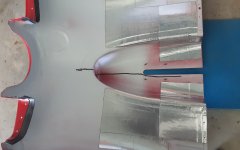
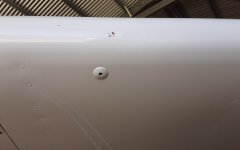
I checked the pitot and static system with a syringe and found there was a leak in the pitot system. This was caused by a loose B-nut on the aluminum line inside the wing inspection panel so it was easy to fix.


20250814_170614.jpg 20250822_121755.jpg 20250822_121935.jpg
 
Last edited:
Getting REAL close now... ! You'll be running out of excuses shortly.
Yep, thanks, it is getting close and the list of things to do is running out BUT I just hit a snag with the fuel tank calibration. It appeared that the old style senders were faulty and needed to be replaced so I ordered new Stewart-Warner senders from Summit Racing and they should get here in about 3 weeks, so there's another delay...

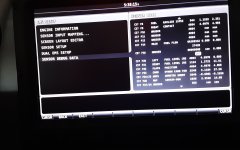
The left tank gauge did not read properly and showed over 50 liters in the tank, even when it was completely drained. Today, after checking the Skyview sensor debugging screen and poking up through the drain hole with a dowel it turns out that the float was caught up against the back of the tank.

20250829_133817.jpg

I pulled the tank off the wing and got the sender out and re-bent the float wire to give a bit more clearance and the sender float can now swing freely through the full range and so the problem should be fixed.

20250829_133443.jpg

The existing senders are the old style Isspro and the resistance range is 180 ohms to 10 ohms, whereas the new style Stewart-Warner senders range from 240 ohms to 30 ohms and could give more accurate readings, so I may still install them in future.

Fortunately the tanks were painted off of the wings, so taking them off wasn't too bad and it was much easier to work on the bench than through the small gap at the wing root. I also had some tank sealant in the freezer and once it has cured the tank can be calibrated, again.
 
Last edited:
Yep, thanks, it is getting close and the list of things to do is running out BUT I just hit a snag with the fuel tank calibration.

Fortunately the tanks were painted off of the wings, so taking them off wasn't too bad and it was much easier to work on the bench than through the small gap at the wing root. I also had some tank sealant in the freezer and once it has cured the tank can be calibrated, again.

Two things... from experience:

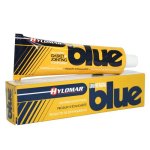
1. We typically use Hylomar on the gasket and screws rather than proseal... much easier to remove later. Seals perfectly.

2. If you replace the screws suggested in the plans with allen-head HEX screws you can remove that tank panel without removing your entire tank.

After years of flying and never trusting fuel gauges, my machine doesn't have them. I dip the tanks before each flight, I have a fuel flow meter, and I have fuel low level warning lights.
 
things... from experience:

1. We typically use Hylomar on the gasket and screws rather than proseal... much easier to remove later. Seals perfectly.
What is this Hylomar you speak of? I presume it's avgas safe. I think their is some different flavors, which one do you use?
Thanks
 
As per the link provided by Penguin, Hylomar is a non-setting blue goo that has been around for donkeys years. We've always used the Hylomar "Universal BLUE" compound for gaskets in the fuel tanks, be it on the end plates or the fuel quantity sender gaskets. It's not for use on AN fittings and because it's fuel resistant you don't want it to use excessive amounts and have it places it shouldn't be. You'll be able to buy it at SuperCheap Auto or Repco over there, Tim, or any similar retailer. It's prolific and it's not expensive at all. You only need the small 100 ml squeeze tube.

1756669678232.jpeg

When applying it, I place the gasket on a clean piece of cardboard and smear the Hylomar evenly on one side bfore flipping it over and repeating the process. The thinning agent on the Hylomar flashes off really quickly and you can then gauge whether you need a little more goo in places. If you use disposible gloves you can wipe it on with your fingers. The Hylomar tends to keep the gasket from drying out over the years and if you're careful, it's easy to peel a cover plate off without ruining the gasket.

Whether you put a blob of Hylomar on the screw or use a dab of proseal is up to you. I just used Hylomar on my tanks. And Allen head screws of course. that way you can tighten the screws in-situ if need be. Or remove them.
 
Last edited:
A brief update on the problem with calibrating the fuel tank level gauges; the left tank with the repaired float sender has been re-fitted and connected and both tanks re-calibrated and the results are much better now (phew!):

Fuel Tank Calibration Graph 31 Aug 2025.png

The calibration range starts from tanks empty and goes up to 55 litres, because above 55 litres the floats do not move any further and so the Skyview gauges will indicate 55+ litres up to the maximum tank capacity of 72 litres.

After saving the calibration, I checked the Skyview display gauges at a couple of levels and they are accurate to within 2 or 3 litres, which is consistent with the Dynon (D180) gauges in my Foxbat aircraft. That aircraft also uses resistive senders, from a Russian LADA car, installed in a Ukrainian aeroplane! Its fuel flow computer is very accurate and I generally triple check fuel before and after flight by dipping the tank, compare to the level gauges and the fuel flow totalizer.

p.s. the senders are installed with cork gaskets and Permatex #3 aviation gasket goo, which is fuel resistant and also allows easy and clean removal of the sender if required. I use Proseal under the screw heads only and they came out easily. Van's plans now call for tank sealant and no gasket under the senders, however the old senders that were in my kit are factory riveted together and the rivets would interfere with proper seating of the sensor, so a gasket is required to help accommodate the rivet tails. I put star washers under a couple of the screw heads to electrically bond the sender body to the tank and the airframe.
 
Last edited:
p.s. the senders are installed with cork gaskets and Permatex #3 aviation gasket goo, which is fuel resistant and also allows easy and clean removal of the sender if required.
Good choice Paul - that's another good gasket goo to use.
 
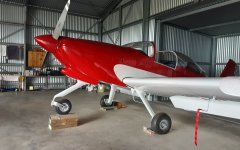
Since the last project update, I ran out of things to do in the shop/hangar because the RV construction phase is complete.

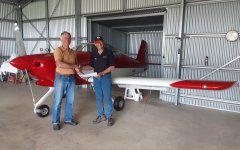
I've been preparing the paperwork that is required to apply for the Special Certificate of Airworthiness in Australia and have had the final inspection by the AP (Authorised Person for CASA), equivalent to DAR. And today I received the certificate, so the plane is legally able to fly (with restrictions) and phase 1 testing can begin.

As mentioned previously, I started building in 1993 and it has thefore taken 32 years and half a lifetime for me to finish this project. There were many moments when I felt that the dang thing had defeated me and that I would never be able to get it done, but somehow it is now ready for phase 1 flight testing. It's fair to say that don't think I could have finished it without support and encoragement from family, friends, SAAA (Sport Aircraft Association of Australia) and VAF!


20251108_122441.jpg
 
Wow !!!
I’m impressed, you can be mighty proud of having patiently and passionately persevered in getting your projet to this stage.
I’m confident that you will enjoy the flying and testing of your 6 !!!
Congratulations Paul
 
Since the last project update, I ran out of things to do in the shop/hangar because the RV construction phase is complete.

I've been preparing the paperwork that is required to apply for the Special Certificate of Airworthiness in Australia and have had the final inspection by the AP (Authorised Person for CASA), equivalent to DAR. And today I received the certificate, so the plane is legally able to fly (with restrictions) and phase 1 testing can begin.

As mentioned previously, I started building in 1993 and it has thefore taken 32 years and half a lifetime for me to finish this project. There were many moments when I felt that the dang thing had defeated me and that I would never be able to get it done, but somehow it is now ready for phase 1 flight testing. It's fair to say that don't think I could have finished it without support and encoragement from family, friends, SAAA (Sport Aircraft Association of Australia) and VAF!


View attachment 101529
Paul
Congratulations.
Extreme perseverance.
Now delight in the outcome.
The paint looks great.
 
Thirty two years, two sets of fuel tanks built, painted yourself, extended property boundary in order to paint!!! Awesome Paul. Congratulations on completing the build phase and sign off. You've built a beautiful airplane. You should be very proud of yourself.
A
 
I'm in awe at your commitment on such a long time scale. Sincere congrats, and hopefully a trouble free continuation whist in the flight phase. May all of your dreams and endless hours of work and dedication reward you 👏🏻🤞🏻😎
 
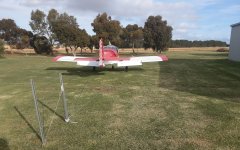
The engine previously had its "first start" and the next stage was to run some further ground tests before first flight to confirm that there are no issues with the engine developing sustained full power. I followed Mahlon Russell's run-in guide as it is well regarded on VAF.

20251109_164316.jpg

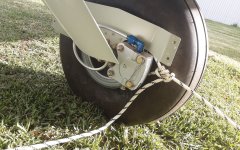
Anchor line round brake hub:
20251109_164812.jpg

During step 7 of the run (1400 RPM for 10 minutes) the plugs on #2 fouled, first bottom and then top (EGT rose and then went cold), it appeared that there was oil and soot on the plugs which were wet. For comparison, the plugs on #1 were dry but also dark from running full rich at low RPM. I cleaned plugs and proceeded to step 8 (5 minutes at 1400 RPM then full power) and plugs were dry after the full power run. The maximum possible duration experienced for full power run up with cowls on and limiting CHT to 350 degrees was about 20 seconds.

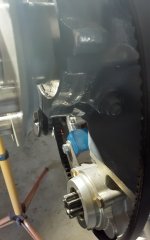
When I removed the cowl to check for leaks, loose items, rubbing etc. there was evidence of oil leaking from the main seal behind the prop, so this will need to be replaced. I've got the parts, just need to try and borrow the tool to stretch on the seal... pull the prop off and get the old seal out and the recess cleaned before installing the new seal.

20251111_101040.jpg

Follow-on inspection and removal

With the prop removed the source of the oil leak is visible - it is seeping out between the seal and the case:

20251111_135613.jpg

There is a small "whisker" of debris in the recess for the seal, which may have contributed to the leak. It is most likely the tail of the silk thread from when the case was assembled:

20251111_142650.jpg

The old seal itelf does not have any pliobond or adhesive residue from when it was originally installed, however the current Lycoming SI 1324D recommends several options of traditional pliobond or Dow/Permatex silicones.

20251111_141410.jpg

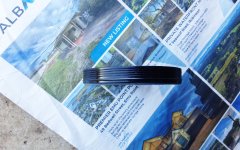
I've put the new seal in and after the adhesive has cured for 24 hours the prop can go back on. I guess the positive part of this is that I learned another Lycoming repair procedure! 😝
 
Last edited:
Good work Paul 👍🏻

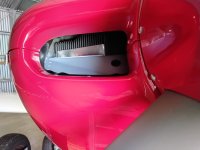
If you still have the lower cowling off, or next time as long as it is still more or less clean, I would seal all the edges of those alu foil protective pads with some hi T silicon. Just a small bead on those edges should prevent oil or gas or crud to impregnate those pads, and have them properly stick for longer.

PS
Assuming the first flight pilot is up to shape, you're slowly running out of excuses for that first flight 😉
 
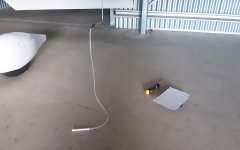
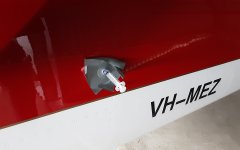
Counting down to the big day, I've got flight insurance coverage and various other documentation is organised. The avionics tech has been out to check the pitot/static instruments and transponder and ADS-B output. For static pressure check, there was no need to cut and plumb into any of the lines as the test instrument had a suction cup type fitting to sit over and seal the external port on the side of the fuselage.

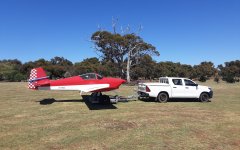
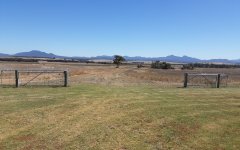
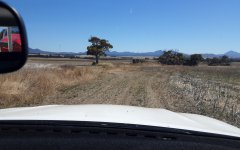
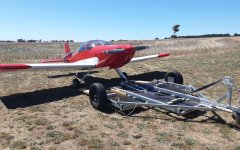
RV transport between the hangar and the 800m dirt track to the farm strip is on a towed trailer. There was a bit of adjusting to get the trailer wheels in the correct position for balance and the deck is low enough to be able pull up the RV on some removable ramps.

20251207_092749.jpg


The track is too rough for taxiing and the power to get back up the slope would cause the prop to pick up gravel.

20251207_092834.jpg 20251207_093030.jpg

Unloading with ramps and braking boat winch. Loading back up is the reverse and is an easy one person job and takes less than 5 minutes. This is the same process I've been using with the Foxbat for the past 5 years and it is an unusual way to move between the hangar and the strip but no different really to the many people who may have a boat that needs to be towed to water.

20251207_094251.jpg

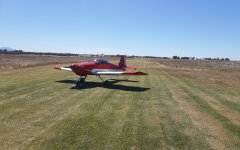
First time on the strip!

20251207_094443.jpg


I conditioned the brake rotors per Cleveland instructions and brakes are now smooth and qiet and can hold OK during engine run-up checks.

20251207_101844.jpg

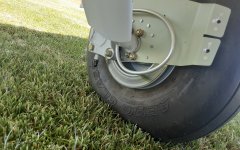
I had a few runs up and down the strip to check ground handling, avoiding inadvertent take off, but fast enough to lift the nose wheel off the ground. The 380x150-5.00 tires are working well on the grass.


20251207_101809.jpg
 
Last edited:
First flight took place this morning!

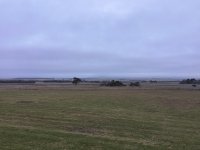
I've been watching the forecast waiting for an opportunity suitable for making the first flight. At this time of the year the air is unstable, and conditions can be quite windy with thermals as the day heats up. There was low cloud and fog at 5 a.m. but this cleared up after 6:30 so we took the RV down to the strip.

c0ff9aec-1700-4839-97cc-84aa90ed7907.jpg

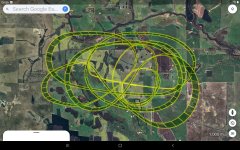
Just after 7 a.m. with heart in mouth I lifted off. The ground roll was a bit longer and the deck angle a bit flatter than the Foxbat STOL that I usually fly (at 75 knots) but otherwise it climbed well (temp was 20 degrees C) and there were no issues with high CHT etc. (initial CHT was 380 F on #3 and this dropped below 370 once I levelled out at 3000'). I spent about 20 minutes in the air checking controls, temperatures, pressures etc. and slow speed handling, staying overhead the farm strip in case there was a need to get down urgently.

Screenshot_20251211-085658_Google Earth.jpg

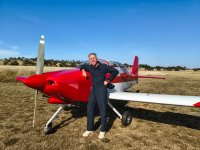
Landing was the next challenge, but happily, nothing got bent!

IMG_20251211_072922240_HDR.jpg

Later today I'm going to take the cowls off to check everything over. The next flights will be more structured test flights per the flight test manuals (EAA and SAAA guides). I think the airspeed indicators may be reading a bit low, so there could be an issue with the static ports in the fuselage sides, which will be checked by flying a rectangular pattern to collect some data.

There are a lot of people to acknowledge for their support! Family, friends, Sport Aircraft Association of Australia, Albany Flying Club, VAF of course! There were more than a few moments during the long and drawn out construction phase when I thought I might never make it to this stage.

 
Last edited:
Paul
When I looked up the word perseverance in the dictionary today it read "See PaulvS on VAF". Congratulations on an epic achievement! Enjoy the flying off of the test cards. You did it all, built it, built tanks twice and painted it yourself. It's a beautiful airplane you should be enormously proud of. Enjoy and have fun flying.
A
 
there's a happy, and proud, camper 👏🏻
Well done Paul, and many thanks for having shared the up and downs of your build with us, it was a great Earth bound ride... now enjoy the airborne rewards, she's a great flyer 👍🏻
 
First flight took place this morning!

I've been watching the forecast waiting for an opportunity suitable for making the first flight. At this time of the year the air is unstable, and conditions can be quite windy with thermals as the day heats up. There was low cloud and fog at 5 a.m. but this cleared up after 6:30 so we took the RV down to the strip.

View attachment 104421

Just after 7 a.m. with heart in mouth I lifted off. The ground roll was a bit longer and the deck angle a bit flatter than the Foxbat STOL that I usually fly (at 75 knots) but otherwise it climbed well (temp was 20 degrees C) and there were no issues with high CHT etc. (initial CHT was 380 F on #3 and this dropped below 370 once I levelled out at 3000'). I spent about 20 minutes in the air checking controls, temperatures, pressures etc. and slow speed handling, staying overhead the farm strip in case there was a need to get down urgently.

View attachment 104420

Landing was the next challenge, but happily, nothing got bent!

View attachment 104419

Later today I'm going to take the cowls off to check everything over. The next flights will be more structured test flights per the flight test manuals (EAA and SAAA guides). I think the airspeed indicators may be reading a bit low, so there could be an issue with the static ports in the fuselage sides, which will be checked by flying a rectangular pattern to collect some data.

There are a lot of people to acknowledge for their support! Family, friends, Sport Aircraft Association of Australia, Albany Flying Club, VAF of course! There were more than a few moments during the long and drawn out construction phase when I thought I might never make it to this stage.

Well done. Congratulations. Just delighted for you.
 
Hi Paul,

Congratulations on your first flight. After seeing your immaculate RV-6A build in person a few months ago I've been looking forward to hearing this news. All the best for the rest of phase 1 from Hobart, Tasmania,

Adrian & Kerrie
 
First flight took place this morning!

Paul, congratulations.

VAF won’t be the same without your build thread, which has been a constant for as long as I’ve been here: I learned to fly 26 years ago, and you were already an experienced builder on this project airplane well before then!

- mark
 
First flight took place this morning!

I've been watching the forecast waiting for an opportunity suitable for making the first flight. At this time of the year the air is unstable, and conditions can be quite windy with thermals as the day heats up. There was low cloud and fog at 5 a.m. but this cleared up after 6:30 so we took the RV down to the strip.

View attachment 104421

Just after 7 a.m. with heart in mouth I lifted off. The ground roll was a bit longer and the deck angle a bit flatter than the Foxbat STOL that I usually fly (at 75 knots) but otherwise it climbed well (temp was 20 degrees C) and there were no issues with high CHT etc. (initial CHT was 380 F on #3 and this dropped below 370 once I levelled out at 3000'). I spent about 20 minutes in the air checking controls, temperatures, pressures etc. and slow speed handling, staying overhead the farm strip in case there was a need to get down urgently.

View attachment 104420

Landing was the next challenge, but happily, nothing got bent!

View attachment 104419

Later today I'm going to take the cowls off to check everything over. The next flights will be more structured test flights per the flight test manuals (EAA and SAAA guides). I think the airspeed indicators may be reading a bit low, so there could be an issue with the static ports in the fuselage sides, which will be checked by flying a rectangular pattern to collect some data.

There are a lot of people to acknowledge for their support! Family, friends, Sport Aircraft Association of Australia, Albany Flying Club, VAF of course! There were more than a few moments during the long and drawn out construction phase when I thought I might never make it to this stage.

 
First flight took place this morning!

I've been watching the forecast waiting for an opportunity suitable for making the first flight. At this time of the year the air is unstable, and conditions can be quite windy with thermals as the day heats up. There was low cloud and fog at 5 a.m. but this cleared up after 6:30 so we took the RV down to the strip.

View attachment 104421

Just after 7 a.m. with heart in mouth I lifted off. The ground roll was a bit longer and the deck angle a bit flatter than the Foxbat STOL that I usually fly (at 75 knots) but otherwise it climbed well (temp was 20 degrees C) and there were no issues with high CHT etc. (initial CHT was 380 F on #3 and this dropped below 370 once I levelled out at 3000'). I spent about 20 minutes in the air checking controls, temperatures, pressures etc. and slow speed handling, staying overhead the farm strip in case there was a need to get down urgently.

View attachment 104420

Landing was the next challenge, but happily, nothing got bent!

View attachment 104419

Later today I'm going to take the cowls off to check everything over. The next flights will be more structured test flights per the flight test manuals (EAA and SAAA guides). I think the airspeed indicators may be reading a bit low, so there could be an issue with the static ports in the fuselage sides, which will be checked by flying a rectangular pattern to collect some data.

There are a lot of people to acknowledge for their support! Family, friends, Sport Aircraft Association of Australia, Albany Flying Club, VAF of course! There were more than a few moments during the long and drawn out construction phase when I thought I might never make it to this stage.
Congratulations Paul.. no longer can you say I'm building a airplane....now you say I fly a airplane I built!!
 
From a fellow down under pilot and recent RV owner - this thread is epic!! Well done man. What a dream to build and fly your own machine.

If you ever head over easy, look me up. Just look for Young, NSW. I’m not far. 😎
 
Thanks all for the kind words and support, it is kinda humbling!

The second flight was early this morning (weather conditions were very calm and stable) for 45 minutes and I really enjoyed the way the machine handles, WOW! On the first flight I was too busy monitoring and checking to "smell the roses".

Temps were all fine again today, though CHT #1 is lower than the rest and may need an air deflector on the front ramp.

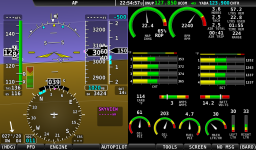
screenshot 20251221_2.png

I calibrated the Dynon AOA system by following the in-flight process and stalling a few times. This AOA port is a rivet a bit below the leading edge of the wing and the location has worked out well and the AOA warning tones and display were functioning properly and sounding as expected during landing.

20251221_083556.jpg
 
Last edited:
Congrats Paul! You're killing bugs with the best of 'em!
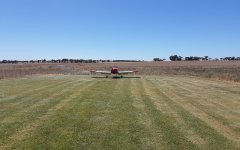
Thanks David... yep the bugs don't know what hit 'em!

The third flight was with a temporary "air dam" deflector stuck on in front of cylinder #3. It was initially running much cooler than the other 3 cylinders.

20260102_100831.jpg

Most of the flight was at 65% power, leaned just ROP, for engine break-in. The CHT for #3 has improved and the final permanent deflector will be made slightly taller and will be held on with screws.

20251231-065457.png

The Dynon Skyview AOA tones are working well and helping with landing comfortably on the 650 m (2200') grass strip. I was initially concerned about the risk of running off the end with the RV, but it hasn't been an issue. The RV-6A floats less than the other RV-9A that I've flown and is actually easier to land.
 
Last edited:
Back
Top