Van's Air Force

The definitive Van's Aircraft support community! Buying, building or flying an RV? Join our exclusive family of mentors and enthusiasts!

RV-6A Fuel Flow Meter Install / O-360

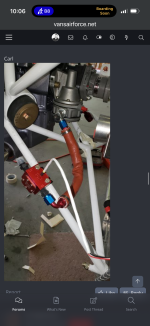
Looking on my airplane for where to install the fuel flow meter between the mechanical fuel pump and the carburetor. I’m not finding a spot that I’m really happy with mounting the fuel flow meter to.

I’ve seen where some have mounted it to the lower left side of the engine mount. That leaves me with a short hose, going to the carburetor itself and not great angles on the fuel flowmeter the installation. Instructions want some straight hose before and after the meter installing it there looks like it will require a 90° on the hose.

Where did you install your meter? Pictures would be amazing. I’m attaching a picture that TS flightline sent me.
 

Attachments

  • IMG_3719.png
    IMG_3719.png
    1.8 MB · Views: 47
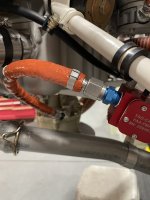
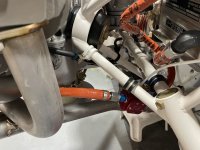
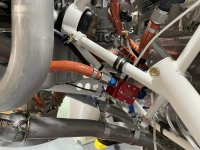
Here’s how I did mine. RV6 / O-360:

I also put a metal heat shield on that exhaust pipe just below the line going to the carb, and I wrapped everything in 1/2” thick ceramic blanket and that aluminum tape we use to protect the cowling - including the red cube.
 

Attachments

  • IMG_2179.jpeg
    IMG_2179.jpeg
    1.6 MB · Views: 61
  • IMG_2169.jpeg
    IMG_2169.jpeg
    2.8 MB · Views: 61
  • IMG_2171.jpeg
    IMG_2171.jpeg
    2.9 MB · Views: 61
My flow meter is on the inside of the fuselage, located lower left within the straight length of tubing that goes from the outlet of the HP Pump to the firewall. In the case of a non-fuel injected engine you can place the fuel meter underneath the center cover plate, aft of the battery but forward of the fuel selector. There is room there for it (I've installed one there on a friends' machine) and the tubes at the inlet and outlet to the flow meter are as straight as you'll be able to achieve anywhere in the aeroplane.

No heat to worry about, it can't get knocked about and the wiring doesn't need to go through the firewall.
 
Looking on my airplane for where to install the fuel flow meter between the mechanical fuel pump and the carburetor. I’m not finding a spot that I’m really happy with mounting the fuel flow meter to.

I’ve seen where some have mounted it to the lower left side of the engine mount. That leaves me with a short hose, going to the carburetor itself and not great angles on the fuel flowmeter the installation. Instructions want some straight hose before and after the meter installing it there looks like it will require a 90° on the hose.

Where did you install your meter? Pictures would be amazing. I’m attaching a picture that TS flightline sent me.
I found the instructions the engineer writes and the reality of the engine compartment real estate often don't align. When I installed mine there was not a way to comply with every detail of the instructions. I did the best I could and it all worked out. Give it your best shot and good luck!
 
My flow meter is on the inside of the fuselage, located lower left within the straight length of tubing that goes from the outlet of the HP Pump to the firewall. In the case of a non-fuel injected engine you can place the fuel meter underneath the center cover plate, aft of the battery but forward of the fuel selector. There is room there for it (I've installed one there on a friends' machine) and the tubes at the inlet and outlet to the flow meter are as straight as you'll be able to achieve anywhere in the aeroplane.

No heat to worry about, it can't get knocked about and the wiring doesn't need to go through the firewall.
+1. I have a Floscan meter forward of my Facet fuel pump, aft of the firewall. Front left footwell area, away from everything. No issues, 15 years, 1600 hours.
 
In the interest of liability and safety, the factory would prefer you mount it outside of the cockpit.
I'm not sure I understand the rationale behind that recommendation. So, it's okay to have fuel selector valves, fuel filters, low pressure or high pressure fuel pumps in the cockpit but not a flow meter?

From a safety perspective, if the flow meter were to develop a leak would you rather have it forward of the firewall , next to the exhaust, where you would most likely not be able to detect that it is leaking or in the cockpit where you would most likely be able to smell or see a weep?
 
I was just commenting on the number 4 post about mounting position. He said "I found the instructions the engineer writes and the reality of the engine compartment real estate often don't align. When I installed mine there was not a way to comply with every detail of the instructions. I did the best I could and it all worked out. Give it your best shot and good luck!"
When I talked to the "red cube" factory, they said they would prefer to mount it accorcing to the instruction manual.
 
My flow meter is on the inside of the fuselage, located lower left within the straight length of tubing that goes from the outlet of the HP Pump to the firewall. In the case of a non-fuel injected engine you can place the fuel meter underneath the center cover plate, aft of the battery but forward of the fuel selector. There is room there for it (I've installed one there on a friends' machine) and the tubes at the inlet and outlet to the flow meter are as straight as you'll be able to achieve anywhere in the aeroplane.

No heat to worry about, it can't get knocked about and the wiring doesn't need to go through the firewall.
I’ve had mine mounted like this on my -7 for 1300 hours and no issues and perfectly accurate.
 
Here’s how I did mine. RV6 / O-360:

I also put a metal heat shield on that exhaust pipe just below the line going to the carb, and I wrapped everything in 1/2” thick ceramic blanket and that aluminum tape we use to protect the cowling - including the red cube.


I installed this transducer in accordance with the instructions from the manufacturer (EI):


Read:

“fuel flow transducer MUST be installed downstream of the LAST fuel pump. Installing the transducer upstream of a fuel pump(s) can cause vapor lock and jumpy/inaccurate readings”.

Mine, installed as shown above, IAW manufacturers recommendations, works as advertised and is very accurate. Of course you can install it anywhere on the airframe you want, but I can tell you that installing it in the normal recommended way works very well. I’ve done it this way more than once, and the install was relatively easy (no crawling under the panel), with no operational issues.
 
Back
Top