Van's Air Force

The definitive Van's Aircraft support community! Buying, building or flying an RV? Join our exclusive family of mentors and enthusiasts!

Rv-4 Cowling Work

JRStocks

Member
Patron
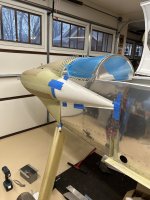
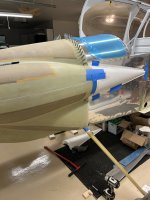
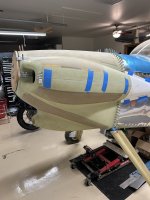
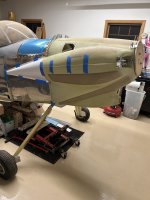
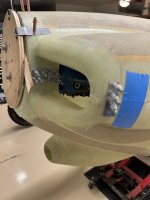
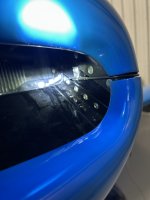
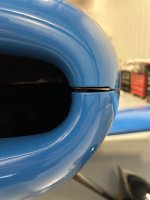
Saw a couple of you guys posting that you’re working on cowlings-you’re not alone. Pretty tedious process so far. Curious what you guys have for your hinge pin where the halves meet. I’ve seen Aerosports covers-any other options out there?
I see a couple other builders posting that are also working on cowlings to
 

Attachments

  • IMG_1856.jpeg
    IMG_1856.jpeg
    1.7 MB · Views: 101
  • IMG_1857.jpeg
    IMG_1857.jpeg
    1.7 MB · Views: 97
  • IMG_1860.jpeg
    IMG_1860.jpeg
    1.9 MB · Views: 92
  • IMG_1862.jpeg
    IMG_1862.jpeg
    1.6 MB · Views: 94
  • IMG_1864.jpeg
    IMG_1864.jpeg
    1.5 MB · Views: 101
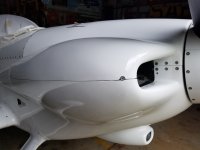
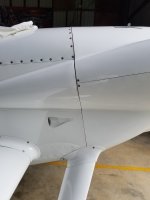
When I built my -4, I was focused on simplicity and security. Nothing fancy to see here... I made a small diameter loop in my hinge pin that fits in a small recess at the front of the cowl. I have a nutplate on a metal plate bonded to the inside of the cowl, and a screw/washer to retain the pin loop. Also, you can see I put a screw in the AFT upper and lower half at that goes into a nutplate on the check extension. During my building stages, I spent alot of time looking at the areas of in service RV-4s that suffered wear and tear, as well as basic aesthetics, and saw these 2 areas as the ones suffering the most. The pin protrusion into the check extension as per plans is OK, but often turns into an ugly wear point, hence the screws I put in mine. Yours is looking good, and the cowling and canopy skirt are the test of patience and detail on the -4 build for sure.

 

Attachments

  • Hinge Pin secure.jpg
    Hinge Pin secure.jpg
    981.6 KB · Views: 86
  • AFT hinge pin.jpg
    AFT hinge pin.jpg
    996.8 KB · Views: 86
When I built my -4, I was focused on simplicity and security. Nothing fancy to see here... I made a small diameter loop in my hinge pin that fits in a small recess at the front of the cowl. I have a nutplate on a metal plate bonded to the inside of the cowl, and a screw/washer to retain the pin loop. Also, you can see I put a screw in the AFT upper and lower half at that goes into a nutplate on the check extension. During my building stages, I spent alot of time looking at the areas of in service RV-4s that suffered wear and tear, as well as basic aesthetics, and saw these 2 areas as the ones suffering the most. The pin protrusion into the check extension as per plans is OK, but often turns into an ugly wear point, hence the screws I put in mine. Yours is looking good, and the cowling and canopy skirt are the test of patience and detail on the -4 build for sure.

Same: piano hinge on the sides and two across the top. All 4 end in an "L" shape to facilitate removal (with a wooden dowel with a hole in it!) I fashioned rectangular thick aluminum plates that are formed to follow the curve of the cowl and the "L" shaped carved in them on the back side, which cover the ends of the hinge pins and those plates are held in place by two countersunk screws that go into nutplates on aluminum pieces glassed in place behind. I saw some fancy oval plates inscribed with RV-4 on them but are WAY out of my price range ($150 for the pair, as I recall) compared to what my simple plates cost (nothing, really, as they were from scrap pieces). I also have screws on the aft corners as in Bill's second picture and one on the corner just above the curve from the cheek. Of course, hinge pins holding the bottom cowl in place.
 
I just left a small opening in the cowl halves where the hinge pin stops and use a 4" pair of needle nose vice grips to pull the pin and to push it in the last little bit. The hole is covered by a tear drop shaped .050 home brew cover held on with 2 #8 FH screws top and bottom. Did the same on my 7 and my 8. A little polishing on the covers...not show plane material but inexpensive and they look fine for me. I also used Skybolts on the top and bottom at the firewall. So much easier than the hinge pins.
 
Saw a couple of you guys posting that you’re working on cowlings-you’re not alone. Pretty tedious process so far. Curious what you guys have for your hinge pin where the halves meet. I’ve seen Aerosports covers-any other options out there?
I see a couple other builders posting that are also working on cowlings to
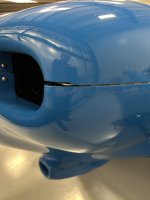
This is how I do it.
Pulls out easily with a loop of twine once the screw inside the cowl is removed.
 

Attachments

  • IMG_3889.jpeg
    IMG_3889.jpeg
    1.1 MB · Views: 73
  • IMG_3890.jpeg
    IMG_3890.jpeg
    1.1 MB · Views: 72
  • IMG_3891.jpeg
    IMG_3891.jpeg
    1.2 MB · Views: 71
mine come out from the inside. i glassed a 1/8 aluminum tube inside the cowl cheek and put a hole in the side panel inside the cockpit for it to go in from. no chance of a pin ever backing out into my prop.
 
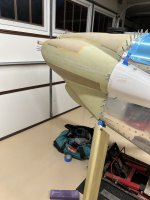
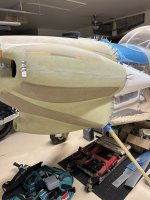
Left side is coming together nicely, trying to get nice even joint at the halves and firewall, then sand to get a gap there-seems like 1/16” gap or so is pretty common? The other side is going to require a little more persuasion. Great ideas from you guys on the hinge pin clamping.
 

Attachments

  • IMG_1952.jpeg
    IMG_1952.jpeg
    1.5 MB · Views: 41
  • IMG_1953.jpeg
    IMG_1953.jpeg
    1.8 MB · Views: 41
Left side is coming together nicely, trying to get nice even joint at the halves and firewall, then sand to get a gap there-seems like 1/16” gap or so is pretty common? The other side is going to require a little more persuasion. Great ideas from you guys on the hinge pin clamping.
Looking good there!..1/16" gap is about right. Paint will build it up a bit also. I don't recommend painting the hinges if you don't have to. Its probably too late in your case, but on mine I located the hinges "low" so the hinge pin line is below the split line ever so slightly. If you put a chisel end on your pins, they go in easier with slight back and forth rotation. Only after flying about 25 hrs will they be super easy to get in and out. I lube mine with a paraffin wax based stick called "Door Ease" It doesn't bleed or smear. You will need those hinge lines really clean later for paint. Also, make plans if you haven't to seal/paint the inner surface while it's all fresh. It will make clean-up a breeze and prevent oil saturation.
 
Looking good there!..1/16" gap is about right. Paint will build it up a bit also. I don't recommend painting the hinges if you don't have to. Its probably too late in your case, but on mine I located the hinges "low" so the hinge pin line is below the split line ever so slightly. If you put a chisel end on your pins, they go in easier with slight back and forth rotation. Only after flying about 25 hrs will they be super easy to get in and out. I lube mine with a paraffin wax based stick called "Door Ease" It doesn't bleed or smear. You will need those hinge lines really clean later for paint. Also, make plans if you haven't to seal/paint the inner surface while it's all fresh. It will make clean-up a breeze and prevent oil saturation.
Thank you for the input, my hinges are just clecoed at the firewall and I haven't installed them along the top/bottom surfaces yet, my plan is to get the top and bottom mating edges just shy of touching, which is there on the left, close on the right. then install the hinges with clecoes and check everything followed by sanding that joint to get the 1/16" gap. On my firewall hinges, I filed the pins to a blunt point/taper to help them go in, but didn't think about the flattening option. It's a tedious process for a first timer, I am being careful not to take too much material off, not sure how easy it is to build up an edge like that if you sand too much off. Sand/fit/remove/repeat.
 
Blue Painters Tape is my friend... Looking good. I sold my RV-4 long ago and had the old style gel coat solid laminate cowl (heavy cowl).

I am not a fan of all those heavy expensive quick turn fasteners. Piano hinge looks clean. The whole cowl can be installed with hinge pins and 6 to 10 screws / notoplates.

Screw and nutplate are lighter and less expensive. Screws hold tight. Taking out a screw is not too time consuming, especially with electric drill.

The top back piano hinges were removed from outside on the center line. They stuck up slightly and back and a small notch in cowl allowed access. No positive lock was needed. They never came out on their own. .

The other suggestion is the lower cowl side back hinges. I wore mine out. I bought heavier extruded hinges (may have been larger as well), verses the soft rolled hinge, just in this location, bottom cowl sides. For the sides and top the stock rolled hinges are fine.
 
A particular problem right now for me is the top center, I have seen other posts that have the same cowling situation where it isn't quite formed to the firewall. I saw some other solutions that involved cutting the top of the cowling but I had already gone down the road of thinking it was going to conform with the piano hinge, which it does except for the very top where there's the gap in piano hinge between sides. I think if I put a bracket at the top and used a single camloc or even a flush screw to a nutplate on an angle attached to the firewall it would work, I'd end up with a visible screw (or two) in the top center unfortunately but that might be my only option without cutting. Any thoughts?
 
A particular problem right now for me is the top center, I have seen other posts that have the same cowling situation where it isn't quite formed to the firewall. I saw some other solutions that involved cutting the top of the cowling but I had already gone down the road of thinking it was going to conform with the piano hinge, which it does except for the very top where there's the gap in piano hinge between sides. I think if I put a bracket at the top and used a single camloc or even a flush screw to a nutplate on an angle attached to the firewall it would work, I'd end up with a visible screw (or two) in the top center unfortunately but that might be my only option without cutting. Any thoughts?

The single screw approach or two and a plate with piano hinges is a viable solution. Not 100% sure what you got, take pictures and post, add sketch and the peanut gallery can chime in.
 
It’s not that bad and I can push it down without any distortion, it’s just keeping it there
 

Attachments

  • IMG_1968.jpeg
    IMG_1968.jpeg
    1.2 MB · Views: 31
Looking good there!..1/16" gap is about right. Paint will build it up a bit also. I don't recommend painting the hinges if you don't have to. Its probably too late in your case, but on mine I located the hinges "low" so the hinge pin line is below the split line ever so slightly. If you put a chisel end on your pins, they go in easier with slight back and forth rotation. Only after flying about 25 hrs will they be super easy to get in and out. I lube mine with a paraffin wax based stick called "Door Ease" It doesn't bleed or smear. You will need those hinge lines really clean later for paint. Also, make plans if you haven't to seal/paint the inner surface while it's all fresh. It will make clean-up a breeze and prevent oil saturation.
Is this about what you set yours to? Is that for ease of removal and reinstall?
 

Attachments

  • IMG_1970.jpeg
    IMG_1970.jpeg
    1.2 MB · Views: 20
Back
Top