Van's Air Force

The definitive Van's Aircraft support community! Buying, building or flying an RV? Join our exclusive family of mentors and enthusiasts!

RV-12 AOA Probe Leading Edge Kit Questions

jackking123

Well Known Member
Patron
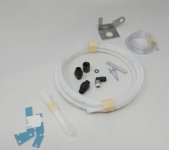
I'm building an RV-7 and plan on putting in the RV-12 AOA probe... The leading edge rib last rivet on bottom side is at the right angle, so the hole is there. My questions can anyone tell me about this KIT and the instructions.

Instructions/Dwg (can you send picture or instructions) or explain how parts (the metal ones especially) are installed?
Does kit use Pop rivet for port as shown?
How does tube connect to pop rivet? (goop on like Van's static ports with pop rivet?)

I might buy Van's AOA Retro kit or go my own DIY way?
The other option is combo pitot / aoa hanging under wing. Not going with $600 Dynon or Garmin. However I could make out of tube pitot/aoa combo.

NOTE: Other RV-7 builders have done this and have had success. I just want a plain per plans Pitot but my EFIS has the whizzbang AOA that uses differential presure, like most of not all EFIS do. I am sure the software can be calibrated to make it work. The CON is if it does not you have to do something different.
Screenshot 2025-02-17 105753.jpg
 
The EFIS should have 3 ports, pitot, static, & AOA. The AOA port gets connected to your EFIS just like the static port does. The only difference is the location of the port which you have already determined. The EFIS MUST be calibrated while flying. Follow the EFIS instructions.
 
I'm building an RV-7 and plan on putting in the RV-12 AOA probe... The leading edge rib last rivet on bottom side is at the right angle, so the hole is there. My questions can anyone tell me about this KIT and the instructions.

Instructions/Dwg (can you send picture or instructions) or explain how parts (the metal ones especially) are installed?
Does kit use Pop rivet for port as shown?
How does tube connect to pop rivet? (goop on like Van's static ports with pop rivet?)
The parts in your photo are the kit that Van's supplies for retrofitting an RV-12 with AOA (which, as I'm sure you're aware, has detachable wings). The right angle bracket is specifically for the RV-12 wing electrical and AOA line connectors where they separate at the wing root when the wing is removed. Most of the small hardware parts are also specific to the RV-12 setup. The 12 does use a rivet for the port; the soft flexible tubing slips over the shop head (after the mandrel is fully removed) and is secured with RTV. The heavier 1/4" nylon tubing is used to connect the fuselage side of the detach fitting to the ADAHRS (for Garmin avionics) inside the fuselage. I would think the only parts of the kit that would be useful to you are the rivet and the flexible tubing, which you can purchase separately.
 
Ahaaaaa got it. Thank you all. That was what I was looking for.

FYI other ports P-S inputs, Pitot is standard under wing, static ports are side of fuselage aft of wing all per plans. I'm debating on making the pitot and AOA together, and have a good idea of how to do it, simple, light and effective.

I am not going with heated pitot, BUT I will run some wires out there and cap them off in case I change my mind on heated pitot later on. Likely putting the pitot in the access cover not in the spar. Still playing with ideas. I am trying to KISS the design, light, simple and works well without gold plate overkill.

I do like the idea of leading edge AOA. I assume "it works", however knowing just enough aerodynamics to be dangerous I think the "free air" AOA integrated with Pitot would be "better". However Cessna and Piper they put their Stall warning (both forms of AOA) in the wing leading edge. PPL may comment RV-12 and RV-7 airfoils are different. True, but other RV builders have done this, report good results. All the original RV's -3/4/6/7/8 have the NACA 23013.5 airfoil. The -9/-10/-14 have other airfoils. I don't want to punch that rivet hole Dia. if it will not work, so still deciding. I would like something more elegant than a pop rivet however.... but... if may work well.
 
Last edited:
FYI other ports P-S inputs, Pitot is standard under wing, static ports are side of fuselage aft of wing all per plans. I'm debating on making the pitot and AOA together, and have a good idea of how to do it, simple, light and effective.
I am not going with heated pitot, BUT I will run some wires out there and cap them off in case I change my mind on heated pitot later on. Likely putting the pitot in the access cover not in the spar. Still playing with ideas. I am trying to KISS the design, light, simple and works well without gold plate overkill.
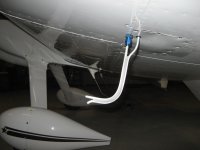
Here's my answer. Been working great for many years.
 

Attachments

  • IMG_3483.jpg
    IMG_3483.jpg
    359 KB · Views: 45
On the -12, the AOA port is not on the leading edge of the airfoil, but on the forward bottom surface of the wing a few inches aft of the leading edge (in fact, it can't be seen when the wing is installed without looking up from underneath). An alternative to using a pop rivet is the "deluxe" ShowPlanes static port kit that Van's sells in their web store, although they are sold in pairs. I used these instead of rivets for the static ports in my fuselage; however, they require enlarging the hole in the skin.
 
Here's my answer. Been working great for many years.
Thanks Mel - That is something like what I will likely do.... I have a machined aluminum fitting for both Pitot and AOA and fab a dual tube set up similar to as you show. If I do this, likely it will be in access cover, to not have a big hole in spar flange, TBD. Thanks for picture, appreciate it.
 
On the -12, the AOA port is not on the leading edge of the airfoil, but on the forward bottom surface of the wing a few inches aft of the leading edge (in fact, it can't be seen when the wing is installed without looking up from underneath). An alternative to using a pop rivet is the "deluxe" ShowPlanes static port kit that Van's sells in their web store, although they are sold in pairs. I used these instead of rivets for the static ports in my fuselage; however, they require enlarging the hole in the skin.
Right, understand it is I recall approx. 30 degree angled down from the Chord, which puts it fairly far aft of leading edge, more on the bottom of wing, but it is still near leading edge, on curved part of the airfoil (verses further back where wing is flat).

The RV-7 most forward rivet that attaches lower rib flange to skin, is at proper location/angle. Not super critical within a handful of degrees. EFIS can be calibrated, but there is a limit. It could be angled too much into airflow or angled down with too little airflow. My GRT EFIS has the angle of what they want, suggest, recommend.

Roger on using static port, but as you say you have to open up hole. Not being an aerodynamics expert (know enough to be dangerous) I wounder the effect of port being proud. For a static port on side of fuselage, which is often beneficial to be have the static port (side of fuselage) slightly proud, gets out of boundary layer and keeps from from creating suction. Fun fact STATIC measurement on planes is the most challenging. That is why in FLIGHT TEST long hoses are run out tail in flight with a basket to get static, free of aircraft disturbance. You just accept some error, and note error for Calibrated vs Indicated Airspeed/Altitude.

People have used things other than pop rivets. I am going towards something similar to what Mel shows, dual pitot/AOA mast under wing is infinitely adjustable. Essentially what Dynon and Garmin sells in the heated versions, but with alum tubing. There is no perfect just good enough in measuring ram and static air pressure. My idea ls blatantly and unashamedly copying what works. 😊

Fun to do thought experiments and reinvent the wheel. Ha ha. In the end I need pitot, static, AOA (differential pitot). TBD. Thank you.
 
Last edited:
I used a BLF rivet for AOA on the 10 back in 2019. You can search my posts for discussion on placement. I just used a few feet of 1/8" tubing. Used RTV to attach to rivet tail (just like the method for static ports), then forced it into the 1/4" tubing with some RTV to keep it there. Has been accurate and reliable. You do NOT want to be near the line of rivets that attach the skin to rib, as that will be the area with the least smooth air.

One note of caution. You can't get too close to the leading edge, as turbulence can create problems. When picking the spot for the 12, Vans moved it further aft than where they started due to seeing too much variation from leading edge turbulence.
 
I used a BLF rivet for AOA on the 10 back in 2019. You can search my posts for discussion on placement. I just used a few feet of 1/8" tubing. Used RTV to attach to rivet tail (just like the method for static ports), then forced it into the 1/4" tubing with some RTV to keep it there. Has been accurate and reliable. You do NOT want to be near the line of rivets that attach the skin to rib, as that will be the area with the least smooth air.

One note of caution. You can't get too close to the leading edge, as turbulence can create problems. When picking the spot for the 12, Vans moved it further aft than where they started due to seeing too much variation from leading edge turbulence.

Yes, thank you. So My thinking is being the FIRST rivet in the rib flange (most FWD) I would think smoothness is not an issue, but then there is a rivet behind it, and many more in that row. So yes did not think that would affect reading, but it could. Good to know you got good results.
 
Back
Top