Van's Air Force

The definitive Van's Aircraft support community! Buying, building or flying an RV? Join our exclusive family of mentors and enthusiasts!

RV-10 Upper Intersection Fairing

Blizzard

Well Known Member
Friend
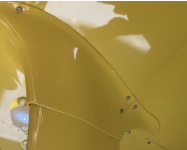
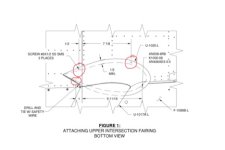
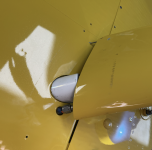
Not a lot of guidance on the installation of this part. I assume it’s implied that the 3 screws I circled are to be drilled and tapped for a #6 screw. Is there enough skin there on the underside of the fuselage to get enough thread bite to hold these things on at that speed?? The measurements for the locations seem close but need a little adjusting to make them work out. Have both the after market fairings and the one’s Vans supplies. Neither seem to fit that great up against the belly. Any tips appreciated. Thanks.

IMG_3965.jpeg
 
I'm in about the same spot. Just finishing up the wheel pants and need to put the wings on to do the upper intersection fairings and the wing fairings. I'm planning to use riv-nuts rather than sheet metal screws. Can't imagine the sheet metal screws will bite much after a few off/on interations.
 
Dang! Smacking my forehead with the palm of my hand! Didn’t even think about using Rivnuts! Are you going to use 6’s or 8’s. This is literally the last part of my build. Everything else is done. Back to Aircraft Spruce! I keep ordering little items that come up and the shipping is usually more than the merchandise! Oh Well! Thanks for the tip.
 
Surprisingly, the sheet metal screws on my 10 have never backed out. On my 6, they came out all the time. Finally started putting blue loctite on them and that ended the problem.
 
Dang! Smacking my forehead with the palm of my hand! Didn’t even think about using Rivnuts! Are you going to use 6’s or 8’s. This is literally the last part of my build. Everything else is done. Back to Aircraft Spruce! I keep ordering little items that come up and the shipping is usually more than the merchandise! Oh Well! Thanks for the tip.
I'll probably use 6's, but I think either will work well. I'd recommend getting the tabbed ones, one less chance for rotation.
 
I used ClickBond nutplates, just one hole to drill and a bit of surface prep.
ClickBond nutplates (I've used these on other applications) would work well but I would not wish Rivnuts on my worst enemy. If you go this way, make sure they are stainless steel 316 (and a little Boelube wax on the screw) as just a little corrosion will bind and twist and then one is screwed. (Ask me how I know)

The upper fairings will need to come off every year if you have wing root filters so plan accordingly.

These are nut-plates and obviously very solid.

Screenshot 2026-04-20 125826.pngScreenshot 2026-04-20 130752.png
 
ClickBond nutplates (I've used these on other applications) would work well but I would not wish Rivnuts on my worst enemy. If you go this way, make sure they are stainless steel 316 (and a little Boelube wax on the screw) as just a little corrosion will bind and twist and then one is screwed. (Ask me how I know)

The upper fairings will need to come off every year if you have wing root filters so plan accordingly.

These are nut-plates and obviously very solid.

View attachment 115585View attachment 115587
I’ve not used Click Bond products before. What style of Click Bond nutplates are you using? There is no access to other side of the belly skin. It’s all covered with the interior flooring.
 
I’ve not used Click Bond products before. What style of Click Bond nutplates are you using? There is no access to other side of the belly skin. It’s all covered with the interior flooring.
After I posted the comment about no access I realized that the measurements actually do provide an access location. Under the seats and exactly between the two spars. Tight but doable with the click bond nutplates.
 
With a bit of creativity - vacuum cleaner, string, magnets etc you can get
regular nutplates with pop rivets to hold them in there for all of those screws. From memory there was only 2 of them that were tricky.

I’d strongly recommend against rivnuts. That’s just asking for grief. They’ll last one or two inspections before they spin and you’ll enter a whole new world of pain trying to fix em.
 
With a bit of creativity - vacuum cleaner, string, magnets etc you can get
regular nutplates with pop rivets to hold them in there for all of those screws. From memory there was only 2 of them that were tricky.

I’d strongly recommend against rivnuts. That’s just asking for grief. They’ll last one or two inspections before they spin and you’ll enter a whole new world of pain trying to fix em.
The more comments and help I get the more I’m leaning towards Click Bond nutplates. To correct my previous comment about the location of the two in the rear half. They fall between the outer skin and the interior side wall. Took some measurements and transferred them to markings on the belly to find the right place to drill and set Click Bond nutplates. Not a lot of space but you can get your hand in there…(barely). The plans call for #6 screws. Is there a problem just putting #8’s in all of them?
 
The more comments and help I get the more I’m leaning towards Click Bond nutplates. To correct my previous comment about the location of the two in the rear half. They fall between the outer skin and the interior side wall. Took some measurements and transferred them to markings on the belly to find the right place to drill and set Click Bond nutplates. Not a lot of space but you can get your hand in there…(barely). The plans call for #6 screws. Is there a problem just putting #8’s in all of them?
I used #8s
 
The more comments and help I get the more I’m leaning towards Click Bond nutplates. To correct my previous comment about the location of the two in the rear half. They fall between the outer skin and the interior side wall. Took some measurements and transferred them to markings on the belly to find the right place to drill and set Click Bond nutplates. Not a lot of space but you can get your hand in there…(barely). The plans call for #6 screws. Is there a problem just putting #8’s in all of them?
You can use an existing #8 and the rest #6's, see post #9 above but your call. #6 provide more than enough structural integrity.
 
I used #6 for all the upper intersection fairings, CB6014CR06-1P

If you decide to go this route, be sure to watch their application videos and use the recommended CB200-40 adhesive - you'll need the CB100 dispenser and CB106 mixing tips (get a bunch of these since you can't reuse them). Practice with a couple before you install the real ones on the airplane to make sure you have the process figured out. You have to get down to bare metal just like you're applying primer. I used the "aircraft paint remover" to get off the Quick Build primer, then sanded it and wiped with acetone until I got a clean break with a drop of water. If the water stays in a bead it's not prepped enough. Even if it's not primed you still have to prepare the surface. Then, install them within 4 hours or the aluminum oxide will reform and you'll have to re-prep the surface. When you apply the adhesive to the nutplate, you have to work fast. Will it work without all this preparation? Maybe, but if you do it this way, the chance of having problems is greatly reduced. If they pop off, it's a real pain to get the screw out, not as bad as a rivnut but still a pain. I use normal 2-lug riveted nutplates wherever I can but this seemed like a good place to use the CB nutplates. In other places, I used CB nutplates behind the subpanel for mounting LRUs to make it easier to remove, and then I used the studs in some other places where I didn't want to drill a thru hole to mount a clamp. After 24 hours, I normally apply touch-up primer around the nutplate or stud to restore corrosion protection.
 
Back
Top