Van's Air Force

The definitive Van's Aircraft support community! Buying, building or flying an RV? Join our exclusive family of mentors and enthusiasts!

Restoring Submerged aircraft- Recommendations

steve murray

Well Known Member
Patron
I am fortunate to be writing this post. My plane (RV10) was fully submerged under muddy water (above VS for about 24 hours) in our NC hangar. I say this as I did not have any damage to our home, no friends, family or pets lost, not jobs or livelihoods lost. We are so fortunate compared to many of our local residents.

I am deciding if I want to attempt a rebuild of my aircraft. Here are some details, I am not really worried about resale value, as that is not what I am interested in. I am interested in a safe aircraft. The entire aircraft was two part epoxy primed (inside and out) during the build process. I take extended camping trips, prior to me leaving the aircraft a few months ago, I had put Phillips "anti-rust" oil in the engine and run it for about 30 minutes. and I taped over exhaust pipe (this tape is still in place after the flood), taped over pitot lines. The throttle body was not taped over.


My assumption is every wire, switch, relay and piece of avionics will need to be removed and replaced. I was out of town during the flood. Some hangar neighbors were very helpful with some preliminary tasks until I return and complete my evaluation in earnest. Soggy logbooks were put in the freezer, engine was filled (the entire engine, with 18 more quarts of oil) rear seat cushions removed, headliner removed for drying etc... I have not yet drained the oil pan to see if\how much water is in the engine.

Some specific questions:

- Do I need to overhaul the prop (engine has not been moved) Is there an option short of full prop overhaul?
- Prop governor?

Anybody done this before? Recommendations? I did find few guidelines from the Australian version of the FAA.

In an effort to keep the discussion focussed, not really interested in financial discussions, insurance aspects, etc or personal preferences, I am interested in technical input and past experiences of others.

Thanks all

Steve
 
Last edited:
When I did this for a truck I needed to strip it down to the frame (all interior parts out) and sponge wash/pressure wash inside. The silt got into everything and it took hand washing to get it out. I agree with your other observation on wires/connectors.

I also was surprised to see how much water was in the engine and transmission. Likely the same goes for an aircraft engine as you have a breather tube that isn’t a one way breather valve like on a car.
 
Avionics Tech here.

you may be going too far by removing all of the electrical system.

You might enjoy a complete rewire, as it is a chance to correct all of the minor annoyances from your build.

But it seems a little extreme.

depending on how fast you can get to the airplane........

Cut tie wraps to loosen up harnesses. Rinse all with boiling hot water and Dawn dish wash liquid. soft brushes, shop vac, repeat. Cut tie wraps to loosen up harnesses.

LOTS of clean fresh water to rinse. Chase with Isopropyl, then judicious use of ACF 50.

Painful lessons learned from lots of spilled coffee and cokes in corporate jets.

Exact same process for all avionics boxes, but they are probably gonners.

Blessings, and thank God for safe family!

Todd
 
As for the airframe, I assume you don't have access to tanks large enough to submerge the major assemblies.

- Start by rinsing the interior sections with lots of water. Pay particular attention to the faying surfaces.
- "Dry" the faying surfaces with compressed air then use blowers for the overall volumes.
- Generously treat the entire inside surfaces with ACF-50; not fogging -> wetting. BTW this is not a debate on preservative oil. Personal test have proved that nothing wicks/penetrates as well as ACF-50). Put down some type of capture paraphernalia. There's no chemical reaction so the oil can be reapplied if clear of bulk water and visible contaminates. Reapply where you can with the (sub) assemblies in different orientations.

I would check with your insurer to see if they have recommendations for a provider that has the equipment for dunk treating (for lack of better words). They so exist but I've only seen it applied to expensive military equipment.

Hurricane Milton is coming at us but our airport threats would be more wind vs. flood related.

Wicked sorry and best of luck.

Edit = was typing when the above rely was added. I was in an airframe frame of mind. Never seen it' s related use but application of IPA (100%, not rubbing alcohol) is a very good idea. It has a good affinity for picking up water (ex = gasoline "drying" additives are basically 100% IPA). The resulting surface tension of the mixture will aid in flushing the joints (wire bundles. etc.). Preservative oil application is still gonna be critical for any hope of long term success. Good idea and thx Mr. Heffley.
 
Last edited:
I went and looked at Steve’s (and my) plane on Saturday. To give everyone some more context: the scum line is somewhere above 9’. At that depth you’ve got about 1/3 atm or 4-5 psi on the water.

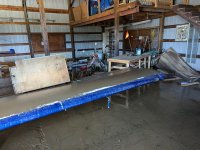
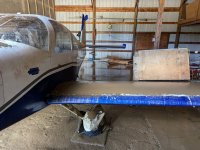
The water swirled around the hangar enough to move Steve’s workbenches across the entire hangar and deposit one on the left wing and is laying on the flap. I didn’t see any obvious major damage but I wasn’t looking.

The residue is extremely fine silt anywhere from a dusty layer to over 1/8” thick.

There is going to be at least a gallon or two of water in the engine. The added oil will be on top of that water. The silty, muddy water has been forced washed into every single nook and cranny and swirled around for at least a day.
 
I worked in a 172 years ago that was full submerged from the Yadkin River here in NC years ago..very similar to this latest horrible event. The quicker you get started, the better. In the case of the 172, the engine was pulled disassembled and cleaned /inspected, but some time had lapsed. The airframe was completely opened and stripped of the interior and panel. The wiring remained in place. It was pressure washed(very low pressure) and blow dried with compressed air were possible in seams and such. Remember, our planes can sweat enough in humid conditions to be just as wet. The 172 went on to live life as normal. I would definately do the same with my RV 4 and never look back. I'm an APIA, and I have seen lots of water logged aircraft in person and via logbook history.
 
I think that most hardware should be replaced, or at a minimum unfastened and cleaned and dried as described, and inspected before reinstallation. This includes the wing-fuselage bolts and the landing gear attachment fasteners.

But the real problems are going to be in the closed parts, like the wings, fuel tank and tail. It's going to be very difficult to dry and clean those without opening them up. The fuel tanks are going to be contaminated, too.

Good luck to you! And please, keep us posted on your progress. perhaps with a dedicated thread in the "My Project" section.

Dave
 
Last edited:
Having dealt with cars, equipment and airplanes that have been underwater, the wiring will die, it's a question of when. Not only do you have to worry about the sand and silt, but the biologic toxins that were in the flood water. Remember that every sewage treatment plant and septic system within miles of the hangar was flooded and released it's contents into that water.

Strip the airframe as quick as you can, liberally wash with soap and water, inside and out, flood rinse afterwards and then rinse again with the strongest alcohol you can find.
Don't bother trying to save the wiring or control cables. The crud is embedded in the cables and water intrusion into the open connection ends will be measured in inches, but the corrosion will be in feet.

The engine should be a quick teardown and flush with water and then alcohol and then submerged in fresh oil and then bagged til reassembly.

Electronics should be flushed with DI water and then lots of alcohol and placed where they can be quickly dried out and you might save them. Any standard steam instruments will have to be overhauled.
 
My heart really sank when I read this… lots of good detailed advice by folks here already. Having cleaned up from floods when I lived on the gulf coast I do know how the silt gets into everything - so don’t forget the ailerons, flaps, elevators and rudder - those things are pretty well closed up structurally, and while the silt gets in “in suspension”, I don’t know how you get it all out without furring some large access holes.
 
You should be able to open the oil quick drain to evacuate most of the water as it should have settled to the bottom of the sump.
 
As far as the electronics, we had many police cars over the years get submerged in SALT water. The radio shop had us take the radios, siren and light box out and put immediately into a pail of fresh water and bring to them. The were able to save most of them. Check with your shop. YMMV. Ben
 
We had a car that my wife decided for some reason to cross a big puddle on a dirt road that turned out to be more like a pond. She got stuck, water up to the bottoms of the front seats, and had to be towed home. I extracted the seats, carpets and cleaned out all of the muddy water, but still had lots of issues with the electronics, even though most of the wiring and sensors/boxes were above the water line. We ended up having the dealership go through the car and after thousands of dollars (covered by comprehensive insurance) it was back to running OK. Over the next few years certain things stopped working (cruise control, phone calling, etc.) and some issues surfaced like bad wheel bearings which had to be replaced. We still held on to the car for a dozen more years and just recently traded it in on a new car after driving it 175000 miles.

Submerging your RV under 9 feet of water to me would be a total loss no matter how well it cleans up. Maybe new interior, wiring and electrical, along with a new/rebuilt engine will work, but maybe not. Your resale value will always be compromised.
 
Good input guys, thanks. Any input on rod end bearings. Can I clean them up, regrease and reuse or should gthey be replaced?
 
Good input guys, thanks. Any input on rod end bearings. Can I clean them up, regrease and reuse or should gthey be replaced?
Think of it this way..the ones on the flight controls can be in rain and sit on a ramp for years. They are somewhat sealed, but don't contain any real bearings per say. After cleaning, hit with LPS and rotate them around without the bolt in them. Make sure the pushrods themselves are not filled with water.
 
Was your 10 one of the aircrafts at Hendersonville?
If so, if you need any additional help, I'm only 30 RV minutes from there & would be happy to come out & help.
Feel free to send me a DM.
 
Last edited:
I'm certainly not an expert on this topic, but just imagining how I would go about it.... For me I think it would require a complete strip and disassembly of the airframe and removing any panels off of 'box sections' (floors/rear seat pans), to open everything up (along with rod ends off of pushrod tubes). Anything that has electrons run through it would be scrapped and obviously FWF would be a complete tear down/rebuild. It would look like an advanced QB stage airplane with the assemblies on a rotisserie. Then spend multiple, repeated sessions with a hose and pressure washer. This will take a LOT of water. I'd even be tempted to strip the paint. Everything down to bare aluminum (with the exception of the interior epoxy prime).

Re-assemble as you would an advanced QB stage aircraft with new and OH'd components, along with all new hardware.

As dumb as this may sound - I'd be tempted to get a 20' long above ground swimming pool and submerge the completely stripped fuse and wings under fresh/clean water. Get a pressure hose and diving mask and wash that thing out as its submerged in hopes that most of the silt will remain suspended. Continue to flush as the assemblies are removed from their fresh water bath.
 
Last edited:
.....removing any panels off of 'box sections' (floors/rear seat pans), to open everything up ........
Yeah, how would you get the silt (and effluent residue...yuck) out of the wings, specifically everything aft of the main spar? I suppose you could use a sewer jetter kit with a pressure washer. Some of those jets spin, and they also have jets pointing aft to help get them to travel down the sewer pipe, which would help here too. Mount the jet nozzle on a wand made of rigid stainless tubing with a 90 deg bend near the end and go through the lightening holes, one bay at a time. Hopefully the corner bend reliefs at the rib ends are enough to drain the FOD out. I'd rig up a jig to hold each wing at, say, 45 deg AOA and outboard down at a 20 deg bank or something like that.

 
Was your 10 one of the aircrafts at Hendersonville?
If so, if you need any additional help, I'm only 30 RV minutes from there & would be happy to come out & help.
Feel free to send me a DM.
Yes, I am one of the Hendersonville folks. Thanks for the offer of help!
 
Yeah, how would you get the silt (and effluent residue...yuck) out of the wings, specifically everything aft of the main spar? I suppose you could use a sewer jetter kit with a pressure washer. Some of those jets spin, and they also have jets pointing aft to help get them to travel down the sewer pipe, which would help here too. Mount the jet nozzle on a wand made of rigid stainless tubing with a 90 deg bend near the end and go through the lightening holes, one bay at a time. Hopefully the corner bend reliefs at the rib ends are enough to drain the FOD out. I'd rig up a jig to hold each wing at, say, 45 deg AOA and outboard down at a 20 deg bank or something like that.

Great idea on the sewer cleaning kit. This is just what I was looking for some new ideas. This definitely could help dislodge some of the silt in the wings. I do need to figure out some type rotisserie setup for the wing cleaning. - Thanks for the idea and Amazon link.
 
Understand that most sewer jetting heads require over 3000 psig and 5+ gpm to function correctly. At that pressure, it can be very easy to damage structure.
 
I can put you touch with a friend who built a wood tank to submerge a yak in separate pieces that was recovered from salt water. good luck.
 
My heart really sank when I read this… lots of good detailed advice by folks here already. Having cleaned up from floods when I lived on the gulf coast I do know how the silt gets into everything - so don’t forget the ailerons, flaps, elevators and rudder - those things are pretty well closed up structurally, and while the silt gets in “in suspension”, I don’t know how you get it all out without furring some large access holes.
I spent a few hours pulling the interior and most of the access panels from the plane this afternoon and oh boy are you correct. Every single horizontal surface has the silt stuck to it and it's weirdly tenacious and extremely fine stuff!
 
Last edited:
I’ve been down this road with several Cessna float planes that were sunk/flipped/submerged and returned to flying status. It’s certainly doable. Clean with mild soap and rinse numerous times. As soon as possible lube up all moveable connections with ACF 50 or Corrosion X. Engine & prop need a teardown. Acessories go to a shop for inspection. All switches, breakers, relays get replaced. Never replaced any wiring on these mostly day VFR planes and don’t remember any unusual electrical troubles in the following years. Good suggestions in this thread. ACF 50 or Corrosion X is your friend for the rest of the airframe as it will get into the seams and in between riveted skins. I have a small pressure washer I bought at Lowe’s for around $95, it operates at a lot less pressure than the regular ones and would be ideal for this cleanup.

Don Broussard
RV9 Rebuild in Progress
57 Pacer
 
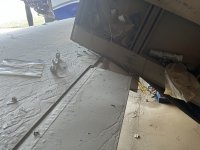
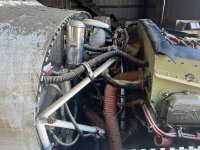
I am stuck at this point, insurance company is trying to figure out the salvage value....the plane is deteriorating while they move slowly along.

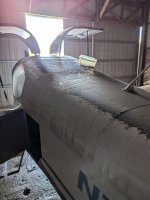
These will make you cry...View attachment 72357

View attachment 72358
View attachment 72359View attachment 72360View attachment 72361View attachment 72357View attachment 72358View attachment 72359View attachment 72360View attachment 72361
That really is terrible. Out of curiosity for our learning…what does it mean when you say trying to figure out salvage value? I thought most policies have an agreed value to start. Wouldn’t that be what you get when it’s a total loss minus a deductible?
 
That really is terrible. Out of curiosity for our learning…what does it mean when you say trying to figure out salvage value? I thought most policies have an agreed value to start. Wouldn’t that be what you get when it’s a total loss minus a deductible?

I think the salvage value would be the price for the airplane if Steve was wanting to purchase it back from the insurance company after he's been paid the policy premium.
 
I think the salvage value would be the price for the airplane if Steve was wanting to purchase it back from the insurance company after he's been paid the policy premium.
With my 182 I was given three options: 1) take the full insured value that day; insurance takes ownership 2) take minimum totaled value (70%) that day; I retain ownership or 3) the aircraft goes out for salvage bids (with the note that the owner wants to retain the aircraft) and I get the option to buy it back for $1 more than the highest bid or take the full insured value once the bids come back.

I went for the 3rd option.
 
One thing I also learned is that the additional insured items such as headsets etc still fall under the insured amount. So if the plane is a total loss you don’t get the extra $1000 or whatever is in that section. If you leave headsets in the plane and expect a 1000-year natural disaster it pays to take them home!
 
Back
Top